
In the evolving landscape of digital business, B2B brands are increasingly recognizing that customers don’t engage with a company through just one channel anymore. Prospects and clients jump between LinkedIn messages, email interactions, website visits, webinars, and even offline meetings with an expectation of continuity, relevance, and personalization. To meet that expectation and truly differentiate, modern B2B marketers must adopt Omnichannel Marketing Strategies that are cohesive, customer-centric, and data-driven.
This article explores how B2B brands can build, implement, and optimize omnichannel programs that not only attract and nurture leads but also solidify long-term partnerships by offering consistently valuable experiences across every touchpoint.
What Is Omnichannel Marketing and Why It Matters in B2B
In simplest terms, omnichannel marketing is a strategic approach that ensures your audience receives a unified brand experience no matter how they interact with your business. It goes beyond multichannel initiatives where channels operate independently. Instead, it ties channels together into one seamless journey.
In B2C, omnichannel might revolve around syncing social media messaging with in-store interactions. In B2B, the notion gets a bit more complex because decision cycles are longer, involve multiple stakeholders, and are rooted in research, trust, and repeat interactions. A CFO might first learn about your solution through a LinkedIn article, while an IT manager dives into a product demo video on YouTube. Both individuals eventually converge on your pricing page and then talk to a sales rep. Without an integrated strategy, these interactions feel disjointed and impersonal. With the right orchestration, they become coordinated experiences that build confidence and push deals forward.
The B2B buyer journey is rarely linear. Prospects jump between channels, departments, devices, and contexts. A well-executed omnichannel strategy ensures that when a potential customer returns to your brand—via email, search, or referral—the message resonates as a continuous part of the same story, not a fragmented interaction.
Key Pillars of Successful Omnichannel Marketing for B2B
Understanding the B2B Buying Journey
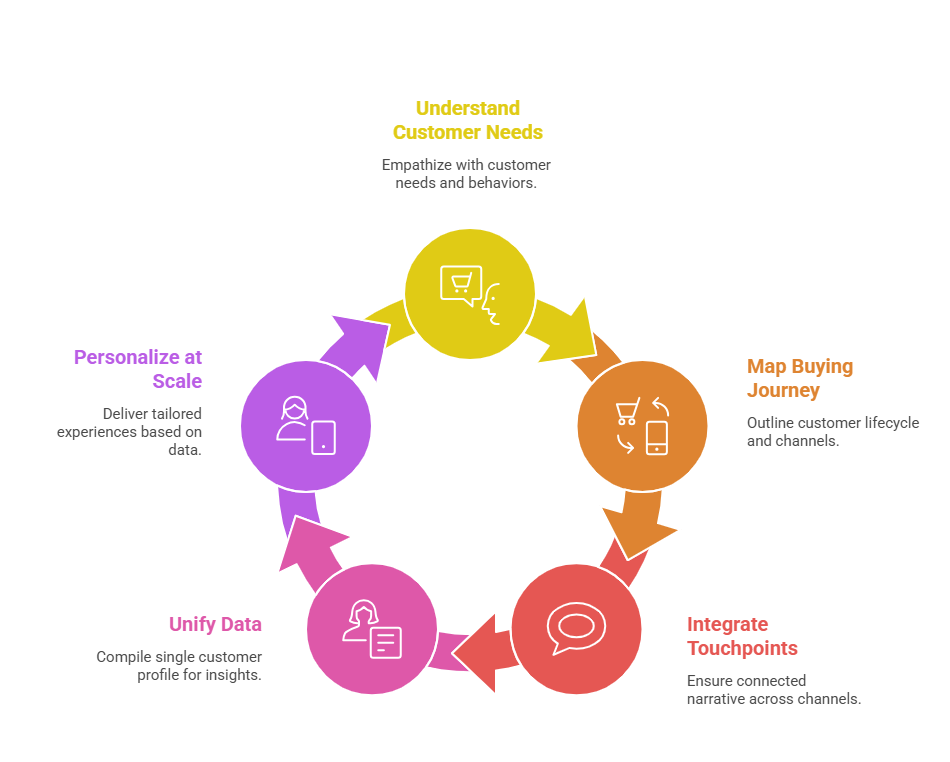
Every successful marketing strategy begins with empathy for the customer’s needs and behaviors. For B2B enterprises, the purchase process can span weeks or months. Multiple stakeholders might evaluate your brand at different stages, often in parallel.
Start by mapping out the typical lifecycle your customers follow. This includes awareness, consideration, evaluation, purchase, onboarding, renewal, and advocacy. Within each stage, identify all the channels a buyer might use to learn about your offerings. These may include search engines, professional networks, industry forums, review sites, conferences, email campaigns, and referrals from trusted partners.
This mapping allows you to spot opportunities where your brand interactions might feel fragmented or inconsistent. It also helps you identify where personalization can add the greatest value, such as delivering educational content on LinkedIn that aligns with the topics they previously engaged with on your blog.
Integrating All Touchpoints
Integration is about making sure every touchpoint contributes to a connected narrative. If a prospect interacts with your webinar on cybersecurity solutions, send them personalized follow-ups that relate directly to their interests, not generic content. This requires both technical capability and a thoughtful content strategy.
Your CRM (Customer Relationship Management) platform should act as the core repository of customer data. Every interaction—opened email, website visit, webinar attendance, demo request—should feed into this system. Marketing automation tools then pull from this data to trigger relevant next-step communications on any channel.
The goal is subtle: make your prospects feel understood. When they move from an email to your website, or from LinkedIn to a live event, the narrative continues naturally.
Data Unification and Customer Insights
If your customer data is siloed across platforms, omnichannel efforts will always fall short. Data unification means compiling a single, coherent customer profile that reflects all past interactions regardless of channel. This allows your teams to tailor experiences based on actual behavior, not assumed preferences.
Data unification also opens the door to predictive insights. For example, if analytics indicate that prospects who attend a case study webinar are more likely to convert after viewing a pricing page, you can optimize your sequencing accordingly. Beyond conversions, data unification fuels personalization, helping your brand speak directly to individual business challenges.
Personalization at Scale
B2B buyers want tailored experiences that reflect their unique context. A manufacturing executive’s interests differ significantly from those of a CIO evaluating software integrations. Personalization means using your customer data to deliver content, messages, and offers that align with individual needs and goals.
This doesn’t happen by accident. It happens by design—through segmentation, smart automation, and thoughtful messaging. Your content library should be tagged and indexed so that your automation systems can assemble the right combinations based on where a prospect is in the journey.
For instance, a lead interested in ROI calculators shouldn’t receive the same nurturing sequence as one just downloading a basic whitepaper. The difference in content should feel intuitive and respectful of their time and intent.
Channel-Specific Tactics That Reinforce the Omnichannel Experience
Email Marketing With Contextual Relevance
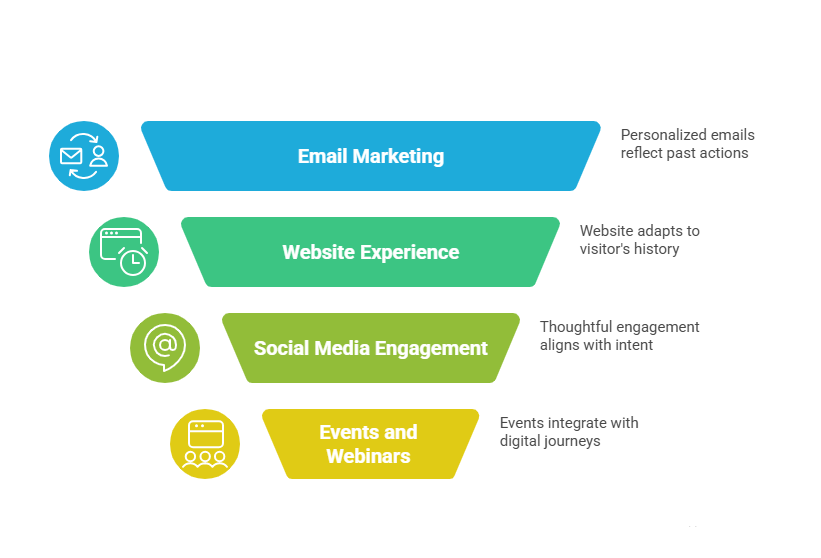
Email remains central to B2B communication, but its true power shows when it is connected to actions on other channels. If a lead interacted with a product demo on your website, the follow-up email should reflect that action. This contextual relevance increases engagement and accelerates decision-making.
Use dynamic content blocks that adapt based on recent behavior. Short, human-sounding subject lines that reference previous engagements can improve open and click-through rates. Remember, the email inbox is where many prospects decide whether your brand feels relevant or intrusive—so personalization must be thoughtful, not forced.
Website Experience That Evolves With the Visitor
Your website shouldn’t be static. With omnichannel thinking, your site becomes context-aware. A returning visitor might see content that reflects their past interactions—case studies if they explored your solutions page, or customer stories if they downloaded a product sheet.
To achieve this, utilize cookies, session tracking, and CRM integrations that allow you to anticipate intent. The goal is to reduce friction and help visitors find what they need quickly without repeating steps they’ve already taken.
Social Media Engagement With Intent Alignment
In B2B, social media isn’t just about broadcasting messages. It’s about engaging thoughtfully with your audience. Channels like LinkedIn and Twitter are where professionals discuss trends, share insights, and evaluate peer recommendations.
Craft content that adds value: thought leadership posts that address common pain points, insights drawn from customer successes, and interactive formats such as polls and live sessions. Engage directly in conversations, answer questions, and direct individuals back to tailored content on your main digital properties.
Events and Webinars That Tie Back Into Digital Journeys
Offline and live virtual events remain powerful conversion drivers. But for omnichannel marketing to work, these experiences must integrate with your broader digital stack. Before the event, send personalized invites based on past engagement. During the event, capture participation data. Afterward, follow up with tailored content that reflects what attendees experienced.
Where possible, link event behavior to digital profiles so future interactions—whether via email or website—are enriched with event insights.
Aligning Sales and Marketing Around a Unified Omnichannel Approach
Omnichannel success requires more than technology; it requires alignment between teams. Marketing and sales must operate as a cohesive unit, sharing data, language, and objectives. When a marketing team nurtures a lead to a certain point, sales should be aware of the interactions that led there.
This alignment ensures that messaging remains consistent and that the experience doesn’t reset when a human rep gets involved. A salesperson should know not just the lead’s name and company, but what content they’ve consumed, what challenges they’ve expressed interest in solving, and what stage they’re in the buying process.
Invest in shared dashboards, regular alignment meetings, and clear definitions of what qualifies a lead to move between teams. Treat this internal alignment as part of the omnichannel experience you deliver externally.
Measuring and Optimizing Performance
A common misconception is that omnichannel success is purely qualitative. While experience matters, measurable outcomes are essential to iterate and improve.
Track metrics that go beyond opens and clicks. Measure engagement across channels, progression through the funnel, lead quality improvements, and conversion rates correlated with specific touchpoint sequences. Attribution models should reflect the reality that B2B purchases are influenced by multiple interactions, not a single click.
Use dashboards that allow you to filter performance by channel, campaign, audience segment, and content type. This enables you to pinpoint what is working and where gaps exist in the journey.
Cultivate a culture of testing. Try new messaging sequences, adjust timing, experiment with different content formats, and collect feedback from your sales team on lead readiness. Optimization is ongoing, not a one-off project.
The Role of Technology in Supporting Omnichannel B2B Marketing
Technology is the backbone that enables omnichannel execution at scale. But adoption without strategy can be wasted investment. Here are the key systems that power modern omnichannel programs:
Customer Relationship Management (CRM) platforms form the foundational database of customer interactions.
Marketing automation solutions deliver personalized nurture sequences and trigger communications based on behavior.
Analytics tools measure cross-channel engagement and help optimize flows.
Content management systems ensure that your digital properties are capable of delivering adaptive experiences.
Artificial intelligence and machine learning increasingly augment personalization, predicting what content a prospect is most likely to engage with next.
Integrations between these systems break down data silos and allow your teams to see a unified view of customer behavior. When systems talk to each other, your audience experiences your brand as a cohesive, responsive entity rather than disjointed efforts.
Challenges and How to Overcome Them
Implementing omnichannel marketing isn’t without challenges. B2B organizations often face internal resistance due to legacy processes, disparate technology stacks, and cultural silos. Data privacy regulations add another layer of complexity, requiring transparent consent handling and responsible use of personal information.
To overcome these hurdles, start small with pilot programs that demonstrate value. Encourage cross-functional collaboration and celebrate early wins. Invest in training that empowers teams to interpret data and use tools effectively. And establish governance practices that protect customer privacy and build trust.
Remember, omnichannel isn’t a one-time project. It’s a mindset shift—from pushing messages out to building truly human experiences that respect how modern buyers seek information and make decisions.
Final Thoughts
B2B buyers expect seamless, insightful, and valuable experiences across every interaction with a brand. Mastering omnichannel doesn’t just improve engagement; it builds trust, accelerates decision cycles, and strengthens long-term relationships.
By treating each channel as part of a connected ecosystem—not isolated silos—and by leveraging customer insights to personalize every interaction, B2B brands can transform fragmented journeys into meaningful narratives. This transformation isn’t easy, but the organizations that embrace it fully are the ones most likely to thrive in competitive markets where experience matters just as much as the solution itself.
In the end, omnichannel excellence isn’t measured only by conversion rates and pipeline acceleration. It’s reflected in the confidence your customers have in your brand, the relevance of every touchpoint they experience, and the long-lasting partnerships that result from consistently valuable interactions.
Let the journey toward your omnichannel future begin with clarity, strategy, and a relentless focus on the customer at the center of it all.