
Search engine optimization in 2026 feels… different. Not dramatically different, but enough that you notice it. Backlinks still matter a lot, maybe even more than before, but how we analyze and build them has changed completely.
AI is now deeply embedded in SEO workflows. It doesn’t just collect backlink data anymore. It interprets it, predicts risk, and even suggests strategies. And honestly, once you start using these tools, going back to manual backlink analysis feels painfully slow.
In this guide, we’ll break down the 10 best AI backlink analysis tools you should consider this year, what makes them powerful, and how you can actually use them to improve rankings.
Why AI is Changing Backlink Analysis (And Why It Matters)
Backlink analysis used to be pretty straightforward.
You’d check referring domains, anchor text, domain authority, maybe spam score. That was it.
But now?
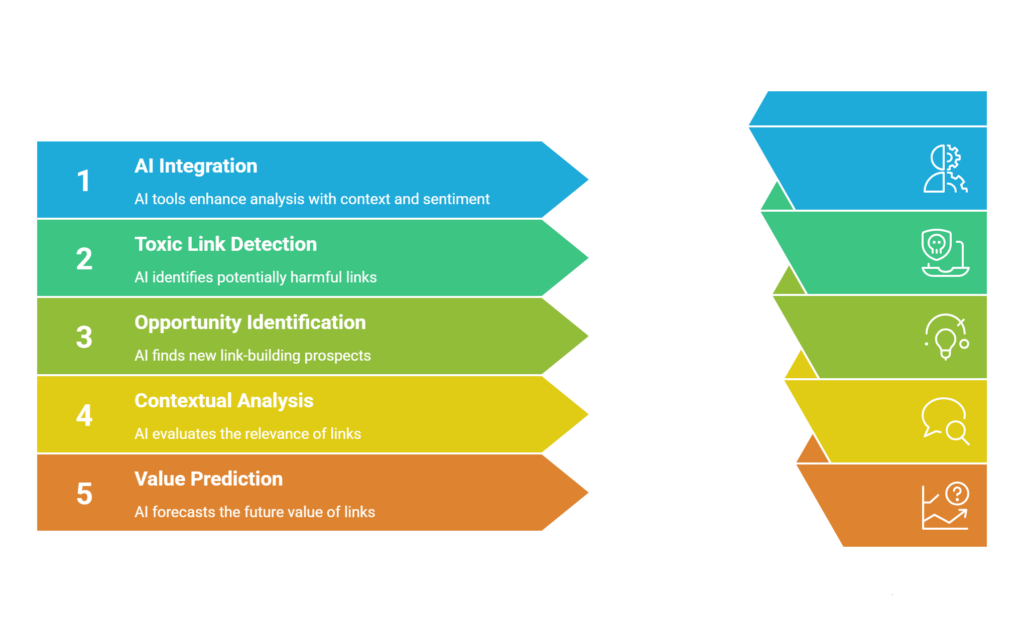
AI tools analyze context, relevance, sentiment, and even predict whether a backlink might harm your rankings in the future. Some tools can even map your backlink profile across topics and identify gaps you didn’t even know existed.
For example, modern tools now:
- Detect toxic links before Google penalizes you
- Identify link-building opportunities based on competitors
- Analyze the context of links, not just quantity
- Predict link value based on historical trends
This shift is exactly why AI Backlink Analysis Tools have become essential for SEO professionals, agencies, and even solo bloggers.
How to Choose the Right AI Backlink Tool
Before we jump into the list, let’s quickly set expectations.
Not all tools are built the same. Some are heavy-duty enterprise platforms, while others are more focused or beginner-friendly.
When evaluating AI Backlink Analysis Tools, you should consider:
- Data size and freshness
- AI capabilities (not just marketing buzzwords)
- Ease of use
- Integration with other SEO workflows
- Pricing vs value
Because honestly, the “best” tool depends on what you actually need.
1. Ahrefs – The Gold Standard for Backlink Intelligence
If backlink analysis is your priority, Ahrefs is still the benchmark.
Its backlink index is massive, with trillions of links, and it updates faster than most competitors.
But what makes it stand out in 2026 is its AI layer.
Ahrefs now includes features like:
- AI-powered link context analysis
- Sentiment detection (positive, neutral, negative mentions)
- Semantic relevance scoring
This means you don’t just see who links to you, but why they link to you.
And that’s a big deal.
Because not all backlinks are equal anymore. Context matters more than ever.
If you’re serious about using AI Backlink Analysis Tools, Ahrefs is probably your starting point.
2. Semrush – The All-in-One AI SEO Powerhouse
Semrush is like that multi-tool you carry everywhere. It does everything.
And in 2026, it’s even more powerful thanks to AI.
Its backlink database is one of the largest, with tens of trillions of links and hundreds of millions of referring domains.
What really stands out is:
- AI-driven toxic link detection
- Predictive backlink risk scoring
- Integration with content, PPC, and keyword data
Semrush doesn’t just analyze backlinks in isolation. It connects them to your entire marketing ecosystem.
That’s why many agencies rely on it as their primary AI Backlink Analysis Tools platform.
3. Moz Pro – Smarter Authority Metrics for 2026
Moz has always been known for Domain Authority.
But in 2026, it’s evolved.
Instead of a single score, Moz now offers:
- Topical authority scoring
- Freshness-based link evaluation
- AI-powered link relevance insights
This is actually really useful.
Because a backlink from a highly relevant niche site often matters more than a high DA but unrelated site.
Moz makes this distinction clearer than most AI Backlink Analysis Tools available today.
4. CognitiveSEO – Deep Semantic Link Analysis
CognitiveSEO is a bit underrated, honestly.
But it’s one of the most advanced tools when it comes to semantic backlink analysis.
It uses AI to:
- Cluster backlinks by topic
- Build a “topical map” of your link profile
- Identify gaps in authority across niches
For example, you might discover that most of your backlinks come from “product-related” content, but very few from thought leadership content.
That insight alone can reshape your entire SEO strategy.
Among AI Backlink Analysis Tools, this one is especially powerful for content-driven SEO.
5. Majestic – Trust Flow Meets AI Enhancements
Majestic has always focused purely on backlinks.
And while it may not be as flashy as newer tools, it still offers:
- Trust Flow and Citation Flow metrics
- Deep backlink history
- Link graph visualization
It’s now incorporating AI to improve link quality analysis, although it’s still more traditional compared to others.
Still, for pure backlink research, it remains a solid choice among AI Backlink Analysis Tools.
6. SE Ranking – Affordable AI-Powered Backlink Tracking
If you’re looking for something more budget-friendly, SE Ranking is worth considering.
It combines:
- Backlink monitoring
- AI-driven insights
- Competitor analysis
It also has access to trillions of backlinks and supports global SEO campaigns.
It might not be as advanced as Ahrefs or Semrush, but for small businesses or freelancers, it’s a practical AI Backlink Analysis Tools option.
7. Linkody – Simple Yet Effective Backlink Monitoring
Not everyone needs complex dashboards.
Linkody focuses on simplicity:
- Real-time backlink tracking
- Spam link detection
- Email alerts for new/lost links
It uses AI in a lighter way, mainly for automation and filtering.
If you’re just starting with AI Backlink Analysis Tools, this can be a good entry point.
8. Monitor Backlinks – Competitor-Focused Insights
Monitor Backlinks does exactly what the name suggests, but with a twist.
It emphasizes competitor analysis.
You can:
- Track competitor backlinks
- Identify link-building opportunities
- Get automated insights
This tool is particularly useful if your strategy is heavily competitor-driven.
Among AI Backlink Analysis Tools, it’s one of the more tactical options.
9. SEO SpyGlass – Advanced Link Auditing
Part of the SEO PowerSuite, SEO SpyGlass is designed for deep audits.
It offers:
- Penalty risk analysis
- Detailed backlink reports
- Historical data tracking
Its AI features help identify harmful patterns and optimize link-building strategies.
If you’re dealing with penalties or recovery, this is one of the more specialized AI Backlink Analysis Tools.
10. MarketMuse – AI for Link Strategy (Indirect but Powerful)
Now this one is interesting.
MarketMuse isn’t a backlink tool in the traditional sense.
But it helps you earn backlinks by:
- Building topical authority
- Identifying content gaps
- Creating link-worthy content
It uses AI to analyze your entire content ecosystem and suggest improvements.
So while it doesn’t track backlinks directly, it complements other AI Backlink Analysis Tools extremely well.
How to Actually Use These Tools (Practical Strategy)
Let’s be honest.
Having tools doesn’t guarantee results.
Here’s a simple workflow you can follow:
Step 1: Audit Your Backlink Profile
Use tools like Ahrefs or Semrush to identify:
- Toxic links
- Weak domains
- Anchor text issues
Step 2: Analyze Competitors
Look at:
- Where competitors are getting links
- What type of content earns backlinks
Step 3: Identify Gaps
This is where AI shines.
Tools like CognitiveSEO or MarketMuse help you find:
- Missing topics
- Weak authority areas
Step 4: Build Smarter Links
Focus on:
- Relevance over quantity
- Editorial links
- Content-driven backlinks
Step 5: Monitor and Optimize
Continuously track:
- New backlinks
- Lost links
- Toxicity signals
This is where consistent use of AI Backlink Analysis Tools really pays off.
Common Mistakes to Avoid
Even with AI, people still mess this up.
Some common mistakes:
- Focusing only on high DA links
- Ignoring link context
- Not removing toxic backlinks
- Over-automating link building
AI should guide decisions, not replace strategy.
The Future of Backlink Analysis
This is where things get interesting.
We’re moving toward:
- AI-driven link valuation
- Real-time penalty prediction
- Integration with AI search engines
Some tools already track visibility in AI-generated results, not just Google rankings.
That’s a huge shift.
And it means AI Backlink Analysis Tools will become even more critical in the next few years.
Final Thoughts
If you’re still relying on manual backlink analysis in 2026, you’re probably missing out on opportunities.
AI doesn’t just save time.
It gives you insights you simply couldn’t uncover manually.
That said, tools are only as good as the strategy behind them.
So pick one or two tools, learn them deeply, and build a system around them.
Because in the end, SEO is still about consistency, quality, and smart decisions.