
Let’s be real. Building a product that works is tough. But getting people to notice? That’s a whole different challenge.
You could be launching AI-driven software that saves teams hours or a health gadget that helps people finally sleep through the night. Either way, if there’s no product marketing strategy behind it, you’re basically shooting in the dark.
And it’s not just about clever taglines or a TikTok dance. You need a strategy. A full one. One that’s clear-eyed about what people want, what’s already out there, and how your product slides right into their life then tells that story in a way that actually sticks.
Let’s walk through what that looks like when it’s done right.
Understanding the Market
First things first. Don’t skip this. If you dive into tactics without knowing the market, it’s like throwing darts blindfolded.
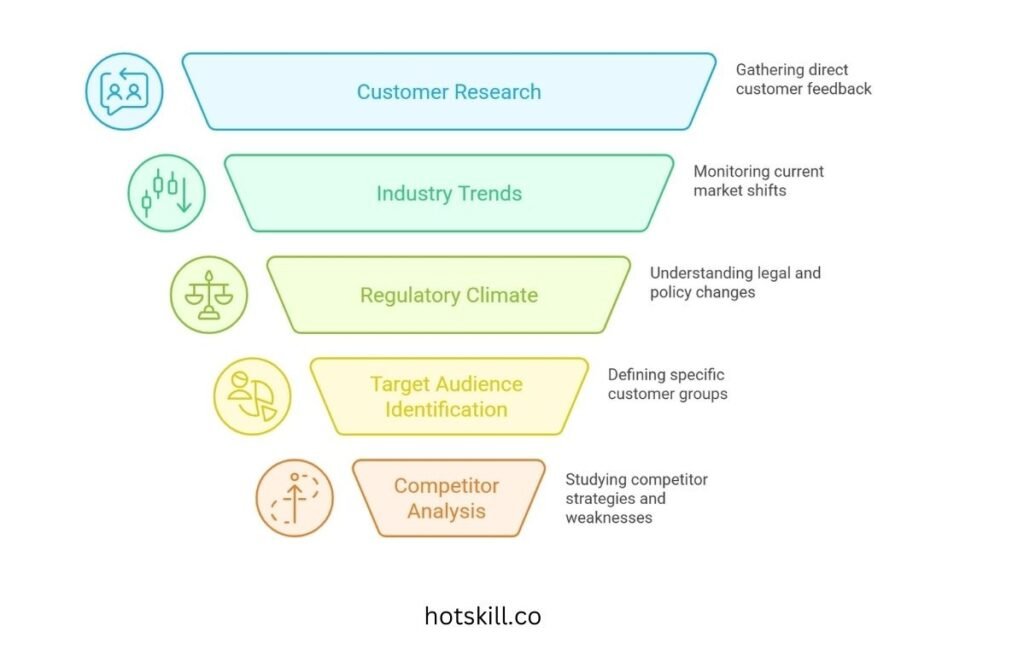
Market Research and Analysis
This part sets your direction. And when it’s done right? It can flip the whole game.
- Customer Research: Start with actual conversations. Not just two people you know cast a wide net. Use surveys, yes, but also get into DMs, forums, even Reddit threads. You’ll spot patterns. McKinsey found that companies who lean into customer insights grow their market share by up to 20%.
- Industry Trends: Look around. Tech shifts fast. AI’s transforming everything from healthcare diagnostics to fashion fitting rooms. Education’s being reshaped by personalized edtech. If you’re not keeping up, you’re already behind.
- Regulatory Climate: In finance, healthcare, education? Rules matter. A sudden data-privacy law or FDA update could derail your rollout. It’s better to know what hurdles lie ahead while you’re still mapping the course.
Identifying Your Target Audience
You’re not selling to “everyone.” You’re helping someone specific.
Drill down:
- Demographics: Age, location, job, income.
- Psychographics: What they care about. Their beliefs, habits.
- Behaviors: Are they loyal to brands? Do they test free trials and bounce?
Picture this: You’re launching a fitness app. For a college athlete, your message might be “Push performance.” But a mom easing back into a workout routine? She may want something gentler: “Breathe. Move. Reclaim your space.”
Build personas. Walk through their journey. That’s not just for planning, it gives your whole team clarity.
Competitor Analysis That Goes Beyond the Surface
Don’t just casually watch your competition. Study them.
What are they saying in their ads? Which channels are they using? What are folks complaining about in their reviews?
If a competitor in retail keeps getting knocked for slow shipping, that’s your edge. Promise faster delivery. Then do it. Done right, that insight becomes your unfair advantage.
> 🔑 Market understanding isn’t a checkbox. It’s the lens through which your whole strategy sharpens.
Positioning and Messaging
Once you know the landscape and your people, it’s time to craft the story. And make every word count.
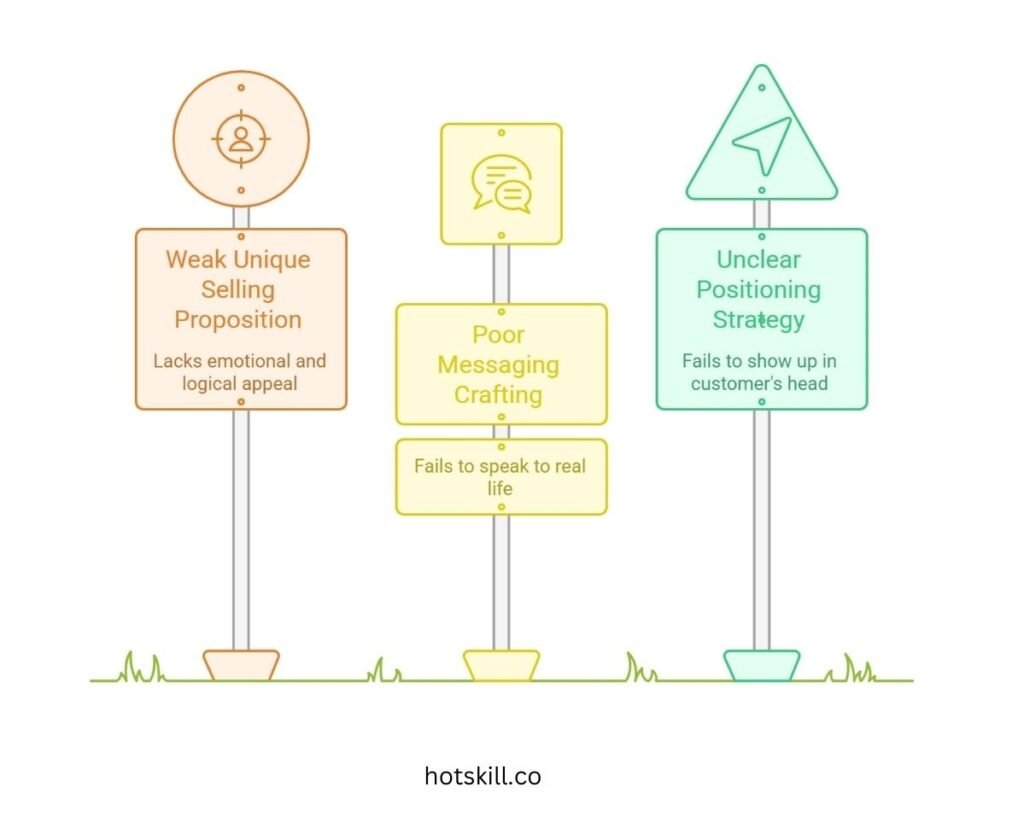
Nail Your Unique Selling Proposition (USP)
This part? It’s the soul of your product, in one sharp sentence.
Don’t just say what your product is. Say why it matters.
You’re not selling time-tracking software. You’re giving freelancers peace of mind. “You’ll always get paid what’s fair.”
A good USP hits two notes:
- Logical: “Save 6 hours a week with one-click reports.”
- Emotional: “Get your weekends back.”
If it makes people say, “Well yeah, of course,” you’re close.
Craft Messaging That Hits Like Truth
Now spread that magic through all your copy emails, product pages, even loading screens.
Skip feature dumps. Speak to real life.
Instead of, “Integrates with 200 platforms,” say, “Automate boring tasks. Focus on great hires.”
Test messages. If people nod when they read it or send it to a colleague? You’ve hit something.
Positioning Strategy: Find the Right Lane
Ask yourself: How do you show up in your customer’s head?
Are you…
- The innovator? “Nobody else is doing this.”
- The safe bet? “Of course I’d choose them.”
- The niche expert? “They literally built this for me.”
Let’s say it’s a healthcare product. Trust is huge. Reliability in that space trumps almost everything. But in DTC lifestyle brands? Speed and cool factor might rule the roost.
> 🎯 Positioning isn’t just about being better. It’s about being the right kind of different.
Product Launch Planning
This is the high-stakes moment. A launch isn’t just press and confetti. It’s when all the layers of strategy come together (or fall apart).
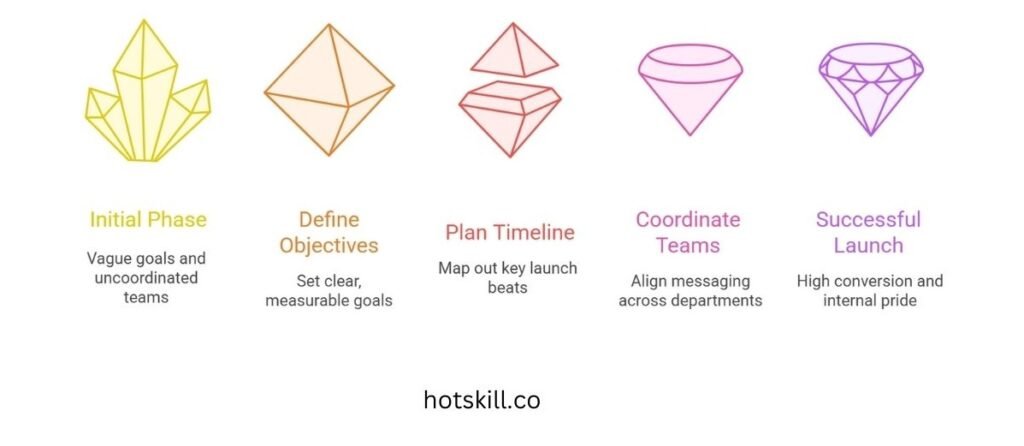
Set Clear, Measurable Objectives
Forget vague goals.
Use numbers that force clarity:
- Hit 50,000 website visits in the first 30 days
- Sign 1,000 early users during beta
- Reach $100,000 in MRR within 60 days
If you’re not measuring it, you’re guessing.
Timeline: From Buzz to Buy-Now
Don’t treat launch like a single day. It’s a slow burn with key beats.
- Teasers or sneak peeks 2–4 weeks before
- Beta invites for early users
- Launch day splash
- Follow through with continued pushes
Map out the dependencies. Your design team needs to know if product marketing are delayed. If commas and dev aren’t talking, stuff breaks.
Cross-functional Coordination
This part is make or break.
Align messaging across the board. Sales pitch = website headline = ad copy = in-product onboarding.
Harvard Business Review found aligned launches convert 36% better. That’s not a small change.
> 🚀 A great product launch doesn’t just drive traffic. It builds internal pride and external conviction.
Pricing Strategy
Price says a lot about value. It’s never just a number.
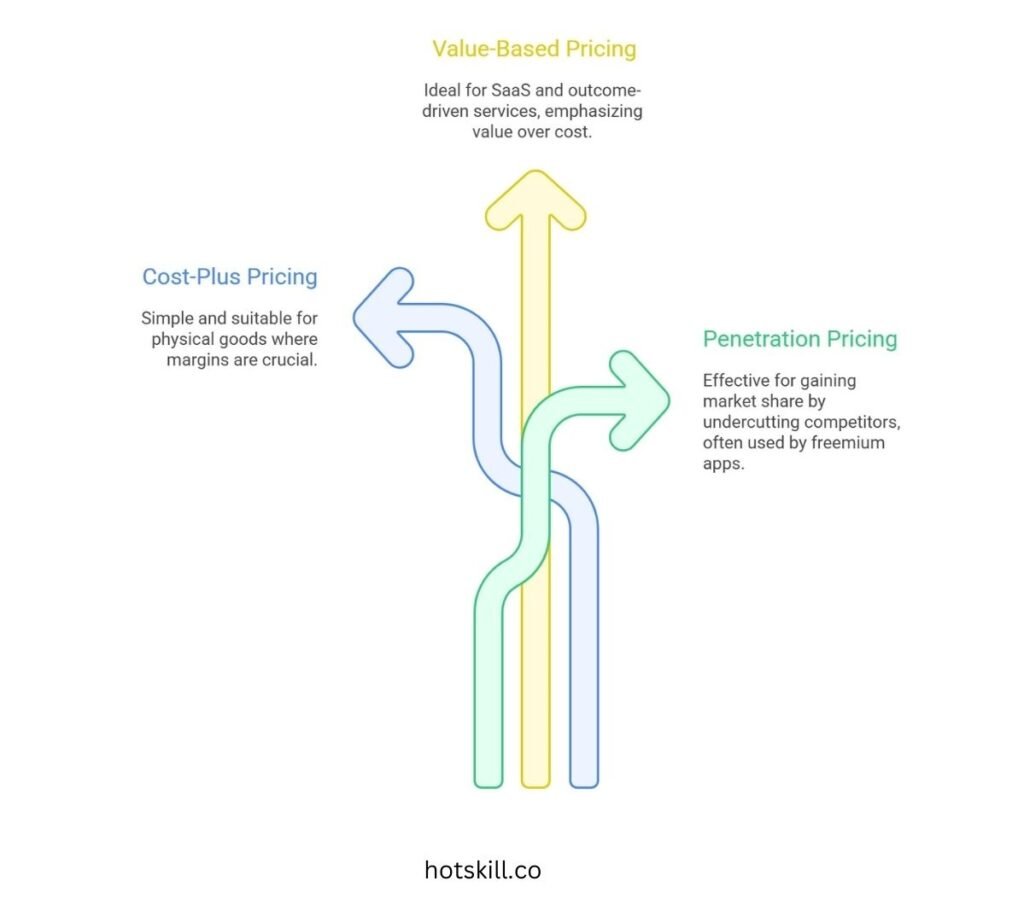
Pricing Models That Fit Your Value
A few go-to strategies:
- 💸 Cost-Plus: Simple. Useful for physical goods where margins matter.
- 💡 Value-Based: Great for SaaS or anything outcome-driven.
- 🧲 Penetration: Undercut competitors early to gain users freemium apps love this one.
Say you’ve got a wellness app. $5 per month? You’ll attract budget-conscious users and scale. But if you’re offering hands-on coaching? Think premium.
Mismatch your price and perception, and you’re in trouble.
Competitive Price Scanning
Watch your competitors. Not to copy but to spot gaps.
If your HR tool adds onboarding and compliance, and your competitor’s charging $200 for the basics? That’s your shot. Charge $250 and explain exactly what that extra $50 gets them.
Bundle if it adds convenience. Unbundle to lower the barrier. Just make it intentional.
Applying Value-Based Pricing at Any Stage
Look at Apple. They never tried to compete on price. They doubled down on premium.
The same goes for B2B consulting, legal tech, or medical devices. Price according to what your solution’s actually worth, especially when it saves time, reduces risk, or drives growth.
Play with:
- Tiered plans by need
- ROI tools
- Proof-backed case studies
Companies using value-based pricing grow up to 25% faster than their exact peers. Worth doing.
> 💰 Price isn’t static. It’s the story people tell themselves about what you’re worth.
Go-To-Market (GTM) Strategy
Your GTM plan isn’t fluff. It’s everything from channel to messaging to momentum.
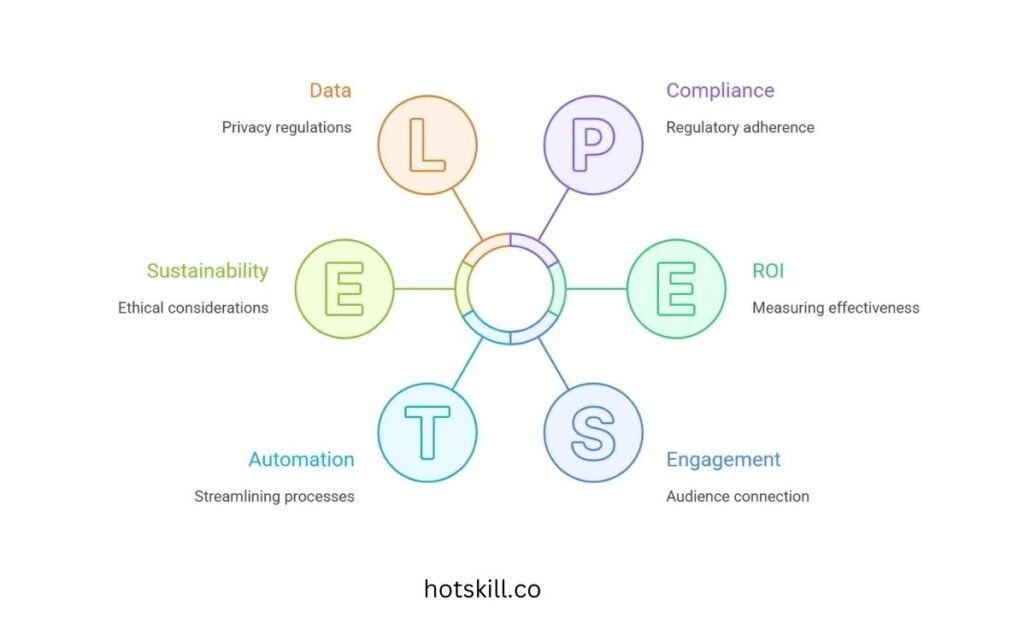
Channel Strategy
Go where your people already hang out.
- Direct-to-consumer? Instagram, TikTok, and smart checkout UX.
- B2B SaaS? Email, LinkedIn, live webinars.
- Healthcare? Whitepapers, compliance forums, medical events.
Launching an edtech solution? You’re probably better off cold-emailing curriculum directors than creating YouTube ads. But fashion ecommerce? Influencer content all the way.
And don’t forget: Strategic partnerships can boost speed. App marketplaces, bundles, affiliate programs work if they align with user needs.
Sales Enablement
Your sales team needs more than motivation. They need tools.
Give them:
- Persona-tailored decks
- Demo scripts
- Story-driven objection answers
- Quick-reference comparison charts
Marketing should work alongside sales, not parallel to it. Flip that silo into a relay team.
Campaigns with Real Lift
Make noise that matters.
Use real deadlines. Retarget like a human. Tell a story people want to follow.
According to Campaign Monitor, consistent multi-channel campaigns increase conversion rates by 287%. Not a typo.
Things that work:
- Countdown launches
- Time-limited discounts
- Big, bold testimonials: “Cut my admin time in half!”
Watch who engages early on they’re often your biggest organic advocates.
> 📢 A strong GTM plan doesn’t just get clicks. It creates believers.
Customer Engagement and Retention
Getting customers matters. Keeping them? That’s where you build something lasting.
Build Relationships, Not Just Lists
Onboarding should feel human. Follow-ups should feel thoughtful.
That might mean sending voice notes, or check-ins that don’t feel automated.
If you’re B2B, maybe that’s a quarterly review call. If you’re lifestyle, maybe it’s exclusive content drops.
Small touches matter.
Use Feedback to Stay Ahead
NPS, sure. But also, ask real questions. Tap customer support logs. Skim what people are saying on Twitter or Slack.
Here’s the kicker: Only 42% of companies actually take action on feedback. Fix that, and you’ve already outrun half your field.
Loyalty Programs That Actually Matter
Forget bland points. Offer early feature access, invites to virtual founder chats, or customer-only communities.
Those tight loops like Discord groups for gaming or community events for coaching platforms can boost customer LTV by 60 to 75%.
> ❤️ Loyal customers spread the word better than ads ever could.
Measure What Matters
Let’s not play guessing games. What you track changes what you do.
Smart KPIs
Metrics that count (and why):
- CAC: What’s the cost to win someone over?
- LTV: How much do they spend over time?
- Conversion Rate: Are people actually saying yes?
- Retention Rate: One-time fluke or long-term fit?
- CLTV:CAC Ratio: If it’s under 3:1, you’re probably burning cash.
ROI: Real-Time, Not Retrospective
Don’t wait until post-mortem reports. Tools like Mixpanel, GA4, and HubSpot show what’s working as it happens.
If ads are tanking? Shift dollars. If email subject lines are converting? Double down.
Test. Learn. Adjust.
Everything’s a test. A failed campaign is just a dataset in disguise.
Change headlines. Switch CTA language. Play with time-of-day sends.
The brands that evolve fastest win the long game.
> 📊 Marketing never stands still. Stay in the driver’s seat.
Learn from the Real World
Here’s where it all gets real.
Lessons from Big Wins
Remember the first iPhone launch? It wasn’t just a product drop. It was a movement.
Apple nailed the emotional hook: “This changes everything.” The result? Over 100 million units sold in two years.
Same for Duolingo. Gamification, streaks, smart referrals turned learning into a daily habit for millions.
Insights from Flops
New Coke. Huge budget. Flashy rollout. People hated it. Because Coca-Cola didn’t listen. They ignored sentiment in favor of shiny innovation.
Theranos? I took it further. Overpromise, underdeliver. The lesson? If you lose integrity, you lose everything.
> 🧠 Learn from the wins, yes. But study the missteps and sometimes they teach more.
Final Thoughts: From Launch to Legacy
So what makes a product marketing strategy actually work?
It’s not flashy tools or clever slogans. It’s understanding real people, offering a real solution, and showing up with value over and over again.
That’s how you build something that lasts.
Final Tips for Long-Term Strategy Wins
- Stay curious. Trends shift faster than ever.
- Document what works and what doesn’t.
- Keep listening. Your users will show you where to go.
- Revisit strategy every quarter. Not once a year.
It’s not about being the loudest company in the room.
It’s about being the one that makes people say, “They just get it.”