
In the fast-paced world of Software as a Service (SaaS), content marketing has evolved from a “nice-to-have” strategy into a central growth engine. For SaaS companies trying to acquire high-quality leads in competitive markets, merely producing content isn’t enough. What separates the leaders from the rest are Content Marketing Examples that not only attract attention but also drive qualified leads who convert into paying customers. In this comprehensive article, we’ll explore proven strategies, dissect real company campaigns, and reveal how SaaS brands are successfully building sustainable pipelines with smart, data-driven content.
This article is divided into clear sections so you can understand what makes content work, see how top SaaS brands implement these ideas, and learn how to adapt these strategies for your own business.
Understanding the Power of SaaS Content Marketing
Content marketing in SaaS isn’t just about writing blog posts or sharing videos on social media. It’s about telling a story that resonates with your audience, answers their most pressing questions, and builds trust over time. SaaS products often solve complex problems, and content is how you educate potential buyers, nurture them through their buying journey, and ultimately guide them toward conversion.
The majority of SaaS buyers begin their journey online. They search for solutions, compare tools, and rely on content to make educated decisions. This shift in behavior means SaaS marketers must be intentional about how they craft and distribute content. Creating content that attracts visitors is half the battle. The real objective is to transform visitors into qualified leads who see your solution as the best answer to their specific problem.
A core aspect of successful strategies lies in understanding your audience’s journey and the problems they want to solve. This journey begins with awareness, transitions into consideration, and ends in decision. Each stage requires a specific type of content. When content is mapped strategically to these stages, it becomes a powerful tool to generate qualified demand.
Let’s take a closer look at what constitutes content that drives results.
What Makes SaaS Content Marketing Effective
Effective SaaS content marketing isn’t random or accidental. It’s strategic, measurable, and directly tied to lead generation goals. High-performing content does more than rank in search engines. It helps audiences solve problems and gently nudges them toward considering your solution. Characteristics of such content include originality, relevance, clarity, and alignment with your audience’s goals and language.
A key element in crafting effective content is understanding buyer personas. Without personas, content risks being generic and ineffective. Buyer personas are semi-fictional representations of your ideal customer. By understanding their daily challenges, motivations, goals, and objections, you can tailor content that resonates on a deeper level.
Another important component is storytelling. People remember stories more than facts. Great SaaS content weaves narratives that make technical concepts relatable. Whether it’s customer success stories, founder insights, or industry thought leadership pieces, storytelling helps your brand build credibility and humanize your product.
Finally, high-quality content must be supported by solid distribution plans. Even the most insightful content won’t drive leads if nobody sees it. Promotion strategies like email campaigns, social media sharing, collaborative content distribution channels, and strategic partnerships amplify reach. Consistent promotion ensures your content reaches the right eyes at the right time.
High-Impact SaaS Content Marketing Examples
To understand what works in real life, let’s analyze successful campaigns from leading SaaS brands. These Content Marketing Examples demonstrate how thoughtful content works as a demand generation engine, turning casual visitors into qualified leads.
HubSpot Academy: Education That Converts
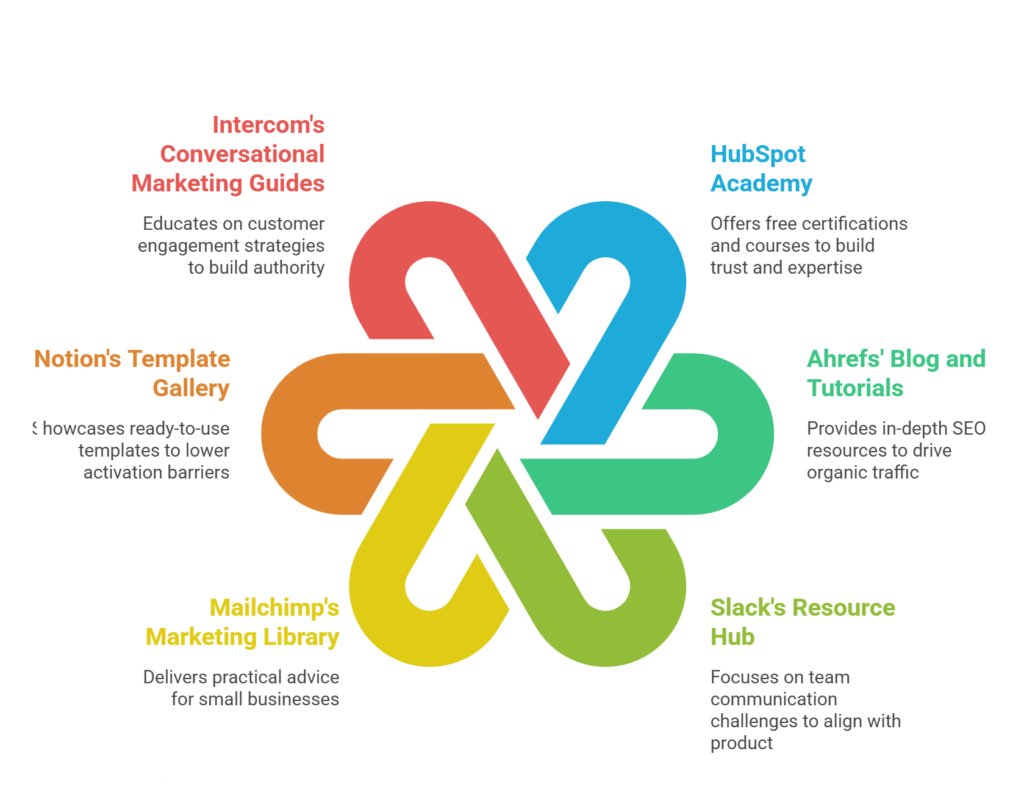
HubSpot has been a pioneer in inbound marketing for years, but its Academy program takes content strategy to new heights. HubSpot Academy offers free certifications, courses, and educational materials on topics like inbound marketing, sales enablement, and customer experience.
Instead of simply promoting product features, HubSpot uses education as a lead magnet. These courses deliver real value. Users who take and complete certifications become more competent marketers, but they also become familiar with HubSpot’s ecosystem. Many eventually convert to paid customers because HubSpot has already earned their trust and demonstrated expertise.
Two aspects make this content exceptionally effective. First, the information provided is actionable, not theoretical. Learners come away with tangible skills they can use immediately. Second, the free model lowers the barrier to entry. Users willingly provide contact information to access high-quality training, which feeds HubSpot’s lead database and nurtures potential customers.
Ahrefs’ In-Depth Blog and Tutorials
Ahrefs, a leading SEO tool provider, is known for its extensive blog, tutorials, and SEO resources. The approach here is rooted in providing deeply educational written content that teaches users how to improve their search visibility.
Instead of just explaining how Ahrefs works, the company publishes tutorials that help users perform SEO tasks step by step, such as keyword research, site audits, and competitor analysis. Each piece of content is optimized for search intent, targeting specific queries that prospective users are actively searching for online.
The brilliance of this strategy lies in the dual benefit it delivers. Readers learn how to do something useful for their business while also seeing Ahrefs as an indispensable tool to implement those techniques. Over time, this content builds organic traffic and consistently drives qualified leads — people actively seeking SEO solutions.
Slack’s Resource Hub for Team Communication
Slack doesn’t just sell a messaging platform. It positions itself as an essential tool for modern workplace collaboration. A major part of Slack’s content strategy is its resource hub. This hub includes long-form articles, webinars, case studies, and reports on topics like remote work, team productivity, and workplace communication strategies.
This form of content is especially valuable for SaaS companies because it’s not product-centric. Instead, it focuses on the broader challenges that Slack users face in their work environments. By addressing these challenges, Slack aligns its product as a natural solution.
Slack’s content often includes expert interviews and real stories from businesses using the platform. This approach humanizes the brand and builds trust, making it easier for potential customers to justify the purchase when they’re ready.
Mailchimp’s Marketing Library
Mailchimp takes a slightly different but equally effective route. Its marketing library offers a mix of educational resources, insights, and inspiration designed to help small businesses grow. The content ranges from tactical advice on email segmentation to broader guides on brand strategy.
What sets Mailchimp apart is its focus on its core audience: small business owners who often wear many hats and have limited marketing knowledge. By speaking directly to this audience in their language — clear, approachable, and practical — Mailchimp removes intimidation around marketing topics. In doing so, it nurtures potential customers at every stage of the buying journey.
Notion’s Template Gallery
Notion, the all-in-one workspace tool, uses a creative form of content to engage users: its template gallery. Rather than relying solely on text content, Notion curates and showcases templates that users can adapt for their own workflows. These templates cover a wide range of use cases like project management, personal productivity, and team planning.
This template gallery does more than just educate. It lowers the activation barrier for new users. Instead of staring at a blank workspace, users can explore practical, ready-to-use templates that demonstrate the tool’s versatility. These templates act as lead drivers because they’re valuable, shareable, and often tailored to specific industries or roles.
Intercom’s Conversational Marketing Guides
Intercom’s content strategy revolves around high-quality educational pieces about customer support, chat automation, and conversational marketing. Intercom’s guides are holistic, combining strategic insights with tactical advice and real-world examples.
Many of these guides are designed to help businesses rethink their customer engagement strategies. By the time a reader finishes consuming Intercom’s content, they understand the value of conversational marketing and are more likely to consider Intercom as the platform to implement these ideas.
This strategy works because it builds authority and trust. Rather than immediately pushing product messages, Intercom positions itself as a thought leader in a specific marketing category, which naturally attracts qualified leads interested in improving their customer interactions.
How These Strategies Drive Qualified Leads
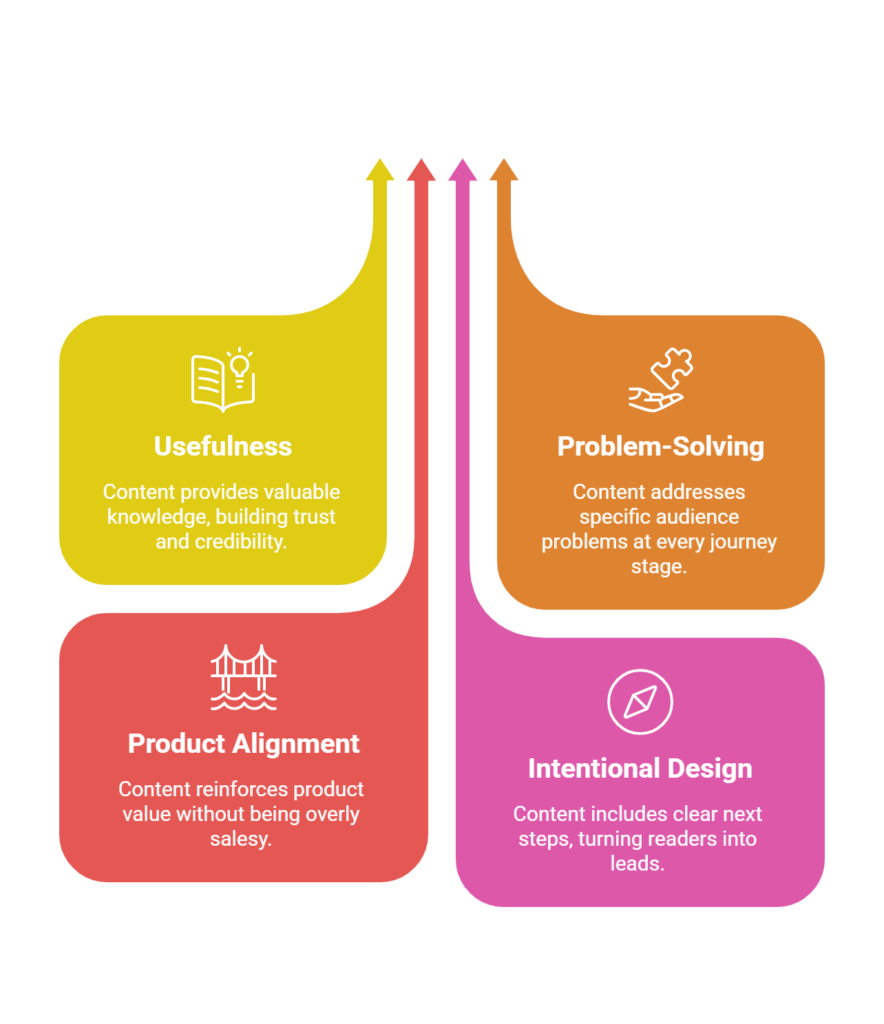
What common threads tie these Content Marketing Examples together? Why do these strategies consistently generate qualified leads for SaaS brands? The answer lies in several core principles:
First, the content is inherently useful. Regardless of whether someone buys the product, they walk away with knowledge that improves their work. This usefulness builds trust and credibility.
Second, the content answers real problems at every stage of the customer journey. Instead of generic marketing fluff, these brands create content that aligns with specific questions, challenges, and decision points their audience faces.
Third, there’s a strong alignment between content and product value. While the content educates, it also subtly reinforces why the brand’s solution is relevant. This context helps move readers from awareness to consideration without feeling pushy or salesy.
Finally, each piece of content is designed with intent. There’s always a next step built into the user journey — whether it’s signing up for a course, subscribing to a newsletter, or starting a trial. These built-in nudges are what turn passive readers into engaged leads.
Measuring Success: The Metrics That Matter
To ensure your SaaS content marketing is driving qualified leads, you need a clear measurement framework. Unlike vanity metrics like page views or social shares, lead generation success is best measured by indicators that correlate with business outcomes.
One fundamental metric is conversion rate. This measures how many visitors take a desired action, such as signing up for a demo, downloading a resource, or subscribing to an email sequence. High conversion rates indicate that your content resonates with the right audience and motivates them to engage.
Another important metric is lead quality. Not all leads are equal. Quality leads are more likely to progress down the funnel and convert into paying customers. Tracking the number of lead conversions to trials, demos, or paid plans helps determine whether your content attracts decision-ready prospects.
Engagement metrics, like time on page and scroll depth, should also be part of your analytics mix. They help you understand whether readers actually consume your content or leave immediately. High engagement often correlates with content relevance and quality.
Finally, understand the long-term impact of your content on customer acquisition. Some content pieces, like cornerstone guides or flagship educational resources, may continue generating leads for months or years. Monitoring the cumulative lead generation from these assets over time reveals their true value.
Building Your Own Lead-Generating Content Engine
If you’re ready to build a content strategy that consistently drives qualified SaaS leads, start with the fundamentals. Begin by identifying your audience’s top priorities, pain points, and search behavior. Build buyer personas and map content to each stage of the journey.
Next, prioritize quality over quantity. One thoughtful long-form guide will typically outperform ten short, superficial posts. Invest in research, clarity, and storytelling. Then, make sure every piece of content has a purpose and a clear next step for the reader.
Promote aggressively. Great content needs distribution through email, social platforms, partner networks, and SEO optimization. Collaborate with influencers or industry leaders to extend your reach.
Finally, measure, iterate, and optimize. Use data to understand what’s working and where there’s room for improvement. Over time, your content will become a refined, efficient mechanism for converting strangers into qualified leads and ultimately paying customers.
Conclusion
Driving qualified leads in SaaS requires more than random blog posts and vague messaging. It requires strategic, intentional content that educates, inspires, and guides prospective buyers. By studying successful SaaS companies and their approaches to content as a growth driver, you can craft your own high-impact content marketing strategy.
The examples discussed in this article demonstrate that when content serves the audience first, leads naturally follow. With careful planning, measurement, and consistency, SaaS brands can build content engines that not only attract attention but also nurture and convert highly qualified leads at scale.