
Digital marketing has undergone a remarkable transformation over the past two decades. As technology evolves and consumer behavior shifts, marketers have been compelled to rethink how they measure success, optimize campaigns, and prove value. At the heart of this transformation lies an ever-growing emphasis on data, insight, and performance accountability. With each wave of innovation—from the emergence of search engines to the rise of artificial intelligence—the way businesses track and interpret digital performance has evolved, affecting everything from strategy to execution.
In this comprehensive article, we will explore the progression of digital measurement frameworks, explore how key performance indicators (KPIs) have shifted in importance, and examine where digital performance metrics are headed next. We’ll look at how the evolution of digital marketing has changed the way companies think about success, allocate budgets, and make strategic decisions.
Understanding the Foundations of Digital Marketing Measurement
To appreciate where digital marketing metrics and KPIs are headed, we must first understand their origins. In the early days of the internet, marketers had few tools to measure campaign performance. Traditional advertising relied heavily on surveys, sales figures, and broad demographic data. Initial digital efforts mirrored this approach, mainly focusing on basic tracking like page views and click-through rates (CTR).
At that time, digital marketing was a novelty, and marketing leaders were largely unconvinced that it could deliver measurable business outcomes. Yet even with rudimentary tools, early adopters saw an undeniable advantage: digital campaigns could be tracked with far greater precision than print or television. This realization laid the groundwork for more sophisticated measurement practices.
The Rise of Web Analytics
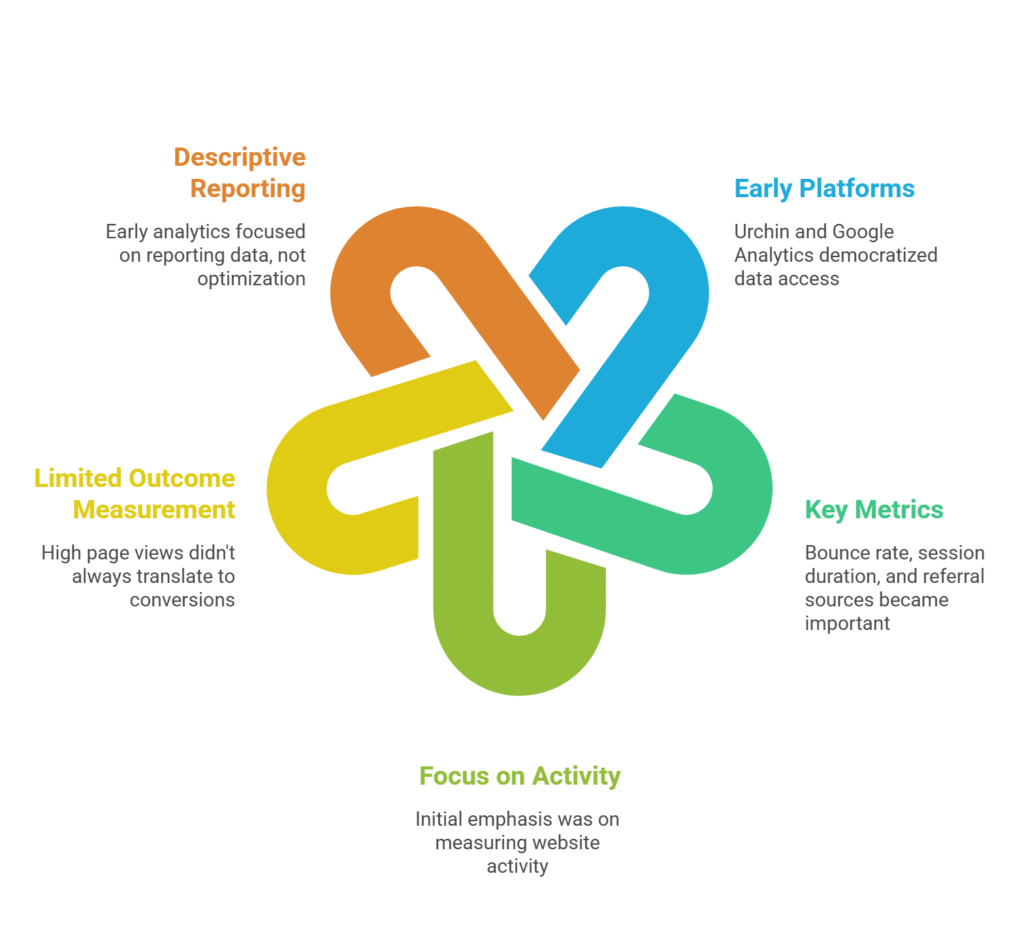
As websites became central to business strategy, web analytics emerged as a crucial tool. Early platforms like Urchin (which later became Google Analytics) democratized access to web performance data. Suddenly, marketers could monitor not only how many visitors came to a site, but also where they came from, what pages they viewed, and how long they stayed.
This new level of visibility meant that KPIs such as bounce rate, session duration, and referral sources joined the marketer’s lexicon. These metrics offered insight into audience engagement and content relevance—things that were hard to gauge with traditional media. However, even at this stage, the focus was largely on measuring activity rather than outcomes.
For example, high page views might have been celebrated, but they didn’t necessarily correlate with conversions or revenue. The initial phase of web analytics was about descriptive reporting, not performance optimization.
From Vanity Metrics to Actionable Insights
As digital marketing matured, it became clear that not all metrics are created equal. Early analytics provided a flood of data, but much of it was superficial or lacked context. Metrics like page views and social media likes, while interesting, didn’t offer strong indicators of business success. These so-called “vanity metrics” could make campaigns look successful on the surface without actually contributing to bottom-line goals.
The shift toward meaningful metrics began when marketers started asking deeper questions: Are we acquiring valuable customers? Are our campaigns contributing to revenue? Are we generating loyalty and repeat business? This shift marked a new chapter in the evolution of digital marketing, one focused on connecting activity to tangible outcomes.
Key performance indicators were recast to emphasize business impact. Conversion rate, customer acquisition cost (CAC), lifetime value (LTV), and return on ad spend (ROAS) became central to digital measurement. Marketers now needed tools that could bridge behavior with business outcomes.
Integration of Multi-Channel Attribution
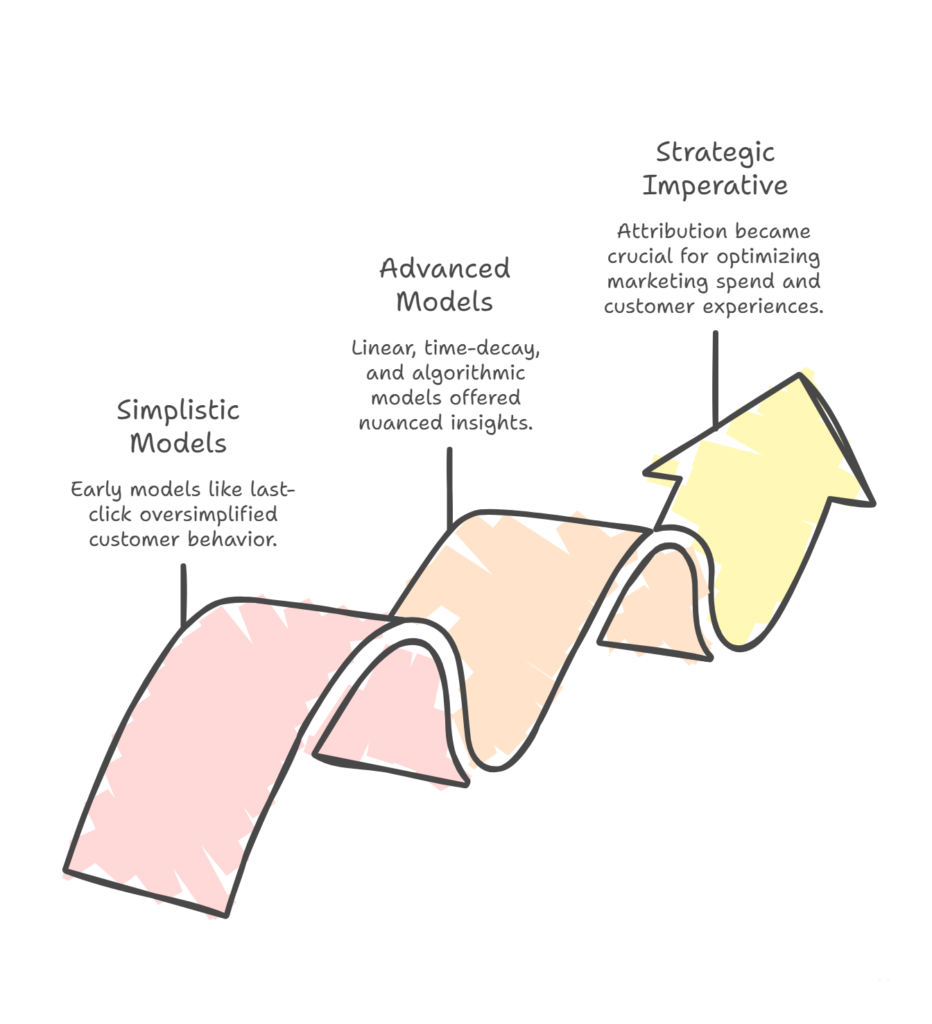
With the proliferation of digital channels—search, display advertising, email, social media, and more—the need for multi-channel attribution became apparent. Attribution models seek to assign credit to various touchpoints in a customer’s journey. Early simplistic models, like last-click attribution, often oversimplified customer behavior and misrepresented the influence of upper-funnel activities.
The evolution of digital marketing saw a shift toward more advanced attribution models. Linear, time-decay, and algorithmic attribution offered nuanced insights into how prospects interacted with different touchpoints before converting. These models helped brands understand which channels were truly driving value and where to invest marketing budgets for maximum impact.
Attribution became not just a measurement tool but a strategic imperative. By understanding the influence of each channel, marketers could optimize spend, refine messaging, and tailor customer experiences across the entire journey.
The Era of Real-Time Data and Dashboards
As digital platforms and marketing automation tools advanced, so did the ability to access real-time data. Real-time dashboards replaced static reports, allowing marketers to monitor performance as it unfolded. This shift dramatically improved decision-making speed. Instead of waiting weeks for insights, marketers could respond to trends, opportunities, and issues instantly.
This real-time capability transformed KPIs into living indicators that guided daily operations. Traffic spikes could be investigated in minutes; campaign optimizations could be implemented on the fly; and marketers could A/B test with a speed and precision previously unattainable.
With the advent of platforms that integrate data across channels, marketers gained a unified view of performance. Centralized dashboards consolidated disparate metrics, making it easier to evaluate overall health and performance against strategic goals. The result was a more agile, data-informed marketing culture.
Predictive Analytics and the Power of Machine Learning
The integration of artificial intelligence (AI) and machine learning (ML) represents the next frontier in digital marketing measurement. Predictive analytics enables marketers to move beyond descriptive and diagnostic insights into foresight. Instead of just knowing what happened and why, marketers can anticipate what will likely happen next.
Machine learning algorithms analyze enormous datasets to uncover patterns not easily visible to humans. Predictive scoring models can estimate the likelihood of conversion or churn. Customer segmentation becomes more dynamic, with AI identifying high-value audiences in real time. As a result, KPIs are no longer static tallies but dynamic forecasts that help steer strategy.
AI-driven tools also enhance personalization at scale. By understanding individual user behavior and preferences, marketers can tailor messaging, offers, and experiences in ways that significantly improve performance. Metrics such as engagement rate, conversion probability, and customer lifetime value are enriched with predictive context, making them more actionable.
Measuring Customer Experience and Engagement Quality
Modern digital marketing places a premium on the quality of interactions, not just quantity. Brands now prioritize customer experience (CX) metrics such as Net Promoter Score (NPS), customer satisfaction (CSAT), and customer effort score (CES). These indicators provide insight into how audiences perceive a brand and how likely they are to recommend it to others.
Engagement metrics have also grown more sophisticated. Instead of counting likes or shares, marketers now evaluate deeper forms of interaction: time spent with interactive content, repeat visits after a personalized recommendation, or engagement with chatbots. These metrics reflect meaningful engagement and can be correlated with long-term loyalty and value.
As digital experiences become more immersive—through video, interactive ads, and rich media—the ways we measure engagement must also progress. Metrics that capture sentiment, attention, emotional response, and user satisfaction are increasingly important.
Privacy, Cookie Deprecation, and Measurement Challenges
One of the most significant disruptions in recent years has been the shift toward greater privacy and the deprecation of third-party cookies. Regulators and browsers have tightened controls on data collection, forcing marketers to rethink measurement approaches that once relied heavily on cookies.
This environment has accelerated the adoption of first-party data strategies, where brands collect information directly from customers with consent. First-party data is richer, more reliable, and compliant with privacy laws. However, it requires brands to build trust and deliver value in exchange for user information.
Marketers are also turning to privacy-preserving measurement techniques. Tools such as aggregated event measurement, server-side tagging, and federated learning aim to balance measurement needs with user privacy. These innovations ensure that marketers can still understand performance while respecting customer rights.
The Role of Customer-Centric Metrics
Today’s digital marketing landscape prioritizes customer-centricity. Rather than solely reporting on outputs (like impressions or clicks), modern KPIs focus on outcomes that matter to both the customer and the business. Metrics such as customer engagement score, customer lifetime value, churn rate, and loyalty index reflect ongoing relationships.
Customer-centric metrics require a blend of quantitative data and qualitative insight. Surveys, behavioral tracking, feedback loops, and sentiment analysis all contribute to a fuller understanding of customer experience. These insights help brands tailor messaging, refine offers, and foster meaningful long-term relationships.
This shift underscores the importance of measurement frameworks that go beyond traditional campaign metrics to encompass the entire customer lifecycle. Marketers are increasingly accountable for delivering value at every stage—from awareness and acquisition to retention and advocacy.
Integration of Cross-Platform and Cross-Device Tracking
Consumers today interact with brands across multiple devices and channels. A customer might first encounter a brand on a mobile ad, explore products on a tablet, and finally convert on desktop. Understanding this journey requires cross-platform and cross-device measurement capabilities.
Advanced tracking solutions, deterministic identity graphs, and probabilistic modeling have emerged to stitch these interactions together. Unified customer profiles allow marketers to understand the holistic customer experience and attribute value accurately to each touchpoint.
This comprehensive view of the customer journey enhances strategic decision-making. Marketers can optimize campaigns across screens and channels, ensuring that messaging is consistent, relevant, and effective at every step.
The Future of Digital Marketing Metrics and KPIs
As we look ahead, the future of performance measurement in digital marketing is bound to become more sophisticated, contextual, and ethical. Metrics will increasingly reflect a blend of human behavior, real-world outcomes, and predictive insights. The evolution of digital marketing will continue to prioritize customer experience, privacy, and business impact in equal measure.
Emerging technologies such as augmented reality (AR), virtual reality (VR), and voice search open new avenues for engagement—and new challenges for measurement. Understanding how audiences interact with these mediums will demand innovative KPIs and analytical frameworks.
Moreover, as AI tools become more embedded in marketing workflows, measurement will likely become more automated, real-time, and predictive. Marketers will spend less time compiling reports and more time interpreting insights and crafting strategies that deliver measurable value.
Conclusion
The evolution of digital marketing metrics and KPIs reflects a broader shift in how businesses understand and engage with their audiences. From early web analytics to advanced AI-driven measurement, the journey has been marked by an increasing demand for clarity, accountability, and business impact.
Today’s marketers must navigate a complex landscape of data sources, privacy constraints, and customer expectations. Success depends not only on tracking the right metrics but also on interpreting them in the context of customer experience and business goals.
By embracing sophisticated measurement frameworks and forward-thinking KPIs, marketers can better demonstrate impact, optimize performance, and drive sustainable growth. In a digital world where change is the only constant, the ability to measure, learn, and adapt will remain a key competitive advantage.
In exploring this transformation, it becomes clear that the story of measurement is not just about numbers—it’s about understanding people, shaping experiences, and delivering real value in a connected world.