

In the competitive world of digital marketing, understanding the nuances of Instagram Ads Cost has never been more critical. Businesses across industries are allocating significant portions of their budgets to Instagram advertising, anticipating strong returns and brand growth. Yet many brands are puzzled, frustrated, or outright dismayed when they review their ad spend and discover that costs seem disproportionately high compared to results. This conundrum has led marketing teams and entrepreneurs alike to ask tough questions: Why am I paying so much? What drives up my costs? And most importantly, how can I optimize so that my ad dollars work smarter, not harder?
In this detailed and structured article, we’ll explore the multifaceted reasons behind high Instagram advertising costs. We will also walk through actionable strategies to identify problem areas, make tactical adjustments, and ultimately enhance performance without blowing your budget. From audience dynamics to creative strategy and bidding mechanics, this is your comprehensive guide to mastering Instagram ads in 2026.
Understanding the Foundations of Instagram Advertising
Before we dig into the specific causes of elevated ad expenses, it’s essential to have a foundational understanding of how Instagram advertising works. Instagram ads are managed through Facebook’s Meta Ads Manager, where advertisers choose campaign objectives, define audiences, set budgets and bids, and upload creative assets. The platform then uses auction dynamics to determine which ads to show to which users and at what cost.
At its core, the cost of any Instagram campaign is influenced by a mix of bid strategy, audience competition, ad relevance, creative quality, seasonal shifts, and broader market conditions. Recognizing that these elements interact with each other — sometimes in unpredictable ways — helps marketers frame cost increases not as isolated problems but as outcomes of interconnected decisions and external pressures.
Instagram’s algorithms strive to deliver ads that are relevant to users. When your ad resonates with the right audience, engagement rises, and cost per action typically decreases. Conversely, when an ad fails to capture attention, users ignore it, the algorithm deprioritizes it, and your cost inflates. With this basic principle in mind, let’s unpack the most common reasons your advertising cost on this platform might be higher than expected.
The Hidden Forces Driving Up Instagram Advertising Costs
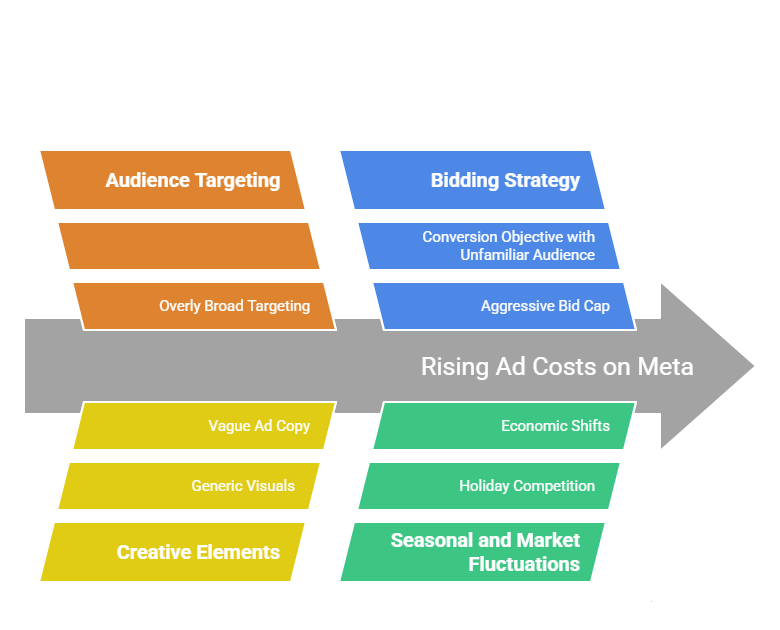
Audience Targeting That Is Too Broad or Too Competitive
One of the first and most overlooked drivers of high costs is audience targeting. Many advertisers assume that reaching more people guarantees better results, but in reality, poorly defined audiences often lead to wasted impressions. When your target group is overly broad, your ads are shown to users who may have no interest in your product or service. Engagement drops, relevance scores decline, and Meta’s delivery system raises your cost.
On the opposite end of the spectrum, some advertisers zero in too tightly or choose segments that are highly competitive. For instance, industries like beauty, fitness, and e-commerce often compete for the same demographic groups, especially during peak buying seasons. This intensified competition raises the price of winning ad auctions and consequently drives up your spending.
To address this issue, refine your target audiences by analyzing customer data and behavior patterns. Create segments based on purchase history, interests that align closely with your brand, and engagement levels. Experiment with lookalike audiences that mirror your best customers. But avoid overlapping audiences that may inadvertently cause internal competition between your own ads. Adjusting targeting parameters thoughtfully will help reduce needless costs and improve overall campaign effectiveness.
Creative Elements That Fail to Engage
Creative content is the heart of Instagram advertising. The images, videos, text, and overall message you use directly impact user engagement. Ads with compelling visuals and clear value propositions naturally attract more interaction, leading to better relevance scores and lower effective costs. Conversely, ads with generic or uninspiring creative elements tend to be ignored, which signals to Instagram’s algorithm that your ad isn’t resonating.
Poor creative can take many forms. It could be an image that looks like a stock photo, a video that fails to capture attention in the first few seconds, or ad copy that is vague or confusing. Even when targeting is well-defined, lackluster creative will hinder performance and inflate costs.
To mitigate this, invest time and resources into developing high-quality creative. Test a range of visuals and messages to see what works. Incorporate storytelling, evoke emotion, and deliver clear calls to action. Use analytics to determine which creative assets drive engagement and adjust future campaigns accordingly. By improving the appeal of your ads, you’ll not only attract more meaningful interactions but also benefit from lower prices per click or conversion.
Bidding Strategy and Campaign Objective Mismatches
The way you bid and the objectives you select in Ads Manager significantly influence how much you pay. Meta offers several bidding options, including automatic, manual, cost cap, bid cap, and target cost bidding. Likewise, campaign objectives range from brand awareness and reach to conversions and catalog sales.
If your bidding strategy or objective doesn’t align with your business goals or the stage of the customer journey you’re targeting, Meta may allocate your budget inefficiently. For example, choosing a conversion objective when your audience isn’t yet familiar with your brand might force Meta to push for actions that aren’t ready to occur, thereby driving up overall cost. Similarly, setting an aggressive bid cap without understanding the average cost of your desired result can lead to overspending or under-delivery.
The fix here is to align your campaign setup with realistic expectations. Begin with campaign objectives that match where your audience is in the funnel. Use automatic bidding if you’re unsure, and gradually test manual strategies as you gain more data. Incorporate learning phase insights to adjust bids over time and avoid resetting campaigns too often, which can disrupt algorithmic optimization.
Seasonal and Market Fluctuations
Some cost swings are simply the result of broader seasonal or market trends. For example, around major holidays, e-commerce sales events, or cultural phenomena, competition for ad space rises across many industries. Retailers offering discounts during Black Friday or Diwali will all bid higher at the same time, pushing up the overall cost per click or conversion for everyone on the platform.
Economic shifts also play a role. Consumer confidence, inflation, and changes in discretionary spending can impact how advertisers value their ad placements. During market slowdowns, some may reduce spend, while others with deeper pockets may increase bids to capture a larger share of diminished consumer attention. These forces ripple through the ad ecosystem and influence the price you pay.
While you can’t control the broader economic environment, you can anticipate seasonal patterns. Plan your campaigns in advance, adjust budgets strategically around expected spikes, and prepare alternative messaging tailored to seasonal trends. By understanding demand cycles, you’ll be better positioned to navigate weeks when competition — and costs — are high.
Frequency Fatigue and Ad Saturation
Another subtle yet powerful factor in rising ad expenses is frequency fatigue. Frequency refers to how many times the same users see your ad. When frequency is too high, users may become tired of your message. This often leads to declining engagement rates and can even result in negative interactions that harm performance. As a result, Meta’s system will require higher bids to serve your ad effectively, further increasing your spend.
Ads that run without rotation or refreshing creative are especially prone to this problem. When users see the same visuals and copy repeatedly, they stop clicking, no matter how relevant the audience. This stagnation signals low relevance to the algorithm and elevates your cost.
To combat this, monitor frequency metrics and introduce fresh creative periodically. Try alternating ad formats, testing different narratives, and segmenting audiences so that no one group sees the identical ad too often. An engaged audience is more inclined to interact with your content, and engagement is a key lever for cost efficiency in Meta’s advertising ecosystem.
How to Diagnose Where Your Budget Is Being Wasted
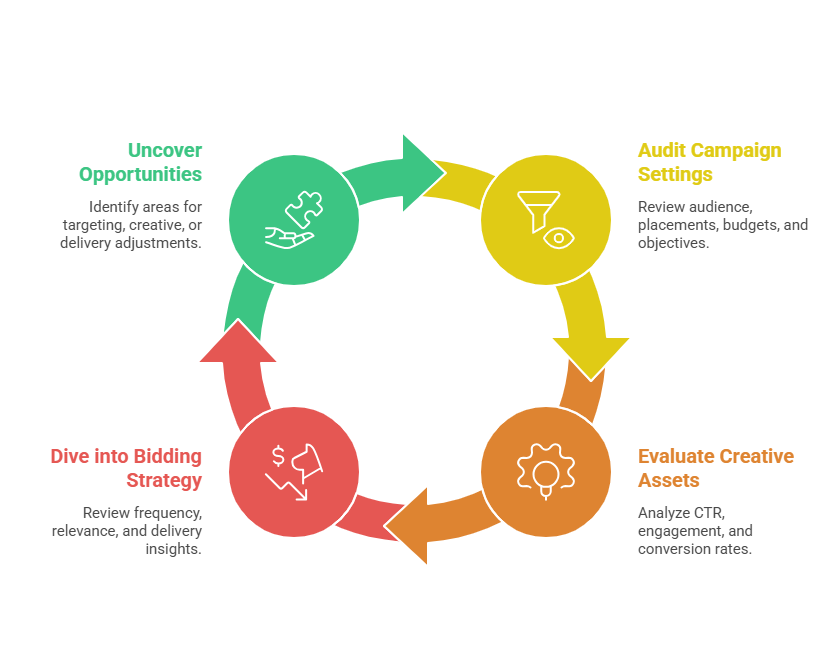
Understanding that high costs are symptoms of deeper issues is a powerful first step, but it’s equally important to diagnose specific pain points within your account. A systematic review of your campaigns will reveal patterns and help pinpoint where adjustments are necessary.
Start with a thorough audit of your campaign settings. Look at audience definitions, placements, creatives, budgets, and objectives across all active campaigns. Compare performance at a granular level — by ad set, creative variation, and audience segment. Ask yourself: Are certain demographics underperforming? Are certain placements (like Stories versus Feed) converting more effectively? Is engagement correlating with better cost outcomes?
Next, evaluate the quality of your creative assets. Analyze metrics like click-through rate (CTR), engagement rate, and conversion rate at the ad level. Ads with low CTR are often the biggest drivers of inflated costs, as they signal poor resonance with the audience. Revise or replace underperforming assets with new content based on insights from your top performers.
Dive into your bidding strategy and learn how the algorithm responds. Review frequency and relevance scores, and don’t ignore feedback from Meta, such as delivery insights. These can reveal problems like audience saturation or poorly aligned campaign objectives. By methodically dissecting each element of your strategy, you’ll uncover clear opportunities to tighten targeting, enhance creative, or adjust delivery.
Practical Strategies to Reduce Instagram Ads Expenses
Now that we’ve explored the root causes, let’s focus on specific strategies you can implement to reduce your instagram ads cost effectively without sacrificing results. These approaches range from creative optimization to smarter audience segmentation and strategic bidding.
First, treat creative as a central pillar of your advertising strategy. Invest in high-quality visuals and messages that are tailored to your audience’s interests and behaviors. Use storytelling to create emotional resonance, and make sure your value propositions are clear within the first few seconds of a video or the first glance of an image.
Second, refine your audience targeting. Use customer data to build segmentation that aligns with distinct user personas. Consider layering interests, behaviors, and demographics to carve out segments more likely to convert. Employ lookalike audiences to reach users similar to your best customers, but monitor overlap carefully to prevent internal competition between ad sets.
Third, monitor and adjust frequency. Develop a rotation strategy for your creatives, and introduce new assets before engagement starts to decline. This keeps your content fresh and reduces audience fatigue, which in turn helps maintain relevance and lower costs.
Fourth, align your bidding and objectives with your campaign goals. Use automatic bidding when you lack data, and transition to manual strategies as your account gains insights. Set realistic cost caps based on historical performance. Recognize that aggressive bids won’t always deliver proportional lift — and can quickly exhaust budgets.
Finally, use Meta’s analytical tools to evaluate performance continuously. Pay attention to trends over time rather than short-term fluctuations. Optimization is an ongoing process, and small, incremental changes often yield better cost outcomes than broad, sweeping revisions.
Measuring Success Beyond Cost
Reducing Instagram ad expenses is valuable, but cost alone doesn’t tell the whole story. To truly assess campaign success, you must evaluate the impact of your ads on your broader business goals. Are you acquiring quality leads? Are conversions translating into revenue? Are you building brand recognition that nudges users toward deeper engagement over time?
Metrics like lifetime value, return on ad spend (ROAS), and customer acquisition cost (CAC) provide context that raw costs cannot. Changes that reduce your cost per click but attract lower-quality users might actually harm your long-term performance. By integrating cost analysis with business outcomes, you’ll make smarter decisions that balance efficiency with effectiveness.
Final Thoughts
High advertising costs can feel discouraging, especially for small businesses or teams operating with tight marketing budgets. But elevated expenses are rarely random — they reveal underlying opportunities for refinement. By understanding the dynamics of Instagram Ads Cost, diagnosing inefficiencies, and applying thoughtful optimization strategies, you can regain control of your campaigns and strengthen your returns.
Remember that Instagram advertising is both an art and a science. It requires creativity, analytical rigor, and the patience to iterate. With a strategic approach grounded in data and continuous learning, you’ll be better equipped to navigate competitive landscapes, connect with the right audiences, and make each advertising dollar count.
If you focus on refining targeting, enhancing creative, adjusting bidding strategies, and measuring outcomes in context, you’ll not only lower unnecessary expenditures but also build campaigns that deliver meaningful value to your business. Spend with intention, learn from every campaign, and let your insights guide you to more impactful and cost-efficient advertising.