
Digital marketing is changing so fast that even professionals sometimes struggle to keep up. What worked brilliantly two years ago may barely move the needle today. Algorithms evolve, platforms mature, consumer behavior shifts, privacy laws tighten, and suddenly the entire playbook feels outdated.
If you’re building or refining a Digital Marketing Strategy in 2026, you cannot rely on surface-level tactics. You need to understand where attention is moving, how data is being used, what AI is really doing behind the scenes, and how trust is becoming the true currency online.
In this deep dive, we’ll explore the Latest Trends in Digital Marketing that are reshaping how brands attract, convert, and retain customers. More importantly, we’ll translate those trends into practical actions you can implement right away.
Let’s get into it.
AI Is No Longer Optional. It Is Infrastructure.
A few years ago, AI felt like an experimental add-on. Today, it is embedded into almost every marketing platform. From Meta’s ad optimization to Google’s Performance Max to automated email personalization, artificial intelligence is not a future trend. It is the foundation.
One of the most important Latest Trends in Digital Marketing is the shift from manual campaign management to AI-assisted decision-making. Marketers are moving from micromanaging bids and keywords to feeding better inputs into machine learning systems.
Google Ads now optimizes creatives, placements, and audience signals in real time. Meta’s Advantage+ campaigns rely heavily on AI to allocate budget across ad sets. Even email tools like HubSpot and Klaviyo predict send times and customer lifetime value automatically.
Actionable insight: Stop fighting automation. Instead, improve your inputs. Focus on better creative testing, stronger first-party data collection, and clearer conversion tracking. AI systems perform best when they are fed structured, accurate data.
If you’re still manually adjusting bids every few hours, you might be solving the wrong problem.
First-Party Data Is the New Gold
With third-party cookies disappearing and privacy regulations tightening globally, first-party data has become critical. Brands that own their data are winning. Brands that rely purely on rented audiences are struggling.
Among the Latest Trends in Digital Marketing, this move toward owned data ecosystems is one of the most strategic shifts. Email lists, SMS subscribers, community groups, loyalty programs, and CRM systems are becoming growth engines.
Look at brands like Sephora or Nike. Their apps and membership programs are not just retention tools. They are data engines. Every interaction feeds personalization, product recommendations, and remarketing precision.
The actionable move here is simple but often neglected. Invest in value exchange. Offer lead magnets, exclusive content, early access, or useful tools in return for user data. Make it worth their while. People are more privacy-conscious, but they are still willing to share data when they see real value.
Content Is Becoming Experience-Led, Not Just Informational
For years, SEO-driven blogs dominated digital marketing. That still matters. But content alone is no longer enough. Experience is the differentiator.
One of the subtle but powerful Latest Trends in Digital Marketing is the transition from static content to interactive and immersive content. Quizzes, calculators, interactive demos, live sessions, and community-based learning are outperforming passive blog posts in many industries.
HubSpot’s website grader tool is a classic example. Instead of just writing about website optimization, they created a tool that analyzes your site. That tool drives leads at scale because it delivers instant value.
Think about your own brand. Can you create an ROI calculator, a personalized recommendation quiz, or even a diagnostic tool? Experience-based content builds engagement and data simultaneously.
Short-Form Video Continues to Dominate Attention
TikTok changed everything. Instagram Reels and YouTube Shorts followed. What started as entertainment has evolved into product discovery and search behavior.
Consumers now search on TikTok for product reviews, tutorials, and recommendations. In fact, Google itself acknowledged that younger audiences increasingly use TikTok as a search engine alternative.
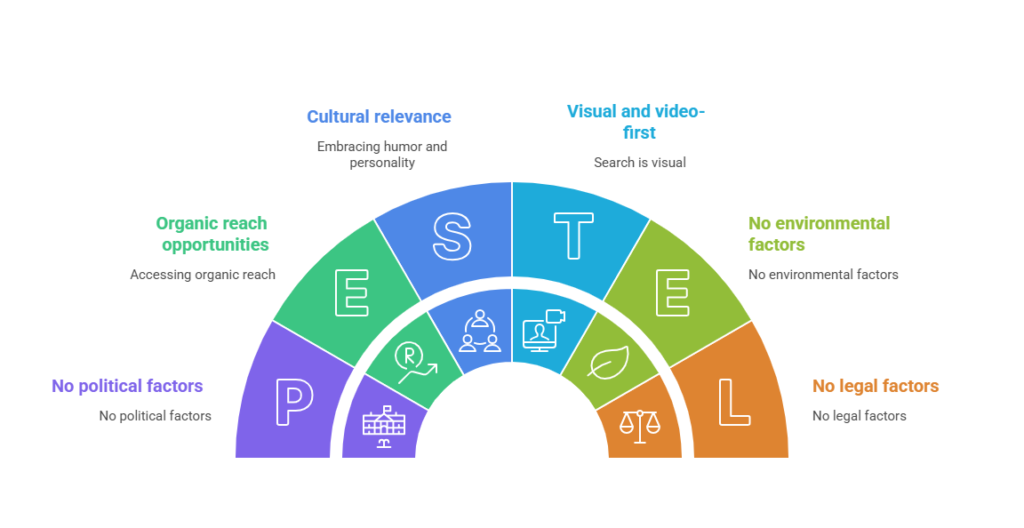
This shift represents one of the most visible Latest Trends in Digital Marketing. Search is no longer just text-based. It is visual and video-first.
Brands like Duolingo mastered short-form content by embracing humor and personality. Instead of pushing ads constantly, they built cultural relevance.
The key is not high production quality. It is authenticity. Short-form video works when it feels native to the platform. Overly polished ads often underperform compared to relatable, behind-the-scenes content.
If you are not testing short-form video yet, you are missing organic reach opportunities that are becoming harder to access elsewhere.
Generative AI Is Transforming Creative Production
Tools like ChatGPT, Midjourney, Runway, and Adobe Firefly are drastically reducing creative production time. Copywriting, image creation, video scripting, and even voiceovers can now be generated in minutes.
This is one of the most disruptive Latest Trends in Digital Marketing because it democratizes creative execution. Small brands can now compete with larger companies in content volume and experimentation.
But here’s the catch. Volume alone is not the advantage. Strategy is.
The brands winning with generative AI are not publishing generic content. They use AI to accelerate testing, personalize messaging, and scale creative variations for ads.
Meta’s algorithm, for example, favors creative testing. The more variations you test, the more data the system gathers. AI makes it possible to produce multiple hooks, headlines, and formats quickly.
The actionable approach is to treat AI as a collaborator, not a replacement. Use it for ideation, structure, and first drafts. Refine with human judgment. Authenticity and emotional nuance still matter deeply.
Community-Led Growth Is Replacing Pure Audience Growth
Follower count used to be the vanity metric. Now engagement and community quality matter far more.
Brands are shifting from broadcasting to facilitating conversations. Discord groups, Slack communities, private LinkedIn groups, and even WhatsApp communities are becoming core assets.
This community-centric approach is one of the more relationship-driven Latest Trends in Digital Marketing. It builds loyalty, user-generated content, referrals, and trust.
Take Notion as an example. Their growth was powered heavily by community templates, ambassadors, and power users sharing use cases.
If you are building a brand, ask yourself: where can my audience connect with each other, not just with me? That shift from brand-centric to community-centric thinking changes long-term growth dynamics.
Performance Marketing Is Becoming Creative-First
There was a time when targeting was everything. Now targeting has become more automated and broad. Creative is the primary lever.
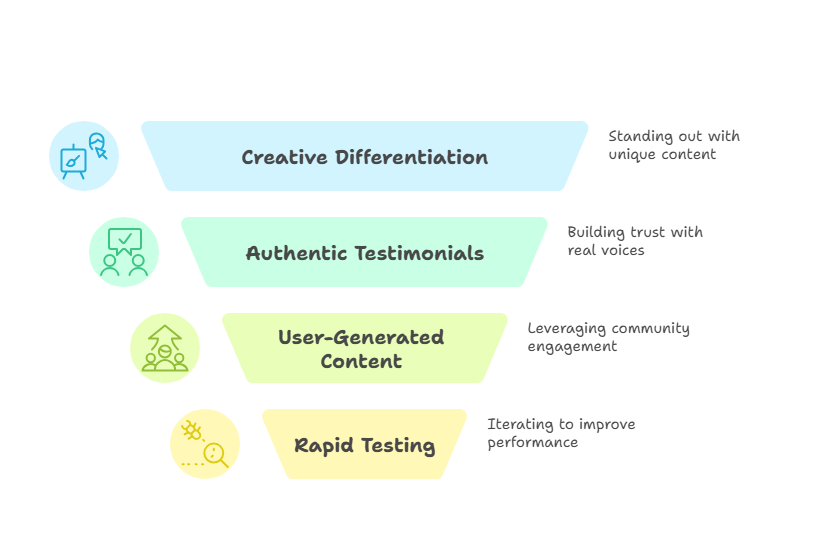
Among the most tactical Latest Trends in Digital Marketing is the idea that ad performance now depends heavily on creative differentiation rather than micro-targeting.
Meta and Google are pushing broad targeting options. As a result, your creative needs to speak clearly to the right person within the first few seconds.
Brands like Gymshark and Glossier excel here. They rely heavily on user-generated content, authentic testimonials, and rapid creative testing cycles.
If your ads are not converting, the problem may not be your audience. It might be your hook, your visual, or your offer positioning.
Conversational Marketing Is Reshaping Customer Journeys
Chatbots used to be clunky and frustrating. Now, with AI-driven natural language processing, conversational interfaces are surprisingly effective.
One of the more customer-centric Latest Trends in Digital Marketing is the rise of AI chat systems that guide users through product discovery and support.
Brands are integrating chat experiences directly into landing pages. Instead of static forms, users can ask questions and receive tailored responses instantly.
This reduces friction dramatically. It also increases conversion rates because users feel guided rather than sold to.
If you sell complex services or high-ticket products, conversational funnels might be worth exploring.
Search Is Expanding Beyond Google
Traditional SEO is evolving. People are now searching on Amazon, YouTube, Pinterest, TikTok, and even AI chat interfaces.
This diversification is one of the structural Latest Trends in Digital Marketing. Search intent exists across platforms, not just search engines.
Amazon has become a dominant product search engine. YouTube remains the second-largest search platform globally. Pinterest drives purchase intent in categories like fashion, home decor, and DIY.
Optimizing only for Google limits your reach. Instead, identify where your audience searches for information related to your product and tailor content accordingly.
Trust and Transparency Are Competitive Advantages
Consumers are skeptical. They research reviews, check brand values, and expect transparency in pricing and policies.
One of the more ethical Latest Trends in Digital Marketing is the emphasis on authenticity and brand accountability. Companies that are transparent about sourcing, sustainability, and data practices build stronger loyalty.
Patagonia is a well-known example. Their brand is built around environmental activism, and their marketing consistently reflects that mission.
Trust is built slowly but lost quickly. Avoid overpromising. Deliver consistent experiences. Communicate clearly.
Influencer Marketing Is Becoming Performance-Oriented
Influencer marketing used to focus heavily on brand awareness. Now it is measurable and performance-driven.
Affiliate links, unique discount codes, and trackable landing pages allow brands to evaluate ROI clearly.
This measurable shift is part of the Latest Trends in Digital Marketing where influencer campaigns integrate with paid media strategies. Many brands now run whitelisted ads using influencer content through their own ad accounts.
Micro-influencers often outperform macro-influencers in engagement rates. Niche audiences convert better when trust is strong.
The key is alignment, not just reach.
Omnichannel Consistency Is Non-Negotiable
Customers interact with brands across multiple touchpoints. Social media, email, website, ads, offline experiences. They expect consistency.
One of the integration-focused Latest Trends in Digital Marketing is unified messaging across platforms. Disconnected campaigns create confusion.
Your brand voice, visuals, and value proposition should feel cohesive. This does not mean identical content everywhere. It means consistent positioning adapted to platform behavior.
Audit your current touchpoints. Are you telling the same story everywhere?
Data Privacy and Ethical Marketing Are Front and Center
Regulations like GDPR and evolving privacy laws worldwide are reshaping how marketers collect and use data.
Ethical marketing practices are becoming part of the Latest Trends in Digital Marketing because trust and compliance now directly impact growth.
Transparent opt-ins, clear cookie policies, and honest communication about data usage are no longer optional.
Building long-term brand equity requires respecting user privacy.
Personalization Is Moving From Basic to Predictive
Basic personalization like inserting a first name in an email feels outdated. Today, predictive personalization uses behavioral data to recommend products before users actively search.
Amazon’s recommendation engine is a powerful example. Netflix’s content suggestions keep users engaged for hours.
This predictive layer is one of the more advanced Latest Trends in Digital Marketing. It requires structured data, machine learning tools, and integration across platforms.
Even smaller brands can implement behavior-triggered email sequences and dynamic website content.
The key is relevance. When marketing feels helpful rather than intrusive, conversions increase naturally.
Voice and Visual Search Are Slowly Rising
Voice search adoption is steady. Smart speakers, mobile assistants, and in-car systems are influencing search behavior.
Visual search, through tools like Google Lens and Pinterest Lens, allows users to search using images instead of text.
While not yet dominant, these technologies are part of the evolving Latest Trends in Digital Marketing that forward-thinking brands are preparing for.
Optimizing for conversational keywords and structured data helps capture voice search traffic.
The Creator Economy Is Reshaping Brand Partnerships
Individual creators are becoming media companies. Newsletters, podcasts, YouTube channels, and paid communities allow creators to build direct relationships with audiences.
Brands are partnering with creators not just for posts but for long-term collaborations and co-branded products.
This evolution represents another layer of the Latest Trends in Digital Marketing where authority and influence are decentralized.
Instead of only working with celebrities, brands are investing in subject-matter experts and niche educators.
Marketing Measurement Is Shifting to Incrementality
Attribution is getting harder due to privacy changes. Multi-touch attribution models are less reliable.
As a result, one of the analytical Latest Trends in Digital Marketing is the focus on incrementality testing. Brands run controlled experiments to measure true lift from campaigns.
Geo-testing and holdout experiments are becoming more common among performance-focused companies.
This approach may feel complex, but it provides more accurate insights than relying purely on platform-reported metrics.
What This Means for Marketers Moving Forward
Marketing is becoming more strategic, more data-driven, and more human at the same time. That sounds contradictory, but it is true.
Automation handles execution complexity. Human creativity and empathy drive differentiation.
To adapt to the Latest Trends in Digital Marketing, marketers need to blend analytical thinking with storytelling. They need to understand technology without losing emotional intelligence.
If you are building a growth plan today, focus on these core principles:
Invest in owned data.
Leverage AI intelligently.
Prioritize creative testing.
Build community, not just traffic.
Stay transparent and ethical.
The landscape will continue to evolve. It always does. But brands that remain adaptable, curious, and customer-focused will thrive.
Digital marketing is no longer about hacks or shortcuts. It is about systems, trust, and meaningful engagement.
And maybe that is a good thing.