

If you’ve run paid ads in the last couple of years, you’ve probably felt this shift. Campaign optimization is no longer just about testing headlines manually or tweaking creatives every few days. It’s faster now. Smarter too. And honestly, a bit overwhelming.
This is where AI Ad Testing Tools come into play.
They don’t just automate A/B testing. They predict outcomes, generate variations, analyze patterns across thousands of data points, and sometimes even tell you what will work before you spend a single rupee.
But here’s the thing. Not all tools are built equally. Some are great for creative testing, others focus on attribution, while a few try to do everything and end up doing nothing particularly well.
So in this guide, I’ll walk you through the 10 best tools you should seriously consider in 2026, along with practical insights on when and how to use them.
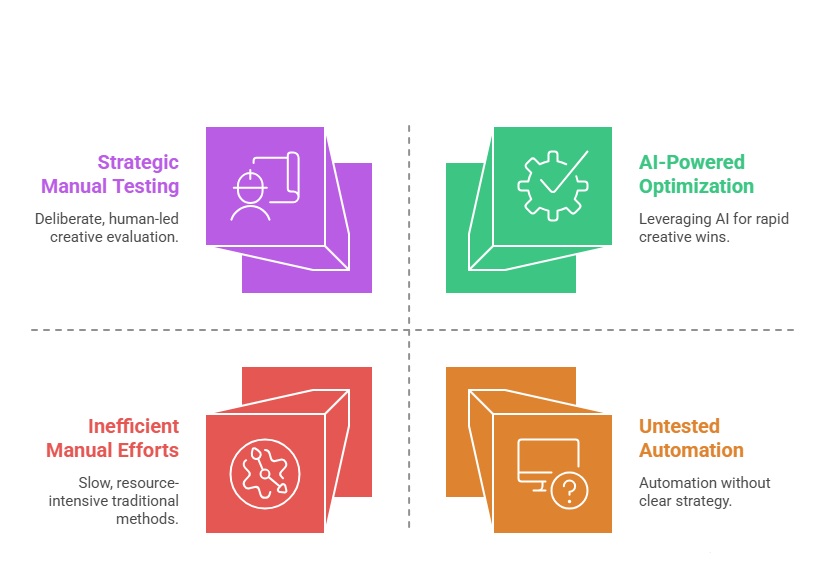
Why AI Ad Testing Tools Are a Game-Changer in 2026
Before jumping into the tools, it’s worth understanding why this category has exploded.
Traditional A/B testing had limitations. You needed large budgets, enough time, and patience. Even then, results were often inconclusive.
AI changed that.
Modern platforms use predictive modeling, machine learning, and large-scale pattern recognition to identify winning creatives faster and with fewer impressions. Some tools even simulate performance before launch.
In fact, many advertisers today are seeing significant improvements in efficiency and ROI by relying on automation and AI-driven experimentation rather than manual testing alone.
Still, there’s a catch. AI doesn’t replace strategy. It amplifies it.
What to Look for in AI Ad Testing Tools
Not every platform will fit your workflow. And I’ve made this mistake myself before choosing tools just because they were popular.
Here are a few things that actually matter:
Predictive Performance Scoring
Tools that estimate conversion probability before launch can save serious budget.
Creative Automation
The ability to generate multiple variations quickly is crucial for scale.
Cross-Platform Testing
Running tests across Meta, Google, and other channels in one place is a big advantage.
Real-Time Optimization
Some tools don’t just test, they automatically shift budget to winning ads.
Attribution Accuracy
Without proper attribution, testing results can be misleading.
1. Madgicx
Madgicx has been around for a while, but it’s evolved significantly into a full-stack AI platform focused on Meta advertising.
What makes it stand out is its combination of creative intelligence and budget optimization. It doesn’t just test ads, it analyzes audience segments, creatives, and performance signals together.
The platform uses AI to identify top-performing creatives and automatically push budget toward them. This reduces manual decision-making and speeds up scaling.
It’s especially useful for eCommerce brands running multiple campaigns at scale.
Interestingly, tools like Madgicx are known to significantly improve efficiency and reduce creative production costs when used correctly.
2. AdCreative.ai
If your biggest bottleneck is producing creatives, this tool is almost a no-brainer.
AdCreative.ai generates high-converting ad creatives using trained AI models. But what really makes it powerful is its performance scoring system.
Before you even launch a campaign, it predicts how well a creative is likely to perform.
This alone can drastically reduce wasted spend.
Many marketers report higher CTRs and lower CPA when using AI-generated creatives optimized through such platforms.
3. Anyword
Anyword focuses more on ad copy than visuals, but it does that incredibly well.
It uses predictive analytics to score different variations of copy based on expected performance.
Instead of guessing which headline might work, you get a data-backed probability score.
This is especially useful for:
- Google Ads
- Facebook primary text
- Landing page messaging
It’s one of those tools that feels simple but becomes indispensable once you start scaling campaigns.
4. Smartly.io
Smartly.io is more of an enterprise-level solution, but worth mentioning.
It combines creative automation, media buying, and testing into a single platform.
You can generate multiple creative variations, launch campaigns, and optimize performance all within one system.
The real advantage is scale.
If you’re managing large budgets or multiple markets, Smartly.io can streamline operations significantly.
5. Revealbot
Revealbot is more focused on automation and rules-based optimization.
While not purely a testing tool, it plays a crucial role in scaling winning ads.
You can set automated rules like:
- Increase budget if ROAS hits a certain threshold
- Pause underperforming ads
- Duplicate winning creatives
Combined with testing tools, it becomes a powerful optimization engine.
6. AdEspresso
AdEspresso is one of the more beginner-friendly platforms in this space.
It simplifies A/B testing for Facebook and Google Ads and provides clear insights into what’s working and what’s not.
It’s not as advanced in AI as some newer tools, but still very effective for structured experimentation.
And sometimes, simplicity wins.
7. Optmyzr
Optmyzr is a strong choice for Google Ads-focused advertisers.
It offers advanced automation, testing frameworks, and optimization suggestions powered by data.
You can run experiments, analyze performance, and implement changes quickly.
For agencies managing multiple accounts, this tool can save a lot of time.
8. Zappi
Zappi is slightly different from the others.
It focuses on pre-launch ad testing using consumer insights and AI-driven simulations.
Instead of testing ads live, it evaluates how audiences are likely to respond before campaigns go live.
This can be extremely useful for brand campaigns where mistakes are costly.
9. Digital First AI
Digital First AI acts more like a strategic assistant.
It helps generate marketing ideas, campaign structures, and testing strategies using AI.
While it’s not a pure ad testing tool, it complements testing platforms by improving the quality of experiments.
Sometimes the biggest issue isn’t testing. It’s what you choose to test.
10. Celtra
Celtra specializes in creative production and testing for large teams.
It allows you to create, manage, and test ad creatives at scale with built-in analytics.
For brands running global campaigns, Celtra offers a structured workflow that’s hard to replicate manually.
How to Choose the Right Tool for Your Business
Here’s where most people get stuck.
They look for the “best” tool instead of the “right” tool.
If you’re just starting out, something like AdEspresso or Anyword might be enough.
If you’re scaling aggressively, tools like Madgicx or Smartly.io make more sense.
And if your focus is creative testing, AdCreative.ai is hard to beat.
Also, don’t rely entirely on AI.
Even experienced marketers point out that AI tools are great for speeding up execution, but strategy and interpretation still require human judgment.
Real-World Use Case: Combining Tools for Better Results
Here’s a simple stack that actually works:
- Use AdCreative.ai for generating creatives
- Use Anyword for copy testing
- Use Madgicx for optimization and scaling
- Use Revealbot for automation
This layered approach often delivers better results than relying on a single platform.
Common Mistakes to Avoid
One mistake I see quite often is over-reliance on automation.
AI can identify patterns, but it doesn’t understand your brand the way you do.
Another issue is testing too many variables at once.
Even with AI, clarity matters.
And finally, ignoring attribution can completely distort your results. If your tracking isn’t accurate, your testing won’t be either.
The Future of AI Ad Testing Tools
Looking ahead, things are only going to get more advanced.
We’re already seeing tools that:
- Predict ad fatigue before it happens
- Generate hyper-personalized creatives for different audience segments
- Run continuous multivariate testing without manual input
There’s also a shift toward simulation-based testing, where campaigns are tested in virtual environments before being deployed.
Research in AI-driven advertising suggests that these systems can significantly improve engagement and reduce wasted spend by adapting strategies dynamically.
Final Thoughts
AI Ad Testing Tools are no longer optional.
They’ve become a core part of modern performance marketing.
But here’s the honest truth.
The tools themselves won’t make you successful.
They’ll just make a good strategy work faster.
If you combine the right tools with strong messaging, clear positioning, and consistent testing, the results can be pretty incredible.
And maybe that’s the real advantage.
Not just better ads, but better decisions.