

At some point, every marketer feels it.
You’re building funnels, tweaking landing pages, writing sequences, testing headlines. It works, but it’s repetitive, and the more you scale, the more mechanical it gets.
That’s usually when people start looking at AI funnel builders. Not because they’re trendy, but because they remove a layer of effort that frankly doesn’t need to be manual anymore.
This isn’t about replacing marketing, it’s about removing the grind from it.
What is an AI Funnel Builder?
An AI funnel builder is essentially a system that uses artificial intelligence to automate and improve how your funnel works.
Simple definition? It’s a tool that doesn’t just run your funnel, it learns from it.
Instead of building fixed steps and hoping they convert, you’re working with something that adapts based on user behavior.
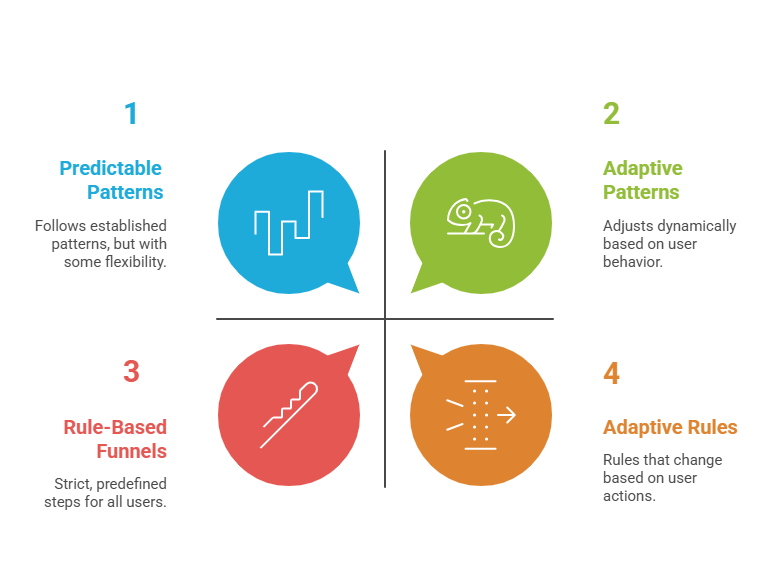
How AI Automates Lead Generation, Nurturing, and Conversion
Traditional funnels follow rules. If a user does X, they get Y.
AI flips that. It focuses less on rules and more on patterns. So instead of everyone going through the same sequence, the system adjusts based on what each person actually does.
A visitor might land on your page, scroll halfway, hesitate, and that’s enough for AI to trigger a chatbot or show a different offer.
Another user might click through fast, check pricing, and leave. That signals something else entirely, and the follow-up changes accordingly. It’s subtle, but powerful.
Over time, this affects everything, how leads are captured, what messages they see, and when they’re nudged to convert. You’re no longer running one funnel; you’re running many variations of it, all at once.
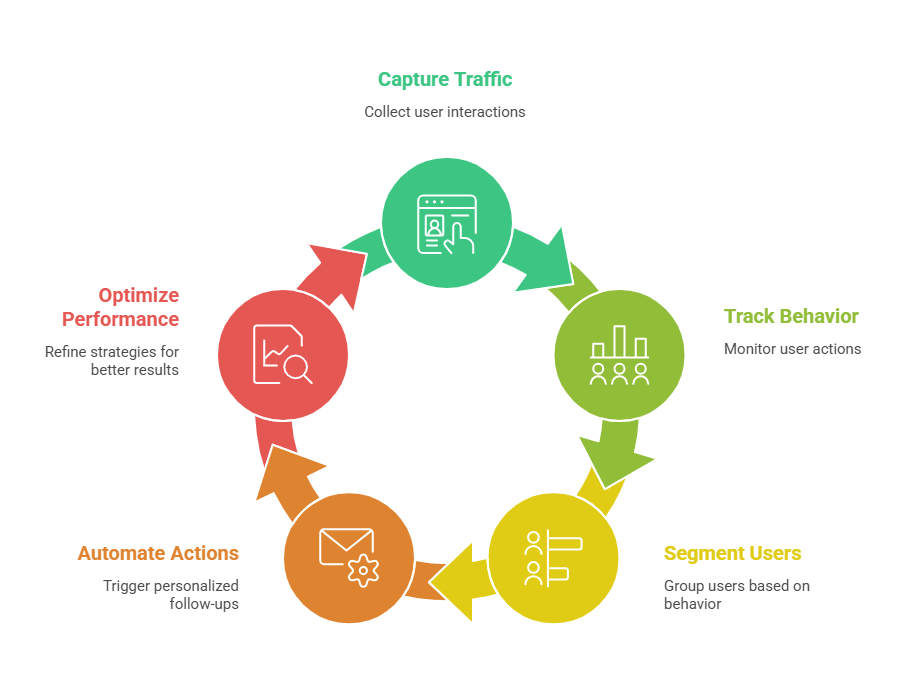
What Actually Makes Up an AI Funnel Builder?
Most AI funnel systems are typically built around a few core layers. There’s always a way to capture traffic. That could be a landing page, a form, or a chatbot.
First, we have the data layer, where user behavior gets tracked. Clicks, time on page, interactions, all of it.
After that comes segmentation. Here, instead of you deciding who’s “warm” or “cold,” the system figures it out based on behavior.
And then comes automation. Emails, follow-ups, and retargeting are all triggered dynamically. Then, finally, there’s optimization. The part where the system keeps improving itself. Individually, none of these is new. But together, powered by AI, they work very differently.
Why “Automation + Intelligence” Changes Everything
We’ve had automation for years; email workflows, CRM pipelines, scheduled campaigns, etc. But automation alone just follows instructions. It doesn’t think. The real shift is when automation starts making decisions. That’s what AI brings in. It decides what to show, who to prioritize, and when to act. So instead of just executing your strategy, it starts shaping it.
What is an AI-Powered Marketing Funnel?
It helps to separate the tool from the idea. An AI funnel builder is what you use. An AI-powered marketing funnel is what you create with it. It’s the system that guides a user from discovering you to becoming a customer, but with intelligence layered into every step.
What Does AI-Powered Funnel Actually Mean?
It means your funnel is no longer static. It observes the user behavior, predicts intent, and adjusts messaging in real time. Sometimes it’s subtle, and sometimes quite aggressive. But the goal stays the same: move users forward in a way that feels natural to them.
The Stages Still Exist; They Just Work Differently.
Even with AI, funnels still follow the familiar stages. Awareness, consideration, conversion, retention. What changes is how fluid those stages become.
In the awareness phase, AI helps bring in better traffic. Not just more traffic. During consideration, users don’t all see the same content anymore. Some get detailed explanations. Others get quick comparisons or social proof. They get the content that works for them, individually.
At the conversion stage, timing becomes everything. AI can push an offer when intent peaks, not when your campaign says it should, while in retention, follow-ups feel less like campaigns and more like conversations. The structure is the same; what changes is what flows in the structure.
How AI Connects the Entire Funnel
This is where things get interesting. In traditional setups, each stage of the funnel often works in isolation. Ads don’t always talk to landing pages, and the landing pages don’t always inform email sequences.
AI helps connect these dots. What someone clicks on in an ad can influence what they see on a landing page. What they do on that page affects the emails they receive. It becomes a loop. And because it’s all connected, the system gets sharper over time.
Real-World Examples
If you’ve ever browsed a product and then started seeing eerily relevant recommendations, that’s part of an AI funnel.
If you signed up for a tool and the onboarding felt almost tailored to how you were using it, the same thing.
Even email sequences that feel oddly timed or specific. That’s not random. These aren’t just smart tactics. They’re AI-driven systems working behind the scenes.
How AI-Powered Funnels Work
From the outside, AI funnels feel smooth and effortless. But behind the scenes, a lot is happening at once. Let’s break it down without overcomplicating it.
Omni-Channel Lead Capture Using AI
Users don’t enter your funnel from just one place anymore. They come from ads, social media, search, referrals, sometimes all at once. AI makes sure you’re capturing those entry points intelligently.
Instead of static forms, you get smarter interactions. You have forms that adjust, chatbots that start conversations at the right moment, and even the pages that react based on how someone is behaving. It feels less like filling out a form and more like interacting with something responsive.
Behavioral Segmentation with Machine Learning
Segmentation used to be manual. You’d tag users based on actions, downloaded a guide, clicked an email, or visited a page. AI helps go deeper. It looks at patterns. Someone who scrolls slowly, clicks multiple sections, and revisits later is very different from someone who skims and leaves. AI picks up on all of that. It groups users based on intent, not just activity. And those groups keep evolving as behavior changes.
Dynamic Content Delivery and Personalization
This is where users start to feel the difference, even if they don’t realize why. Landing pages aren’t always fixed. Headlines can shift. Offers can change. Layouts can adjust.
Emails don’t always follow a strict sequence. They adapt based on what you’ve engaged with. Even ads can change depending on where you are in the journey. It’s not one experience. It’s many, tailored in real time.
Real-Time Analytics and Predictive Insights
Traditional analytics tell you what happened. AI tries to tell you what’s about to happen. That’s a big difference.
Instead of waiting to analyze results, you get signals early. Which leads are likely to convert? Which users are about to drop off? Where friction is building, the system also doesn’t just show this; it often acts on it.
Adjusting campaigns. shifting traffic. refining messaging. It might not be perfect, but it’s fast. Much faster than manual optimization cycles.
Core Benefits of AI Funnel Builders for Modern Businesses
All of this sounds impressive on paper, but what actually matters is what you gain from it. And the benefits tend to show up pretty quickly once things are set up right.
Personalization That Actually Scales
Personalization used to be surface-level. Adding a first name to an email, or maybe segmenting by interest. Now it goes deeper, and the entire journey can shift based on behavior. Messaging feels more relevant, and the offers show up at the right time.
Most importantly, this happens at scale. You’re not manually customizing anything; you just let the system handle it.
Continuous Optimization Without the Wait
Before, optimization used to take a lot of time. You’d test one variation against another, wait for data, pick a winner, and then repeat. AI compresses that loop. Changes happen constantly in the background. Small but frequent adjustments.
So instead of running campaigns that improve slowly, you get a system that’s always refining itself. You don’t stop optimizing; it just becomes less visible.
Easier Scaling Without More Complexity
Scaling funnels normally means more tools, more workflows, more effort. Now, AI simplifies some of that.
Campaigns can expand across channels without needing entirely new setups. Messaging stays aligned, even as it adapts. You’re not rebuilding your funnel every time you grow. You’re letting it stretch.
Better Conversions and Higher Quality Leads
This is where the real impact shows. When targeting and timing improve and when messaging feels more relevant, conversions tend to follow.
You then get fewer drop-offs, more qualified leads, and better overall ROI. AI makes it a lot more consistent to shape the right message to the right person at just the right time.
Best AI Funnel Builder Tools
Once you understand how AI funnels work, the next obvious question is: which tools actually make this possible? And honestly, this is where things can get a bit messy.
There’s no shortage of platforms claiming to be “AI-powered.” Some genuinely are. Others just layer a few smart features on top of traditional funnel builders and call it a day. So instead of chasing hype, it’s better to look at what these tools actually help you do.
AI Funnel Builder Software for Beginners and Experts
Not every business needs the same setup. It really depends on where you’re starting from.
If it’s a new business, the goal is usually something simple, quick to set up, minimal integrations, and a working funnel in a day or two. No one wants to wrestle with overly complicated workflows right out of the gate.
On the other hand, agencies or folks running multiple campaigns will want more depth. Think advanced automation, flexible reporting, custom triggers, the kind of stuff that lets you juggle clients or multiple products without breaking a sweat.
The market has matured enough to serve both sides, but the gap is noticeable. Simple tools feel easy, even enjoyable. Power tools can be overwhelming until you get the hang of them. You’ll feel that the moment you start testing.
Top AI Funnel Builder Tools
Here’s a practical look at some platforms that matter right now, and how they approach AI funnels differently.
involve.me
This one leans heavily on interactivity. Quizzes, multi-step forms, calculators, you get the idea. The AI personalizes flows, nudging users along and improving completion rates. Works best if engagement matters more than just capturing emails. Good for lead gen campaigns where keeping people involved is key.
Durable
Durable is all-in-one, aimed at small businesses. Quick setup for websites, landing pages, and basic funnels. The AI handles a lot of the structure and setup. Not a powerhouse, but it’s efficient, especially if building from scratch feels like a chore.
GetResponse AI
You might know GetResponse from email marketing. It’s evolved into something broader: email, automation, and funnel building, all with AI suggestions. It’s strong if email is central to your funnel. Balanced usability and depth. Not flashy, but reliable.
Unbounce Smart Builder
If landing pages are your thing, Unbounce is still solid. AI helps optimize layouts, tweak copy, and suggest improvements. Saves a ton of testing time. Not a full funnel tool, per se, but landing pages are often the biggest bottleneck, so it’s worth considering.
FERMÀT
Niche but interesting. Focused on commerce funnels and dynamic storefronts. The AI optimizes buying journeys and personalization. Not for every business, but if you’re an e-commerce brand looking to get fancy, it’s worth a look.
GPTBots
This is all about conversations. Chatbots that qualify leads, answer questions, and move users along without a human typing a thing. Works well if your funnel is conversational-heavy rather than page-heavy.
Dashly
Dashly isn’t just a chatbot anymore. It’s a full inbound AI funnel platform. Captures leads via conversational pop-ups, sorts them in real time, and sends them into emails or retargeting campaigns. The AI decides when to show a message, what to say, and when a human should step in. Great for SaaS and B2B, though setup can be fiddly at first.
HubSpot AI Funnel Workflows
HubSpot’s been around forever, but the AI upgrades in 2025-2026 changed things. Now, entire funnel stages, emails, landing pages, and follow-ups can auto-generate and adapt to the deal stage or behavior. Not so much for building a funnel from scratch as it is letting AI manage the flow inside the CRM. Perfect for teams already in HubSpot; if not, it might feel heavy.
Heyflow
Heyflow makes interactive, no-code funnels that feel conversational. Multi-step forms, quizzes, calculators, and everything adapts depending on the user. The AI can skip steps, ask follow-ups, or redirect flows dynamically. Works best for high-intent lead capture. Slight learning curve, but worth it if you want a more dynamic funnel.
Tidio: with Lyro AI
Tidio plus Lyro AI equals a full conversational funnel. Visitors get greeted, questions answered, product recommendations, abandoned cart recovery, all automated. The funnel is a chat sequence rather than a page sequence. Super useful for busy e-commerce stores. Just make sure the tone feels human, or it can come off robotic.
Perspective
The newer tool, 2026, focused on agencies and coaches. Combines AI landing pages, ad-to-page personalization, and automated booking flows. The neat part: page copy changes depending on which ad someone clicked. Still niche, but gaining traction. Not as polished as older tools, but it gets results if targeting matters.
Drift: AI Playbooks
Drift has long been about conversational marketing. The 2026 AI Playbooks turn it into full B2B funnels. High-intent visitors trigger contextual conversations, meetings get scheduled, and everything syncs with the CRM. The funnel is dialogue-based, adapting in real time. Works really well for high-ticket sales where conversation drives conversion. Needs tweaking to get the tone right, but the payoff can be huge.
Additional Tools to Consider
Some tools aren’t “funnel builders” in name, but they slot into AI-driven systems nicely:
- Systeme.io
- Exceed.ai
- Saleswhale
- Appier
- Funnel.io
You don’t need all of them. Often, combining a few creates a flexible, custom setup. Pretty common in practice.
How to Choose the Best AI Funnel Builder Tool
This is where most people get stuck. Because the “best” tool isn’t universal. It depends heavily on your business model, your stage, and how you like to work. But a few things to think through before deciding would be:
Budget vs Expected ROI
Some tools are affordable but limited. Others are powerful but expensive. The key question isn’t just cost. It’s whether the tool can realistically improve your funnel performance enough to justify that cost. Sometimes a simpler tool, used well, outperforms a complex one.
Business Type Matters More Than You Think
Different funnels need different capabilities.
- SaaS businesses often need onboarding and lifecycle automation.
- E-commerce brands need personalization and product recommendations.
- Agencies need flexibility and multi-client management.
- Creators care more about lead capture and nurturing.
Trying to force one tool into every use case usually leads to frustration.
Integration Capabilities
This one gets overlooked until it becomes a problem. Your funnel doesn’t exist in isolation. It connects with your CRM, ad platforms, email tools, and analytics systems. If integrations are weak, things break, or worse, they become manual again, which defeats the whole purpose.
Ease of Use vs Customization
There’s always a trade-off here. Some tools are incredibly easy to use, but limited in what you can tweak, while others give you full control, but come with a steeper learning curve. There’s no right answer. Just be honest about how much complexity you’re willing to handle.
Why Businesses Are Turning to AI Funnel Builders
If you zoom out a bit, this shift toward AI funnels isn’t exactly random. It’s happening because the old way of doing things is starting to break under pressure. Manual funnels still work, yes. But they don’t scale well anymore. And more importantly, they don’t match how users behave today.
The Shift from Manual to Automated Marketing
Marketing used to be slower. You’d build campaigns, launch them, wait for data, optimize, repeat. That cycle could take weeks, sometimes months. Now everything is faster, while user attention is getting shorter, and the Competition is only getting higher.
And manual systems just can’t keep up with that speed. AI funnel builders reduce that lag. They respond in real time, adjust continuously, and remove a lot of the waiting that used to be built into marketing workflows.
Rising Expectations for Personalization
This is probably the biggest driver. Users expect relevance now. Not just good design or clear messaging, but timing and context. If someone visits your site twice and sees the same thing both times, it would feel off.
People don’t always notice great personalization, but they definitely notice when it’s missing. AI helps close that gap. It allows businesses to deliver experiences that feel tailored without manually creating dozens of variations.
Increasing Ad Costs and the Need for Efficiency
Traffic isn’t cheap anymore. Whether it’s paid ads, influencer collaborations, or even content distribution, acquiring users has become more expensive across the board. Which means inefficiencies hurt more. If your funnel leaks, you feel it immediately.
AI funnel builders help tighten that system. Not perfectly, but enough to improve how traffic converts. It helps with better targeting, better timing, and better follow-ups. Small improvements here compound quickly.
The Competitive Advantage of Moving Early
There’s also a quieter reason behind this shift. Early adopters tend to gain an edge. Not just because they’re using better tools, but because their systems improve faster over time.
AI funnels learn from data. So the earlier you start, the more refined your funnel becomes. Meanwhile, competitors relying on static systems have to keep catching up manually. It’s not an overnight advantage. But over months, it becomes easily noticeable.
How AI Funnels Improve ROI
At the end of the day, most businesses care about one thing. Does this improve results?
AI funnels typically impact ROI in a few key ways:
- Higher conversion rates from better personalization.
- Lower acquisition costs due to improved targeting.
- Better lead quality, which improves downstream sales.
- Reduced manual effort, freeing up time for strategy
None of this is dramatic on its own. But together, it shifts the efficiency of your entire funnel.
Traditional Sales Funnel vs AI Funnel Builder
It’s easy to talk about AI funnels in isolation. But the difference becomes clearer when you put them side by side with traditional funnels. Because on the surface, they can look quite similar. Both have the same stages and the same goals. But how they operate is very different.
Manual vs Automated Processes
Traditional funnels rely heavily on manual effort. You build each step, monitor performance, then make adjustments based on what you see. It works, but it’s reactive.
AI funnels shift that to a more proactive model. They don’t wait for you to identify issues. They start adjusting as patterns emerge.
Static vs Dynamic Content
This is one of the most visible differences. In a traditional funnel, your landing page is your landing page. Your email sequence is fixed. Everyone sees roughly the same experience.
With AI, that experience changes. Headlines, offers, messaging, all of it can adapt depending on who’s interacting with it. It’s less about one perfect version and more about multiple relevant versions.
Human Decision-Making vs AI-Driven Optimization
Human intuition is still valuable. It always will be. But it has limits. You can only analyze so much data. You can only run so many tests at once.
AI expands that capacity. It processes more signals, makes faster adjustments, and uncovers patterns that are easy to miss manually. That doesn’t replace human strategy. It enhances it.
Time Investment and ROI Differences
Traditional funnels demand consistent attention. They need to be reviewed, updated, tested, optimized, again and again.
AI funnels still need oversight, but not at the same level. Once they’re set up properly, they take on a lot of the heavy lifting. That shift alone changes how teams operate. Less time is then spent on execution, and more is used on thinking, positioning, and creative work.
Example AI Funnel Use Cases
All of this can feel a bit abstract until you see how it plays out in real scenarios. Different industries use AI funnels in slightly different ways, depending on their goals. But the underlying idea stays the same. Reduce friction, improve relevance, increase conversions.
E-commerce AI Sales Funnel
E-commerce is probably the most obvious fit. There’s a lot of data, a lot of traffic, and a lot of opportunity to personalize.
AI funnels here often focus on:
- Product recommendations based on browsing behavior.
- Dynamic pricing or offers (in some cases).
- Cart abandonment recovery with personalized follow-ups.
A user might browse a few products, leave, and then receive a follow-up that feels surprisingly aligned with what they were considering. Not generic, but Specific. That’s where conversions improve.
SaaS AI Funnel Automation
SaaS funnels are slightly different. The goal isn’t just conversion. It’s activation and retention. AI helps guide users through the onboarding process based on how they interact with the product.
For example:
- New users who seem stuck might get tutorials or prompts.
- Power users might be nudged toward advanced features.
- Inactive users can be re-engaged with targeted messaging.
It becomes less about pushing everyone toward the same outcome and more about helping each user reach value faster.
Lead Generation Funnels for Agencies and Coaches
This is where conversational funnels are becoming more common. Instead of static forms, you’ll often see:
- Chatbots ask qualifying questions.
- Quiz-style funnels that segment users instantly.
- Automated booking systems that adjust availability and messaging.
The goal is simple. Filter and qualify leads before they even reach a human conversation. This saves time and improves lead quality at the same time.
Content Creator and Personal Brand Funnels
For creators, the funnel usually starts with attention and trust. AI helps nurture that over time.
- Lead magnets that adapt based on interest.
- Email sequences that change based on engagement.
- Content recommendations that keep users in the ecosystem.
It’s less aggressive than other funnels, but just as effective when done right. The key here is consistency. Staying relevant without overwhelming the audience.
Challenges and Considerations of AI Funnel Builders
AI funnel builders can feel like a clear upgrade. And in many ways, they are. But they’re not frictionless. There are a few things that tend to get overlooked, especially when the focus is only on performance and automation.
Data Privacy and Compliance Concerns
AI funnels run on data. A lot of it. User behavior, preferences, interactions, and sometimes even intent signals. That raises obvious questions around privacy. Depending on where your audience is, you’ll need to think about:
- Consent and data collection policies.
- Compliance with regulations like GDPR or similar frameworks.
- Transparency in how user data is used.
It’s not just a legal checkbox. It affects trust, and once trust drops, funnel performance usually follows.
The Risk of Over-Reliance on Automation
There’s a tendency to assume that once AI is in place, everything will just run itself. That’s not quite how it works. Automation can handle execution, but it still needs direction. If your positioning is weak or your offer isn’t compelling, no amount of automation will fix that.
In some cases, over-automation can even make things worse. Messaging starts to feel generic, and interactions lose their human touch. So there’s a balance to maintain. Let the system optimize, but don’t completely step away from it.
Learning Curve for Beginners
AI funnel builders are easier than they used to be, but they’re not always intuitive. There’s still a layer of understanding required for how the funnels are structured, what data actually matters, and how to interpret performance signals. Without that, it’s easy to rely on defaults and hope for the best. Which rarely leads to strong results.
Tool Costs and ROI Evaluation
Some platforms are affordable, while others aren’t, and pricing can scale quickly as your usage grows. So the question becomes less about cost and more about return.
Is the system actually improving conversions? Is it saving time? Is it replacing other tools? If the answer is unclear, it’s worth stepping back and reassessing. Because it’s easy to stack tools without fully using them.
Integration Challenges
Very few businesses operate with a single system. You’ve got CRMs, ad platforms, analytics tools, maybe even internal dashboards. If your AI funnel builder doesn’t integrate cleanly, things get messy.
Data can become fragmented, workflows easily break, and the manual work creeps back in, which defeats the whole purpose. This is one of those issues that doesn’t show up immediately, but becomes painful over time.
Conclusion
By now, the direction is pretty clear. Funnels aren’t going away. But the way they’re built and managed is changing. AI funnel builders are part of that shift. While not every business needs to jump in immediately, some should definitely be paying closer attention.
If your funnel is already generating traffic and leads, there’s usually room to improve efficiency. That’s where AI tends to have the most impact.
There’s always a concern that automation might take over too much. But in reality, the opposite tends to happen.
You don’t need to rebuild everything overnight. But ignoring this shift completely probably isn’t a great idea either. The smarter approach is gradual. Start small. Test where it makes sense. Let the system prove its value.
Frequently Asked Questions About AI Funnel Builders
What is a sales funnel?
At its core, a sales funnel is just the journey someone goes through before buying. Sounds simple. In reality, it rarely is.
People don’t move in clean stages as most diagrams suggest. They bounce around. One day they’re curious, the next day they forget the brand exists. Then suddenly they come back and buy. Happens more often than expected.
That said, the rough flow still holds up. Awareness first, then some level of consideration, and eventually conversion. The better funnels don’t stop there, though. They keep going, into retention, repeat purchases, referrals. That’s where things get interesting.
Do sales funnels still work?
Short answer, yes. Longer answer, not in the way they used to.
Old-school funnels were very linear. Same landing page, same emails, same timing for everyone. That approach feels a bit outdated now. People expect relevance. Almost instinctively.
So what’s changed isn’t the idea of funnels, it’s how they behave. The newer setups, especially AI-driven ones, react. They adjust based on what users actually do instead of forcing them down a fixed path.
It’s a subtle shift, but it changes performance quite a bit.
How is an AI sales funnel different from a traditional funnel?
Traditional funnels are predictable. That’s both their strength and their weakness.
They follow a set sequence. If someone opts in, they get email A, then B, then C. Whether they’re interested or not.
AI funnels don’t stick to that script. They branch out. Someone clicks but doesn’t convert? Different follow-up. Does someone spend time on pricing? That signal gets picked up.
It’s less about controlling the journey and more about responding to it. Not perfect, of course. But noticeably smarter.
Can AI improve lead quality and conversion rates?
In a lot of cases, yes. Though it’s not some overnight miracle.
AI helps filter noise. It looks at behavior patterns, timing, and small signals that are easy to miss when everything’s manual. That usually leads to better targeting.
And when targeting improves, lead quality tends to follow. Conversion rates, too. Not always dramatically, but enough to justify the shift.
Still worth saying, if the offer is weak or the positioning is off, AI won’t rescue it. It’ll just make the problem clearer, faster.
What types of businesses should use AI sales funnels?
The ones that already have some momentum. E-commerce brands, SaaS products, agencies, and even creators selling digital products. Basically, businesses that rely on consistent traffic and online journeys.
If there’s no traffic coming in or no clear path to conversion, AI doesn’t have much to work with. It’s more of an amplifier than a starting point.
Are AI sales funnels only for email marketing?
Not even close. Email is part of it, sure. But focusing only on email misses the bigger picture. AI can sit across landing pages, ads, chatbots, content delivery, and even what happens after someone buys.
In some setups, email plays a smaller role than expected. Surprising at first, but it makes sense once everything else starts working together.
How do you choose the right type of funnel?
This is where things usually go wrong. Most people start with tools, templates, or whatever’s trending. And then try to fit their business into it. The better approach is simpler. Start with the goal. If you need leads? Build for lead generation. If you want direct sales? Focus on conversion. Running a SaaS product? Onboarding becomes critical. And if you are trying to build relationships over time? That’s nurturing.
The funnel should follow the objective, not the other way around. Sounds obvious, but gets ignored a lot.
Is it easy to build an AI funnel?
Easier than before, definitely. But not exactly plug-and-play. Tools have improved a lot. Automation, segmentation, and even content suggestions are much smoother now. Still, there’s a layer that tools can’t handle. Strategy. Without a clear offer, a defined audience, and at least a basic structure, things fall apart quickly. The tech can only do so much.
Can a sales funnel be built for free using AI tools?
Technically, yes. There are enough free tools to get something up and running. But there’s usually a trade-off. Limited automation, basic personalization, and restricted data insights. That sort of thing.
Starting free isn’t a bad idea, though. Helps test assumptions without much risk. Then, once something starts working, upgrading feels a lot more justified.
What data is required for AI funnels to work effectively?
This part matters more than most expect.
AI feeds on data. Clicks, visits, scroll depth, traffic sources, engagement signals, and sometimes CRM inputs. The more structured it is, the better. Messy data creates messy outputs. There’s no way around that. A lot of funnel issues aren’t actually funnel issues; they’re data problems in disguise.
Do AI funnels replace human sales teams?
Not really. They just change the role. AI handles repetitive tasks well. Initial follow-ups, basic qualification, routing leads, all of that becomes easier to manage.
But when decisions get complex, especially in high-ticket scenarios, human involvement still carries weight. Context, nuance, trust, those aren’t fully automated yet. So it’s less replacement, more redistribution.
What are the key components of an AI-powered funnel?
Nothing here is completely new, which is interesting.
You still have traffic coming in: ads, SEO, and social. You still need a way to capture leads. Forms, landing pages, chatbots. There’s segmentation, where users get grouped based on behavior, then automation kicks in to move things forward. Then there are conversion elements: offers, CTAs, and pricing pages. And finally, analytics ties everything together.
The difference is in how these pieces talk to each other now. There’s more feedback, more adjustment happening in the background.