

Technical SEO has always been a bit of a grind. You crawl a site, export spreadsheets, hunt for errors, fix things manually, and then repeat. It works, sure. But it’s slow, reactive, and honestly, not built for how complex websites have become today.
Now enter AI. And not in a vague, buzzwordy way, but in a very practical, hands-on way. From automated audits to predictive issue detection, AI is reshaping how we approach technical SEO at a foundational level.
This guide breaks it all down. Not just theory, but how you can actually use it to automate audits, fix errors faster, and improve rankings in a way that feels sustainable.
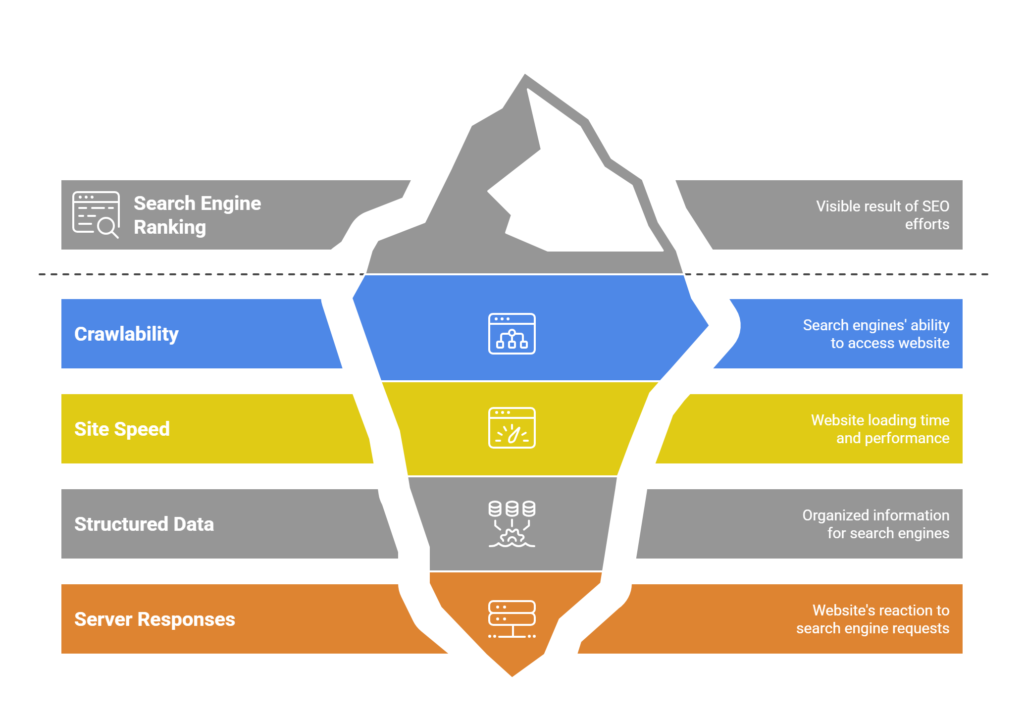
What is Technical SEO and Why It Still Matters
Before we layer AI on top, let’s ground this.
Technical SEO is essentially everything happening behind the scenes of your website that affects how search engines crawl, index, and rank your content. It includes things like crawlability, site speed, structured data, and server responses.
A technical SEO audit evaluates whether search engines can properly access and interpret your site without running into barriers.
And here’s the thing… even in the era of AI-driven search, these fundamentals haven’t gone away. If anything, they’ve become more important.
AI systems like Google’s AI Overviews or ChatGPT-based search still rely on structured, accessible, technically sound websites. If your site is slow, broken, or hard to crawl, no amount of content or backlinks will fully compensate.
The Rise of AI for Technical SEO
Let’s talk about the shift.
Traditional audits used to take hours, sometimes days. You’d manually analyze crawl reports, prioritize issues, and implement fixes. But modern websites are far more complex, with dynamic rendering, personalization layers, and large-scale architectures.
Manual methods just don’t scale anymore.
That’s where AI for Technical SEO comes in.
AI-powered tools can now automatically scan your entire website, identify issues like broken links, duplicate content, missing metadata, and performance bottlenecks, and even suggest fixes in real time.
And honestly, the biggest advantage isn’t just speed. It’s consistency.
AI doesn’t forget to check edge cases. It doesn’t skip pages. It doesn’t get tired halfway through a 50,000-URL crawl.
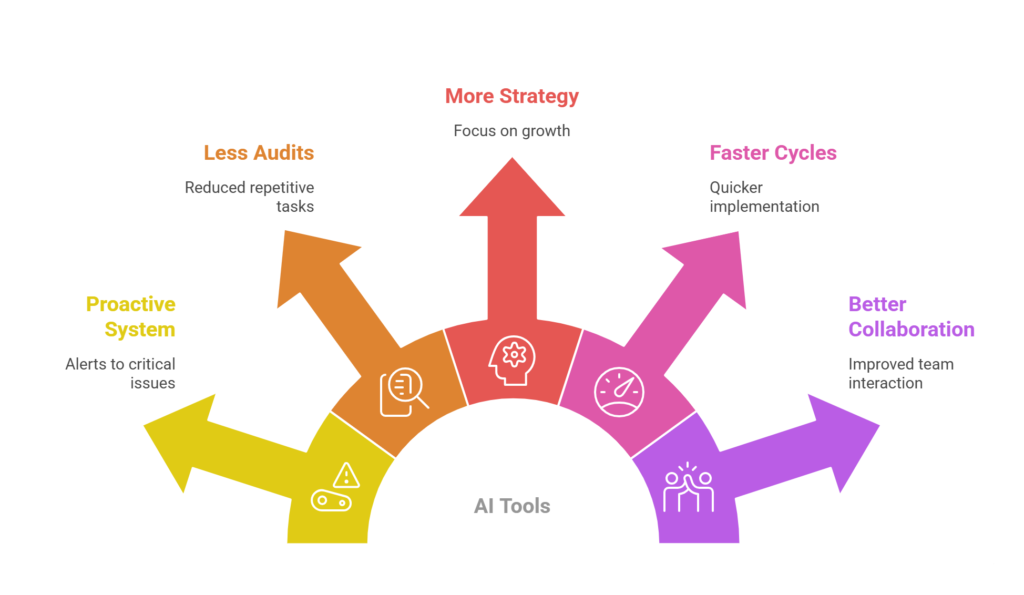
Why AI is a Game-Changer for Technical SEO Workflows
Let me put this simply.
AI transforms technical SEO from a reactive process into a proactive system.
Instead of waiting for rankings to drop or traffic to decline, AI tools continuously monitor your site and alert you to issues before they become critical.
Some platforms even act like a 24/7 SEO assistant, automatically auditing your site and uncovering optimization opportunities without manual input.
This changes how teams work:
- Less time spent on repetitive audits
- More time focused on strategy and growth
- Faster implementation cycles
- Better collaboration across teams
And maybe this is just my observation, but teams that adopt AI early tend to move faster not because they work harder, but because they remove friction.
Automating Technical SEO Audits with AI
This is where things get really interesting.
What Does an AI-Powered Audit Actually Do?
At its core, an AI audit scans your site and evaluates:
- Crawlability and indexation
- Site architecture and internal linking
- Core Web Vitals and page speed
- Structured data and schema
- Duplicate content and canonical issues
- Security (HTTPS, status codes)
These are standard audit components, but AI handles them differently.
Instead of just reporting issues, AI tools:
- Prioritize problems based on impact
- Detect patterns across thousands of pages
- Suggest actionable fixes
- Continuously monitor changes
Real Advantage: Speed and Scale
Manual audits might take 40+ hours.
AI can do it in minutes.
And that’s not an exaggeration.
For large enterprise sites, this is the difference between quarterly audits and real-time optimization.
How AI Identifies and Fixes Technical SEO Errors
Let’s go deeper into execution.
AI doesn’t just find problems. It understands context.
For example:
1. Crawl Errors and Broken Links
Traditional tools show you a list of broken URLs.
AI tools go further:
- Identify patterns causing the errors
- Suggest redirect strategies
- Predict impact on crawl budget
2. Duplicate Content
Instead of flagging duplicates blindly, AI can:
- Group similar pages
- Recommend canonical tags
- Suggest content consolidation
3. Page Speed Issues
Page speed is a huge factor, especially for user experience.
Slow-loading pages can drive users away before they even see your content.
AI tools analyze:
- Render-blocking resources
- Image optimization opportunities
- Code inefficiencies
And then suggest fixes that are actually implementable.
AI for Technical SEO in Crawl Optimization
Crawl budget is one of those things people talk about but don’t always fully optimize.
AI changes that.
By analyzing crawl patterns and server logs, AI tools can:
- Identify low-value pages consuming crawl budget
- Recommend internal linking improvements
- Optimize XML sitemaps
- Refine robots.txt directives
Some tools even simulate how search engines crawl your site, giving you a clearer picture of what’s happening behind the scenes.
And honestly, this is where a lot of hidden performance gains come from.
Improving Site Architecture with AI
Site architecture is one of the most underrated aspects of technical SEO.
A well-structured site helps both users and search engines navigate content efficiently.
AI can:
- Analyze internal linking structures
- Identify orphan pages
- Recommend better hierarchy
- Suggest contextual linking opportunities
This is especially useful for large content sites or ecommerce platforms with thousands of pages.
AI and Core Web Vitals Optimization
Core Web Vitals are still critical ranking factors.
AI tools continuously monitor:
- Largest Contentful Paint (LCP)
- First Input Delay (FID)
- Cumulative Layout Shift (CLS)
And provide actionable recommendations.
For example:
- Compress images
- Defer non-critical scripts
- Optimize server response times
These improvements directly impact both rankings and user experience.
AI for JavaScript SEO and Rendering Issues
Here’s something many sites struggle with.
AI crawlers often don’t execute JavaScript fully, which means content rendered client-side may not be visible.
AI-powered tools can:
- Detect rendering issues
- Recommend server-side rendering (SSR)
- Identify missing HTML content
This is crucial for modern frameworks like React or Angular.
Best AI Tools for Technical SEO Automation
Let’s talk tools, because this is where theory meets reality.
Some of the most widely used tools include:
- Screaming Frog (now with AI integrations)
- Semrush
- Ahrefs
- Google Search Console
- Sitebulb
These tools help with crawling, auditing, and performance optimization.
Modern versions even integrate AI to:
- Automate analysis
- Generate insights
- Suggest fixes
For example, tools like Screaming Frog now support AI-driven data analysis and content insights directly within crawl reports.
From Reactive SEO to Predictive SEO
This is probably the biggest shift.
AI doesn’t just analyze what’s broken.
It predicts what might break.
By combining historical data with real-time signals, AI can:
- Forecast traffic drops
- Identify potential crawl issues
- Detect algorithmic risks
And this is where SEO becomes more strategic.
Instead of constantly fixing problems, you’re preventing them.
How AI Helps Improve Rankings
At the end of the day, everything comes down to rankings.
So how exactly does AI improve them?
1. Better Crawlability
AI ensures search engines can access your content efficiently.
2. Faster Load Times
Optimized performance leads to better user experience.
3. Cleaner Site Structure
Improved navigation boosts indexing and relevance.
4. Reduced Errors
Fewer technical issues mean fewer ranking barriers.
All of this contributes to stronger search visibility.
AI and the Future of Technical SEO
Let’s zoom out for a second.
Search is evolving rapidly.
AI-driven systems are changing how results are generated, how content is evaluated, and how visibility is measured.
Websites now need to be optimized not just for search engines, but for AI systems that interpret and summarize content.
This means:
- Structured data becomes more important
- Clear content hierarchy matters more
- Technical accessibility is critical
And honestly, we’re just getting started.
Practical Workflow: Using AI for Technical SEO
Let’s make this actionable.
Here’s a simple workflow you can follow:
Step 1: Run an AI Audit
Use an AI-powered tool to scan your site.
Step 2: Prioritize Issues
Focus on high-impact problems first.
Step 3: Implement Fixes
Use AI recommendations as a guide.
Step 4: Monitor Continuously
Set up automated monitoring.
Step 5: Iterate
SEO is never done. Keep improving.
Common Mistakes to Avoid
Even with AI, mistakes happen.
Some common ones:
- Over-relying on automation without validation
- Ignoring technical fundamentals
- Focusing only on tools, not strategy
- Not updating workflows
AI is powerful, but it’s still a tool.
Final Thoughts
Technical SEO used to be tedious, manual, and honestly a bit overwhelming.
AI changes that.
It automates audits, identifies issues faster, and helps you fix problems before they impact rankings.
But more importantly, it shifts your mindset.
From reactive to proactive.
From manual to automated.
From guesswork to data-driven decisions.
And if you’re serious about scaling SEO in 2026 and beyond, adopting AI for Technical SEO isn’t optional anymore.