

If you’ve ever tried writing product descriptions at scale, you already know the struggle. It sounds easy at first until you have 50, 500, or even 5,000 SKUs staring back at you. Suddenly, creativity dries up, repetition creeps in, and SEO becomes an afterthought.
This is exactly where an ai product description generator changes the game.
But here’s the thing. Not all tools are equal. Some are fast but generic. Others are powerful but complicated. And a few actually feel like they understand marketing.
In this guide, we’re going deep. Not just listing tools, but really unpacking how they work, when to use them, and what makes each one stand out.
Table of Contents
- What is an AI Product Description Generator
- Why Businesses Are Rapidly Adopting AI Copywriting
- How AI Product Description Tools Actually Work
- Key Benefits for Marketers and E-commerce Brands
- Best AI Product Description Generator Tools (Detailed Breakdown)
- How to Choose the Right Tool for Your Needs
- Real-World Use Cases and Examples
- Limitations and Things to Watch Out For
- Future of AI in Product Content Creation
- Final Thoughts
- FAQs
What is an AI Product Description Generator
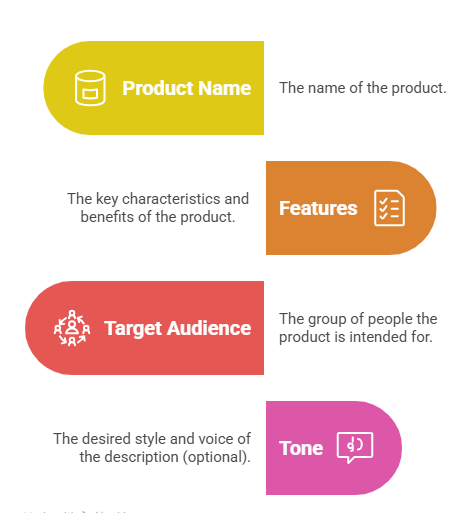
An AI product description generator is a software tool that uses artificial intelligence, specifically natural language processing (NLP), to create product descriptions automatically.
Instead of manually writing descriptions, you simply input:
- Product name
- Features
- Target audience
- Tone (optional)
And within seconds, the tool generates a ready-to-use product description.
These tools are designed to create persuasive, informative, and SEO-friendly content that can improve conversions and search rankings
Honestly, it feels a bit like having a copywriter on demand except it works 24/7 and doesn’t complain about deadlines.
Why Businesses Are Rapidly Adopting AI Copywriting
There’s a reason AI writing tools have exploded in popularity over the last couple of years.
Let’s be real. Writing product descriptions is repetitive. And when you scale an e-commerce business, it becomes a bottleneck.
AI solves that.
Research and industry use cases show that automated product description systems can significantly improve engagement and conversion rates when implemented properly
That’s not just convenience. That’s revenue impact.
Also, tools today are far more advanced than early AI writers. They don’t just rewrite templates anymore. They understand tone, audience, and even intent.
How AI Product Description Tools Actually Work
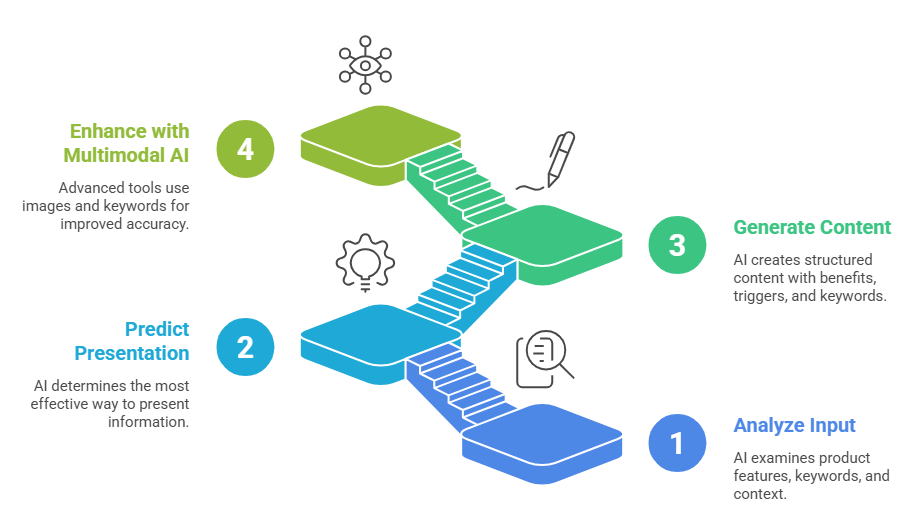
At a high level, these tools rely on large language models trained on massive datasets.
Here’s a simplified breakdown:
First, the AI analyzes your input. This includes product features, keywords, and context.
Then, it predicts the most relevant and persuasive way to present that information using patterns learned from millions of examples.
Finally, it generates structured content that includes:
- Benefits (not just features)
- Emotional triggers
- SEO keywords
- Clear formatting
Some advanced tools even use multimodal AI, meaning they can generate descriptions from images and keywords combined, improving accuracy and creativity
It’s honestly impressive and a little scary if you’re a traditional copywriter.
Key Benefits for Marketers and E-commerce Brands
Let’s talk about why this matters in real life.
1. Speed and Scalability
You can generate hundreds of product descriptions in minutes instead of days.
2. Consistency
AI ensures your tone and structure remain uniform across all listings.
3. SEO Optimization
Most tools are built to include keywords naturally, helping improve rankings.
4. Cost Efficiency
Hiring copywriters for large catalogs can get expensive. AI reduces that cost significantly.
5. Creative Variations
Many tools generate multiple versions, making A/B testing easier.
Best AI Product Description Generator Tools (Detailed Breakdown)
Now, let’s get into the tools themselves. This is where things get interesting.
1. Copy.ai
Copy.ai is probably one of the easiest tools to start with.
It’s designed for simplicity. You enter your product details, and within seconds, you get multiple description options.
What makes it stand out is its ability to generate benefit-driven copy rather than just listing features. It focuses on persuasion, which is exactly what you want in e-commerce.
It also includes templates specifically for product descriptions, making it beginner-friendly.
According to industry insights, Copy.ai is widely used by marketers and e-commerce teams for generating structured and engaging product descriptions quickly
If you’re just getting started, this is a safe bet.
2. Jasper AI
Jasper is more advanced. And honestly, it feels more like a full marketing assistant than just a tool.
It allows you to define brand voice, target audience, and tone. The output is highly polished and often closer to human-written content.
Jasper also integrates SEO tools, helping you create descriptions optimized for search engines.
It’s particularly useful for large e-commerce stores and brands that need consistent, high-quality content at scale
The downside? It’s not the cheapest option. But you kind of get what you pay for.
3. Writesonic
Writesonic is like a middle ground between beginner-friendly and powerful.
It offers templates for product descriptions, ads, and landing pages. Plus, it has built-in SEO optimization features.
One thing I personally like is its versatility. You can use it not just for product descriptions but for almost all marketing content.
It’s especially useful for global brands because it supports multiple languages
So if you’re targeting international markets, this is a strong option.
4. Anyword
Anyword is a bit different.
It focuses heavily on performance marketing. Instead of just generating content, it predicts how well your copy might perform.
This means you’re not just guessing what works. You’re using data-backed insights.
It’s ideal for brands that rely heavily on conversion optimization and paid ads.
5. Copysmith
Copysmith is built specifically for e-commerce teams.
Its biggest strength is bulk generation. If you have thousands of products, this tool can handle it.
It also allows you to create A/B variations, which is great for testing different messaging strategies.
6. LogicBall
LogicBalls is a newer tool, but it’s gaining popularity quickly.
It’s affordable, easy to use, and focuses on SEO-friendly descriptions.
It supports multiple tones and languages, making it suitable for different niches and markets.
It’s especially helpful for small businesses that want quick results without spending too much
7. Ahrefs AI Product Description Generator
Yes, Ahrefs the SEO giant.
Their free product description generator is surprisingly effective.
You can input product details and choose writing styles, and it generates high-quality descriptions quickly.
What makes it interesting is its SEO-first approach. You can expect keyword-friendly outputs.
8. Peppertype AI
Peppertype offers a wide range of templates, including product descriptions and reviews.
It guides you step-by-step, making it useful for beginners.
It’s also good for teams that want structured workflows rather than open-ended generation.
9. Descriptify AI
Descriptify focuses on generating product descriptions along with social media content.
It’s useful if you want a multi-channel content strategy from one tool.
10. Dukaan AI
Dukaan is more than just a description generator. It’s an e-commerce platform with built-in AI tools.
It helps you manage your store while also generating product descriptions.
This makes it ideal for small business owners who want an all-in-one solution.
How to Choose the Right Tool for Your Needs
Here’s where most people get confused.
There’s no “best” tool. It depends on your use case.
If you’re a beginner, go for something simple like Copy.ai.
If you need advanced customization and brand voice control, Jasper is better.
If you’re running ads and want performance insights, Anyword is a strong choice.
And if you’re managing a massive catalog, Copysmith is probably the way to go.
It really comes down to:
- Budget
- Scale
- Required features
- Technical comfort
Real-World Use Cases and Examples
Let’s make this practical.
E-commerce Stores
Online stores use AI to generate descriptions for hundreds of products quickly.
Dropshipping Businesses
Since products change frequently, AI helps keep listings updated without extra effort.
Marketplaces like Amazon and Shopify
Sellers use AI tools to optimize listings for better visibility and conversions.
Digital Marketers
Agencies use AI to create product copy for multiple clients efficiently.
Limitations and Things to Watch Out For
AI isn’t perfect. Not even close.
Sometimes, the output can feel generic.
Other times, it might exaggerate product claims, which can be risky.
You still need human editing. Think of AI as a first draft generator, not a final solution.
Also, over-reliance on AI can make your brand voice feel… robotic. And that’s something customers notice.
Future of AI in Product Content Creation
This is where things get exciting.
AI is moving beyond text.
We’re already seeing tools that generate product descriptions from images and videos.
Even Amazon has started experimenting with AI-generated product content, including videos and audio summaries, to enhance shopping experiences
In the future, you might not even need to write anything.
Just upload a product image, and everything else will be generated automatically.
Final Thoughts
AI product description tools are not just a trend. They’re becoming a core part of modern e-commerce.
They save time, reduce costs, and improve scalability.
But… they’re not magic.
The best results come when you combine AI efficiency with human creativity.
Use AI to generate. Use humans to refine.
That’s the real winning formula.
FAQs
1. What is an AI product description generator
It is a tool that uses artificial intelligence to automatically create product descriptions based on input data like features and keywords.
2. Are AI-generated product descriptions SEO-friendly
Yes, most tools are designed to include keywords naturally and improve search rankings.
3. Can AI completely replace copywriters
Not really. AI can generate drafts, but human editing is still important for quality and brand voice.
4. Which is the best tool for beginners
Copy.ai is one of the easiest tools to start with.
5. Are there free AI product description tools
Yes, tools like Copy.ai and Ahrefs offer free plans or free versions.
6. How accurate are AI-generated descriptions
They are generally accurate but depend on the input you provide.
7. Can AI write descriptions for any product
Yes, most tools can handle a wide range of product categories.
8. Do these tools support multiple languages
Many tools like Writesonic support multilingual content.
9. Is AI content safe for e-commerce platforms
Yes, but you should always review the content before publishing.
10. How can I get the best results from AI tools
Provide detailed inputs, define tone clearly, and always edit the output.