

Search engine optimization used to be slow, repetitive, and frankly exhausting. Marketers spent hours researching keywords, optimizing pages, checking rankings, building links, and updating content. Some of those tasks still matter today, but the way they’re done has changed dramatically.
Artificial intelligence has quietly reshaped SEO workflows. Tools powered by machine learning can now analyze massive datasets, identify opportunities, generate optimized content, audit websites, and monitor rankings in real time. What once took entire teams can now be handled by smaller teams or even solo marketers.
This shift has given rise to a new approach that many marketers are starting to rely on: AI SEO Automation. The idea is simple. Instead of manually performing every SEO task, AI systems automate large parts of the process while still allowing humans to guide strategy and decision-making.
The result is faster execution, better data analysis, and often stronger rankings.
In this guide, we’ll explore how automation powered by artificial intelligence is transforming SEO, which processes can be automated safely, the tools that make it possible, and how businesses can implement these systems to rank higher with far less manual effort.
The Evolution of SEO and Why Automation Matters
SEO has always been data-heavy. Every strategy depends on analyzing keywords, competitors, search trends, backlinks, technical performance, and content quality.
In the early 2000s, most of this work was done manually. Marketers exported spreadsheets, tracked rankings by hand, and optimized pages individually.
Then came SEO platforms that centralized data. Tools began offering keyword databases, backlink tracking, and site audits. These tools improved efficiency, but humans still had to interpret everything.
Artificial intelligence changed that dynamic.
Modern systems can detect patterns in search behavior, predict keyword opportunities, analyze content relevance, and automate repetitive tasks. This is where AI SEO Automation begins to show its true value. Instead of simply displaying data, AI tools interpret it and recommend actions.
For example, an AI-driven system can analyze thousands of search queries and identify which ones have high ranking potential. It can then suggest content outlines, optimize headings, and even generate structured content drafts.
The shift from manual analysis to automated intelligence allows marketers to spend less time on repetitive work and more time on strategy.
What AI Automation Really Means in SEO
Automation in SEO does not mean removing humans from the process. Instead, it means letting machines handle tasks that are repetitive, data-heavy, or time consuming.
When implemented correctly, AI SEO Automation helps teams streamline their workflow while maintaining control over quality and strategy.
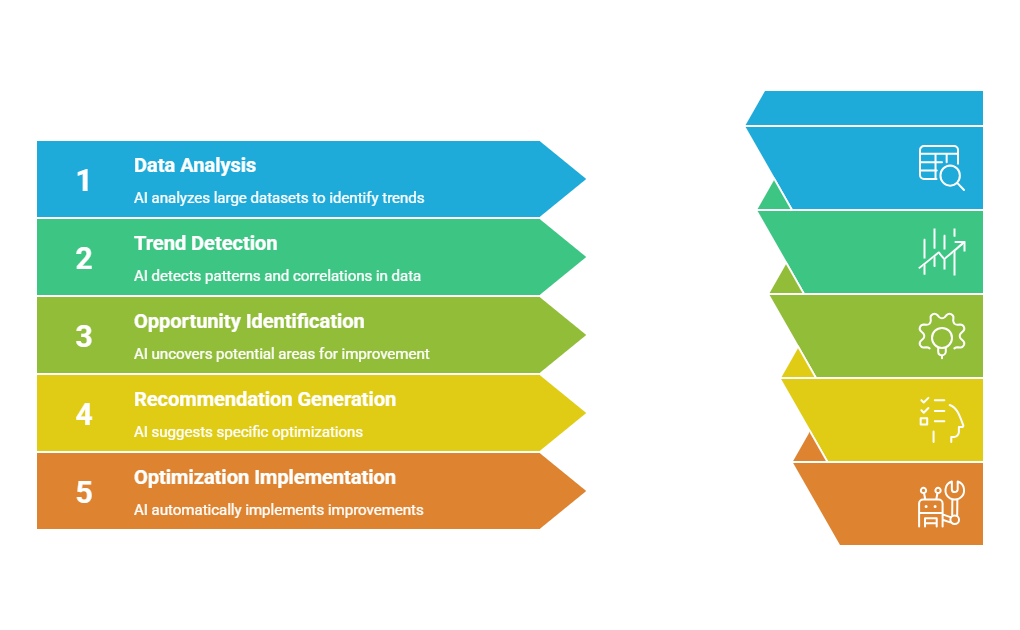
Artificial intelligence excels at analyzing massive datasets. Search engines process billions of queries every day, and no human can analyze that scale of data manually. AI models can quickly detect trends, identify correlations, and uncover opportunities that might otherwise be missed.
For example, AI tools can scan an entire website and identify pages that are underperforming in search results. They can analyze why those pages are not ranking, whether it is due to weak content, missing keywords, technical issues, or poor internal linking.
From there, the system can recommend specific improvements or automatically implement optimizations.
This capability is why many marketers are adopting AI SEO Automation as a core part of their digital strategy.
How AI Is Transforming Core SEO Processes
To understand the impact of automation, it helps to look at how artificial intelligence improves different SEO workflows.
AI-Powered Keyword Research
Keyword research has always been the foundation of SEO. Traditionally, marketers used keyword tools to search for phrases, analyze search volume, and estimate ranking difficulty.
AI has made this process far more intelligent.
Instead of simply listing keywords, modern systems analyze user intent and topic relationships. They identify clusters of related queries and group them into content opportunities.
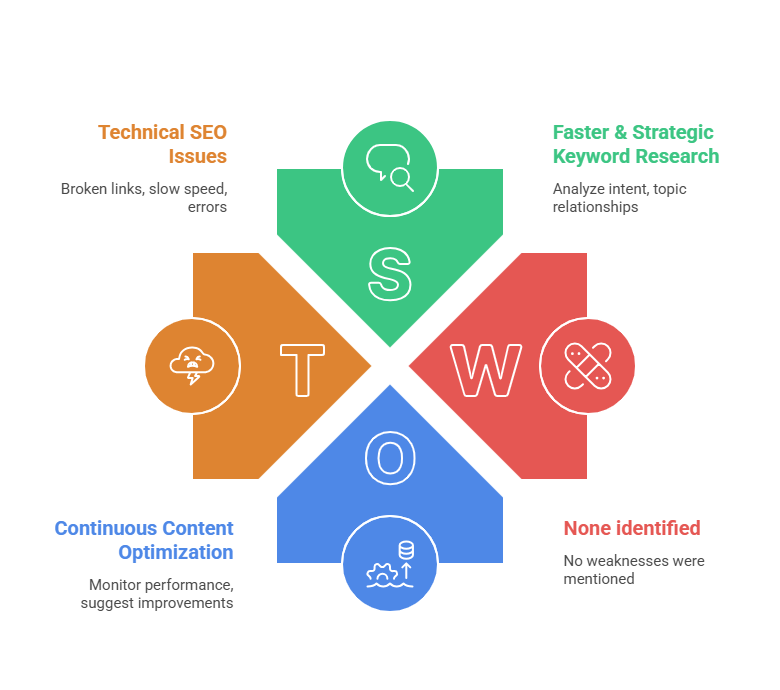
With AI SEO Automation, keyword research becomes faster and more strategic. AI tools can generate entire keyword maps based on search intent, competitor analysis, and ranking opportunities.
This allows marketers to focus on building topical authority rather than targeting isolated keywords.
Automated Content Optimization
Content optimization used to involve manually checking keyword density, headings, internal links, and readability. Today, AI systems can evaluate content quality instantly.
These tools compare a page against top-ranking competitors and identify what elements are missing. They analyze semantic relevance, topic coverage, and keyword distribution.
Through AI SEO Automation, content optimization becomes a continuous process. Instead of updating pages once a year, AI systems can constantly monitor performance and suggest improvements.
This ensures that content stays competitive as search algorithms evolve.
Technical SEO Monitoring
Technical SEO issues often go unnoticed until rankings drop. Broken links, slow page speed, crawl errors, and indexing problems can all affect visibility.
AI-powered site auditing tools now scan websites automatically and identify technical issues before they impact performance.
Using AI SEO Automation, marketers can monitor thousands of pages without manually checking each one. The system detects errors, prioritizes them based on severity, and suggests fixes.
This proactive approach keeps websites optimized and search-engine friendly at all times.
AI Tools That Are Reshaping SEO Workflows
The growth of automation has led to a new generation of SEO tools designed specifically for AI-powered optimization. Platforms referenced in resources such as Marketer Milk and WPSEOAI highlight how these tools are changing SEO strategies.
Some tools focus on content optimization, while others specialize in site audits, keyword analysis, or backlink monitoring. What they share in common is the ability to process large amounts of search data and turn it into actionable insights.
For example, AI-driven content tools analyze top-performing articles and generate recommendations for structure, headings, and topic coverage. Technical audit tools automatically detect issues and prioritize fixes.
When combined into a unified workflow, these systems create a powerful AI SEO Automation framework that reduces manual work dramatically.
Instead of jumping between multiple tools and spreadsheets, marketers can rely on integrated platforms that continuously analyze performance and recommend improvements.
Automating Content Creation Without Sacrificing Quality
Content creation is often the most time-consuming part of SEO. Researching topics, outlining articles, writing drafts, editing, and optimizing each piece can take hours or even days.
Artificial intelligence has introduced new ways to accelerate this process.
AI writing assistants can generate outlines, suggest headings, and draft sections of content based on keyword inputs. They analyze top-ranking articles and replicate successful structures.
However, successful content still requires human insight. AI should be used as an assistant rather than a replacement for human expertise.
When used properly, AI SEO Automation can speed up research, generate structured outlines, and identify content gaps. Writers can then focus on adding expertise, unique perspectives, and real-world examples.
This hybrid approach maintains quality while dramatically increasing production speed.
Smarter Competitor Analysis with AI
Competitor analysis is another area where automation provides significant advantages.
Traditional SEO analysis involved manually reviewing competitor pages, checking backlinks, and analyzing keyword rankings.
AI-powered tools now analyze entire competitor websites in minutes.
Through AI SEO Automation, marketers can identify which keywords competitors rank for, which pages drive the most traffic, and where backlink opportunities exist.
These insights help businesses identify gaps in their own strategy.
For example, AI tools can detect topics that competitors have not covered yet but show rising search demand. Creating content around those topics can generate traffic before competitors even notice the opportunity.
This proactive strategy gives businesses a significant ranking advantage.
AI and Link Building Automation
Link building has always been one of the most difficult aspects of SEO. Finding relevant websites, sending outreach emails, and tracking responses requires time and persistence.
Artificial intelligence can streamline parts of this process.
AI systems can analyze backlink profiles, identify high-authority domains, and prioritize outreach opportunities. Some platforms even generate personalized outreach templates.
With AI SEO Automation, link building becomes more strategic. Instead of sending hundreds of generic emails, marketers can focus on high-value opportunities identified through data analysis.
The result is higher-quality backlinks and a more efficient outreach process.
Predictive SEO and Search Trend Forecasting
One of the most exciting aspects of artificial intelligence in SEO is predictive analytics.
AI models can analyze historical search data and detect emerging trends. They can identify topics that are gaining momentum before they become highly competitive.
Through AI SEO Automation, marketers gain the ability to create content ahead of the curve.
For example, if search data shows that interest in a particular topic is rising rapidly, businesses can publish content early and capture rankings before competitors enter the space.
This predictive approach transforms SEO from a reactive strategy into a proactive growth engine.
Automating SEO Reporting and Performance Tracking
SEO reporting used to involve exporting data from multiple tools and building manual reports.
Artificial intelligence has simplified this process significantly.
Modern SEO platforms can automatically generate performance reports that track keyword rankings, traffic growth, backlinks, and technical improvements.
With AI SEO Automation, these reports update in real time. Marketers can see which pages are improving, which keywords are gaining visibility, and which areas require attention.
This transparency makes it easier for teams to measure the impact of their SEO strategy and make data-driven decisions.
Challenges and Limitations of SEO Automation
Despite its advantages, automation is not a magic solution.
Search engines prioritize quality, relevance, and user experience. Over-automating content or relying entirely on AI-generated material can lead to generic or low-quality pages.
Successful SEO still requires human expertise.
While AI SEO Automation can analyze data and recommend optimizations, humans must interpret those insights and ensure that content delivers real value.
Another limitation is tool dependency. Not all AI tools produce accurate recommendations. Marketers need to validate suggestions and ensure they align with broader strategy.
The key is balance.
Automation should handle repetitive tasks while humans focus on creativity, brand voice, and strategic decision-making.
How to Implement an AI-Powered SEO Workflow
Adopting automation does not require completely restructuring your SEO strategy. Most businesses start by automating a few specific tasks and gradually expanding.
The first step is identifying repetitive processes that consume time but do not require complex decision-making. Keyword clustering, content audits, technical monitoring, and reporting are common starting points.
By integrating AI SEO Automation into these workflows, teams can reduce manual effort and improve efficiency.
Next comes tool integration. Many SEO platforms now include AI features that combine keyword research, content optimization, and site auditing in one interface.
Finally, teams should establish clear human oversight. AI tools should generate insights and recommendations, but final decisions should always involve human judgment.
This balance ensures that automation improves efficiency without compromising quality.
The Future of AI in Search Optimization
Search engines themselves are becoming increasingly powered by artificial intelligence.
Algorithms now evaluate content relevance, semantic meaning, user behavior, and search intent with incredible sophistication.
As a result, SEO strategies must evolve as well.
The future will likely involve deeper integration between AI tools and search engines. Content optimization may become more predictive, and ranking algorithms may reward websites that respond quickly to emerging trends.
Businesses that adopt AI SEO Automation early will likely gain a competitive advantage.
They will be able to analyze data faster, publish optimized content sooner, and respond to algorithm changes more effectively than competitors relying on manual workflows.
Conclusion
SEO is no longer just about keywords and backlinks. It is about understanding massive amounts of data, identifying patterns, and acting quickly on opportunities.
Artificial intelligence has made that process far more efficient.
Through AI SEO Automation, marketers can streamline keyword research, automate technical audits, optimize content, monitor rankings, and analyze competitors with far less manual work.
But the most effective strategies combine automation with human expertise.
AI tools can process data and recommend improvements, but humans bring creativity, strategic thinking, and real-world insight.
Businesses that learn how to balance these strengths will build faster, smarter, and more scalable SEO strategies.
And in a world where search competition grows every day, that advantage can make all the difference.