

Introduction
You’re bringing a product to market. Probably in an industry that’s loud, fast, and crowded as hell. Everyone’s racing to grab attention, win loyalty, and take up that tiny window of time a customer might spare.
But before you get too deep into catchy taglines or beautiful packaging, let’s pause. Ask this:
Does your product actually match what the market wants? And more than that, where is it headed?
That’s where product marketing earns its paycheck. And sitting right at the core of solid product marketing is a tool that’s plain on the surface but sharp underneath: the SWOT analysis.
SWOT stands for Strengths, Weaknesses, Opportunities, and Threats. It’s a framework, sure. But really, it’s a mirror. One that forces you to look at your product with clear eyes both from inside your walls and out in the wild.
It helps you catch what’s working beautifully, spot what’s dragging you down, see where there’s untapped potential, and brace for what could tank you if you’re not paying attention.
And here’s the thing: businesses that make decisions based on data rather than gut feelings are five times more likely to see a higher return on investment. That’s not us guessing McKinsey found that.
So, how do you do a SWOT analysis that’s not just a dusty slide in a deck but something you could actually act on in the next 7 days? Let’s dive in.
Understanding SWOT Analysis
Before you get your hands dirty, let’s make sure we’re all talking about the same thing.
What Is a SWOT Analysis?
Think of it like a fitness test for your product. But not just a snapshot. More like checking the heart rate under stress and seeing how it stacks up against the competition and the demands of the market.
There are two angles:
- Internal stuff — your team, tech, brand, experience.
- What’s going on out there — trends, competitors, customers, and frankly, chaos.
It’s structured enough to guide you but flexible enough to explore. Brutal honesty helps.
Components of SWOT Analysis
Each piece gives you a different lens:
- Strengths: What’s already working? What are customers raving about?
- Weaknesses: What drags your product down? Are there features your team avoids mentioning on sales calls?
- Opportunities: What’s bubbling up in the market that you could run toward before others do?
- Threats: What could derail you whether it’s a smarter rival or a curveball from regulatory changes?
Laying these four side by side gives you the full picture. Decisions stop being guesses. They start being smart bets.
Role of SWOT Analysis in Product Marketing
SWOT isn’t a side task in your marketing strategy. It belongs right in the thick of it.
The more you know about what your product truly is and isn’t the better you can show it to the world. That’s positioning. That’s pricing. That’s picking the right message and putting it in front of the right people.
Here’s how it shapes each angle.
Identifying Product Strengths
This is your springboard. What sets your product apart?
Some real examples:
- A healthtech app with a dead-simple interface that even non-tech-savvy users can navigate without panicking.
- A fintech platform with built-in multilingual support that resonates with underserved markets.
- A beverage with a bold flavor profile no one saw coming, but suddenly everyone wants.
Use what your customers say, not just your gut. NPS data, repeat order rates, screenshots from glowing reviews all of it matters.
Recognizing Product Weaknesses
This one stings. But it’s where you grow.
Say your e-learning tool is killer for college-level learners but has nothing for K-12. Or your logistics system works beautifully until someone asks it to talk to a widely used ERP system…and it just can’t.
Call it out. Write it down. Figure out what’s worth fixing, what’s fine to ignore, and what needs a complete rethink.
Exploring Market Opportunities
Now you widen the lens.
Maybe you notice:
- A spike in demand for products that respect data privacy after recent legislation.
- Consumer interest is rising in spicy plant-based snacks and you’ve already got heat-packed chickpea clusters.
- Half a billion smartphones hitting emerging markets over the next year.
Use things like Google Trends, Nielsen reports, or what your sales team keeps hearing on demo calls. Look outside your bubble.
Anticipating Potential Threats
You can’t future-proof everything. But you can spot cracks in the road up ahead.
Think:
- A recession slowly tightening consumer spending.
- Tech giants giving away something for free you charge for.
- A competitor suddenly landing a government contract you didn’t even know existed.
This part is about being ready, not being paranoid. The more aware you are, the less likely you’ll get blindsided.
Okay we’ve covered the why. Now, let’s tackle the how.
How to Conduct a Product Marketing SWOT Analysis
You don’t need a fancy template. But you do need a strong process. Especially if you want this to fuel real decisions.
Step 1: Research and Data Collection
Start with the facts. Real ones. Not hopeful guesses.
Pull in:
- Customer service transcripts or support tickets
- Public customer reviews on platforms like G2 or Amazon
- Notes from your sales reps who hear the unfiltered truth daily
- Product analytics (usage, abandonment stats, churn)
- Competitive write-ups what they do better, worse, or differently
Mix the numbers and the words. “33% of users leave after the first week” says one thing. But hearing “the dashboard feels 2005” says another.
Salesforce found that 67% of marketing leads believe customer insight is the most powerful influence behind a successful campaign. So don’t skip this.
Step 2: Internal Analysis (Strengths & Weaknesses)
Ask:
- Where do we shine?
- Where do we travel?
Break it down into categories like:
- Features
- Design and usability
- Customer experience
- Brand trust
- Speed and innovation
And if your leadership team loves a feature but users barely touch it? That’s not a strength. That’s a blind spot.
Step 3: External Analysis (Opportunities & Threats)
Now zoom out.
Look at:
- What trends are rising fast?
- What regulations might shift things?
- Who’s gaining ground that wasn’t even on your radar?
Use frameworks like PESTEL political, economic, social, tech, environmental, legal to cover your bases.
Examples:
- AI moving into every corner of SaaS
- Anti-subscription fatigue among online shoppers
- Stricter packaging laws in Europe changing costs for FMCG brands overnight
This is about mapping the terrain you’re walking into.
Step 4: Compile the SWOT Matrix
Now structure it.
Use a simple 2×2 grid:
| Strengths | Weaknesses |
|————————|————————|
| Actual advantages | Known friction points |
| What users love | Where drop-offs happen |
| Opportunities | Threats |
|————————-|————————–|
| Untapped demand | Competitor movement |
| Trends aligning | Economic headwinds |
Helpful trick: Use color-coding or impact scales for visibility. Not every threat is a fire. Not every opportunity is gold.
Step 5: Translate SWOT Into Strategy
This is where it matters.
Ask:
- What can we double down on?
- Which weaknesses are damaging enough to fix fast?
- What opportunities match our existing strengths?
- What backup moves will soften the blow if a threat lands hard?
Turn findings into plans: feature updates, improved messaging, partnerships, or even timing your next launch more strategically.
Let’s see it in real-world shades.
Examples of Product Marketing SWOT Analysis
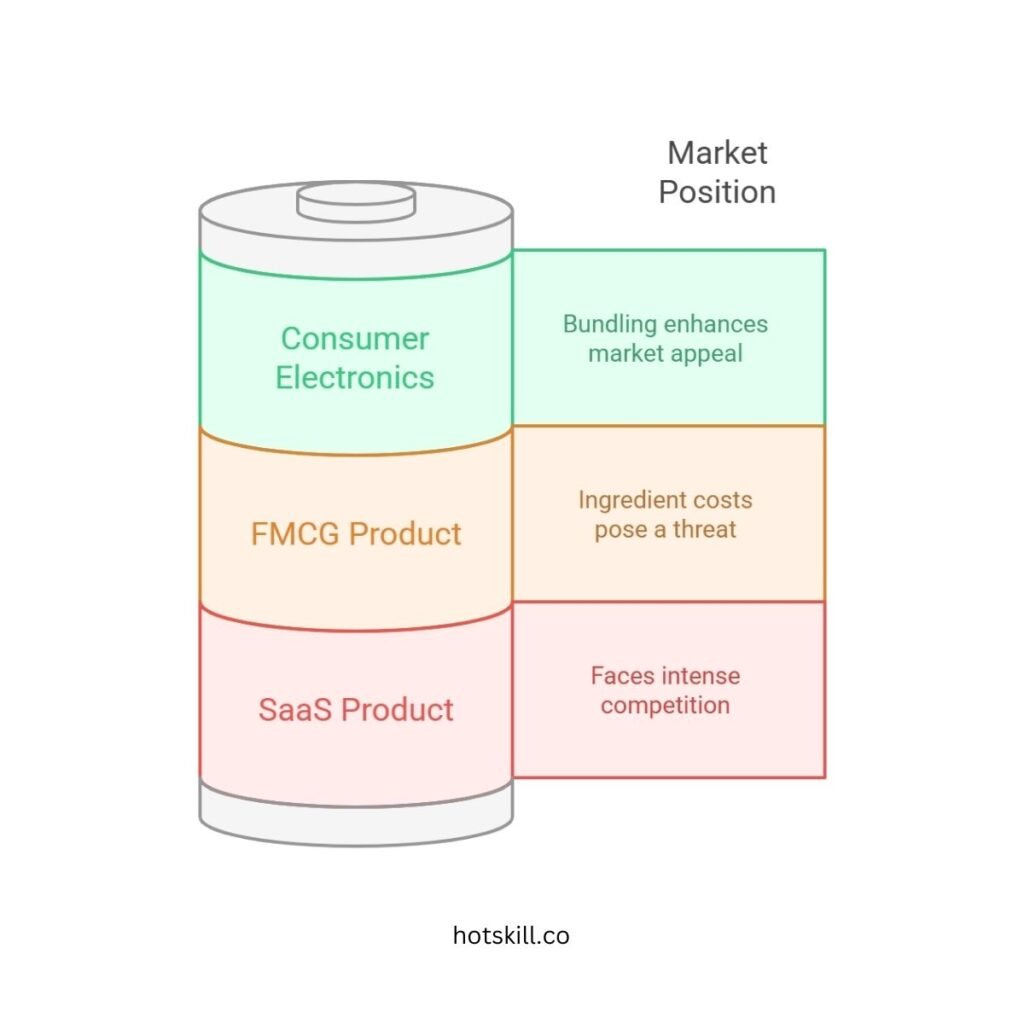
Here’s how SWOT works in a few different sectors.
Example 1: Consumer Electronics
Product: New fitness smartwatch.
- Strengths: Long battery life, smooth app connections, tap-responsive display
- Weaknesses: No waterproofing, lacks key sleep-tracking
- Opportunities: Asia-Pacific fitness market jumping 15% CAGR
- Threats: Xiaomi pushing similar watches for less than half the price
Play: Bundle your product with health app perks. Tap wellness incentives offered by insurers.
Example 2: FMCG (Fast-Moving Consumer Goods)
Product: Organic, plant-based protein bar.
- Strengths: Clean label, high protein, low sugar
- Weaknesses: Shorter shelf life
- Opportunities: Urban retailers growing premium snack aisles
- Threats: Ingredient costs rising due to climate pressure
Play: Rethink your preservative. Amp up the sustainability edge in your copy.
Example 3: SaaS Product
- Product: Lightweight project coordination app made for creative teams.
- Strengths: Crazy simple UI, instant team syncing, affordable plans
- Weaknesses: No SOC2 or HIPAA yet
- Opportunities: Remote teams begging for better async tools
- Threats: Over 250 rivals in the space and counting
Play: Target small teams who don’t need heavy compliance. Build integrations they already use daily.
Benefits of Conducting a Product Marketing SWOT Analysis
It feels basic. But it’s not. A good SWOT helps you make better choices faster.
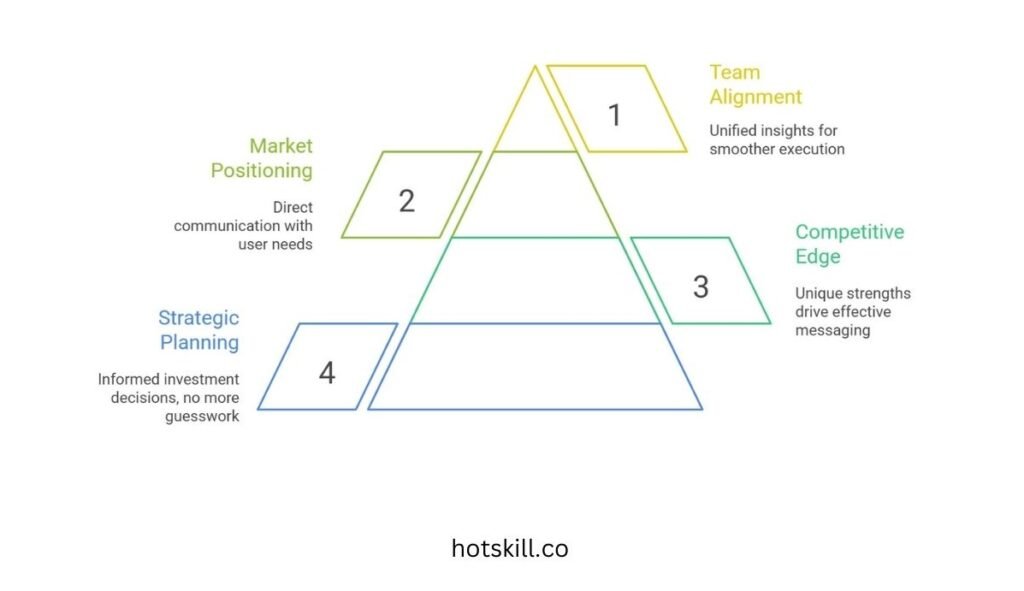
Stronger Strategic Planning
No more tossing darts in the dark. You know where to invest and where to pull back.
Clearer Competitive Edge
Spotting what sets you apart lets you hammer that advantage home. That’s where messaging sings.
And stats agree: Strong brand differentiation can boost revenue growth by 2.3x. Harvard Business Review said it, not us.
Sharper Market Positioning
You can speak directly to the need. At the right time. In the voice your user actually connects with.
Alignment Across Teams
When product, sales, and marketing all see the same insights, execution gets way easier. Less friction. More traction.
Common Challenges in Product Marketing SWOT Analysis
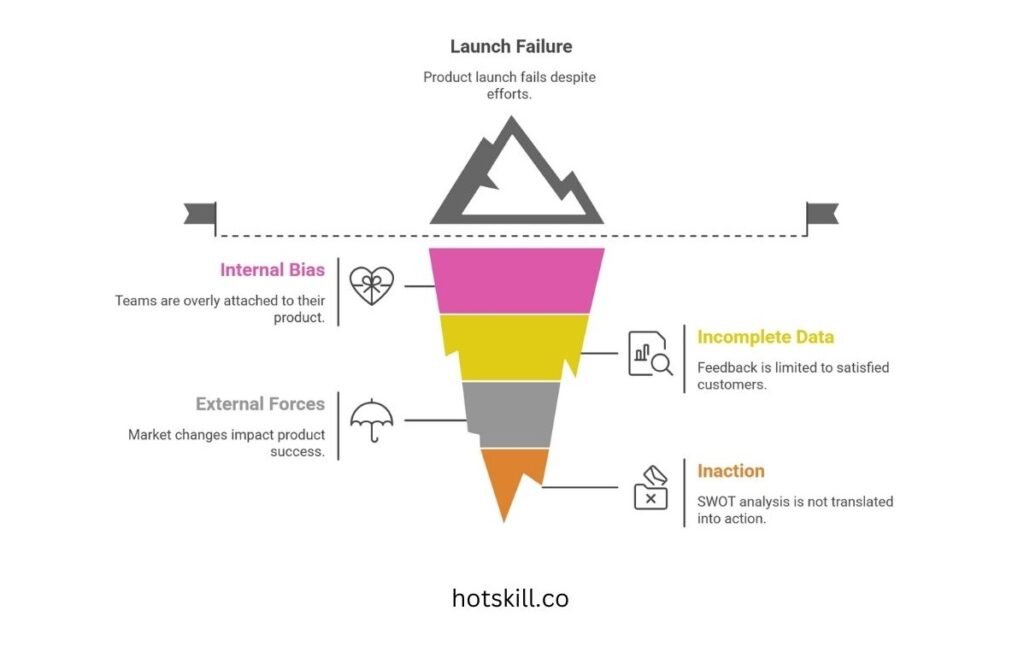
The model’s simple. The traps are hidden.
Internal Bias
Teams love their product too much. It skews things. Bring in outside voices to balance it.
Incomplete Data
Just talking to happy customers won’t cut it. Pull in critics. Look at churn. Validate from the edges.
Ignoring External Forces
Your launch might be flawless, but if the market flips or a new law messes with your product? That’s real.
No Action = No Point
A SWOT in a slide deck that no one touches again? Waste of time. Turn it into plans, owners, deadlines.
Tips for an Effective Product Marketing SWOT Analysis
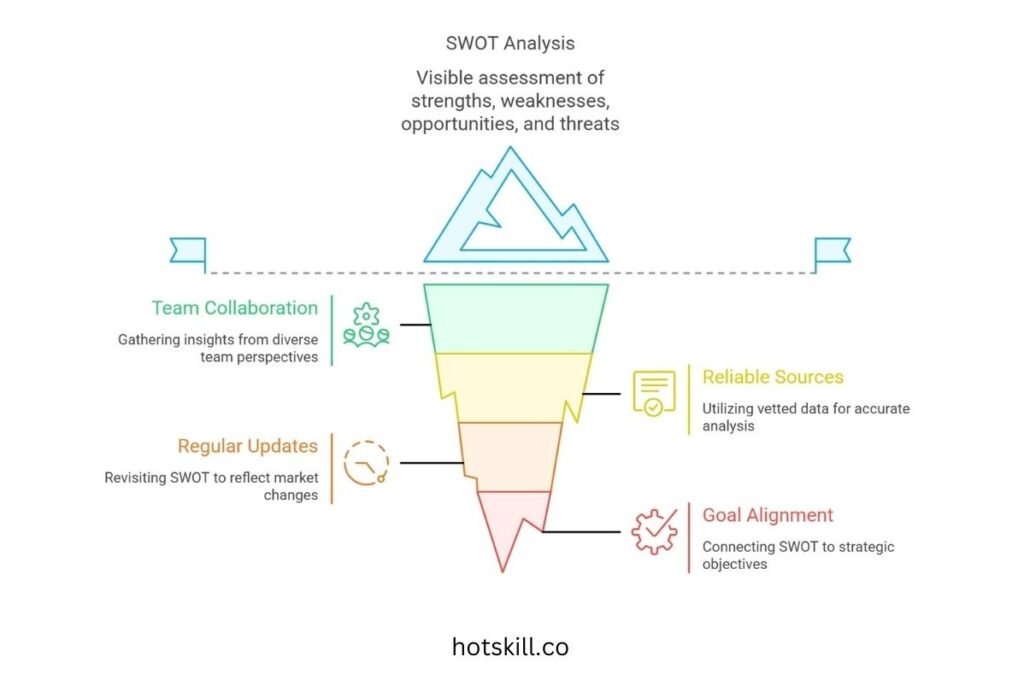
Want your analysis to actually drive moves? Keep these real.
Pull in People From Different Teams
Sales hears the rough stuff. Product sees what’s built. Marketing feels the gap. You need these together to get the full story.
Use Solid, Vetted Sources
If you found it in a tweet, it might not be enough. Cross-check with legit stuff—think Pew, Forrester, Statista.
Revisit Often
A good SWOT isn’t one-and-done. Markets flip. Competitors evolve. Refresh it quarterly or when major stuff hits.
Tie It Back to Actual Goals
Launching version 2.0? Expanding into new markets? Make sure your SWOT feeds into those not just running in parallel.
Conclusion
At the end of the day, a product marketing SWOT analysis isn’t just a box to check. It’s a tool that gives you direction when the noise gets loud.
Done well, it keeps you grounded when the team’s excited about shiny ideas. It reins you in when a threat starts to creep up. It helps you see what’s not obvious and act on it fast.
Because nothing stays still in the market. Competitors get faster. Customers change. New tech reshapes everything–again.
Keeping SWOT part of your rhythm makes you more adaptable. And that? That’s your edge.
Don’t wait for a downturn or a failed launch. Do your SWOT now.