
You know that moment when the deadlines are closing in, the cursor’s blinking like it’s mocking you, and the ideas just… don’t come. Your brain’s trying to catch something good, something fresh, but all you’ve got is static.
Yeah. We’ve been there.
Coming up with content ideas for your business real ones, not copy-and-paste fluff can feel like trying to juggle kitchen knives on a moving treadmill. There’s pressure to be relevant. Clever. Authentic. And somehow do it consistently, without sounding like everyone else in your niche.
But here’s the deal: original content still works. Really well, actually.
The kind that makes someone stop scrolling, pay attention, nod a little. That kind builds trust. Gets clicks. Turns followers into fans, and fans into customers. And sure, it takes effort but it’s worth it.
Start With Your Audience
Before anything else, figure out who you’re even talking to. Not just age and job title. We’re talking fears, goals, the stuff they Google at 2 a.m.
Basic stuff helps location, job, industry. But here’s where it gets good: what’s bugging them right now? What questions are they always asking? What would make their day easier, or their problem feel smaller?
Ask them what they want. Literally. Hop on a customer call. Run a one-question poll on Instagram. Throw in a “What’s frustrating you this week?” in your newsletter.
If you’re in health tech, maybe patients are overwhelmed by insurance jargon. In small business circles, maybe it’s freelancers freaking out over tax season or late-paying clients.
Get close enough to understand what keeps them up. Then write like you’re speaking directly into that fog.
You’ll find that when you actually listen first, the content practically writes itself.
Watch What Competitors Are Saying And What They’re Not

Look around. What are others in your space talking about? More importantly, what are they ignoring?
This isn’t about copying no thanks. It’s about spotting gaps and doing it better.
Dig through your competitors’ blogs, videos, social posts. What’s getting attention? What’s slipping through the cracks?
Helpful tools here: BuzzSumo. SimilarWeb. Ahrefs. They’ll show you what’s performing well. But instincts matter too.
Say you’re in the pet care space and everyone’s talking about dog diets…but no one’s addressing elderly pet exercise routines. That gap? It’s yours to fill.
Sometimes, the opportunity isn’t what they’re doing. It’s what they’re forgetting. Look for the cracks.
Then build something solid right into them.
Let Keyword Research Guide You (But Not Box You In)
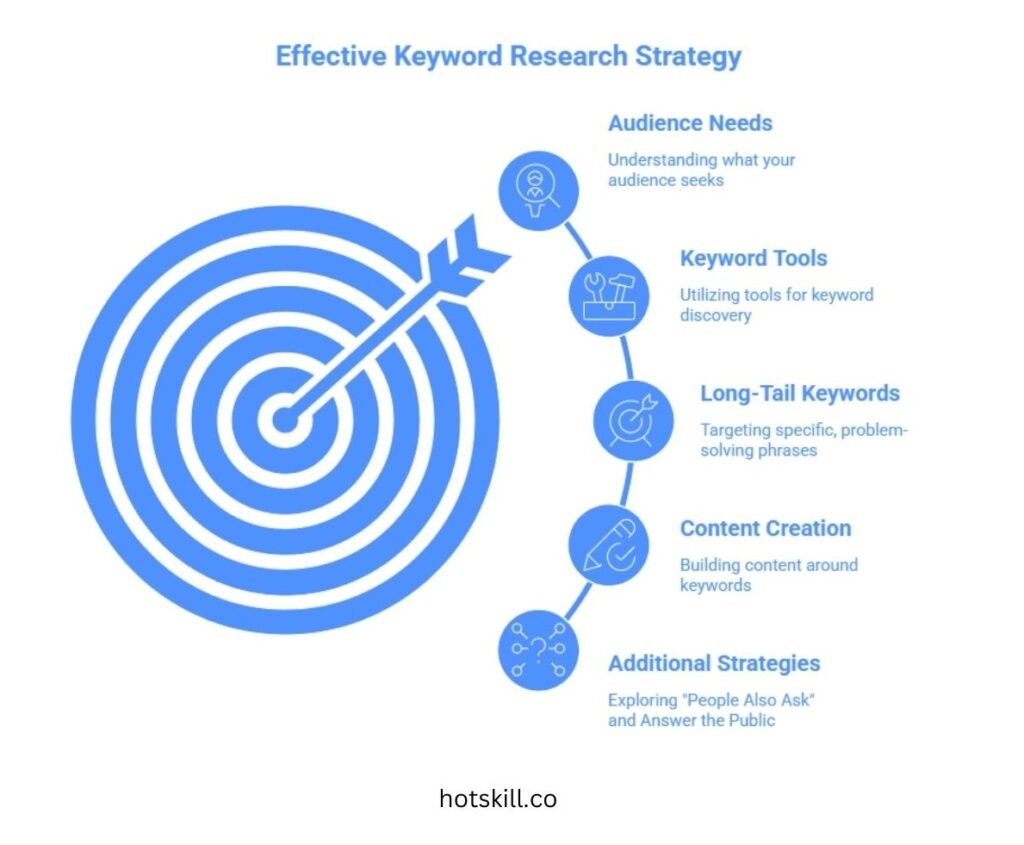
This part gets brushed off fast and seriously, don’t.
Keyword research tells you what your actual audience is typing in, searching for, hoping to find. Data doesn’t guess. It reveals.
Use tools like SEMrush, Google Keyword Planner, or Ubersuggest. Look for specific long-tail phrases, the kind that show someone’s already deep into solving a problem. Like “affordable CRM for solopreneurs” or “how to stretch tight hamstrings after sitting all day.”
That stuff? It’s gold.
Here’s what works: build content around those keywords, not just include them. Make sure your keyword density hits close to 4 percent. Don’t stuff structure.
Also, check the “People Also Ask” boxes or try Answer the Public for ideas straight from the horse’s mouth.
In finance, you might surface terms like “how to create a budget that actually works.” Write the answer. Tell the story. Hit the keyword…but don’t sound like a robot doing it.
Ride the Wave of Social Media Trends
Think of social media as your content temperature check. What’s getting people fired up right now?
Check trending hashtags on Twitter/X, TikTok, Instagram. Pay attention to what influencers are saying. What’s sparking comments, threads, debates?
Use social listening tools like Hootsuite or Brand24 to track mentions of your brand’s, and your competitors’.
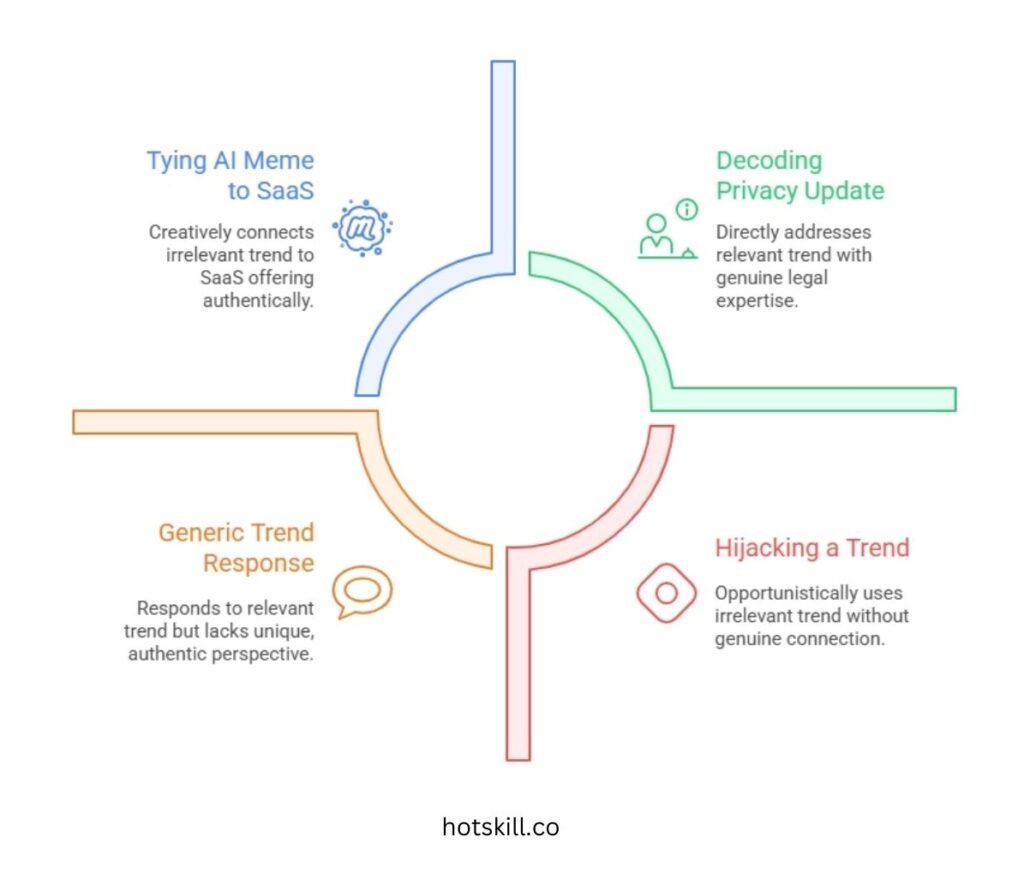
But here’s the key: don’t just hijack a trend. Filter it through your lens.
If you’re a legal consultant and people are buzzing about a privacy update, create a quick post decoding what the change actually means. If everyone’s laughing about the latest AI meme, chime in… but tie it back to your SaaS offering.
Stay human. Add value. Trends move fast, but substance keeps people coming back.
Lurk Where Your Audience Hangs Out (Unfiltered)
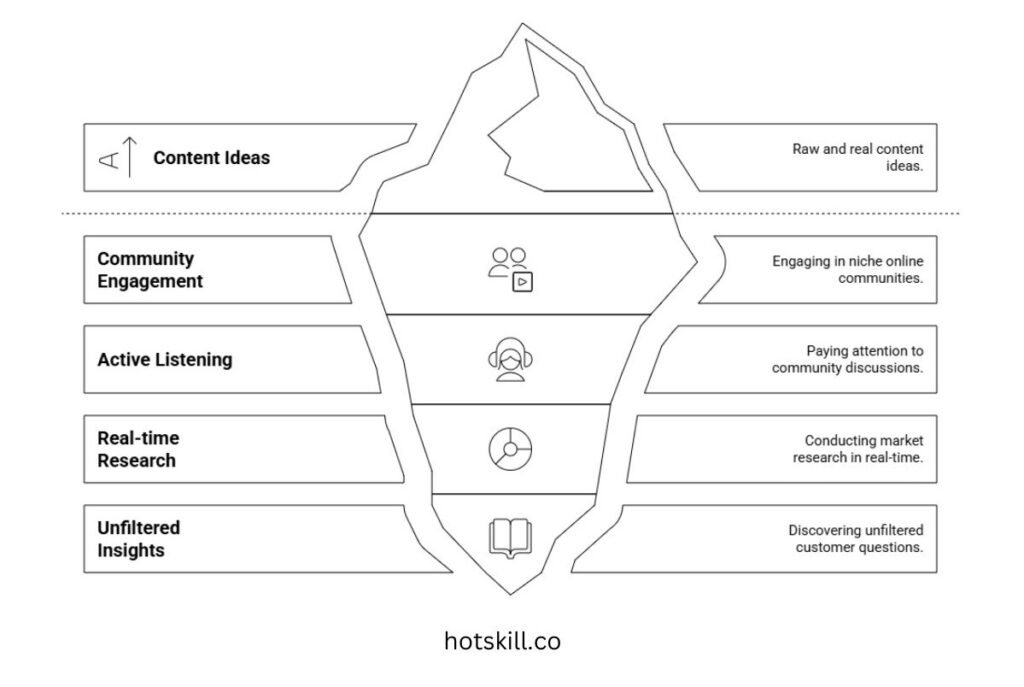
Want the rawest, realest content ideas? Get off your own channels for a bit.
Reddit. Quora. Discord servers. Slack groups. Niche communities where people share struggles, ask for advice, rant a little. That’s real-time market research.
Read the threads, not just the top posts. Pay attention to what keeps coming up, how people phrase their questions, and which answers get upvoted.
A travel brand might trip over a Reddit thread with hundreds of people debating whether to travel solo in South America. That’s not just an idea. That’s a whole series.
Skincare brand? You might find people confused about ingredient combinations (“Can I use retinol and vitamin C together?”). That’s your next video.
No filter. No fluff. Just the stuff people actually want to know but haven’t figured out where to ask yet.
Use Idea Generators When You’re Tapped Out
Let’s be honest. Sometimes your brain just refuses to cooperate. Happens.
Pull up tools like Copy.ai, Frase.io, or even the old-school HubSpot Blog Ideas Generator. Feed them a core keyword or problem. See what comes back.
Yeah, some of it might be whacky or cheesy. Doesn’t matter.
That oddball suggestion like “5 Ways Your Workspace Shapes Your Mental Health”? Might spark a blog, an infographic, and a mental health awareness campaign down the line.
Let the tools shake things loose. Sometimes weird gets you somewhere great.
Repurpose What’s Already Working
Here’s where people get stuck thinking every piece of content has to start from scratch.
Nope.
Look at what’s already done well: a blog post that got saved a lot, or a LinkedIn carousel that racked up comments. Now stretch it.
Turn that blog into a podcast episode. Split it into five tweets. Make it visual for Instagram. Update it with new info and re-post it.
Maybe even bundle a few posts into an ebook or course.
Same story, told differently. That’s not lazy. That’s smart content multiplication.
And across any industry real estate, wellness, consulting you’ve probably got treasure sitting in your archives, waiting to be brought back to life.
Try Different Brainstorming Approaches
Whiteboards are fine. But real creativity? It needs a shake-up sometimes.
Try mind mapping. Start with one central idea like “client onboarding” and build outward. Questions, objections, struggles, tools.
Bring in voices outside the marketing team. Sales hears the objections. Support knows the pain points. Operations? Oh, they’ve seen things.
And if you’re stuck, gamify it. Write random formats on slips of paper (video, email, infographic), and pair them with random topics. See what happens.
Yeah, it’s messy. But sometimes you land on gold. Like a comic strip about complicated tax law, or a dating app doing a “relationship contract” template.
Odd combos lead to fresh ideas. Just run with it.
Stay Plugged Into Industry News
Stuff changes fast. And when it does? People need help making sense of it.
Sign up for newsletters in your field. Set Google Alerts for terms you care about (“blockchain for supply chain” or “ADA compliance for small business”). Follow voices who break it down quickly and clearly.
Then do the same in your way. Explain the update. Add your take. Tell people what it means and why it matters.
A new law passes? That’s a breakdown post. A sudden shift in algorithm? Share what you’re changing in your strategy.
When you’re known for being the voice that jumps on relevant news and unpacks it like a trusted friend… people keep coming back.
Keep an Ongoing Idea Dump
You know how some of your best ideas come while doing dishes or walking the dog?
Capture them. All of them. Even the ones that feel dumb in the moment.
Use Notion, Trello, Google Docs, or the Notes app whatever’s nearby. Record voice notes if your hands are f
ull. The goal isn’t polish. It’s storage.
Review your idea stash once a week. Clean it up. Sort the keepers into themes. Toss the duds. Expand anything that still clicks.
Even short fragments like “why metrics kill creativity” or “video on procrastination triggers” might become your next pillar piece.
Over time, you’ll have a bank of 100+ ideas ready for when your brain goes quiet. That’s not just handy, that’s how pros stay in motion.
Final Thoughts: You Don’t Need Magical Inspiration Just a System That Works
Most good content doesn’t land out of nowhere. It’s not a lightning bolt.
It’s a rhythm. A practice.
You get closer to your audience. You watch your space. You collect questions, test directions, rework the stuff that works.
Little by little, you stop staring at blank pages and start stacking ideas. Ideas that connect. Convert. Stick.
Because let’s be real: the future doesn’t belong to who posts the most. It belongs to whoever understands their people best and shows up with content that genuinely helps.
So go on. Open that folder. Ask that question. Save that Reddit thread.
You don’t need to be the noisiest marketer in the feed.
Just be the most useful one.
Let’s get writing.