
Ever had that feeling where a campaign “felt” like a knockout, but the numbers didn’t quite cheer you on? Or maybe one that seemed to fizzle… but months later, turns out it quietly brought in solid leads? Yep. Search marketing isn’t just about the click. It stretches far past that first landing.
So here’s the big question: how do you really know if last quarter’s (or last year’s) search campaigns actually pulled their weight?
This isn’t about patting yourself on the back. It’s about figuring out what moved the needle, what flopped, and more importantly, why. That reflection? It’s not optional. If you’re in fintech, e-commerce, education, healthcare you name it understanding the past shapes every smart move forward.
Let’s break it down. We’ll pull insights from old campaigns, dissect what worked, what didn’t, and turn that into something better.
Understanding Search Marketing Performance: What It Really Means
Think of search marketing as a full-body checkup for both SEO and paid search work. Not just traffic blips or how cheap a click was, but a deeper dive: who clicked, what they did next, why they bailed, and what you paid to find out.
What Counts as “Performance”?
“Performance” covers both organic SEO and PPC (pay-per-click). Together, they decide how your stuff shows up when people go hunting for answers whether that’s someone Googling “affordable dental implants” or asking Siri for “best budget travel apps.”
And the performance itself? It’s in the data: impressions, click-through rate (CTR), engagement, bounce rate, conversions, sales. The usual suspects, but all layered with intent.
Why Bother Looking Back?
Because let’s be honest—marketing is educated guessing until the data shows up.
When you circle back to past campaigns, a few things happen:
1. You find out what really worked (not just what felt good).
2. You spot mistakes hiding in plain sight.
3. You start backing up your asks with actual ROI.
If you’re leading a marketing team, this matters. A lot. Showing up with numbers is what turns “nice try” into “well played.”
What Metrics Actually Matter?
Here’s your starter pack of metrics worth drilling into:
- Click-Through Rate (CTR) – Did the ad or link pique enough interest to earn a click?
- Conversion Rate (CVR) – Did the click actually turn into something valuable?
- Return on Investment (ROI) – Did it make more money than it cost?
- Bounce Rate – Did visitors leave in a flash, or did they stick around?
- Cost Per Conversion (CPA) – Were those leads or sales worth the price?
Rule of thumb? For paid search, CTR should be above 2%, and your conversion rate over 3%. That’s a good starting point. But honestly, context is everything. A 1% CTR in B2B might still be gold if the leads are quality.
Core Components: What to Analyze in Old Campaigns
Got those clunky campaign reports from six months ago? Good. Let’s dust them off and look at what really went down organic and paid.
Digging into Organic Search
Organic’s the slow burn. Might not be flashy, but it’s steady. Over 53% of total site traffic comes from organic, which tells you it’s not something to sleep on.
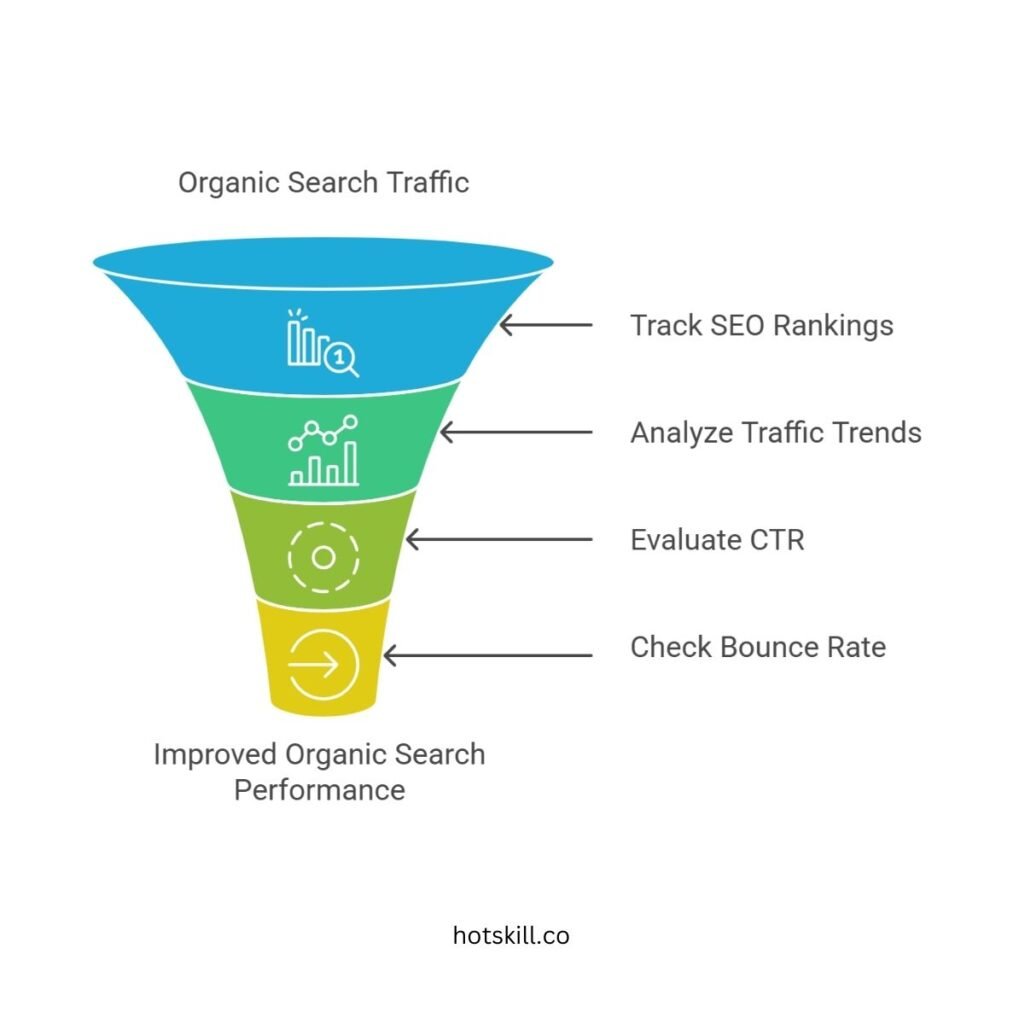
Here’s what to check:
1. SEO Rankings Over Time: Use Ahrefs or SEMrush to track keyword changes. Did your “How to refinance student loans” guide climb up slowly in SERPs? That’s gold.
2. Organic Traffic Trends: Open Google Analytics. Spot the spikes or dips. Match those with specific articles or landing pages. Was there a content asset that outperformed… but you forgot about?
3. Search Click-Through Rates (CTR): Google Search Console is your friend here. How often are people clicking after seeing you in search? If impressions are climbing but clicks aren’t, your title or meta description probably needs love.
4. Bounce Rate and Time on Page: If folks are hitting your blog post only to immediately click away, chances are the content doesn’t line up with their search intent. Anything over 60% should make you pause and think.
By industry, behavior changes. For instance, higher ed sees more time-on-page with long-form pieces. Meanwhile, ecommerce benefits big time from rich product schema and visuals that show up in search.
Doing the Math on Paid Search (PPC)
Paid search isn’t for the faint of heart. When it works, it’s fast and powerful. When it doesn’t? Feels like lighting your budget on fire.
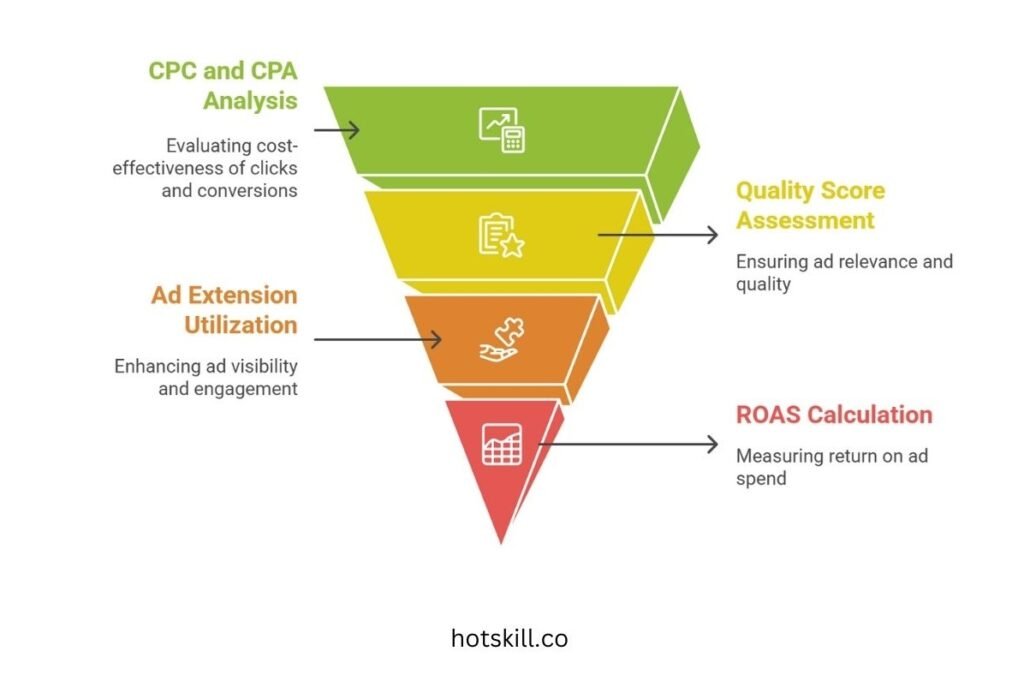
So here’s what to watch:
1. CPC and CPA: Cost per click is your first line of defense. But CPA tells the real story. A retail brand might thrive at $20 per conversion. B2B? You could stomach $100+ if it means closing a $10K deal.
2. Quality Score: Google’s grading your ads. Scores below 6? That’s a red flag. Might be weak ad copy, irrelevant keywords, or a landing page that just doesn’t match.
3. Use of Ad Extensions: Did you bother with sitelinks, price extensions, click-to-call? Ads loaded with useful extras grab more attention—by as much as 15%.
4. ROAS (Return on Ad Spend): Simple math: if you spent $1 and made $4, that’s a 4:1 ROAS. Hold onto that. Anything under 1:1? Time to pivot, fast.
And here’s the thing—don’t stop at clicks. If 100 people clicked but only 2 were actually the right fit, something’s off in your targeting or copy. In healthcare, even five leads might be massive. In real estate, landing one serious buyer? That’s the win.
Tools That’ll Save You Time (and Sanity)
The right tools can give you signals through all the noise. Here’s what to keep in your mix:
- Google Analytics – Understand what happens after someone clicks.
- Google Search Console – See how your pages perform in search.
- SEMrush, Ahrefs, Moz – Check your SEO pulse and spy on what’s working.
- Google Ads / Bing Ads Dashboards – All your PPC data in one messy but useful place.
- Looker Studio – Create dashboards so you’re not digging through spreadsheets at 11 PM.
Bonus tip: GA4’s funnel reports can track if someone from last year’s campaign just now became a paying client. Useful in SaaS, financial services, and other long lead time industries.
How to Actually Improve Your Strategy Now That You Know What’s Broken
So you’ve got your data. Some wins. Some “what were we thinking” moments. Now comes the part where it all pays off.
For SEO: Tighten It Up
1. Match Keyword Intent Better: Ranking high for “best email tools” but no one’s converting? Might be because they’re just window shopping. Add CTAs, checklists, or lead magnets to pull them in.
2. Update the Good Stuff: That blog from last year that got traction? Refresh it. Tweak the title. Add recent stats. Link to new posts. Google loves when you show your content some love.
3. Fix the Tech Side: Slow site speed, bad mobile layout, or missing structured data will drag rankings into the dirt. Even a one-second load delay can cost you 7% of conversions.
4. Think Voice Search: More people are searching with their thumbs or their voice now. Add “How do I…” or “Where to find…” type queries, especially for service businesses or local platforms.
A stat for ammo: SEO drives over 1000% more traffic than organic social. Worth investing the time.
For Paid: Sharpen the Blade
1. A/B Your Ad Copy: Test urgency, try social proof, play with emotional triggers. Something as simple as adding “over 10,000 customers served” can bump conversions by 20%.
2. Refine Bidding Strategy: If smart bidding isn’t cutting it, go manual for your best-performing queries. Or test target ROAS bidding if you’ve built good historical data.
3. Rethink Timing and Geography: Ever looked and realized your best traffic came from San Diego after 8 PM? You can use that. Change dayparting. Shift location targeting. Tighten your spending.
4. Segment Your Audience Smarter: Target people who visited pricing pages but didn’t convert. Use demographic layering recent grads, expectant parents, job switchers. If you’re in B2B, Microsoft Ads + LinkedIn lets you get ninja-specific.
Reporting Performance in a Way People Actually Care About
Here’s the truth no one on the C-suite cares that your CTR was “above average.” They care if you moved money, solved a problem, or created momentum.
Keep It Clear and Honest
Build reports that show:
- What the goal was vs. what actually happened.
- Trends over time, broken down by channel.
- High-level wins and misses, tagged clearly.
If someone has to read five times to figure out if the campaign worked, it didn’t.
Tell a Story With Your Data
“CTR increased” means little. Try “After adding social proof, we saw CTR jump from 2.1% to 4.3% in three weeks.”
Graphs, images, funnel snapshots make the invisible visible.
Spot Patterns That Shape the Future
Do keyword themes tied to problems perform better than solutions? Are campaigns with video consistently outpacing text-only ones?
One SaaS brand found its best keyword wasn’t the product, but the pain: “how to fix onboarding churn.” That changed everything.
When Metrics Get Weird: What to Watch Out For
Sometimes the numbers lie. Or just confuse you. You’re not alone.
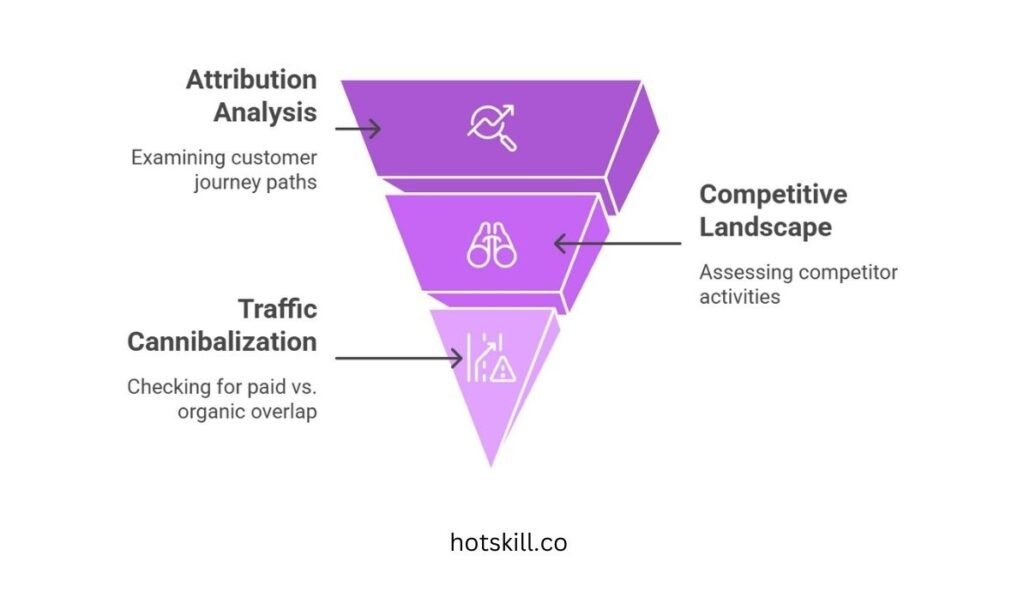
Attribution Gets Messy
In longer customer journeys (finance, education), the first click might be months earlier. Use tools like GA4 attribution models to look at the whole path, not just last touch.
Things You Can’t Control—Like Competitors
Don’t beat yourself up if performance tanked while three competitors launched new offers or doubled their bids. SpyFu and Similarweb can help you peek into that world.
Organic and Paid Clash
Some brands kill their own organic traffic by bidding on terms they already rank for. Check if paid cannibalized existing visits. You might be paying for what used to be free.
Where Search Is Going: Get Ready
Search marketing won’t look the same a year from now. Here’s what’s brewing:
AI Is Changing All of It
Tools like Google’s Performance Max and AI-driven platforms like SurferSEO or Jasper are changing how we research, write, and buy. Lean in.
Voice and Visual Are Gaining Ground
48% of users now turn to voice. That means search queries are longer, messier, and more like everyday speech. “How do I unclog a bathroom sink without a plunger” is your new keyword.
Predictive Is the Future
Marketing platforms will soon tell you not just what worked, but what’s likely to work next. Especially in health, education, and ecomm forecasting will be your edge.
Wrapping Up (and What’s Next)
Search marketing isn’t just about pixels and clicks. It’s about people, choices, behavior.
And those old campaigns? They’re filled with stories.
Here’s the gist of everything we’ve covered:
- Analytics matter—track CTR, conversion, bounce, ROI.
- Keep tools close: GA4, Search Console, SEMrush, Ads dashboards.
- Let the data guide your moves—fix content, tweak targeting, rethink timing.
- Tell the story behind the numbers—show results with context.
- Use insights to fuel smarter campaigns. Every old report holds lessons if you’re willing to sift through.
The best ideas for your next campaign are probably sitting in last year’s data, quietly waiting. Find them. Use them. Build better.
Smart marketers don’t just chase trends. They dig deep, learn brutally, and apply it with heart.
That’s how you stay ahead.