

Introduction
If you’ve ever stared at your ad numbers climbing and thought, “Seriously? This much already?” yeah, you’re not alone.
PPC Ad can feel like a high-stakes game. Done right, it’s powerful like flipping a switch and watching traffic pour in. But when it’s off? It’s like pouring water into a leaky bucket.
Every click costs. And without tight control, you’re just boosting someone else’s bottom line, not yours.
Here’s the upside: you don’t need to throw more money at the problem. You just need to make smarter moves tighter keywords, clearer targeting, strategic bidding, and consistent reviews. When all those pieces click together, your PPC campaigns turn from cash burners into steady growth engines.
Let’s walk through it all. Simple steps, real impact.
Analyze and Optimize Keyword Selection
It all starts with what people type into search bars. That’s where your campaign is born. Nail this part, and the rest gets easier.
Conduct Thorough Keyword Research
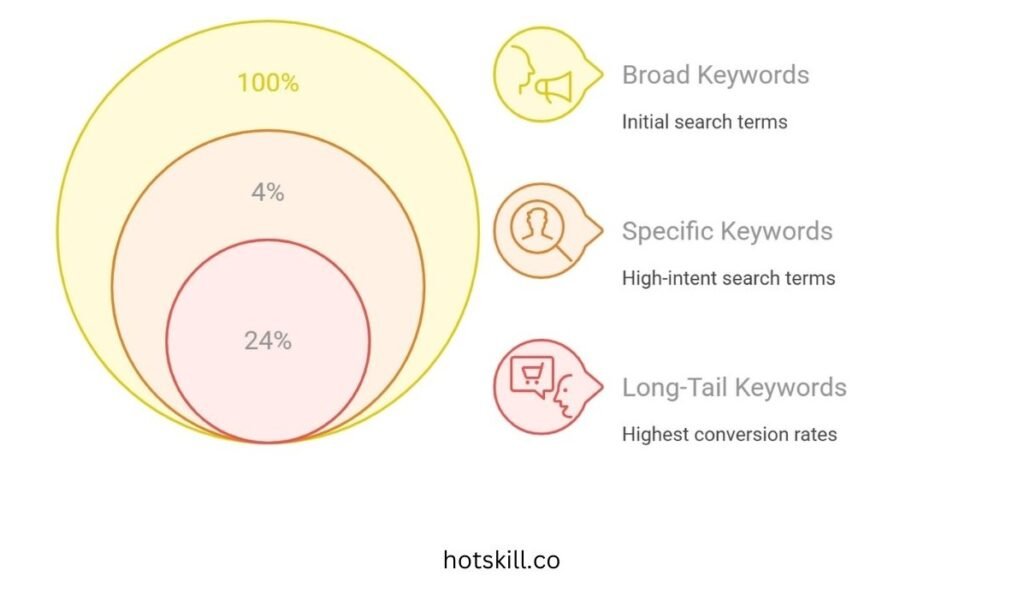
Here’s the truth: going after big, broad keywords like “buy shoes” or “life insurance” is like shouting into a packed stadium. Sure, someone might hear you but most won’t care.
What you want are the quieter, more specific searches. The ones that come from people who already know what they want.
Use tools like Google Keyword Planner, SEMrush, Ahrefs whatever fits your workflow. Then look for those middle-ground opportunities. Not too broad. Not buried. Just right.
Say you’re a legal tech company “legal mobile software” sounds useful, but isn’t specific. “Best time-tracking apps for law firms” now that’s a search from someone with purchase intent.
Find words like that. Look for that 4% of keywords likely to drive most of your conversions. The quiet superstars.
Also and this matters keywords aren’t “set once and move on.” Search behavior changes. What worked six months ago might be stale now. Keep your ear to the ground.
Use Negative Keywords to Filter Irrelevant Traffic
You know those budget holes that quietly suck dollars down the drain? They hide in bad traffic.
Negative keywords are your way of saying “No thanks.”
Selling high-end watches? Add “free,” “cheap,” “knockoff” to the ignore list. Teaching premium coding bootcamps? Block anything with “beginner tutorial free download.”
This one tweak alone can make your ad spend cleaner, leaner, and much more focused.
Focus on Long-Tail Keywords for Better ROI
Long-tail keywords are underrated, quietly brilliant.
Think about it: someone searching “CRM” is browsing. Someone searching “best CRM for law firms under 50 employees” is shopping.
That difference matters.
According to WordStream, advertisers leveraging long-tail keywords see up to 24% higher conversion rates and 36% lower cost-per-conversion. That’s not a tweak—that’s a game-changer.
These phrases may have lower volume, but they pull in high-intent users across all industries healthcare, fitness, software, you name it.
And once those tighter keywords are dialed in, the next step is making sure your ads actually earn the click.
Improve Quality Score
Quality Score might sound technical, but it’s basically Google trying to answer one question: “How useful is this ad for the person seeing it?”
The better you match that need, the less you pay per click, and the higher your ad appears.
Create Relevant and Compelling Ad Copy
This is where you cut through the noise.
People don’t click because your ad is “good.” They click because it speaks directly to what they’re looking for.
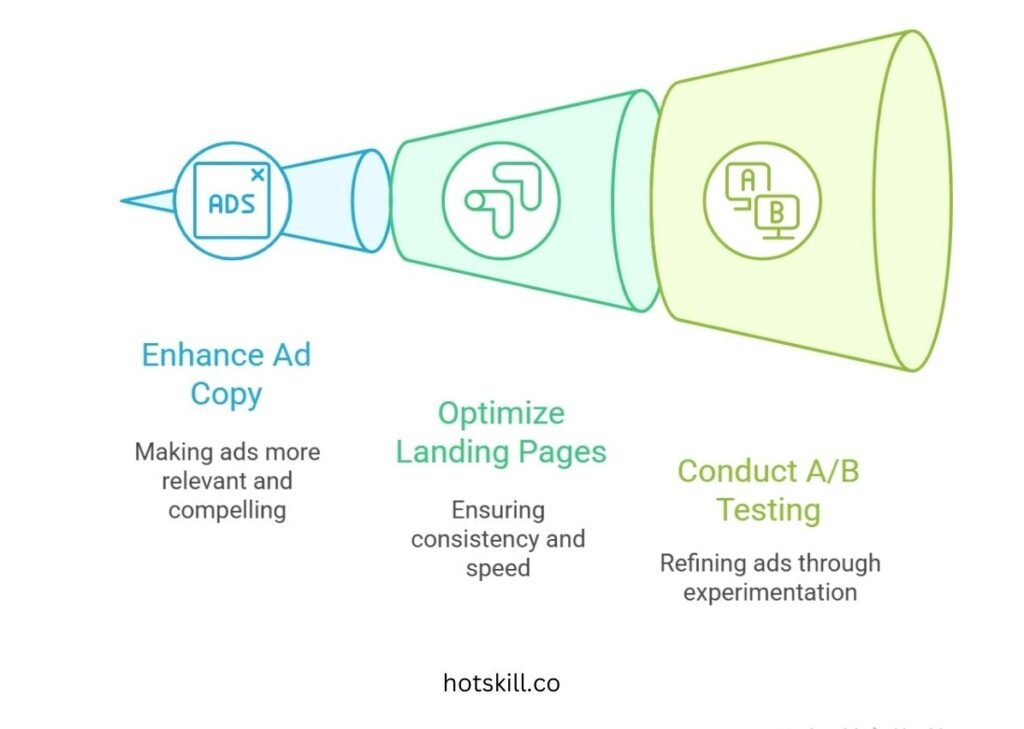
So, instead of saying “Vegan Skincare Products,” say “Cruelty-Free Gift Sets for Every Skin Type • Ships Free Today.” You’re not just listing features you’re solving problems. You’re speaking their language.
Use CTAs that actually create action like “See What’s Inside” or “Try It Risk-Free.” And don’t be afraid to test out new variations. Some of the best performing ads started as quick experiments.
Optimize Landing Pages for User Experience and Relevance
The click is just part one. Where you send them afterward has to deliver.
If you’re advertising estate planning for new parents and they land on a generic legal landing page, it breaks the spell. Keep the message consistent. Match the promise in the ad, word for word if you can.
Also don’t sleep on load speed. According to Google, more than half of visitors bounce if a mobile page takes over 3 seconds to load. So yeah, speed kills bounce rates.
Use that space to reinforce trust. Add social proof. Keep forms short. Make action simple.
Enhance Click-Through Rates (CTR) Through A/B Testing
Little changes can lead to big jumps.
Try different versions of headlines, CTAs, even capitalization styles. Something as small as swapping “Buy” for “Discover” lifted CTR by 20% for one e-commerce brand.
Keep tests small, controlled, and consistent. Then double down when you find what clicks.
Every A/B test is a chance to get sharper so treat it like an ongoing lab project.
Now, let’s make sure we’re shouting in the right direction.
Refine Targeting Settings
No matter how great your ad is, if it’s showing up in the wrong place or to the wrong person it’s wasted.

Narrow Down Geographic Targeting
Why advertise in London if your service is U.S.-only?
Use campaign data and analytics to find out where your high-performing clicks come from. If most of your paying customers are from Chicago and Houston lean into those cities.
One telehealth startup saw a huge bump 27% jump in signups just by honing in on zip codes with underserved access.
This might sound small, but small changes over time make a big difference.
Adjust Device Targeting Based on Performance Data
Not all clicks are equal. A mobile user stuck in traffic isn’t going to fill out a detailed form like someone at a desktop during lunch break.
Dive into your reports. Where are the conversions happening? Maybe your mobile ads show a high CTR, but conversions are weak. For one finance brand, shifting ad spend toward desktop during weekdays dropped their cost-per-lead by 40%.
Let the data guide the budget not assumptions.
Use Audience Targeting and Remarketing Strategies
This one’s huge.
You’ve probably visited a site and seen the same ad campaigns follow you around the internet. That’s remarketing. And it works. Retargeted visitors are 70% more likely to convert than first-timers.
Layer in audiences like in-market shoppers, recent site visitors, or lookalikes. These are warm leads. Speak to them differently.
Don’t try to close a deal with someone who just met you, but maybe encourage a return visit with a discount or testimonial.
Precision beats volume. Every time.
Now that you’re hitting the right people, at the right time let’s look at how you manage what you’re paying for each click.
Implement Bid Management Techniques
Bidding determines what each visit is worth to you. People often overspend here because, well… it’s intimidating. But it doesn’t need to be.
Set Appropriate Bid Caps
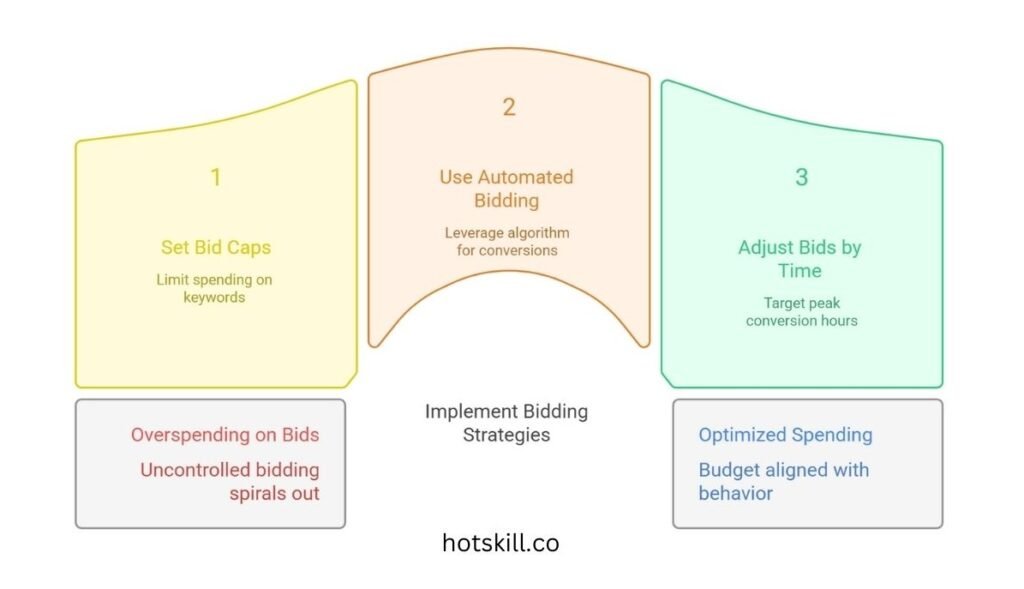
Let’s be real left unchecked, bidding can spiral.
Bid caps are the guardrails that keep your spend in line. An online tutoring platform cut costs by 18% simply by lowering bids on generic keywords like “math help.” They didn’t lose volume. They ditched wasted spend.
Check your top spenders monthly. If they’re not earning their keep, tighten the leash.
Use Automated Bid Strategies Wisely
Automation can be brilliant or… really dumb.
Smart Bidding works when the machine has something solid to learn from. If you’re tracking conversions well and have clear goals, Google’s algorithm can actually outperform manual bidding.
A healthcare SaaS team saw 30% more leads and paid 20% less per lead after switching to Target CPA. The catch? They had to fix messy tracking and clearly define what a conversion actually was.
Automation only works if what you’re feeding it is clean.
Adjust Bids by Time of Day and Day of Week
Not all hours are created equal.
If your B2B ads perform best Monday through Friday between 9 and 4 don’t burn the budget at midnight. Run a time report. See when conversions peak, then lean in.
Retailers sometimes see spikes on weekends. Legal leads may come in midweek. A furniture company boosted ROI by 22% just by pushing weekend bids on top-performing products.
Timing your bids like this brings your budget into alignment with real behavior.
Now, let’s make this a habit not a one-time fix.
Monitor and Analyze Campaign Performance
Even the best campaigns decay. Markets shift. Competitors catch up. One change in the algorithm and you’re behind.
The only play is to stay plugged in.
Track Conversion Metrics Regularly
Clicks are nice. Conversions pay the bills.
Track the full list CPC, CTR, bounce rate, conversion rate, ROAS. But more than that, look for patterns. Where is money being made? Where does interest fizzle out?
A high CPC ad with a killer conversion rate often beats a low-cost campaign that doesn’t convert at all.
Pause or Eliminate Underperforming Ads or Keywords
Don’t get sentimental.
Just because a keyword worked once doesn’t mean it gets to stay forever. Review your list. Pause stuff that’s dragging you down.
One online education platform cut its junk keywords by over a third and saw enrollments jump by 15% while spending 20% less.
Keep your winners. Cull the rest.
Use Analytics Tools to Identify Cost-Saving Opportunities
Don’t stop at the ad level.
Use Google Analytics, Hotjar, HubSpot whatever helps you see the full journey. Are visitors bouncing from your signup form? Is the call-to-action buried? Are desktop and mobile telling two different stories?
Fixing friction points post-click is often where the biggest gains happen.
If the ad is the front door, analytics is seeing who walked in and what made them leave.
Now, for something most businesses overlook.
Leverage Alternative Advertising Platforms
Everyone’s crowding into the same spaces Google, Facebook. That makes them noisy. And expensive.
Here’s a thought: go where the competition isn’t.
Explore Lower-Cost PPC Platforms
Microsoft Ads, Reddit Ads, even Pinterest they’re seriously underused.
One eco-friendly home goods store moved 20% of its Google budget to Pinterest. In just 60 days, ROI jumped by 35%. Fewer competitors. Lower costs. More engaged users.
Especially if your offer’s visual or values-driven places like Pinterest and even YouTube can quietly outperform the big dogs.
Consider Social Media Ads with Better Cost Efficiency
Social ads are still a goldmine if you match the message to the right crowd.
A bootstrapped SaaS startup used LinkedIn Sponsored Posts to hit CFOs directly. Lead quality doubled. A meal-prep brand found joy on TikTok, hitting half the cost-per-click vs Instagram.
It’s not about trendy platforms it’s about resonance. Where is your buyer already tuned in?
Try. Test. Compare.
Alright, deep breath. Let’s zoom out a bit.
Conclusion
Cutting ad spend doesn’t mean pulling the plug. It means sharpening the blade.
Dial in the keywords especially that essential 4%. Speak your customer’s language. Build landing pages that don’t just deliver, but convert. Show up only when and where it matters.
And don’t get lazy. Great PPC isn’t set-and-forget. It’s watchful. Ongoing. Curious.
Keep asking: Is this connecting? Is it clear? Is it worth it?
Because in the end, winning in PPC isn’t about spending more. It’s about spending smart. Every click, every dollar should feel intentional.