
Introduction
You’ve built the thing. Poured in hours, budget, and belief.
And now… it’s time to get it out there. But just releasing a product into the wild doesn’t mean it’ll catch on. We all know that sinking feeling when something incredible slips under the radar. It usually happens when the campaign misses the mark.
Because what moves people these days isn’t just noise. It’s clear. It’s relevant. It’s the feeling that this solution was made for them.
A solid product marketing campaign bridges the gap between your offer and the real everyday needs of people out there. Especially now, when attention is short and trust is earned slowly, a campaign isn’t just about being seen, it’s about being remembered.
Done right, campaigns go beyond clicks and conversions. They turn first-time buyers into loyal fans, the kind who tell their friends, wear your brand, or defend it online like it’s theirs.
Let’s crack open what makes these efforts actually stick. And why some campaigns hit different.
Key Components of Successful Product Marketing Campaigns
No eye-popping ad or clever tagline can save a campaign without strong bones underneath. Start with strategy. Here’s that solid foundation you’ll need before any creativity starts rolling.
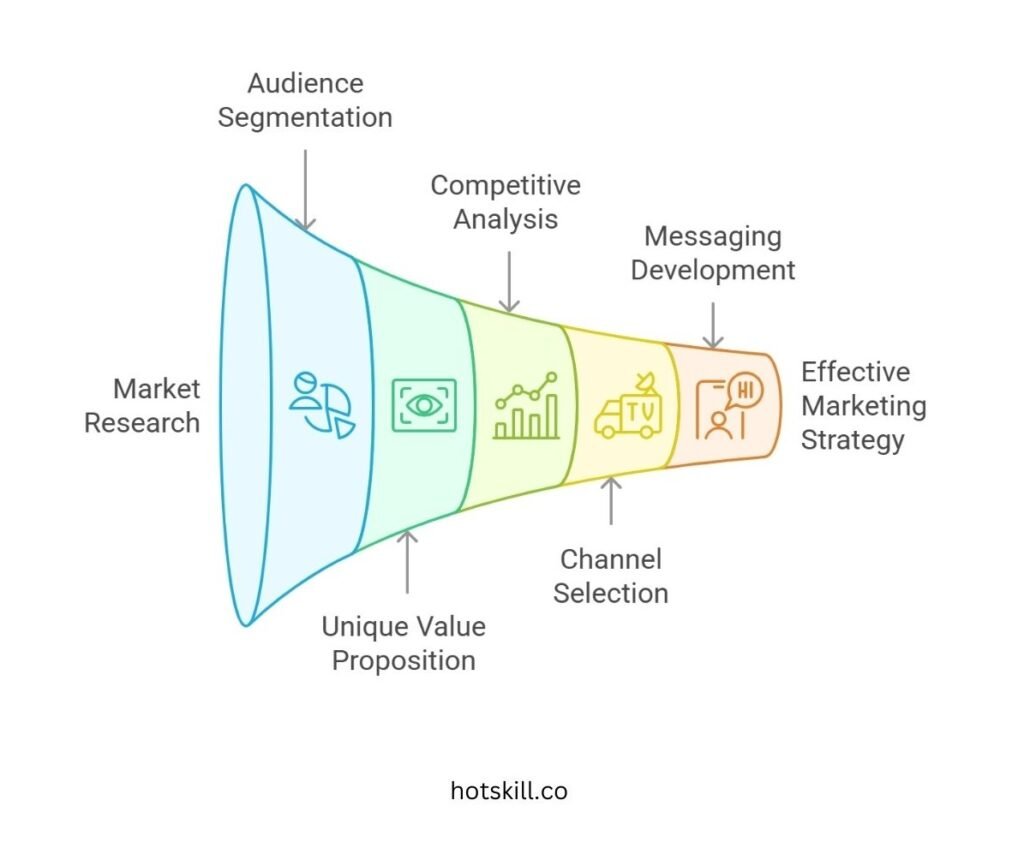
Market Research and Audience Segmentation
You can’t sell to people you don’t understand. Period.
And guessing isn’t enough. You need real data both hard numbers and messy human insight. Talk to users. Watch how they behave. Combine that with surveys and past purchase behavior.
According to McKinsey, companies that lean into deep customer understanding see an 85% edge in revenue growth over competitors.
Then, segments like it matter. Gender, life stage, income, occupation, even mindset. If you’re marketing a skincare line to new moms versus a subscription software for CFOs, your message better shift. Context is everything.
Unique Value Proposition (UVP)
Think fast, why should anyone choose you?
If your UVP can’t be explained clearly in a sentence or two, it’s not sharp enough. And sorry, “We’re the best” doesn’t count.
It’s not about what your product is, it’s what it does that nobody else does quite like you. Skip the vague benefits. Be bold. Say, “Save six hours in compliance tasks weekly,” not “Effortlessly streamline processes.” One talks like a human. The other sounds like ad fluff.
Your UVP should sit at the heart of every ad, landing page, or pitch that follows.
Competitive Analysis
Like it or not, your audience is already comparing you. If not to another company, then to their current way of doing things.
So look around. Study your competitors’ pricing, tone of voice, pain points they solve then scan what people are actually saying in reviews or community forums.
You’re not trying to copy them. You’re hunting for the gap. What are they missing? Fix that, and now you’re valuable.
Marketing Channel Selection
The right message in the wrong place? Wasted effort.
You’ve got to know where your people hang out. If your audience is 22 and loves video, TikTok and Reels might crush it. But selling industrial software to decision-makers? LinkedIn and webinars are going to work harder for you.
Mix it up, but don’t treat it like roulette. Start with a few high-fit channels, track carefully, then scale what’s working.
Messaging and Creative Development
Here’s where the magic happens or totally fizzles.
People forget features. But they remember moments. That one ad that made them laugh. Or the message that hit too close to home. That’s what sticks.
Whatever your tone is, bold, empathetic, quirky it should mirror how your audience speaks and feels. If you’re selling something tied to emotion or pain (say, a migraine tracker or budget tool), don’t hide that. Show you understand.
Test different versions. Keep tweaking until it clicks.
Budget Planning and Allocation
No budget? No campaign.
Every big idea needs fuel. Plan smart. Divide your spend across stages awareness, testing, retargeting, creative dev, and optimization.
Big players might put in 10–12% of their revenue into marketing. But here’s something wild startups that are super lean often pull off higher ROI. Sometimes by over 20%.
Measure obsessively. ROAS, CPA, customer LTV. If it’s not performing, don’t wait adjust early.
Campaign Timeline and Milestones
If you rush the campaign just to meet a deadline, you’ll feel it later.
Lay out your entire timeline from brainstorming to rollout to optimization. Build in breathing room for edits, testing, and last-minute tweaks. Keep stakeholders looped in so no one’s bottlenecking success two days before launch.
Types of Product Marketing Campaigns
There’s no one-size-fits-all. Whether you’re making noise during a big release or keeping things bubbling quietly in the background, the campaign type matters.
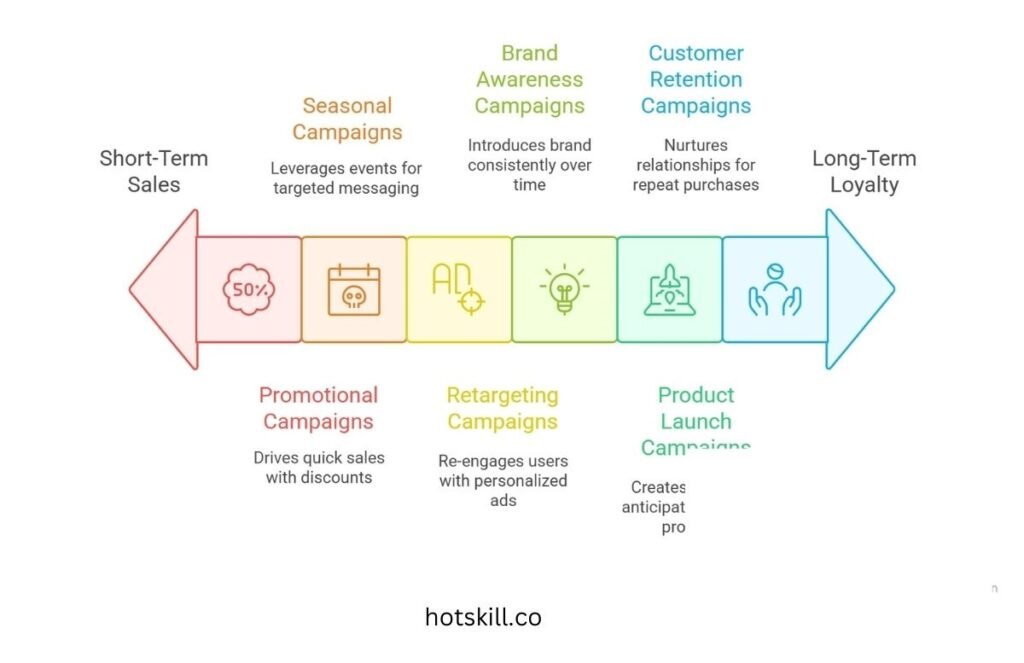
Product Launch Campaigns
This is your moment. Your brand’s curtain rises.
Think back to the iPhone unveilings. They didn’t just show products, they stoked tension, stirred curiosity. Even mid-sized brands can do this. Canva rolled out an AI feature with sneak peeks and demos that made users feel like insiders.
A good launch doesn’t just inform. It makes people want in.
Brand Awareness Campaigns
Not every campaign should sell right away.
Some are built to introduce. To make people see you, remember you, start to trust you. These are especially vital in industries where the buying cycle is long. Think insurance, SaaS, or healthcare.
Your goal? Show up where they are. Often. Consistently. And with heart.
Promotional Campaigns
Sales, bundles, free trials. We’ve all seen the flash.
Promos can create urgency and move inventory fast. But here’s the deal: use them too often and you train people to wait for discounts. Use them smartly, and they become memorable (and profitable) moments.
Aim for value-first language: “2-for-1 so you can share with someone you love.” Not just “50% off.”
Seasonal Campaigns
Timing is a cheat code.
Partner your product with a season, trend, or event. A fitness app during New Year’s. A wellness tracker in Mental Health Awareness Month. A meditation platform over finals season.
The closer you align with real-life rhythms, the more people feel your message was made for them.
Retargeting Campaigns
This is the nudge campaign.
Someone visits. Browses. Leaves. That’s most people. Retargeting helps bring them back with just-right reminders.
It could be a saved cart, a follow-up email with social proof, or a tailored Instagram ad nudging them gently: “Still thinking about those running shoes? Let’s get you moving.”
Done right, it doesn’t feel pushy. It feels helpful.
Customer Retention and Loyalty Campaigns
Acquiring new users is cool. Keeping the old ones happy? That’s where real compounding happens.
Build campaigns not to sell—but to thank, invite, or check in. Refill prompts for med-tech. Special perks from a subscription box. Content-only emails that just help your user win the day.
And it pays off. Retained users buy 5 times more often and spend 33% more.
Steps to Plan and Execute a Product Marketing Campaign
Big goals start with clear steps. Here’s how to take the idea in your head and bring it to market.
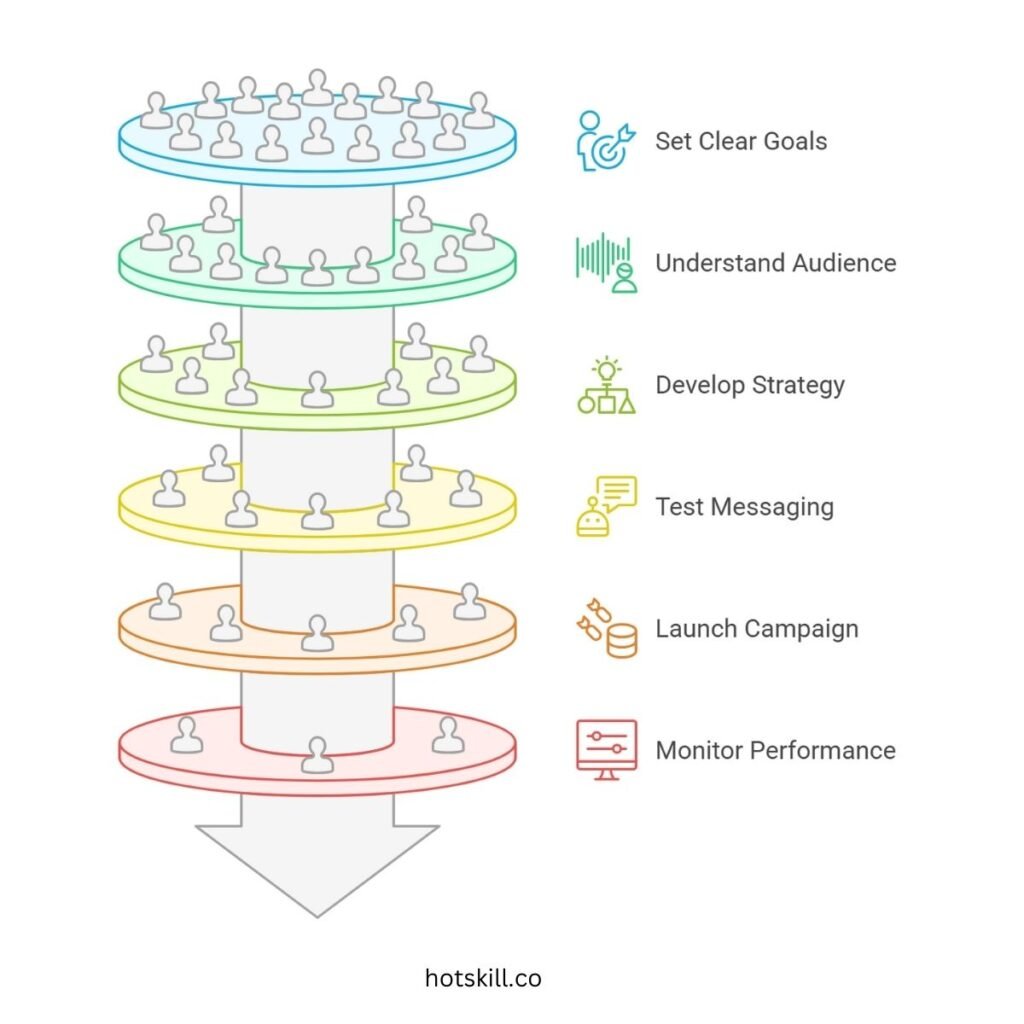
Set Clear Goals and KPIs
What does winning look like?
Set specific targets. Not fluffy ones like “increase engagement.” But things like “Add 2,000 new subscribers in 6 weeks” or “Improve demo-to-close rate by 15%.”
Then pick KPIs that track each stage, think reach, CTR, conversions, ROAS.
Understand the Target Audience
The closer your campaign speaks to someone’s life, the better it works.
Don’t target “busy parents.” Target Nadia, a 33-year-old mom juggling two kids and remote work, who hates dinnertime stress.
Get into their heads and daily pain points. Use real language. Build personas that truly feel like people, not generic profiles.
Develop Campaign Strategy
This is where planning meets creativity.
Start with your core message and big why. Then decide which levers you’ll pull, will it be emotional storytelling? Urgency? Educational content?
Think format too: user videos, short animations, swipeable carousels. Every choice adds or subtracts meaning.
Create and Test Messaging and Creatives
Seriously, test everything.
Run A/B tests. Use different hooks, different CTAs, different images. Platforms like Google Experiments or Meta Ads Manager let you do this quickly.
Don’t guess what’ll resonate, use data to find the winner.
Launch the Campaign
Prep matters here. Are all your links working? Pixels tracking? Budget pacing set?
Start small if possible. Soft launch in a smaller market or audience. Tweak, then scale up. The early signal will save you lots of cleanup later on.
Monitor and Optimize Performance
Don’t just launch and forget.
Check in daily or weekly. Look beyond surface stats. If CTR is solid but conversions drop, maybe it’s a landing page issue. If people bounce, maybe the message is a mismatch.
Shift budget. Adjust creative. Stay scrappy.
Analyze Results and Report
After the dust settles, dig in.
Pull together what worked, what didn’t, what you’d repeat versus leave behind. Show ROI, customer behavior, even qualitative feedback.
Don’t keep the info locked in marketing, share it with sales, product, leadership. Every campaign is a lesson for the next one.
Tools and Platforms for Product Marketing Campaigns
Good tools won’t guarantee a win but bad ones will definitely waste your time.
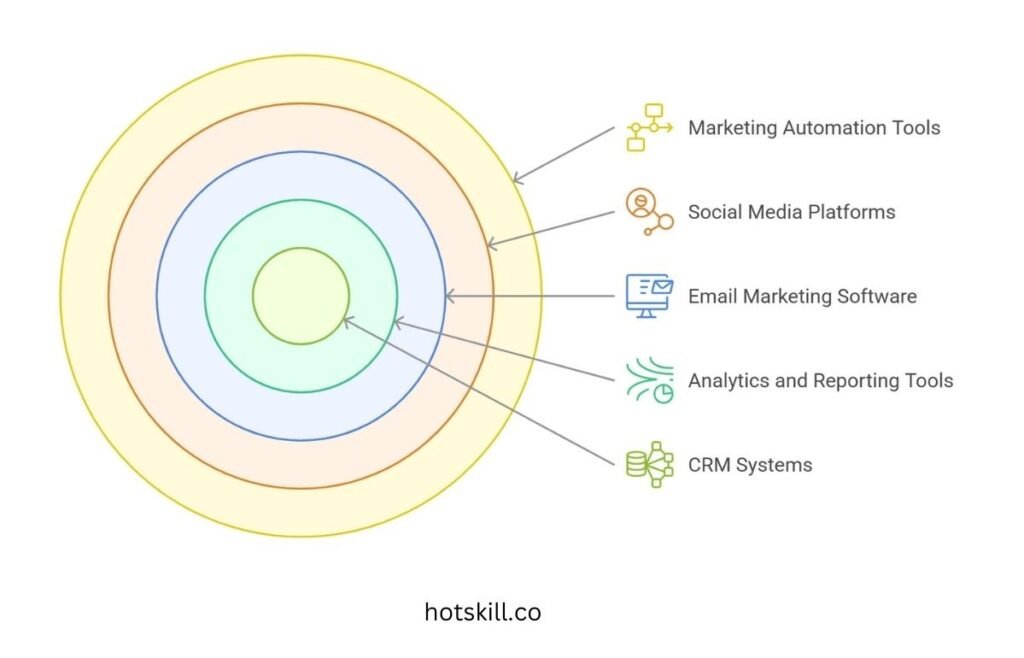
Marketing Automation Tools
Drip sequences. Smart triggers. Segmented flows.
Platforms like HubSpot, Marketo, or MailerLite let you streamline without dropping the ball.
Use them to stay consistent, especially at scale.
Social Media Platforms
Where the eyeballs are. Instagram. TikTok. LinkedIn. X.
Use scheduling tools like Hootsuite or Buffer to plan ahead. Want deeper insight? Try Sprout or Later to see what truly lands.
Socializing isn’t something you “do.” It’s how you show up in their lives.
Email Marketing Software
Still king in ROI. It averages $36 back for every $1 spent.
Tools like Mailchimp or Klaviyo let you segment and personalize. Great for re-engagement flows and nurture sequences.
If you’re not using email? You’re leaving a lot of opportunities cold.
Analytics and Reporting Tools
This is where truth lives.
Track how customers move through your funnel tools like Google Analytics, Hotjar for heatmaps, or Mixpanel for product behavior.
Need to present findings? Databox or Looker make it visual and digestible.
CRM Systems
Salesforce. HubSpot CRM. Zoho.
A solid CRM keeps your entire team aligned on what your customer clicked, bought, replied to, or ignored. Tie it to campaigns for next-level targeting.
When used well, CRMs can boost conversion rates by 300%.
Common Challenges in Product Marketing Campaigns and How to Overcome Them
Let’s be real. Even great plans go sideways sometimes.
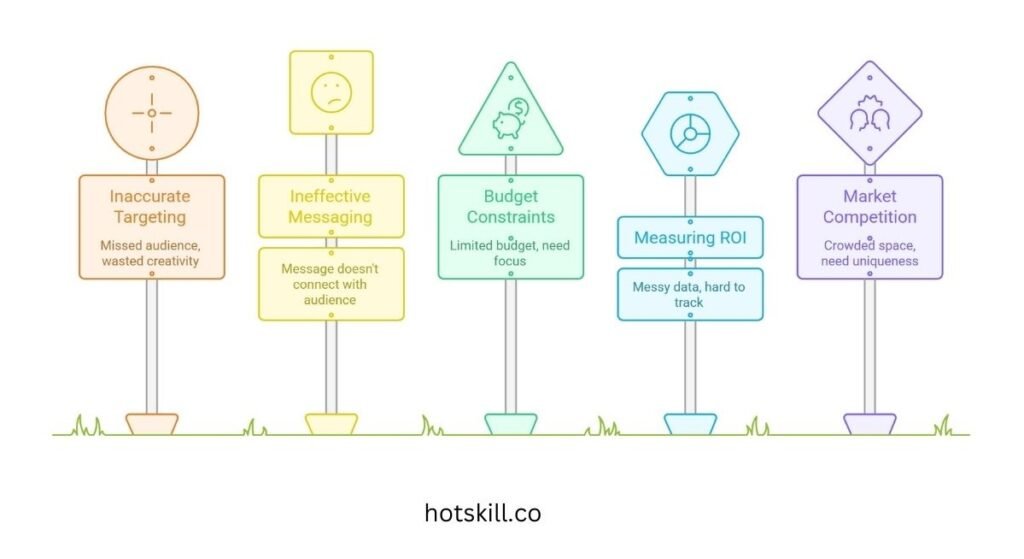
Inaccurate Targeting
Missing the audience sinks even brilliant creativity.
Keep refining your personas. Use new data. Apply filters based on current trends not just what worked last year.
Ineffective Messaging
If your message doesn’t connect, no one clicks.
Avoid fluff. Test new angles fast. Drop the pitch voice. Speak the way your customer does when talking to a friend.
Budget Constraints
Small budget? Don’t panic.
Focus on organic. Nail SEO, build community, use email. Then test tiny ad budgets on high-intent keywords or retargeting first.
Measuring ROI
Too many platforms make it messy.
Set up UTMs from the start. Use one dashboard to centralize tracking. And make sure every team knows what “success” looks like.
Market Competition
Crowded spaces? Double down on uniqueness.
Use testimonials, case studies, real faces, and proof. Sometimes the best edge is simply being more human.
Case Studies of Successful Product Marketing Campaigns
Let’s peek at a few real-world home runs.
Apple’s iPhone Launch
They made it a global event. Anticipation, mystery, sleek visuals all of it engineered to feel like you were witnessing history.
iPhone 12? Over 2 million pre-orders in the first 24 hours.
Coca-Cola’s Share a Coke Campaign
One simple shift: names on bottles.
Boom 7% sales spike and over a million #ShareACoke mentions. Personalization at scale, and it paid off in smiles and buys.
Canva’s Remote Work Playbook
Mid-pandemic, Canva released a beautifully designed remote playbook free, helpful, no strings.
Result? Triple the social engagement. 35% bump in paid signups. Sometimes being useful works better than shouting.
Best Practices and Tips for Effective Product Marketing Campaigns
A few moves that always carry weight.
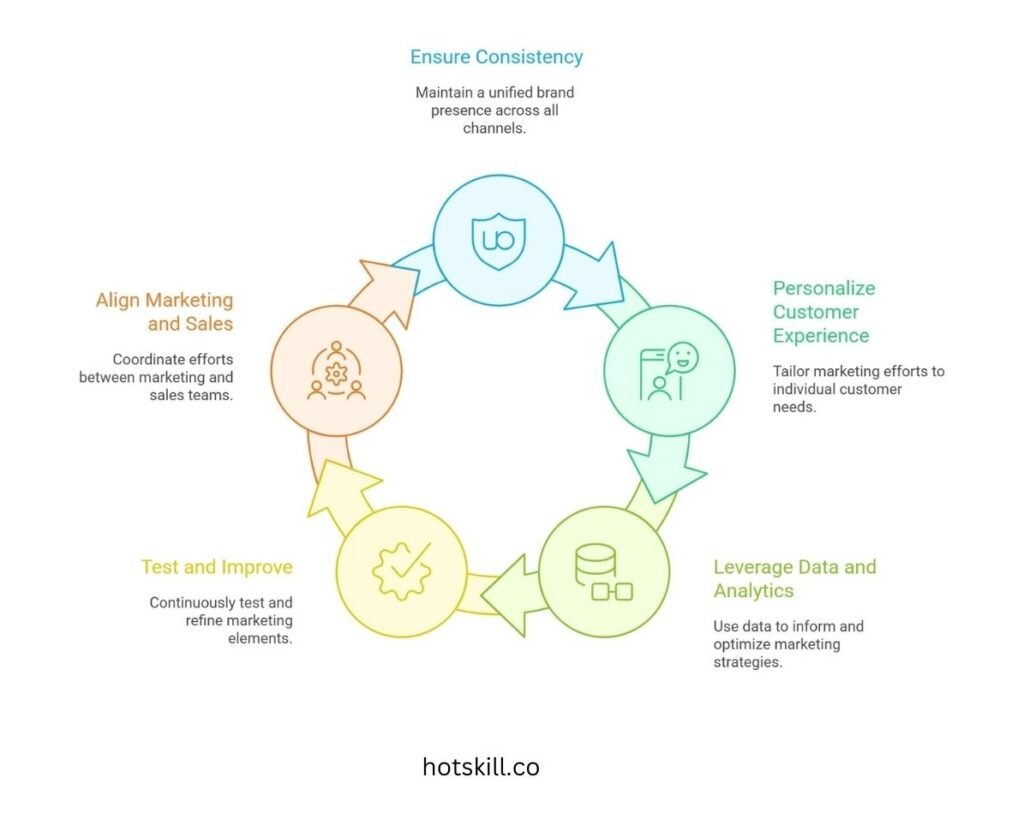
Consistency Across Channels
Message, tone, visuals keep everything in sync. Makes you look trustworthy before a word is read.
Personalization and Customer-Centricity
Blast emails belong in 2003.
Speak to individuals. Tailor based on behavior, life stage, or interests. Shoppers are 82% more likely to buy from brands that personalize.
Leveraging Data and Analytics
The gut feel is fine until you’re scaling. Then you need dashboards.
Track. Learn. Adjust. Repeat.
Continuous Testing and Improvement
You’ll never be “done.”
Test different images, times, channels. The gold is often in the tweaks.
Marketing and Sales Alignment
Marketing warms up. Sales Closes. Make sure the handoff is clean.
Share messaging frameworks. Coordinate objections and benefits. You’re on the same team.
Conclusion
Great product marketing campaigns do more than get attention. They build meaning.
They connect. They convert. And sometimes? They even inspire.
In a world full of choices and noise, being relevant and real is your edge. Keep listening. Keep adapting. Let data talk. But always let empathy lead.
Because you’re not just running campaigns. You’re creating connections. You’re giving people something worth turning toward.
And if you do that well enough, they won’t just buy from you.