
So, you’re thinking about getting into PPC budget (pay-per-click) advertising.
Or maybe you’re already spending money but have no idea where it’s going—or if it’s even working.
It can feel like tossing coins into a well and hoping something good comes out.
But PPC doesn’t have to feel like a gamble. With the right steps, you can build a budget that delivers real leads, real customers, and real growth.
Let’s walk through it—from the strategy to the actual math.
Understanding PPC Budget Basics: What You’re Really Spending
A PPC budget is essentially the amount you’re willing to spend on getting clicks—whether daily, monthly, or by campaign.
But it’s not just what you spend.
It’s why you spend it.
Your budget depends on:
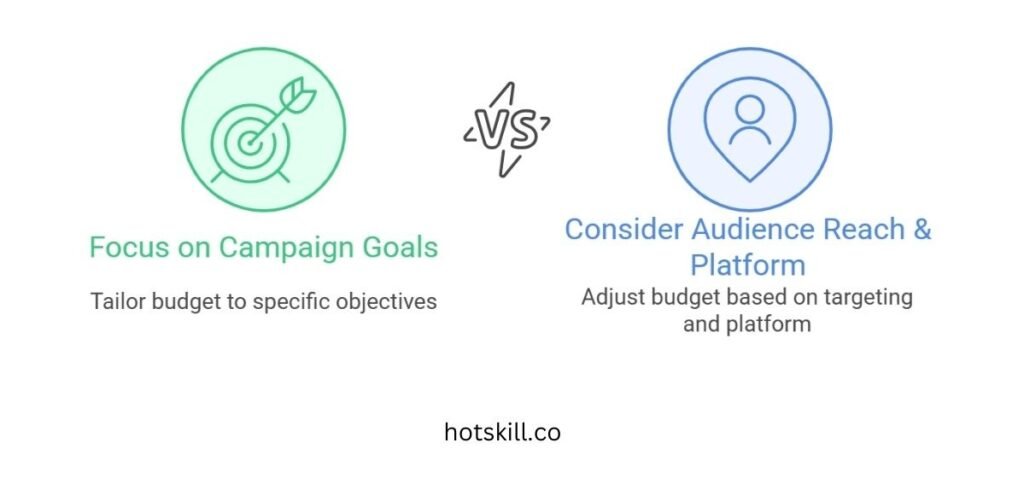
Key Factors That Shape PPC Spend
- Your Campaign Goals
Selling a product? Building awareness? Each objective needs different budgets and strategies. - Audience Reach
Local targeting vs. national targeting = HUGE cost differences. - Platform Choices
Google Ads = high intent, higher CPC.
Social media = cheaper CPC, but more testing needed.
Think of your PPC budget not as one big pool—but as a toolkit where every dollar has a defined job.
Start with Your Business Goals (This Is the Heart of It)
If you don’t know what success looks like, you can’t build a budget around it.
Ask yourself:
What EXACT outcome do we want from PPC?
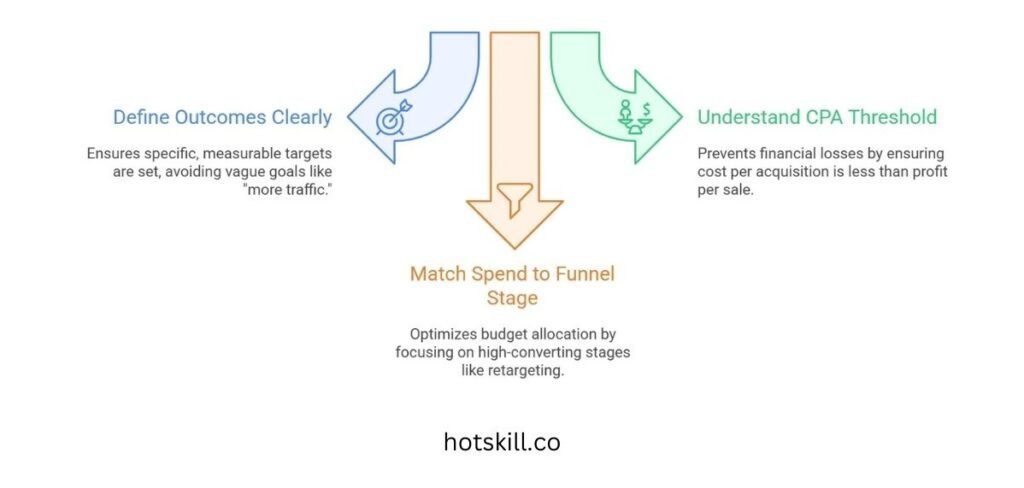
Ways to Clarify Your PPC Goals
- Define Outcomes Clearly
Not “get more traffic.”
Instead: “Get 2,000 pricing page visits with under 40% bounce rate.” - Understand Your CPA Threshold
Profit per sale vs cost per acquisition.
If CPA > profit (and CLV is low), you’re losing money. - Match Spend to Funnel Stage
Retargeting converts better than cold traffic—so allocate accordingly.
Quick Reminder: PPC should work alongside email, SEO, social, and your full marketing ecosystem.
Analyze the Market: Know Who You’re Up Against
Your budget doesn’t exist in isolation.
Every click is a competition.
Smart Competitive Research
- Industry Benchmarks
Legal: $6+ CPC
Retail: ~$1 CPC
Tools: WordStream, Google Benchmarks - Competitor Insights
Tools: SpyFu, SEMrush, SimilarWeb
Identify:- platforms they use
- keywords they target
- gaps you can exploit
It’s not about outspending competitors—
It’s about outsmarting them.
Know Your Audience: Define Who You’re Talking To
Most PPC waste comes from poor targeting.
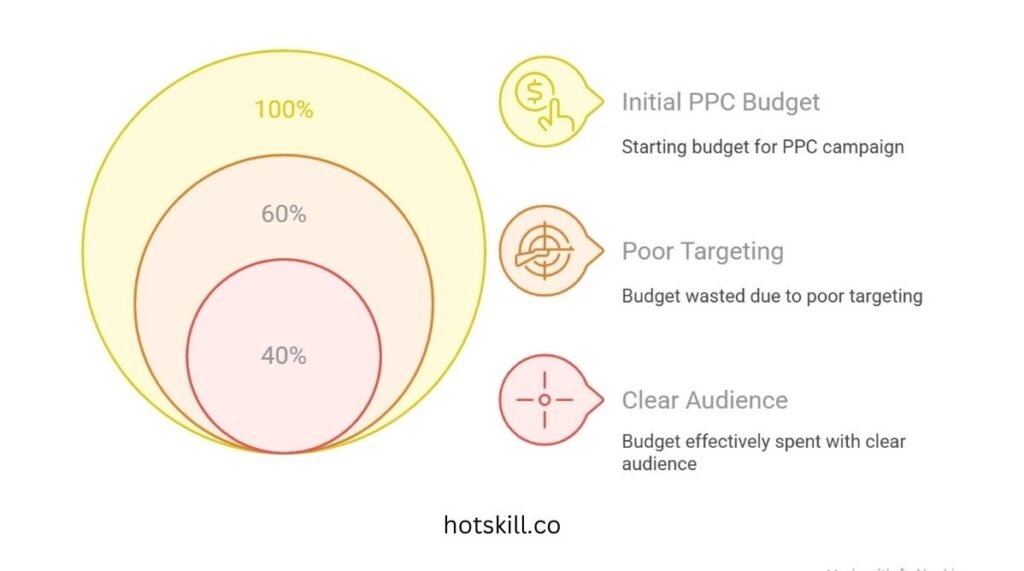
Audience Elements to Define
- Demographics: age, income, location
- Interests & Lifestyles: habits, brands followed
- Device & Behavior: mobile vs desktop, active hours
- Audience Size: smaller = lower budget
Examples
- Pet food brand → lookalike audience from past buyers
- B2B SaaS → LinkedIn targeting IT managers
- SAT tutoring → geotargeting wealthy neighborhoods in exam months
The clearer your audience, the more your dollars stretch.
Pick Your Platforms: Go Where Your Customers Are
Each platform has different strengths:
Platform Breakdown
- Google Ads
High intent. Best for service-based businesses. - Facebook/Instagram
Perfect for storytelling and retargeting. - TikTok/Snapchat
Low CPMs, younger audience, video-driven content. - LinkedIn
Pricier, but unmatched B2B precision. - Microsoft Ads
Cheaper alternative to Google with less competition.
You don’t need to be everywhere—
Just where your buyers are.
Crunch the Numbers: Real Budget Math
Here’s the formula for determining your PPC budget:
What You Need
- Avg CPC
- Conversion Rate
- Customer Lifetime Value (CLV)
Example Calculation
- CPC: $3.50
- Conversion rate: 4%
- Customer value: $200 (6-month CLV)
- Goal: 20 new customers/month
Math:
- Need 500 clicks (20 ÷ 0.04)
- Cost = 500 × $3.50 = $1,750
Result:
- Spend: $1,750
- Revenue: $4,000
- ROAS ≈ 2.28x
This is why CLV is everything.
Most small businesses invest 4%–10% of total revenue into digital marketing.
Map Out Your Money: Allocate Budget Across Campaigns
Don’t dump all your money into one bucket.
Smart Allocation Rules
- Feed Winners
Increase budgets for best-performing campaigns. - Split by Funnel Stage
Awareness vs retargeting vs conversion campaigns. - Factor in Seasonality
Spend more during seasonal spikes.
Over time, allocations evolve from guesswork to a repeatable system.
Test, Monitor, Adjust: Start Small, Scale Smart
Start with testing—it saves money and identifies winning combinations.
Testing Framework
- Test headlines, creatives, audiences
- Track:
- CTR
- Conversions
- CPA
- Bounce rate
Don’t tweak daily—let algorithms settle before reacting.
Squeeze More from Your Budget: Optimization Tips
Make your budget work harder:
- Use automated bidding (once you have enough data)
- Schedule ads based on peak conversion times
- Refine geotargeting
- Weekly audits to adjust performance
PPC is about ongoing tuning—not “set and forget.”
Final Take: Build a Budget You Trust—And Grow With
The real win is creating a PPC system that learns and improves over time.
You:
- set goals
- build around them
- test
- optimize
- refine
It’s not about perfection—it’s about progress.
Businesses that treat PPC like a guessing game waste money.
Businesses that treat PPC like a system grow.