
You’ve poured hours into crafting the perfect ad creatives. The headlines grab, the visuals pop. You hit the launch, expecting fireworks…and all you get is silence. Maybe one ad limps along. The rest? Dead weight.
Yep, been there.
The internet feels louder than ever. Too much noise. Too much choice. And unless your creativity hits the right nerve, it’s drowned out. That’s why winging it? Not an option anymore.
You’ve got to test. Not just once. Not half-heartedly. Real, structured, ongoing testing.
Think it’s only for agencies with big retainers or teams of data nerds? Not true. We’ve seen solo founders and tiny teams move mountains with smart creative testing. Doesn’t matter if you’re pushing a wellness app, an e-com brand, or a software tool still wearing its beta badge. If you’re spending on ads, you can’t afford guesswork.
So let’s dig in. From nailing down your goals to scaling a winner, here’s how to test ad creatives like it actually matters.
Step 1: Start with Sharper Goals (Define What Success Means)\
Before you make another ad, stop and ask yourself what you’re really trying to fix.
Not just get more clicks or boost sales. The magic happens when you get specific.
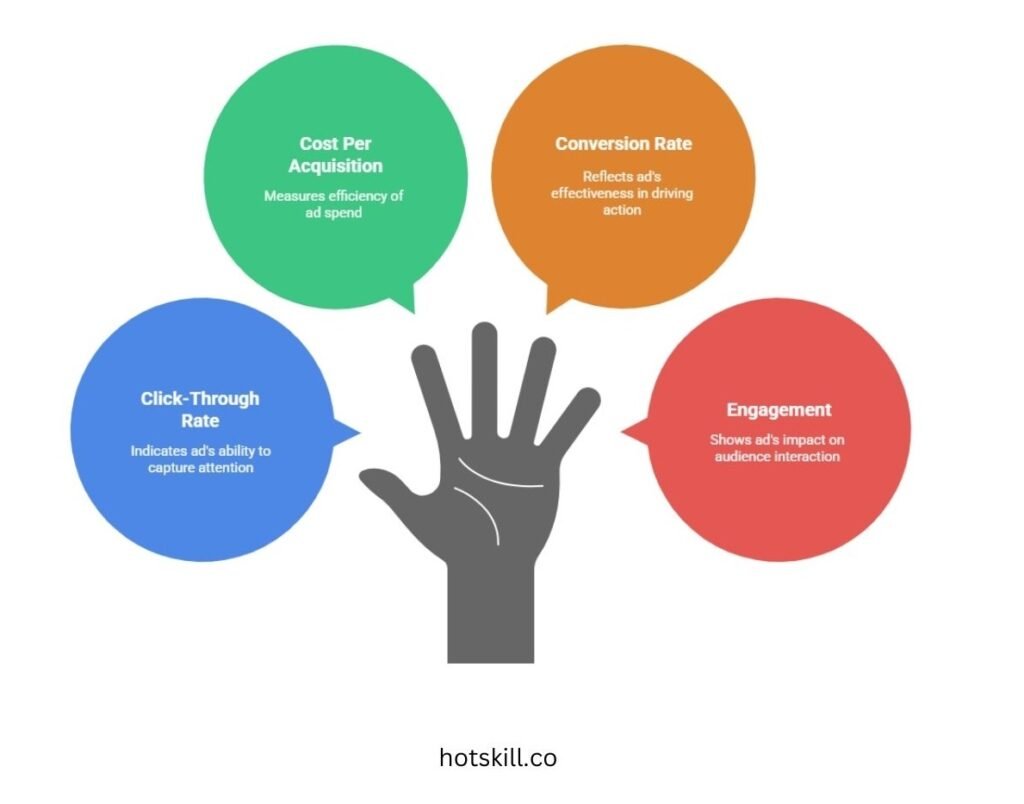
Key metrics that actually tell you what’s working:
- Click-Through Rate (CTR): Is your ad winning the scroll war?
- Cost Per Acquisition (CPA): Are you paying too much per signup or sale?
- Conversion Rate: Do people act once they land or bounce fast?
- Engagement: Likes, comments, shares especially valuable for awareness campaigns.
If you’re running ads for an online language course and your CTR is strong but conversions flatline, the problem isn’t attraction, it’s promise vs. payoff. Maybe the tone shifts after the click. Maybe the offer isn’t aligned.
Drill into the right metric. It keeps your tests honest.
Step 2: Know Your Audience (Before You Test Anything)
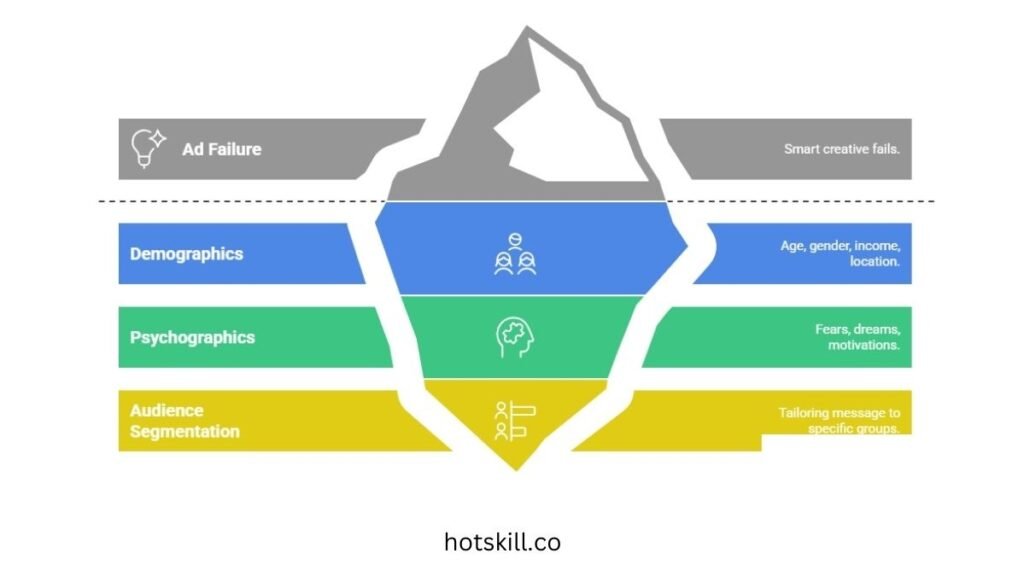
Here’s the uncomfortable truth: even the smartest creative fails if it’s speaking to the wrong person.
So define who the ad is for:
- Demographics: Age, gender, income, location.
- Psychographics: Fears, dreams, motivations.
Real-world examples:
A meal-prep service tested two audiences: fitness pros vs. busy parents. Two completely different emotional drivers. Or a B2B platform testing messaging to CTOs vs. growth marketers CTOs hated emojis, growth marketers loved them.
You don’t talk to a frazzled new mom the way you talk to a founder grinding 80-hour weeks.
Segment. Then speak directly.
Step 3: Build Variations That Actually Test Something
This is where creators get sloppy.
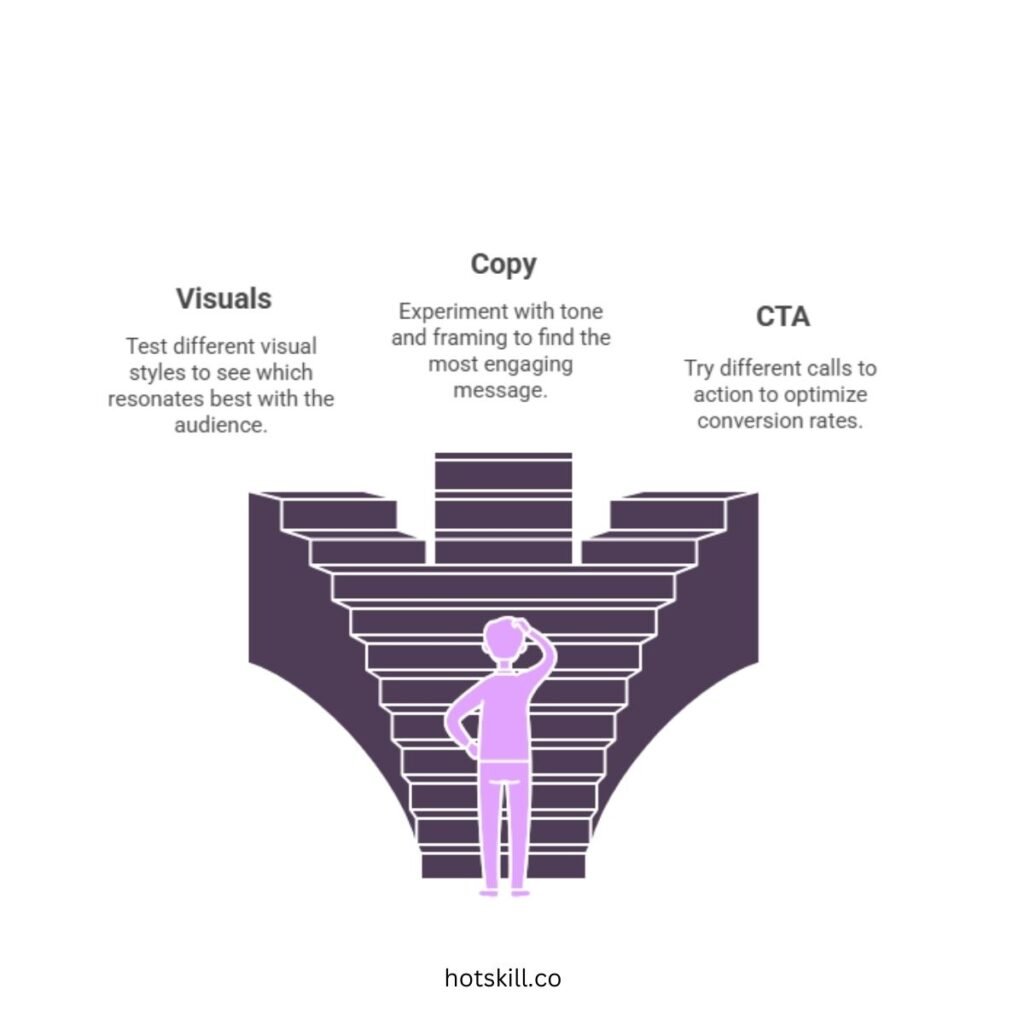
Don’t just make random variations each version should test one clear variable:
- Visuals
Bold vs minimal, product in use vs product alone, illustration vs raw selfie-style video. - Copy
Playful vs serious tone, emotional vs logical framing. - CTA
“Start Learning Today” vs “Join Free” vs “Get the Guide.”
Example: A skincare brand swapped polished product shots for a shaky bathroom selfie video explaining how it works. CTR jumped 45% because it felt real, not staged.
Test with intention.
Step 4: Pick a Testing Method
There isn’t one universal right way. There are three:
A/B Testing
Two versions. One change. Clean, simple, effective.
Multivariate Testing
Multiple elements tested at once. Requires bigger audience + clean hypothesis.
Sequential Testing
Run one version for a set period, then test the next. Ideal for seasonal campaigns or phased learning.
Choose based on budget, traffic volume, and urgency.
Step 5: Set Your Testing Parameters (Rules Before Launch)
Before hitting launch, lock in:
- Platform
- Time frame (ideally 10–14 days minimum)
- Equal budget distribution
- Sample size confidence threshold
Without structure, the data lies.
Step 6: Launch — and Don’t Judge Too Early
Once live, resist the urge to tweak too soon. Ad fatigue, algorithm learning phases, and delayed behavioral responses matter.
Look deeper:
- Which audience segments are responding?
- Does landing page behavior match the ad’s promise?
- Who’s bouncing, and why?
Give it time. Then analyze.
Step 7: Analyze Results Beyond Surface Metrics
A high CTR doesn’t matter if conversions are trash.
Ask:
- Is the difference statistically significant?
- Did it scale or collapse under volume?
- What explains the behavior change?
Sometimes the roughest creative wins because it’s honest not curated.
Step 8: Optimize, Scale, Repeat
Once you have a winner:
- Pause the losers.
- Shift budget to the winner.
- Duplicate it, and test a twist.
This is where momentum builds.
Best Practices to Keep in Mind
- Test one variable at a time early on.
- Align creative with funnel stage.
- Don’t throw away brand consistency for temporary novelty.
- Test platform-specific creative, not one-size-fits-all.
Creative testing isn’t fixing ads, it’s learning the language of your audience.
Final Thoughts
The internet is louder than ever. Attention is scarce. Creativity alone doesn’t win clarity, relevance, and iteration do.
Creative testing helps you shift from guessing to understanding. As AI increases content volume, testing becomes the filter that finds what resonates.
Run ads. Test smart. Keep learning. The danger isn’t a bad ad it’s not knowing why it didn’t work.