

You know that moment when a new product pops up and it feels like it understands you?
Maybe it fixes a small annoyance you stopped noticing or maybe it solves something big. Either way, it feels intentional. Personal. Like it was built just for you.
That’s product marketing at work quietly connecting the dots.
But product marketing isn’t just catchy copy or flashy launches. It’s about ensuring the product actually matters to the people it’s meant for and that it reaches them at the right time.
Let’s break down what product marketing really is, how it works, and why it’s at the heart of sustainable growth.
Introduction
Product marketing sits at the intersection of strategy, storytelling, and empathy. It’s the bridge between a product and the people it exists to help.
Beyond launches and promotions, product marketing is about alignment matching real user needs with meaningful solutions. It’s positioning. It’s messaging. And most importantly, it’s understanding.
If you’re launching something new or reviving something that’s losing momentum, product marketing is your lifeline. Ignore it, and even the best products can fade quietly.
Let’s unpack what strong product marketing actually looks like.
Key Components of Product Marketing
At its core, product marketing starts with clarity about the market, the audience, and the product’s purpose.
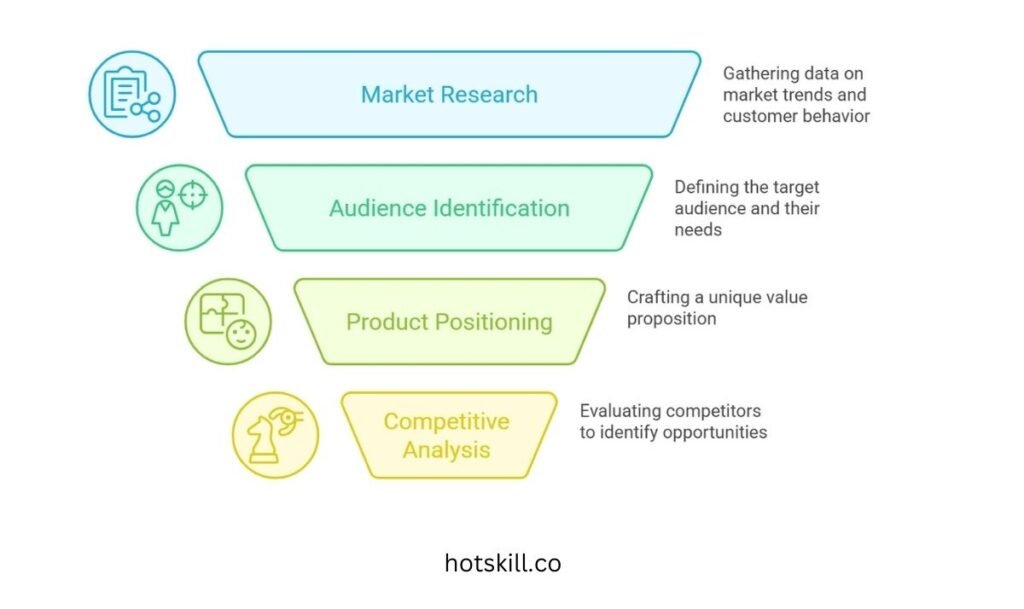
Market Research and Analysis
Markets change fast. Customer behavior evolves. Competitors adapt.
Effective product marketing begins by listening through surveys, trend analysis, interviews, and social signals.
Example:
A healthtech startup discovers doctors are overwhelmed with documentation. That insight becomes direction. Features sharpen. Messaging focuses. Now the product solves a real pain point.
Research doesn’t just inform it guides.
Target Audience Identification
You can’t help everyone and trying to usually backfires.
Strong product marketing means knowing:
- Who your product is for
- What frustrates them
- What they value
- How they think and talk
Example:
A Gen Z finance app shouldn’t sound like a bank brochure. Its audience cares about budgeting apps, crypto curiosity, and splitting bills—not retirement portfolios.
Connection starts with relevance.
Product Positioning and Messaging
Positioning answers: Why this product? Why now?
Messaging answers: How do we say it so people care?
Different audiences need different angles.
Example:
An AI-powered contract review tool:
- Lawyers care about accuracy and efficiency
- Startup founders care about saving time and money
Same product. Different pain points. Different stories.
Competitive Analysis
Competition reveals opportunity.
Watching competitors helps you:
- Identify gaps
- Sharpen differentiation
- Refine pricing and timing
Example:
An education platform that adapts in real-time for struggling students isn’t just another quiz app that’s a standout value.
Competitive analysis isn’t copying. It’s positioning yourself where others aren’t.
The Role of a Product Marketer
Product marketers are translators connecting product, marketing, sales, and customers.
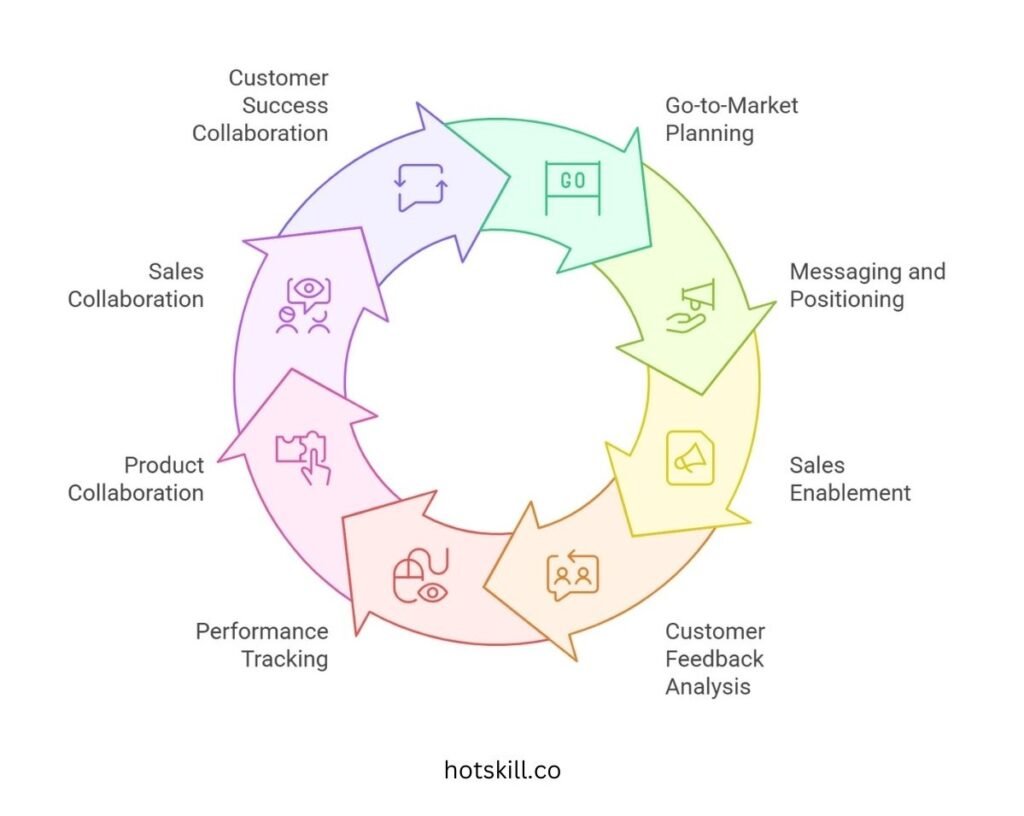
Responsibilities and Skills
Their work blends strategy with execution:
- Go-to-market planning
- Messaging and positioning
- Sales enablement
- Customer feedback analysis
- Performance tracking
One day they’re writing launch copy. The next, they’re analyzing churn data.
It takes logic, creativity, and empathy to turn features into stories people care about.
Collaboration with Other Teams
Product marketing thrives on collaboration.
- With Product: Shape features around real user needs
- With Sales: Equip teams with stories, decks, and objections
- With Customer Success: Turn feedback into improvements
They keep everyone aligned—and focused on the customer.
Product Marketing Process
A great idea needs a roadmap to succeed.
Product Launch Planning
A launch requires structure:
- Clear objectives
- Defined timelines
- Assigned ownership
- Educational and promotional content
- Distribution strategies
Example:
A sustainable clothing brand might tease material sourcing pre-launch, then collect feedback post-launch to improve the next drop.
Go-to-Market Strategy
This defines:
- Where to show up
- Who to speak to
- What to say
- How to price
Example:
Enterprise cybersecurity brands target CIOs via webinars and whitepapers not TikTok.
Skincare brands for Gen Z? TikTok might be the best channel.
Strategy works when message meets audience.
Sales Enablement
Even the best product fails if it’s hard to explain.
Product marketers create:
- Competitive battlecards
- Email templates
- One-pagers
- Demo scripts
- Objection-handling guides
They turn complexity into clarity.
Customer Feedback and Iteration
Launch is just the beginning.
Insights come from:
- Support tickets
- NPS scores
- User behavior
- Direct feedback
Example:
An EdTech platform adds in-app tip videos based on teacher feedback and adoption increases.
Listening fuels improvement.
Product Marketing vs. Product Management
They work closely but focus on different questions:
- Product Marketing: How do we explain it and who needs it?
- Product Management: What should we build and why?
One creates the solution. The other ensures it’s understood and desired.
Alignment between the two is where growth accelerates.
Product Marketing Across Business Stages
Startups
Startups search for product-market fit.
Product marketing here means:
- Rapid experimentation
- Bold messaging
- Fast feedback loops
Example:
A solar startup tests messaging in local communities, webinars, and social groups—learning what resonates in real time.
Established Companies
For larger companies, the challenge is staying relevant.
Product marketing helps:
- Refresh positioning
- Reintroduce products
- Reach new audiences
Even traditional industries benefit from sharper storytelling.
Common Challenges in Product Marketing
Some challenges show up often:
- Shifting customer expectations
- Team silos
- Attribution and measurement gaps
The fix? Better alignment, clearer roles, and constant learning.
Tools and Techniques Used in Product Marketing
Product marketers rely on tools such as:
- Analytics: Google Analytics, Mixpanel
- CRM: HubSpot
- Email automation: Marketo
- Feedback tools: Typeform, Qualtrics
Tools don’t replace strategy—they support it.
Conclusion
What Product Marketing Really Is
Product marketing is about connection.
Between product and person.
Between features and outcomes.
Between problems and solutions.
It’s finding the story that makes people say, “This is for me.”
Why Product Marketing Matters
When done right:
- Sales grow
- Retention improves
- Trust builds
- Communities form
Customers don’t buy features.
They buy clarity, confidence, and hope.
Product marketing is how you deliver that.
And that makes it one of the most important roles in any business.