

Introduction
You’ve put in the hours. Poured budget into your landing pages, fine-tuned the copy, maybe redesigned the entire thing twice. You step back and ask yourself…the big question:
“Is this actually working?”
That, right there, is why we track conversions. It’s how we move out of guesswork and into clarity. When someone visits your site and actually takes action — buys something, signs up, downloads whatever you’re offering — that’s a conversion. Simple idea, big impact.
But let’s not stop at measuring conversion rate alone. If you’re playing the long game, you also want to know if one version of your page works better than another. That’s what Calculate conversion uplift shows us.
This guide walks you through how to calculate conversion rates and find the uplift between two versions — Variant A and Variant B. Doesn’t matter if you’re in marketing or in health, finance, education, or e-commerce. This stuff applies across the board.
So, let’s dig in.
Understanding Conversion Rate
Before we jump to the “growth” stuff, let’s get our footing.
What Is a Conversion Rate, Really?
At its core, Calculate Conversion rate = the percentage of people who see what you’re offering and say yes.
That “yes” can be:
- Buying something
- Signing up for a newsletter
- Filling out a form
- Downloading a tool, a guide, maybe an app
The math is basic:
(Conversions / Total Visitors) x 100 = Conversion Rate
For example, if 10 people out of 200 make a purchase:
(10 / 200) x 100 = 5%
That’s your Calculate Conversion rate. Five percent might not sound huge, but even a single percentage point say 5% jumping to 6% can mean serious money or signups, depending on your volume.
Different Industries, Different “Conversions”
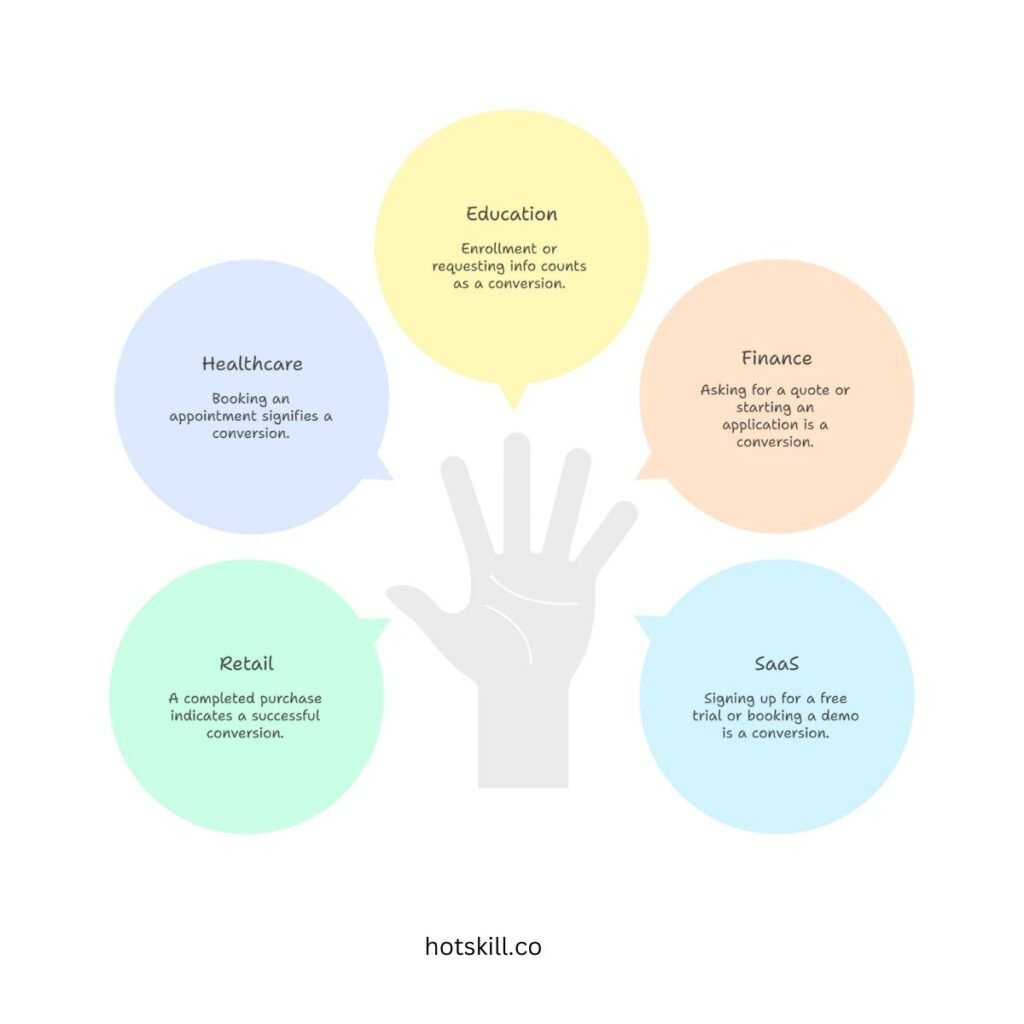
What counts as a conversion kind of depends on your world:
- Retail? A completed purchase
- Healthcare? Someone booking an appointment
- Education? Enrollment or even just requesting info
- Finance? Asking for a quote or starting an application
- SaaS? Signing up for a free trial or booking a demo
The key is making sure the action you’re measuring ties clearly to an actual business goal. Otherwise, you’re tracking noise.
What You’ll Need to Do the Math
No fancy dashboards required (though they help). At the bare minimum, grab:
- Number of users or visitors
- Number of conversions (those who completed the action)
Make sure you’re comparing apples to apples. Don’t look at a week of data for one variant and a whole month for another. Don’t compare one channel to a completely different one. Consistency matters more than most people realize.
Clean numbers = useful insights.
Step-by-Step: How to Calculate Conversion Rates
Time to roll up sleeves.
Step 1: Gather Your Numbers
Start simple:
- How many people saw Version A? How many converted?
- Same for Version B.
Stick to the same tools Google Analytics, your CRM, Hotjar, doesn’t matter. Just be consistent.
Step 2: Calculate Each Conversion Rate
Plug into the formula separately for each variant.
Conversion Rate A = (Conversions A / Visitors A) x 100
Conversion Rate B = (Conversions B / Visitors B) x 100
Say you’ve got:
- Variant A: 5 conversions out of 125 visitors → 4%
- Variant B: 9 conversions out of 150 visitors → 6%
Nothing complicated there. Now let’s see how much better B did.
Step 3: Find the Uplift
This is the part people often skip but it tells the real story.
Use this formula:
[(Conversion Rate B – Conversion Rate A) / Conversion Rate A] x 100
With our example:
[(6 – 4) / 4] x 100 = 50% Uplift
That 6% isn’t just better than 4%. It’s 50 percent better. See the difference?
Knowing that lift gives better context to results than just looking at raw conversion rates.
Tools That Make This Easier (and Faster)
Yes, pen and paper works. But let’s be honest we’re all busy.
Here are tools that’ll save your brainpower:
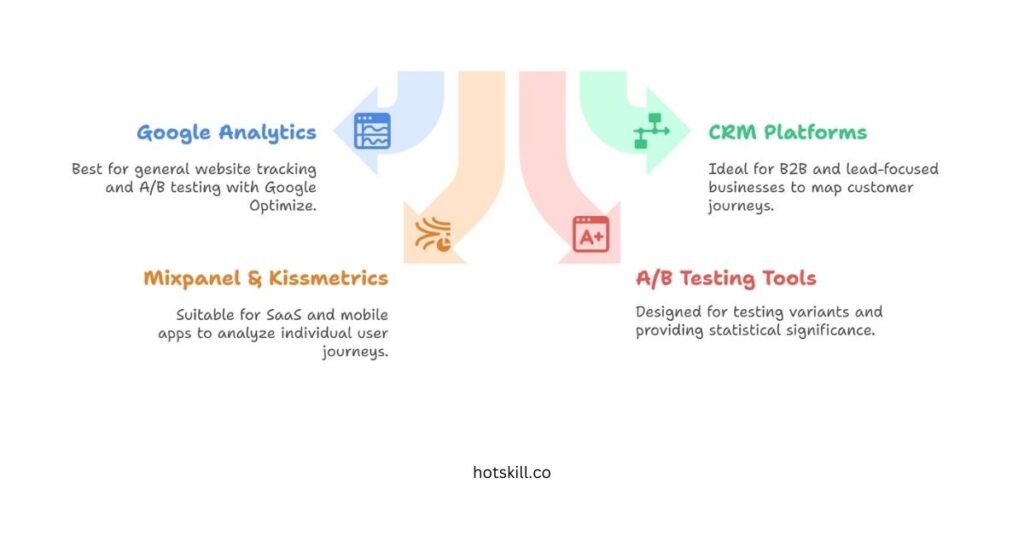
Google Analytics
Still the backbone for most websites. Use goals to track conversions by page or campaign. Pair it with Google Optimize to run tests directly.
HubSpot, Salesforce, and CRM Platforms
Especially handy for B2B or lead-focused businesses. They help map out the journey from first click to actual Calculate Conversion, so you know how someone got there.
Mixpanel & Kissmetrics
These dig deeper. Perfect for SaaS or mobile apps. You can analyze individual user journeys, not just aggregate stuff.
A/B Testing Tools (Optimizely, VWO, etc.)
These are built for testing. Push variants live, monitor performance, and they’ll even flag when results are statistically significant. No manual stats needed.
You don’t need to stick to one platform. Use what fits depending on where in the journey you’re focusing.
What Impacts Conversion Rate?
Math is one side of it. But let’s talk about real-world factors. These are the invisible levers that shape your rates.
Design & UX
Even the best offer won’t convert well on a clunky, slow, or ugly page. People bounce fast when things feel off.
Clean layout. Clear navigation. Minimal distractions. Whether you’re helping patients schedule an appointment or selling a course, friction kills conversions.
We’ve seen forms lose people just because they were longer than needed. Sometimes, trimming two fields makes all the difference.
Your CTA — It Matters More Than You Think
A call to action isn’t just a button. It’s the moment you’re asking someone to trust you, even a little.
“Submit” is boring. “Start Learning” or “Get My Free Quote”? Specific. Personal. Action-driven.
Tiny changes in button text or color can actually boost Calculate Conversion rates by 4% or more. For real.
Speaking to the Right People
Doesn’t matter how clever your copy is if it’s for the wrong audience. Or if they don’t care.
A landing page that nails the message for first-time home buyers probably won’t click with seasoned investors. In education, targeting parents is going to look way different than speaking to recent grads.
Dial into your audience. Match their tone, their urgency, their goals.
How to Boost Those Conversion Rates (and Uplift)
Alright, ready to turn those small wins into real growth?
A/B Test Smart Not Wild
Testing is less about constant change and more about consistent learning.
Don’t flip five things at once. Pick one: a headline, a new image, the order of testimonials. Test it. See what moves.
And please wait until you’ve got enough data to trust your result. Hunches are fun, but data wins.
Keep refining. The game never really ends.
Clean Up Your Landing Pages
Most pages lose people because they’re trying to do too much.
Try this instead:
- Cut out extra links
- Replace paragraphs with bullet points
- Add reviews, media shoutouts, or “as seen in” logos
- Focus on benefits, not just features
We’ve seen education sites jump 4% in sign-ups just by moving their strongest testimonial above the fold. Small shifts, big gains.
Personalize the Experience
In 2024 people expect stuff to feel tailored to them.
Use what you know. If someone looked at winter gear, suggest snow boots, not sandals. If a lead clicked your email about accounting software, don’t send them follow-ups about HR tools.
Even basic personalization can lift performance. It shows you’re paying attention.
Mistakes That Trip People Up
Even folks who’ve been doing this a while can mess up the basics. Here’s what to avoid:
- ❌ Testing with tiny traffic means unreliable results
- ❌ Skipping statistical significance leaves you guessing
- ❌ Ignoring time of year or outside factors (like… holidays)
- ❌ Comparing different users or channels without adjusting for it
- ❌ Calling it a win after one test… and then watching conversions drop the next week
Protect against wishful thinking. Always check context. Be skeptical of spikes until they hold for a while.
Wrapping It All Together: Why Uplift Actually Matters
Conversions aren’t random. They’re built over time, through tweaks and tests that stack up.
Your conversion rate tells you your score. Uplift tells you what helped move the needle. That second metric? That’s where the gold is buried.
Even a 4% uplift isn’t small. Depends on your volume, but for lots of businesses, it’s the difference between scraping by and actually getting ahead this quarter.
So here’s your move:
- Nail down what a conversion means for your biz
- Use the right tools to collect clean, comparable data
- Run smart, focused tests. Don’t get distracted by shiny ideas
- Always measure the uplift, not just end numbers
- Keep going. Growth lives in the refinements
Businesses that treat conversion optimization as an ongoing habit, not a one-time project, are the ones that win. Because they’re learning. Testing. Evolving.
And those little lifts over time? They add up. Whether that’s more booked appointments, higher product sales, or just more people actually completing your form.
Are you ready to chase that next 4%?
Let’s get testing.