

Introduction
Let’s be honest—building a digital marketing strategy from scratch feels like dumping out a 1,000-piece puzzle with no box lid. You’ve got all these scattered pieces—SEO, social, content, emails, ads, analytics—and no idea which corner to start with.
But here’s the truth: whether you’re running a neighborhood bakery, launching a SaaS product, or managing marketing for a healthcare giant, you need a solid digital strategy. Without it, you’re basically competing blindfolded.
This isn’t another jargon-filled checklist. This is the guide for those staring at a blank page wondering: What do I actually do? Where do I start? What’s worth my time?
Let’s build this step by step—realistic, imperfect, effective.
And first? You look inward.
Understanding Your Business and Goals
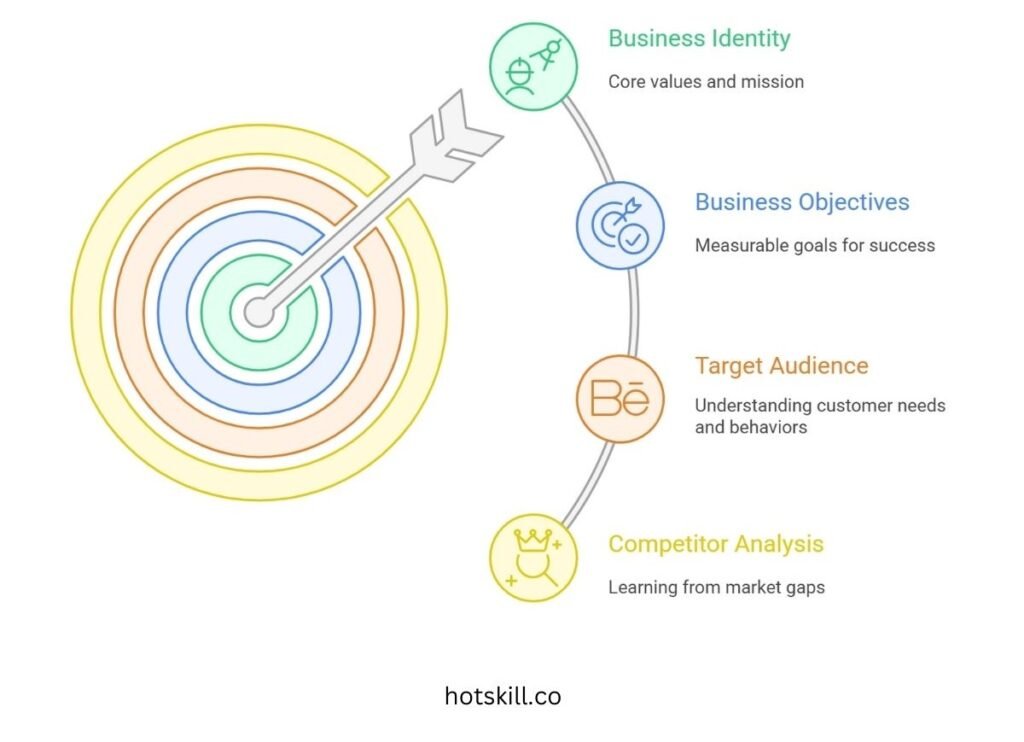
Before running ads or pumping out content, you need clarity about your identity, purpose, and direction.
A. Define Your Business Objectives
Skip the fluff and get brutally clear.
Ask: What does success look like?
Examples:
- Generate $30,000/month in online leads by Q4
- Reach 1,000 paid subscribers within 6 months
- Expand into two new cities by year-end
These aren’t just “goals”—they’re your lighthouse.
B. Identify Your Target Audience & Build Personas
Marketing to everyone is marketing to no one.
Dig deep:
- What keeps them up at night?
- What are they Googling in panic mode?
- What’s stopping them from solutions?
Give your personas names and stories. Real conversations > fancy templates.
C. Analyze Competitors and Industry Trends
You’re not copying competitors—you’re learning from the gaps they leave.
Study:
- Their content
- Their reviews
- Their social tone
- Their website UX
- Their ranking keywords
Tools help (SEMrush, Ahrefs), but sometimes a simple user’s-eye-view works best.
Now that we know who you are, let’s understand the world around you.
Conducting Market and Audience Research
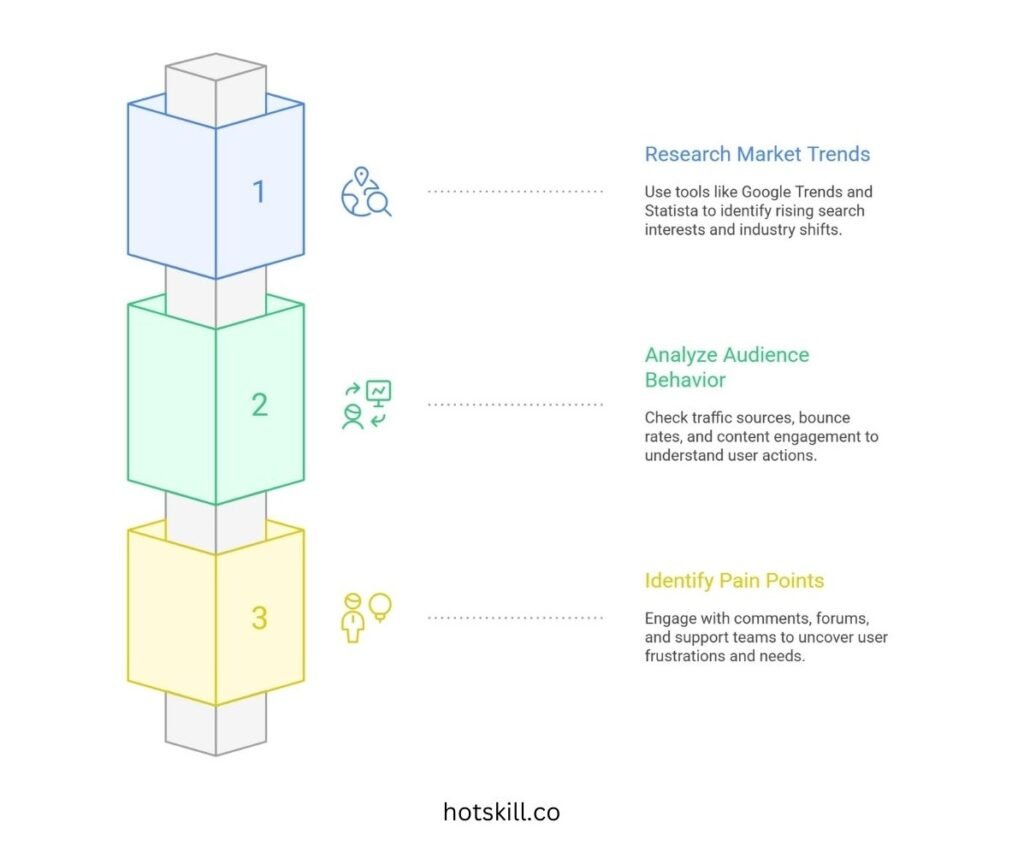
This step transforms assumptions into actionable truth.
A. Research Market Trends with the Right Tools
Look for moving patterns—not hype.
Tools like:
- Google Trends → rising search interests
- AnswerThePublic → real user questions
- Statista / McKinsey → industry shifts and forecasts
Trends show where attention (and opportunity) is heading.
B. Analyze Audience Behavior with Analytics
What people do matters more than what they say.
Check:
- Where your traffic comes from
- What pages they bounce from
- Which content they binge
- Which keywords competitors dominate
This removes guesswork from strategy.
C. Identify Pain Points via Empathy-Driven Research
Scroll comments. Search Reddit threads. Talk to support teams. Listen to complaints.
You may find:
- It’s not about “features”
- It’s about saving time
- Reducing stress
- Simplifying life
This is your positioning gold.
Setting Clear & Measurable Goals

Goals guide decisions. Without them, you’re just reacting.
A. Use SMART Goals
Make them:
- Specific
- Measurable
- Achievable
- Relevant
- Time-bound
Example:
❌ “Get more traffic.”
✅ “Increase organic traffic by 25% in 90 days.”
B. Examples of Solid Digital Goals
For a fitness app:
- 10,000 new app users in 6 months
- Improve email open rate by 18%
- Reduce landing page bounce rate by 20%
Different industries = different benchmarks. Adjust accordingly.
C. Connect Goals to Business Objectives
If your business wants wider recognition, track brand searches by region.
If revenue per user matters, focus on retention and upsells.
Everything should ladder up.
Choosing the Right Digital Marketing Channels
Your message only works if your audience actually sees it.
A. Overview of Key Marketing Channels
Pick what fits your brand and goals:
- SEO → long-term visibility
- PPC → instant traffic
- Social media → brand personality + community
- Email → highest ROI
- Video → unmatched engagement
- Content → authority + trust
- Local SEO → must-have for physical businesses
No brand needs every channel.
B. Match Channels to Audience Behavior
Examples:
- New moms → Instagram, Pinterest
- CTOs → LinkedIn, YouTube, niche communities
- Gen Z → TikTok, Reels
- Agencies → Twitter, webinars, newsletters
Right platform = half the battle won.
C. Prioritize Budget by ROI Potential
Follow a smart rule of thumb:
- 70% → Channels already working
- 20% → Testing new ideas
- 10% → High-risk creative experiments
Focus beats scatter.
Creating a Content Strategy
Content is the backbone of digital marketing.
A. Why Content Matters
It builds:
- Trust
- Awareness
- Authority
- Brand voice
Content shapes perception long before anyone buys.
B. Choose Content Types That Fit Your Message
Try:
- How-to blog posts
- Tutorials
- Testimonials
- Videos
- Case studies
- Checklists & templates
- Infographics
- Podcasts
Create once → repurpose everywhere.
C. Build a Practical Content Calendar
Plan:
- Evergreen pieces
- Seasonal topics
- Launch-related content
- Weekly pillars
Use whatever tool keeps you consistent: Notion, Trello, Sheets—anything works.
Now let’s talk about the place where content lives: your website.
Building & Optimizing Your Website
Think of your site as your digital storefront. Make it intuitive.
A. Must-Have Features
- Strong CTAs
- Fast load times
- Mobile-friendly design
- Testimonials
- Clear navigation
- Easy forms
If clarity is missing, conversions tank.
B. Focus on Mobile & UX
Since most users are mobile-first:
- Large buttons
- Fast-loading media
- Clean text
- Zero clutter
Tools like Hotjar show exactly where users get stuck.
C. Basic SEO Essentials
- Clear URL structure
- Keyword-optimized headlines
- Compressed images
- Proper schema
- Internal linking
- Secure hosting
Small changes → huge results
Implementing SEO Strategies
SEO is how strangers discover you organically.
A. On-Page SEO
Optimize:
- Keywords
- Headers
- Meta descriptions
- Readability
- Search intent
Search intent is everything.
B. Off-Page SEO
Build trust with:
- Backlinks
- Guest posts
- Digital PR
- Directory listings
- Social proof
Credibility signals matter.
C. Technical SEO
Behind-the-scenes improvements:
- Fast load speeds
- Zero broken links
- Clean sitemaps
- SSL
- Mobile-first indexing
Healthy sites rank better.
Setting Up Paid Advertising Campaigns
Ads fuel growth when used strategically not blindly.
A. Build PPC Campaigns Right
Structure campaigns by:
- Product/service
- Audience type
- Funnel stage
Always match ad → landing page.
B. Test Budget & Bidding Models
Start small:
- $5–$15/day
- Test multiple audiences
- Refine based on early data
Most ads improve through iteration, not luck.
C. Monitor Results Closely
Track:
- CTR
- CPC
- CPA
- ROAS
- Funnel drop-offs
Scale only what’s working.
Leveraging Social Media Marketing
This is where your brand becomes human.
A. Choose the Right Platforms
Quality > quantity.
B. Focus on Engagement, Not Vanity Metrics
Likes don’t convert—conversations do.
Ask questions, share wins, teach, reveal behind-the-scenes. That’s how you build true connection.
C. Social Advertising Basics
Short video. Clear copy. Strong hooks.
Test variations constantly.
Email Marketing & Automation
Email remains a powerhouse if used thoughtfully.
A. Build a High-Quality List
Offer:
- Guides
- Templates
- Tools
- Discounts
Never buy lists.
B. Send Emails People Look Forward To
Educational > salesy.
Deliver value consistently.
C. Automate Smartly
Set up:
- Welcome flows
- Abandoned cart emails
- Win-back sequences
Review quarterly and optimize.
Measuring & Analyzing Performance
What isn’t measured can’t be improved.
A. Identify the Right KPIs
Match KPIs to goals.
Avoid vanity metrics.
B. Use Tracking Tools
GA4
Looker Studio
HubSpot
Heatmaps
CRM dashboards
These make insight fast, not painful.
C. Make Data-Driven Improvements
Keep asking “Why?”
Why did traffic dip?
Why did a page convert higher?
Why did one ad flop and the other take off?
Dig until you find the real reason.
Continuous Optimization & Scaling
Digital marketing is a moving target.
A. Run Regular Audits
Quarterly reviews help you stay sharp and relevant.
B. Experiment Often
A/B test:
- Headlines
- CTAs
- Colors
- Layouts
- Creatives
- Subject lines
Small tweaks → big gains.
C. Scale What Performs
If something works double down.
Repurpose content. Increase ad spend. Simplify funnels. Duplicate winning campaigns.
Common Challenges & How to Overcome Them
A. Limited Budget
Prioritize:
- SEO
- Content repurposing
- Referral programs
These compound over time.
B. Fast-Changing Trends
Stay curious. Follow creators. Watch communities. Keep experimenting.
C. Multi-Channel Overwhelm
Organize with:
- Notion
- Trello
- Airtable
- ClickUp
Create a rhythm and refine it.
Conclusion
There’s no perfect digital marketing strategy. There’s only:
- Clarity
- Consistency
- Curiosity
- Continuous improvement
Start small. Learn fast. Pivot often.
Your strategy will evolve and so will you.
Build it one piece at a time.