

Introduction
Let’s be honest—keeping up with content these days is a grind. Whether you’re writing blog posts, running Instagram campaigns, or pushing out a podcast episode, it takes a toll. Ideas slow down. Deadlines speed up. And trying to maintain quality at the same time? That’s the part nobody talks about enough.
But here’s the interesting twist: AI tools are here, and they’re not just a buzzword from tech Twitter.
Picture this—you’ve got a script that isn’t landing, or you need graphics for a last-minute email campaign. Instead of scrambling, your AI tools step in. No burnout. No delays. Just help that works. And no, it’s not robotic filler. With the right prompts and edits, the output sounds exactly like you—sometimes even sharper.
This guide breaks down how AI tools help you write smarter, design better, and create faster. Whether you’re in education, healthcare, marketing, public service, or building something solo, this is about working smarter, not harder.
Let’s dive in.
Types of AI Tools for Content Creation
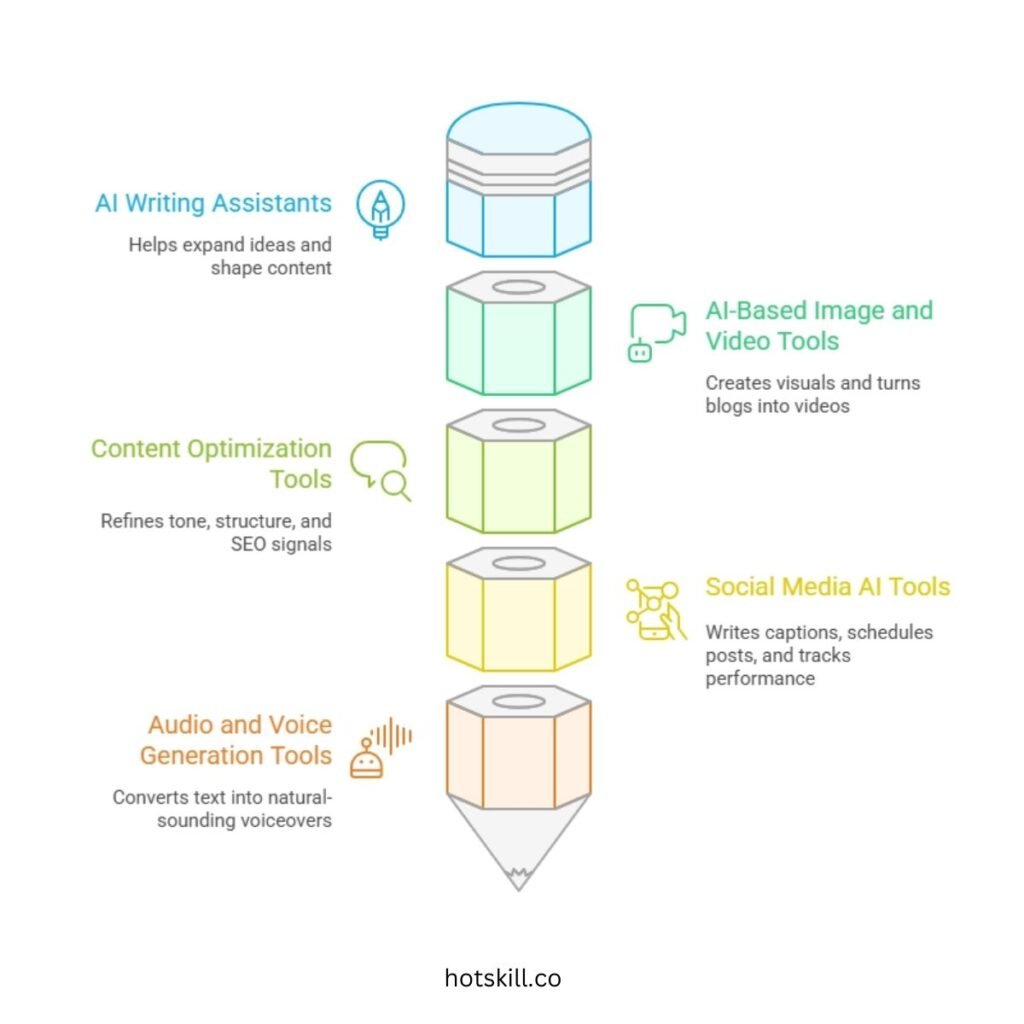
AI tools wear different hats. Some write, some design, some optimize, and some do a bit of everything. Here’s how they break down.
AI Writing Assistants
We’ve all been there—staring at a blank page while the cursor blinks back like it’s judging you. Tools like Jasper and ChatGPT kickstart the process by expanding your ideas, generating outlines, and shaping content in your voice.
They’re not just for bloggers. Teachers, marketers, HR teams, legal departments—anyone who writes anything can use them.
AI-Based Image and Video Tools
People scroll fast, but they stop for visuals.
Canva’s AI features, Lumen5, and other design tools help you create clean graphics or turn blogs into videos without a design background. Perfect for Instagram, LinkedIn, or TikTok.
And then there’s DALL·E, which creates original images straight from text prompts. Need an “astronaut juggling lemons on a rooftop”? Done.
Content Optimization Tools
Publishing is only half the job. Getting discovered is the other half.
Tools like Grammarly and Surfer SEO help refine tone, structure, and SEO signals so your content ranks better. Whether you’re writing about solar energy or skincare, these tools make your content clearer and more findable.
Social Media AI Tools
Posting daily across multiple platforms is exhausting.
Tools like Buffer and Lately.ai help write captions, schedule posts, and track performance. They’re perfect for nonprofits, colleges, startups—any team juggling multiple channels with limited bandwidth.
Audio and Voice Generation Tools
Some people prefer listening over reading.
Audio AI tools like ElevenLabs convert articles or FAQs into natural-sounding voiceovers. Great for accessibility, patient communication, education, or repurposing content across formats.
Top AI Tools for Content Writing

If writing is your heavy-lift task, these are the tools that matter.
Jasper.ai
Jasper adapts to your brand tone almost instantly. Whether it’s a product launch or a long-form guide, it delivers strong, consistent writing. Popular across SaaS, ecommerce, coaching, and creator brands.
Copy.ai
Perfect for short, punchy content: captions, headlines, microcopy, email openers. Loved by founders, creators, and small teams who want clean output fast.
Writesonic
Your brainstorming buddy. Especially strong for topic ideas, SEO content, and blog structures. When you’re stuck, it pushes you forward.
Grammarly
More than spellcheck. It analyzes clarity, tone, and flow—and works across tools like WordPress, Google Docs, and Slack. Great for formal, internal, or public-facing documents.
Surfer SEO
If ranking matters, Surfer is essential. It integrates SEO into your writing with real-time keyword, structure, and linking suggestions. Used across finance, lifestyle, education, and tech niches.
AI Tools for Visual Content Creation
Words matter. Visuals pull attention. Here are the top tools in this space.
Canva AI
With AI-powered suggestions for layouts, color palettes, and captions, Canva makes design easier for non-designers. Great for teachers, marketers, and small businesses.
DALL·E
When you need something truly original, DALL·E generates custom images from text prompts. Brands use it for ads, campaign visuals, product concepts, and more.
Lumen5
Turns long-form content into short videos—perfect for social media. Used by real estate brands, universities, charities, and media teams.
DeepArt
Transforms photos into artwork in the style of famous painters. Great for album covers, posters, campaigns, and creative visual branding.
Benefits of Using AI Tools in Content Creation
Here’s the real payoff.
Speed and Efficiency
Tasks that normally take days can happen in minutes. Drafting, editing, scheduling—it all speeds up. One agency cut 55% of its weekly production time by adopting AI across workflows.
Creativity on Demand
AI helps break creative blocks by generating new angles, examples, hooks, and story ideas. You may ignore some ideas—but the gems are worth it.
Natural SEO Integration
Modern tools blend SEO suggestions into your writing without making it sound robotic. One team doubled blog traffic in six months by combining AI-assisted writing with human editing.
Budget-Friendly Production
AI reduces dependency on constant outsourcing. You can create pro-level blogs, graphics, audio, and videos without expanding your team.
AI doesn’t replace people—it helps small teams work like big ones.
Challenges and Limitations of AI Content Tool
AI is powerful, but not perfect.
It’s Not Fully Human
AI can miss emotional nuance or cultural context. Great draft, but you still need human warmth and insight.
Similarity and Repetition
AI pulls from patterns it has seen before. Sometimes it can sound generic or repetitive. Always edit to add originality and brand personality.
Over-Reliance
AI can cause people to stop thinking critically. You must fact-check and refine to avoid tone issues or inaccuracies.
Best Practices for Using AI Tools in Content Creation
Use AI wisely—not blindly.
Always Add a Human Layer
AI is a starting point. The final touch should be yours—tone, storytelling, sharpness, and nuance.
Maintain Your Brand Voice
Keep your point of view, your tone, and your style. AI helps; it shouldn’t overwrite your creative identity.
Stay Updated
AI evolves fast. Features improve weekly, and policies around AI content shift. Staying current helps you get the most impact.
The Future of AI in Content Creation
The next wave is coming—and it’s big.
Smarter Language Models
Future writing tools will understand emotion, cultural context, humor, and intent more accurately—resulting in even more natural content.
Seamless Integrations
Content tools will sync directly with CRM, analytics, calendars, and campaign systems. Imagine a blog post that auto-publishes at the best time based on audience behavior.
Hyper-Personalized Content
AI will create content tailored to individuals—personalized emails, audio summaries, product updates, and more.
What feels sci-fi today will be standard soon.
Conclusion
AI tools are no longer a luxury—they’re an advantage anyone can use. Whether you’re running a side hustle or managing a large content operation, AI helps lighten the load and strengthen your output.
Start with one tool. Use it where you feel the most friction—brainstorming, editing, design, or scheduling. Then scale from there.
This isn’t about chasing every new trend. It’s about using today’s tools to tell your story better, faster, and with more impact.
Don’t just keep up—get ahead.