

Introduction
In today’s dynamic business environment, brands are constantly seeking innovative ways to connect with consumers on a deeper, more meaningful level. Traditional advertising is no longer enough to capture attention or build lasting brand loyalty. Instead, companies are turning toward immersive experiences that create emotional connections, foster community, and fundamentally shift how people perceive and interact with products and services. In this expansive article, we will explore powerful experiential marketing examples that revolutionized engagement and shifted the way audiences think, feel, and behave.
Experiential marketing—also known as engagement marketing—involves live, interactive brand experiences designed to spark a reaction, emotion, or memory. When done right, these experiences leave a lasting imprint on the consumer psyche, often prompting action far beyond the event itself. This detailed exploration goes beyond surface-level definitions to examine real-world implementations that altered audiences’ attitudes and purchase patterns.
Understanding how and why these initiatives work requires a deeper look at the psychological processes behind consumer decision-making. Brands that succeed in this space don’t just promote products; they create narratives that allow customers to become part of the story. They invoke curiosity, inclusivity, and participation in ways that transform passive observers into active brand advocates.
In the following sections, we’ll analyze a variety of experiential marketing examples from global brands across industries. Each case study offers insights into strategy, execution, and outcomes, revealing how strategic experiences can influence perceptions, shape preferences, and ultimately drive conversions.
The Power of Personal Interaction
Most experiential marketing initiatives hinge on personalized interactions between brands and consumers. Unlike traditional channels that broadcast messages to a mass audience, experiential marketing invites individuals to engage in a two-way dialogue. At its core, this form of marketing prioritizes individual experience over broad messaging, emphasizing quality of engagement rather than quantity of impressions.
Take, for instance, an athletic apparel brand that turns its retail store into a fitness playground. Rather than merely displaying products on racks, the brand invites customers to test gear through guided workouts and product demonstrations. These hands-on interactions allow prospective buyers to feel fabrics, assess performance, and test comfort in real-world conditions.
What sets impactful experiential campaigns apart is their ability to create authentic moments. Consumers aren’t simply told a product is superior; they experience proof firsthand. These experiences don’t just inform; they influence; they trigger changes in consumer perception, preferences, and, importantly, behavior.
Redefining Engagement Through Innovative Environments
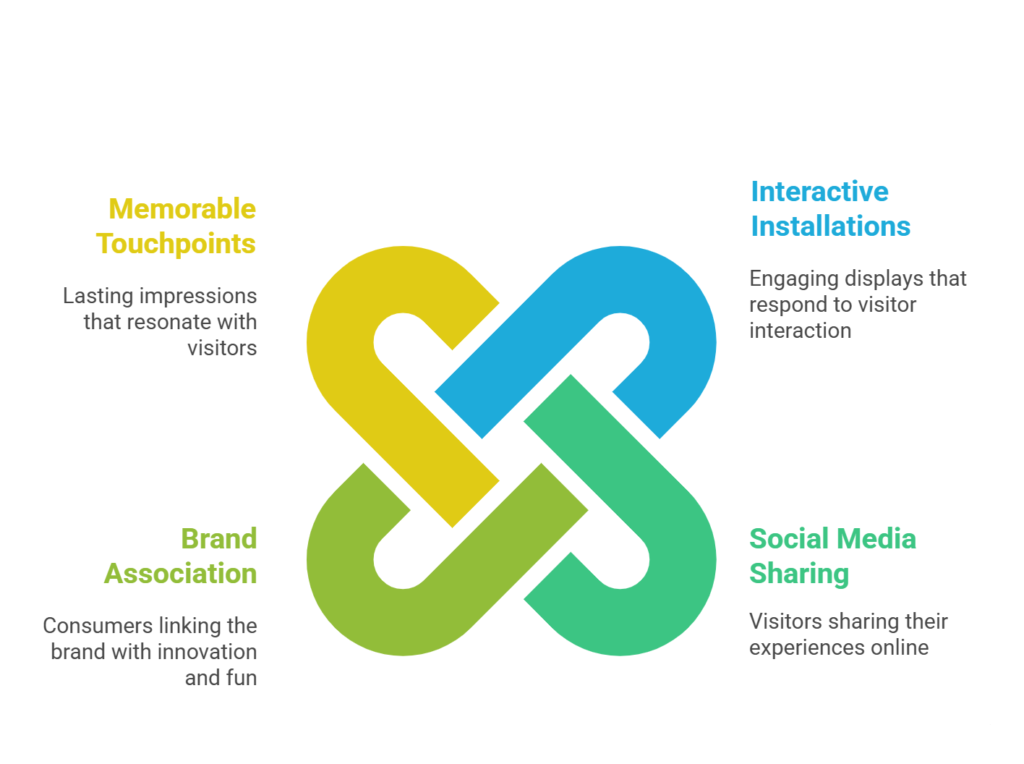
When brands invest in creative spaces that surprise and delight visitors, they create buzzworthy moments that extend far beyond the event footprint. Consider a global technology company that transforms a busy urban square into a futuristic playground. With interactive installations that respond to movement, light, and touch, the company turns an ordinary public space into a living showcase of its latest innovations.
Passersby are drawn to the spectacle, often stopping to interact with the displays, take photos, and share their experiences on social media. The environment itself becomes the medium of communication. Consumers begin to associate the brand with innovation, fun, and a willingness to push the boundaries of expectation.
These types of experiential marketing examples demonstrate how physical environments can become extensions of brand identity—spaces where narratives are lived rather than merely told. By blurring the lines between entertainment and promotion, companies create memorable touchpoints that resonate long after the experience ends.
Transforming Routines: Immersive Retail Experiences
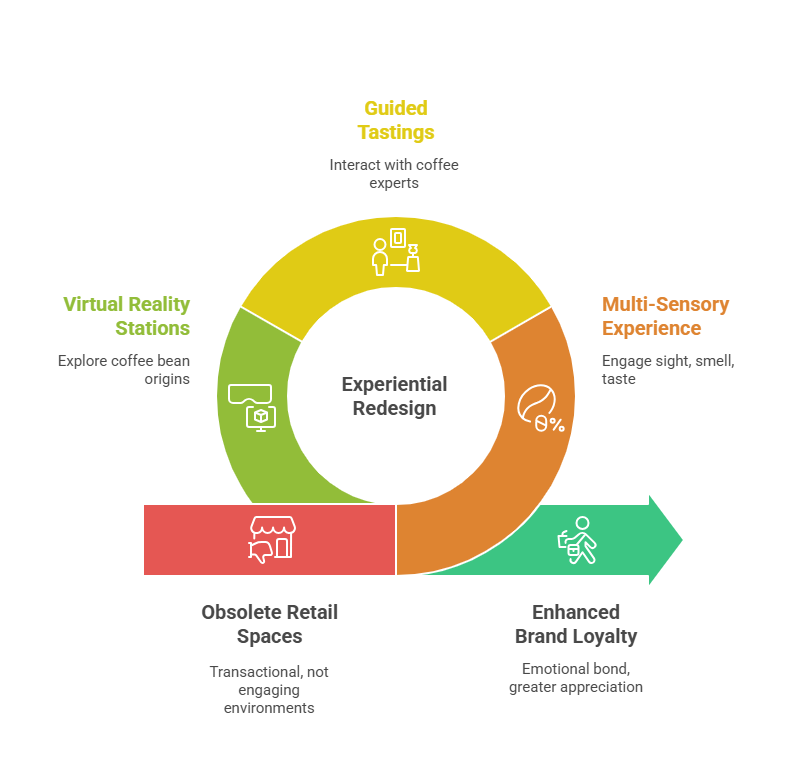
Retail spaces have historically functioned as transactional environments. The rise of e-commerce only reinforced that trend, making physical stores seem increasingly obsolete. Yet, some brands have breathed new life into brick-and-mortar by reimagining the in-store journey.
One compelling example involved a global coffee chain that redesigned its flagship store into a multi-sensory experience hub. Instead of merely serving coffee, the space invited visitors to participate in guided tastings, interact with coffee experts, and explore the origins of each bean through virtual reality stations. Customers could smell, taste, and see the journey of their coffee from farm to cup.
This approach turned a routine purchase into an explorative journey. Visitors didn’t just buy a beverage; they connected with the story behind it. They left with a stronger emotional bond to the brand and a greater appreciation for the craft involved in producing their coffee. The result was not just increased sales but heightened loyalty and advocacy.
Through thoughtful design and intentional storytelling, this experiential campaign encouraged deeper engagement. Instead of viewing the store as a place to buy, consumers began to view it as a destination for learning, exploration, and connection.
The Role of Emotional Storytelling
Some of the most effective experiential marketing examples leverage emotional storytelling to drive impact. Emotional resonance has a profound effect on decision-making processes, often guiding choices in ways that logic alone cannot. When brands tap into emotions such as joy, nostalgia, or wonder, they create powerful associations that endure well beyond the moment.
Imagine a luxury automotive brand hosting an exclusive event where attendees are invited to test-drive the latest model on a scenic route at sunrise. The experience includes gourmet breakfasts, personalized interaction with engineers, and opportunities to capture professional photos at scenic overlooks. The event transcends conventional test drives by weaving a narrative of aspiration, elegance, and exclusivity.
Participants leave with not only impressions of the vehicle’s capabilities but also memories anchored in sensory richness—visual beauty, refined tastes, and social connection all intertwined with the brand. These emotional connections often translate into stronger purchase intent and a willingness to justify premium pricing.
By crafting narratives that invite consumers to feel rather than simply see or hear about products, brands can ignite deeper levels of engagement.
Engaging Through Unexpected Moments
Surprise and delight remain powerful elements in experiential marketing. People are naturally drawn to the unexpected. When brands create moments that interrupt daily routines with moments of joy, consumers become more receptive to messaging and more likely to form positive associations.
For example, a beverage company once deployed mobile sampling teams to high-foot-traffic areas. Instead of conventional handouts, the company set up immersive tasting stations designed like miniature tropical oases—complete with soundscapes, themed décor, and interactive games. Participants were encouraged to explore, take photos, and share experiences with friends.
Unlike typical sampling efforts that feel transactional and forgettable, this approach instinctively pulled people into a playful, immersive moment. Rather than merely receiving a free product, individuals became part of an experience that sparked conversation, sharing, and positive sentiment. The environment amplified the product’s appeal and elevated it beyond a simple refreshment.
These experiences shift the paradigm of how consumers relate to brands. Rather than associations rooted in utility alone, engagement becomes tied to mood, memory, and shared social moments.
Creating Shared Community Experiences
Many brands have found success by focusing on collective participation, inviting groups of consumers to share immersive experiences that reinforce a sense of community. When people engage in brand experiences together, the social reinforcement amplifies the emotional impact, making memories more vivid and long-lasting.
One outdoor apparel company created an experiential initiative centered around guided wilderness retreats. Participants were invited to join multi-day excursions led by expert guides, where they could test gear, learn survival skills, and connect with fellow adventurers. The event was less about selling products and more about fostering a community united by a passion for exploration.
Through shared challenges, laughter, and the beauty of nature, participants developed a sense of belonging. Their connection to the brand grew not from advertising messages but from shared experiences that mirrored their values and aspirations. After the retreat, participants returned to their everyday lives with not only a deeper affinity for the products they used but also an emotional attachment to the brand’s ethos.
This illustrates how experiential strategies can extend beyond isolated events to create movements, nurturing communities that champion the brand organically.
The Fusion of Digital and Physical Realms
Today’s most innovative experiential marketing examples often blend digital and physical elements to create seamlessly integrated experiences. As technology evolves, brands are finding new ways to weave augmented reality, mobile interaction, and gamification into live events.
Consider a global sportswear brand that launched an interactive citywide challenge accessible through a mobile app. Participants were invited to complete fitness-oriented tasks at various landmarks, each unlocking digital rewards and exclusive content. As users progressed, they collected badges, shared milestones on social media, and accessed special offers tied to the brand’s latest product lines.
This fusion of real-world activity and digital engagement created a dynamic loop of interaction. The experience encouraged physical exploration, social sharing, and brand discovery. Participants felt motivated not just by competition or rewards, but by the enjoyment of a connected experience that extended beyond the physical event itself.
The campaign’s success lay in its ability to meet consumers where they already spend much of their time—their mobile devices—while motivating movement and real-world engagement. The result was a multi-dimensional experience that kept audiences involved long after the initial launch.
Immersive Storytelling in Entertainment
Entertainment venues and events offer fertile ground for experiential marketing activations. When brands align with cultural moments or popular interests, they have the opportunity to embed themselves into the stories consumers are already passionate about.
A notable example involved a major film studio partnering with a global technology brand to create an immersive exhibit based on a blockbuster movie franchise. Fans were invited to step inside life-sized sets, engage with interactive props, and participate in challenges linked to the film’s narrative. These immersive zones were installed in high-traffic public spaces, drawing both dedicated fans and curious onlookers.
The experience spoke directly to fans’ emotional investment in the story world, giving them a chance to live inside the universe they admired on screen. It transformed promotion into participation and advertising into adventure. Fans shared photos, videos, and reactions across social platforms, expanding the campaign’s reach organically.
By inserting brand experiences into the cultural zeitgeist, companies tap into existing passion points, creating resonance that reverberates far beyond the event.
Measuring Impact and Driving Long-term Value
Understanding the success of experiential marketing initiatives requires a nuanced approach to measurement. Unlike traditional campaigns that may rely solely on impressions or click-through rates, experiential outcomes often manifest in subtle shifts in brand perception, word-of-mouth referrals, and emotional affinity.
Brands must gauge both quantitative and qualitative indicators—post-event surveys, social media sentiment, repeat engagement, and long-term purchase patterns. When analyzing results, companies should ask not just whether consumers remembered the experience, but whether it influenced their attitudes and future decisions. Did the experience increase favorability toward the brand? Did it prompt trial, recommendation, or advocacy? These questions reveal whether the experience achieved deeper resonance.
While the path from experience to conversion may not always be linear, the most impactful campaigns leave an imprint that can be traced through behavior change over time. When consumers start to seek out a brand, share stories with peers, or justify choices based on emotional fulfillment, the ripple effect of experiential initiatives becomes clear.
It’s this transformation—from passive awareness to active engagement—that defines the true power of experiential marketing.
Conclusion: Creating Lasting Connections
The experiential marketing examples highlighted here demonstrate more than just promotional creativity; they reveal how brands can foster meaningful connections that endure long after the moment has passed. By prioritizing immersive engagement, personal interaction, and emotional resonance, companies can shift perceptions and influence the way audiences relate to products and services.
These strategies underscore a broader shift in marketing philosophy—from broadcasting messages to crafting moments that matter. When brands invite consumers into shared experiences, they don’t just tell stories—they co-create them. This collaborative dynamic elevates brand experiences from transactional to transformational.
As we look to the future, the brands that will thrive are those willing to push boundaries, rethink traditional paradigms, and place human experience at the heart of their strategy. By learning from these groundbreaking experiential marketing examples, companies can design initiatives that not only capture attention but also inspire action, build loyalty, and create ambassadors out of everyday consumers.
In an increasingly competitive landscape, connecting with audiences on a human level has never been more essential. The experiences that change minds, inspire emotion, and shape choices are the ones that will define the next era of brand engagement. Through intentional design, thoughtful storytelling, and a deep understanding of what motivates human connection, brands can transform consumers into lifelong partners on a shared journey of discovery and delight.