

In today’s digital-first world, people no longer respond to brands that only talk about their products. Audiences want value, relevance, and trust before they are willing to engage, subscribe, or buy. This shift in behavior has made content one of the most powerful assets a business can own. However, publishing random blogs or posting occasionally on social media rarely delivers results. What truly drives sustainable growth is a well-planned, documented, and purpose-driven approach to content.
This guide is designed for beginners who want clarity, structure, and direction. By the end of this article, you will understand what a content marketing strategy is, why it matters, how it works, and how you can build one that supports real business goals instead of just generating noise.
Understanding the Foundations of Content Marketing
Content marketing is the practice of creating and distributing valuable, relevant, and consistent content to attract and retain a clearly defined audience. Instead of interrupting people with ads, content marketing focuses on helping them. This help can come in the form of education, inspiration, entertainment, or practical guidance that solves real problems.
At its core, content marketing is built on trust. When a brand consistently provides useful information, audiences begin to see it as a credible source rather than just another company trying to sell something. Over time, this trust turns into engagement, loyalty, and conversions.
A strategy brings structure to this process. Without a strategy, content is reactive and disconnected. With a strategy, every piece of content has a reason to exist and a role to play in the larger business journey.
What Makes a Content Marketing Strategy Different From Just Creating Content
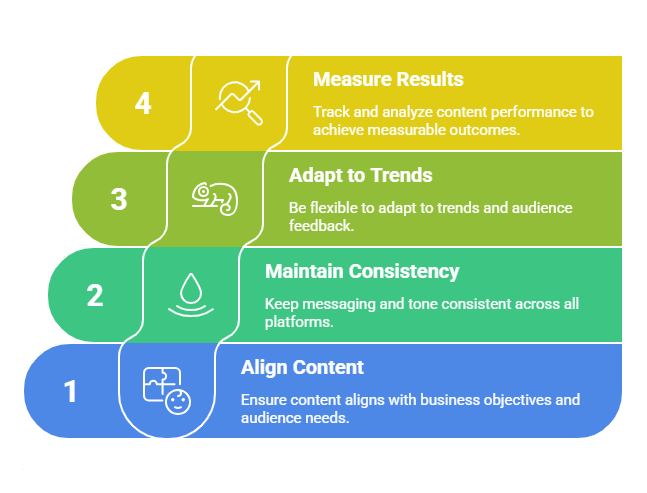
Many beginners confuse content creation with strategy. Writing blogs, posting on LinkedIn, or uploading videos are activities. A strategy is the system that decides why those activities happen, who they are for, what outcomes they should achieve, and how success will be measured.
A Content Marketing Strategy aligns content with business objectives, audience needs, brand positioning, and distribution channels. It ensures consistency in messaging and tone while allowing flexibility to adapt to trends and audience feedback.
Without this alignment, content often fails to deliver meaningful results. Traffic may increase, but leads do not convert. Social posts may get likes, but brand recall remains weak. A strategy bridges this gap by connecting content efforts to measurable outcomes.
Why Content Marketing Strategy Matters in 2026 and Beyond
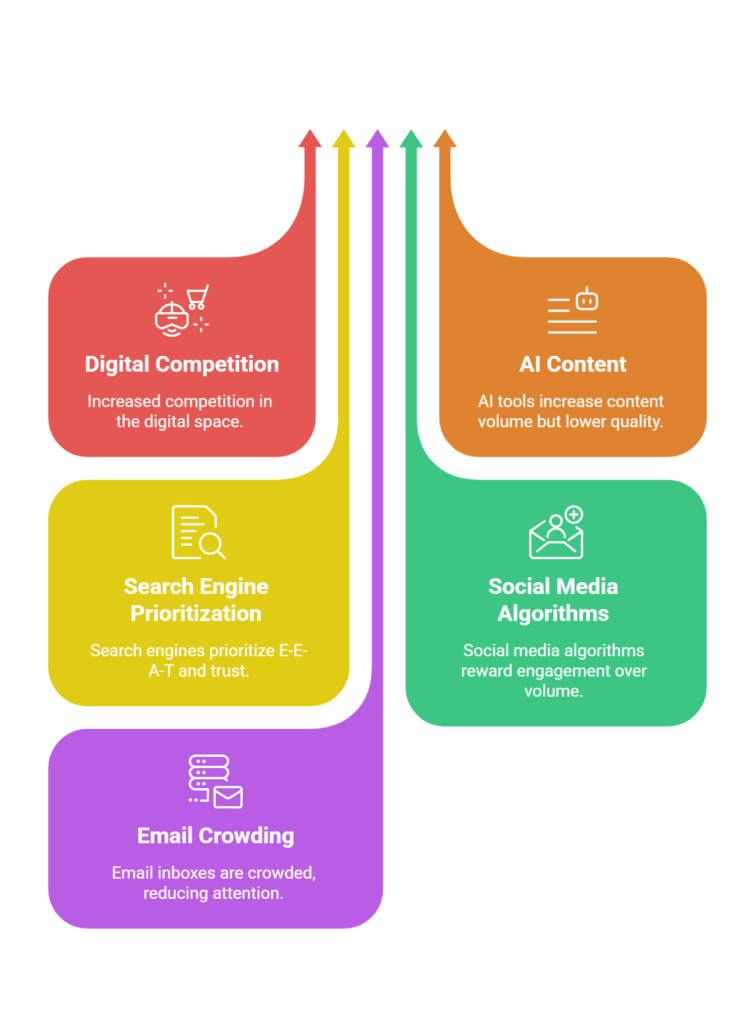
The digital landscape has become more competitive and more saturated than ever. Artificial intelligence tools have made content creation faster, but they have also increased the volume of low-quality, repetitive information online. As a result, audiences are more selective about what they consume and trust.
Search engines now prioritize experience, expertise, authority, and trust. Social media algorithms reward consistency and meaningful engagement over volume. Email inboxes are crowded, and attention spans are shorter.
In this environment, strategy is what separates impactful content from forgettable content. A clear strategy helps brands stand out by focusing on relevance instead of reach and depth instead of frequency. It allows marketers to create content that resonates with real human needs rather than chasing algorithms alone.
Defining Clear Goals Before You Create Content
Every effective content effort begins with a clear purpose. Goals give direction and help you decide what type of content to create, which channels to use, and how to measure success.
Some businesses focus on increasing brand awareness, while others aim to generate qualified leads or nurture existing customers. For some, content supports sales teams, and for others, it builds thought leadership in a niche industry.
The key is clarity. When goals are vague, content becomes generic. When goals are specific, content becomes intentional. A beginner-friendly approach is to connect content goals directly to business outcomes such as visibility, engagement, trust, or revenue influence.
Knowing Your Audience on a Deeper Level
Audience understanding is the backbone of any successful content plan. Creating content for everyone usually results in content that resonates with no one. A strategy requires you to identify who your ideal audience is, what challenges they face, and how they prefer to consume information.
This goes beyond basic demographics. It includes understanding motivations, objections, pain points, and decision-making behavior. For example, a beginner in digital marketing has very different content needs than a senior marketing leader, even if they work in the same industry.
When you truly understand your audience, content ideas become easier to generate and more effective to execute. You stop guessing and start responding to real needs and questions.
The Role of Brand Voice and Positioning in Content
Content is not just about what you say, but how you say it. Your brand voice reflects your personality, values, and positioning in the market. It creates familiarity and emotional connection over time.
A consistent voice helps audiences recognize your brand across different platforms. Whether your tone is professional, conversational, authoritative, or friendly, consistency builds trust. Inconsistent messaging, on the other hand, creates confusion and weakens brand identity.
Your strategy should clearly define how your brand sounds and what it stands for. This ensures that content created by different writers or teams still feels cohesive and aligned.
Choosing the Right Content Types and Formats
Different audiences consume content in different ways. Some prefer long-form articles, while others engage more with videos, podcasts, or visual storytelling. A strong strategy considers format selection as part of the planning process.
Content formats should match both audience preferences and business goals. Educational topics may work well as in-depth guides, while industry insights may perform better as short-form posts or commentary. The key is balance and intentionality.
Over time, analyzing performance data helps refine format choices. What matters most is not using every format available, but using the right ones consistently and effectively.
Content Distribution and Channel Strategy
Creating great content is only half the job. Distribution determines whether that content reaches the right people at the right time. A strategy defines where content will be published, shared, and promoted.
Owned channels such as websites, blogs, and email lists provide control and long-term value. Earned and shared channels such as social media and partnerships expand reach and visibility. Each channel plays a different role in the content ecosystem.
Effective distribution requires understanding platform behavior and audience intent. A long educational article may perform well on search engines, while a concise insight may gain traction on social platforms. Strategy helps align content with channel strengths.
Aligning Content With the Buyer’s Journey
Audiences interact with content at different stages of awareness and decision-making. Some are just discovering a problem, while others are comparing solutions or evaluating providers.
A beginner-friendly strategy maps content to these stages. Early-stage content focuses on education and awareness. Mid-stage content builds trust and credibility. Later-stage content supports decision-making and conversion.
This alignment ensures that content supports users throughout their journey instead of focusing only on promotion. It also helps avoid the common mistake of pushing sales messages too early.
Measuring Success and Performance
Content marketing is not guesswork. Measurement turns effort into insight. A strategy defines what success looks like and how it will be tracked.
Metrics may include traffic growth, engagement, time spent on content, lead quality, or conversion influence. The right metrics depend on your goals and channels. What matters is consistency and relevance.
Performance analysis helps identify what works, what doesn’t, and where to improve. Over time, this feedback loop strengthens the strategy and increases return on investment.
Common Mistakes Beginners Should Avoid
One of the most common mistakes is focusing on quantity over quality. Publishing frequently without purpose often leads to burnout and poor results. Another mistake is copying competitors without understanding why their content works.
Beginners also tend to ignore distribution, assuming good content will automatically find an audience. In reality, even the best content needs promotion and visibility.
A lack of patience is another challenge. Content marketing is a long-term investment. Results compound over time, but only when efforts are consistent and strategic.
How Technology and AI Are Shaping Content Marketing
Modern content marketing is influenced by data, automation, and artificial intelligence. AI tools assist with research, ideation, optimization, and performance analysis. However, technology should support strategy, not replace it.
Human insight, creativity, and empathy remain essential. Audiences can recognize generic or automated content quickly. The most effective strategies combine technology with authentic understanding of human needs.
As platforms evolve, adaptability becomes a strategic advantage. Staying informed and willing to experiment helps content remain relevant in a changing digital landscape.
Building a Sustainable Long-Term Content Approach
A strategy is not a one-time document. It evolves as business goals, audience behavior, and market conditions change. Regular reviews and updates ensure relevance and effectiveness.
Sustainability comes from realistic planning, clear ownership, and continuous learning. When content becomes part of the business culture rather than a side task, its impact grows significantly.
Consistency over time builds authority, trust, and organic growth that paid advertising alone cannot achieve.
The Real Value of a Content Marketing Strategy
At its best, a content marketing strategy transforms how a brand communicates with its audience. It shifts the focus from selling to serving and from short-term wins to long-term relationships. Businesses that invest in strategy create assets that continue to deliver value long after publication.
When content is planned, purposeful, and audience-driven, it becomes more than marketing. It becomes a bridge between a brand and the people it exists to help.
By understanding the principles outlined in this guide and applying them with patience and intent, beginners can move from random content creation to a structured system that drives meaningful growth and lasting impact.