

Marketing has never been static. From print and broadcast advertising to search engines and social media, every era reshapes how brands communicate with people. Today, the digital environment is saturated with content, platforms, and competition, making it increasingly difficult to capture attention. Businesses no longer succeed simply by publishing information or promoting products online. They must craft experiences that resonate emotionally, intellectually, and culturally. This shift has led to the emergence of creative digital marketing as a strategic approach that prioritizes originality, storytelling, personalization, and innovation.
At its core, modern marketing integrates art with analytics. Marketers blend data insights, technology, and human imagination to design campaigns that feel meaningful rather than intrusive. Artificial intelligence, interactive media, immersive technologies, and user-generated content now empower companies to design communications that are dynamic and adaptive. Research indicates that AI-supported engagement strategies can significantly influence customer decision-making, satisfaction, and loyalty by improving interaction and personalization in digital environments.
This article explores the concept, mechanisms, and importance of this evolving discipline. It provides a detailed examination of how creativity operates in digital channels, how emerging technologies reshape strategies, and why organizations must prioritize innovation to remain relevant in a crowded marketplace.
Understanding Creative Digital Marketing
Defining the Concept
Creative digital marketing refers to the application of imaginative thinking, storytelling, design innovation, and technological experimentation within online promotional strategies. It transcends conventional advertising by transforming campaigns into experiences that entertain, educate, or inspire audiences. Instead of focusing only on distribution channels or metrics, this approach emphasizes originality and human connection.
The practice involves combining creativity with advanced tools such as generative AI, data analytics, and real-time optimization. Recent academic work shows that modern systems can collaborate with marketers throughout campaign development, from extracting audience insights to refining narrative messaging based on performance data, demonstrating the integration of strategic creativity with machine intelligence.
Unlike traditional digital campaigns that may rely on repetitive messaging, creative approaches encourage experimentation. Campaigns can include immersive storytelling, humor, surreal visuals, or participatory elements. Contemporary creative trends illustrate how unconventional aesthetics and humor capture attention, particularly among younger audiences who respond to abstract or playful content styles.
Evolution from Traditional Digital Marketing
The early stages of digital marketing were largely transactional and efficiency-driven. Websites functioned as digital brochures, and banner ads focused on reach and frequency. Over time, technological advancements introduced personalization and automation, enabling brands to tailor content based on user behavior and preferences.
Today’s environment goes further by merging creativity with data-driven targeting. Multimodal AI frameworks can analyze user personas and generate culturally relevant messages, enhancing engagement while optimizing return on advertising investment.
Consumer expectations have also shifted. Short-form videos, interactive tools, and influencer collaborations dominate attention spans because they provide authentic and immediate experiences. Studies of digital trends show that brief video content delivers strong recall and engagement, and interactive tools such as calculators or augmented previews significantly increase conversions.
This transformation reflects a broader change in philosophy: digital marketing is no longer just about delivering messages but about designing memorable interactions.
Core Elements That Shape Creative Digital Marketing
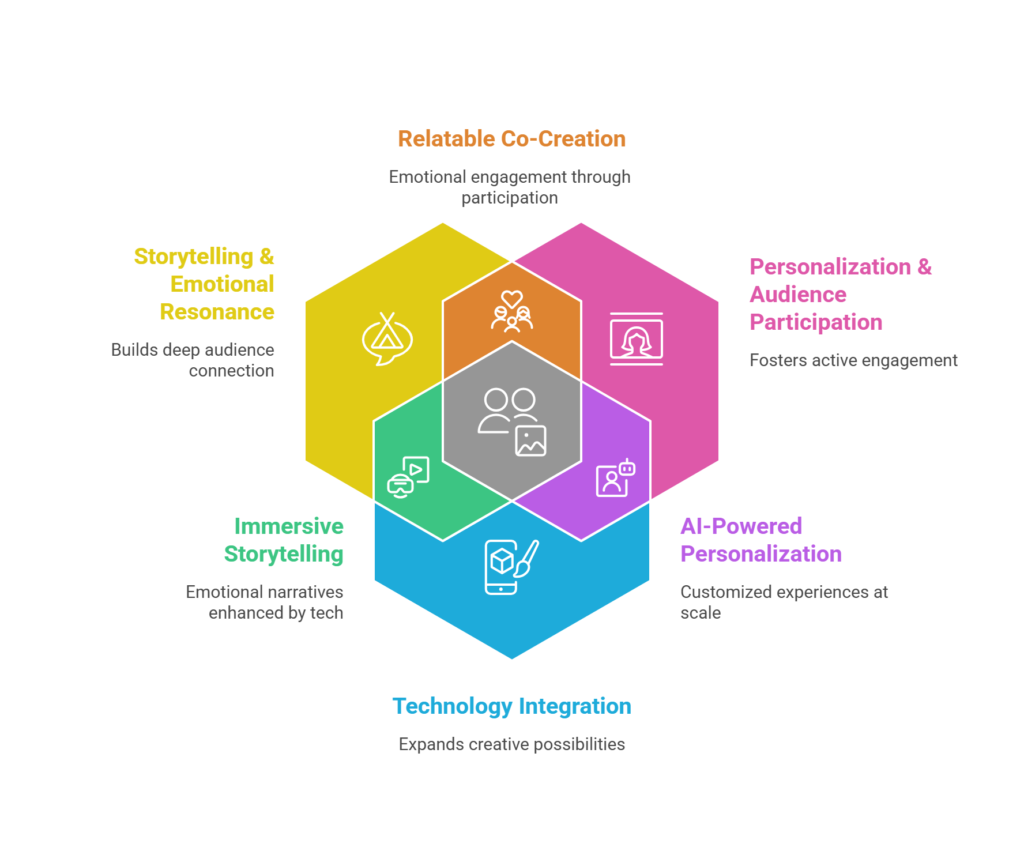
Storytelling and Emotional Resonance
Narratives remain fundamental to effective marketing. Stories allow brands to communicate values, identity, and purpose in ways that statistics alone cannot achieve. Contemporary campaigns often leverage emotional storytelling, celebrity participation, and cultural references to captivate viewers and encourage sharing across platforms.
Emotion-driven storytelling strengthens engagement by helping audiences relate to brands as human entities. When people identify with a message, they become participants rather than passive observers. Creative storytelling therefore builds long-term brand loyalty rather than generating only short-term awareness.
Personalization and Audience Participation
Personalization represents another essential dimension of modern marketing creativity. Instead of delivering standardized messages, marketers design experiences that invite participation. Campaigns allowing users to generate customized products, art, or digital assets demonstrate how creativity extends beyond messaging into co-creation.
Examples of recent campaigns show how AI-driven tools enabled users to design personalized items or digital content, strengthening emotional connection and encouraging social sharing.
This participatory approach reflects a deeper strategic insight. When audiences actively contribute, they invest attention and identity in the brand relationship. Creativity thus evolves from performance into collaboration.
Technology Integration
Creative strategies increasingly rely on advanced technologies. Artificial intelligence enables rapid content generation and analysis, while augmented and virtual reality create immersive experiences. Voice and visual search technologies transform how users discover information and interact with brands.
Current trends indicate that AI-powered optimization, video-first content, and trust-driven structured content will play major roles in digital marketing strategies in the coming years.
Technological integration also includes new forms of identity and communication, such as virtual influencers or animated avatars that allow creators to build digital personas. These innovations expand creative possibilities beyond physical constraints and provide novel engagement opportunities.
Balancing Creativity and Conversion
While creativity enhances engagement, marketing ultimately seeks measurable outcomes. Advanced content optimization frameworks illustrate how language models can generate persuasive messaging that improves click-through and conversion rates without sacrificing originality.
Balancing creative expression with performance metrics ensures that campaigns remain both imaginative and effective. This integration represents the essence of modern marketing strategy.
Why Creative Digital Marketing Matters
Differentiation in a Saturated Market
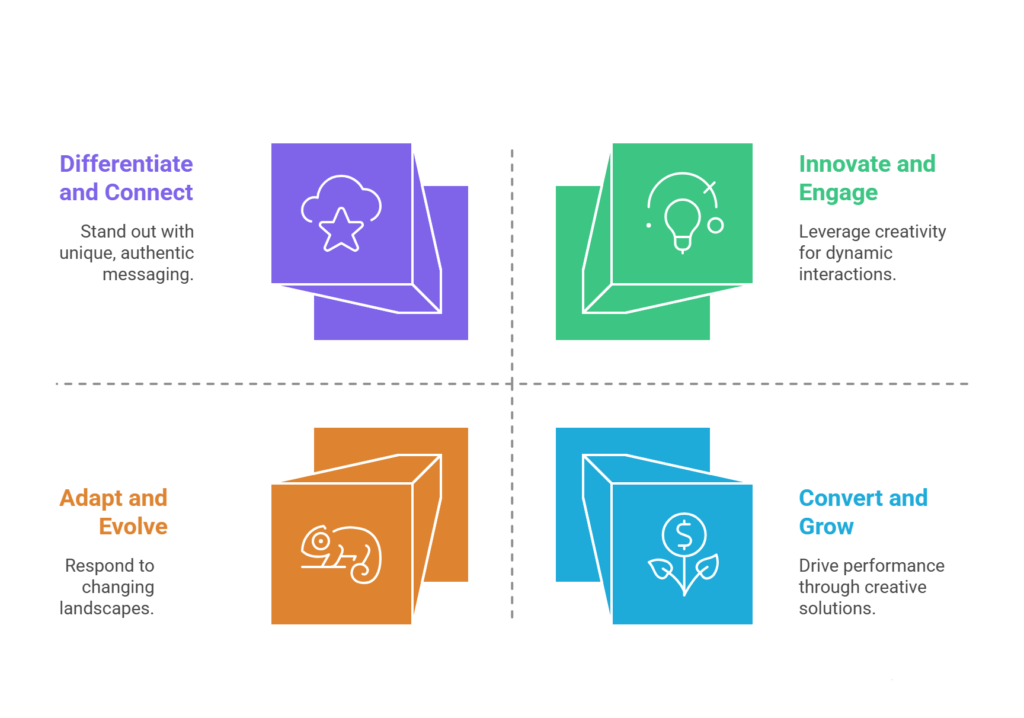
The digital ecosystem contains vast quantities of content competing for attention. Generic or repetitive messaging quickly fades into obscurity. Creativity allows brands to stand out by offering distinctive experiences.
Community insights from practitioners suggest that originality has become a primary differentiator, especially as AI-generated material becomes commonplace. Campaigns succeed when automation supports efficiency but human insight shapes messaging and perspective.
Differentiation is therefore not optional but essential for visibility and recognition.
Building Authentic Connections
Trust and authenticity influence consumer decisions more than ever. Personal branding, transparent communication, and influencer collaborations illustrate how audiences value human voices over impersonal corporate messaging.
Creative approaches enable organizations to demonstrate personality, empathy, and cultural awareness. By crafting relatable content, brands foster trust and emotional attachment that strengthen long-term relationships.
Driving Engagement and Conversion
Engaging campaigns encourage interaction, exploration, and sharing, all of which contribute to business performance. AI-driven marketing techniques demonstrate measurable positive effects on consumer engagement and purchasing decisions by enhancing interaction quality.
Interactive formats and integrated purchase experiences further connect entertainment with transaction, allowing users to discover and buy products seamlessly within the same digital environment.
This integration shows how creativity contributes directly to revenue rather than serving as mere decoration.
Responding to Cultural and Technological Change
Digital marketing exists within a rapidly evolving social and technological landscape. New advertising experiments illustrate how brands adopt AI-generated media or unconventional storytelling to provoke conversation and maintain relevance, even amid public debate about authenticity and artistic integrity.
Such experimentation demonstrates the necessity of adaptability. Creativity empowers marketers to explore new formats, respond to cultural shifts, and align communication with emerging technologies.
Current Trends Influencing Creative Digital Marketing
AI and Human Collaboration
Modern marketing increasingly blends machine intelligence with human creativity. Collaborative frameworks enable real-time adaptation of messaging based on audience response, accelerating efficiency and innovation.
However, reliance on automation also raises concerns about authenticity. Public reactions to AI-generated advertising highlight tensions between efficiency and artistic integrity, emphasizing the continued importance of human creativity.
Video and Immersive Content
Video continues to dominate digital communication because of its capacity to convey emotion and narrative quickly. Trends indicate that short-form videos and immersive formats will remain central to capturing audience attention.
The combination of storytelling, visuals, and sound creates multi-sensory experiences that text alone cannot replicate, making video a powerful creative medium.
Personal Brands and Communities
The shift toward individual voices and community engagement reflects changing perceptions of authority and trust. Marketers increasingly leverage personal branding and niche creators to connect authentically with audiences.
Online communities further amplify engagement by enabling dialogue and collaboration, transforming marketing into relationship building.
Strategies for Implementing Creative Digital Marketing
Encouraging Experimentation
Organizations should cultivate environments where experimentation is welcomed. Creative breakthroughs often arise from testing unconventional ideas, formats, or narratives. Failure becomes part of the learning process rather than a setback.
Integrating Data with Imagination
Data analytics reveal patterns, preferences, and opportunities, but imagination interprets and applies these insights meaningfully. Combining both ensures campaigns resonate emotionally while remaining strategically aligned.
Prioritizing User Experience
Creative strategies must consider usability, accessibility, and relevance. Whether designing interactive tools or storytelling content, the ultimate objective is to enrich audience experience rather than simply capture attention.
Investing in Continuous Learning
Technological advancements and cultural trends evolve rapidly. Marketers should continually update skills, experiment with new tools, and study emerging behaviors to sustain creativity.
Challenges and Ethical Considerations
Creativity in digital marketing also presents challenges. Overreliance on automation may dilute originality, while excessive personalization raises privacy concerns. Ethical use of data and transparency about AI involvement are therefore essential.
Additionally, balancing innovation with authenticity remains difficult. Marketers must ensure creativity enhances trust rather than undermines credibility.
Conclusion
Creative digital marketing represents a transformation in how organizations communicate, engage, and build relationships in digital environments. It merges imagination with technology, storytelling with analytics, and personalization with participation. By emphasizing originality, emotional resonance, and technological integration, it allows brands to differentiate themselves, foster trust, and drive meaningful engagement.
In an era where audiences encounter countless messages daily, creativity becomes the decisive factor that determines whether communication is ignored or remembered. As digital ecosystems continue to evolve, organizations that embrace experimentation, human-centered storytelling, and collaborative innovation will not only adapt but lead.
Ultimately, the significance of creative digital marketing lies not merely in promoting products or services but in shaping experiences that connect individuals, communities, and brands in lasting and meaningful ways.