
Social media has evolved from being a casual networking space into one of the most powerful marketing ecosystems in the world. Brands are not just posting updates anymore. They are building communities, running full-funnel campaigns, launching products, handling customer service, and even shaping brand narratives in real time.
And somewhere in the middle of all this complexity, artificial intelligence quietly stepped in.
What started as simple automation tools has now transformed into intelligent systems that can generate content, predict trends, personalize messages, optimize ad performance, and even respond to customers instantly. If you are a marketer, creator, founder, or someone exploring digital marketing seriously, understanding AI in Social Media is no longer optional. It is becoming foundational.
In this article, we will explore how artificial intelligence is transforming social media content creation, what it means for marketers, how leading brands are using it, and most importantly, how you can use it responsibly and effectively.
Understanding AI in Social Media
Before diving deep, let us clarify something important. Artificial intelligence in social media does not simply mean using ChatGPT to write captions. It is much broader.
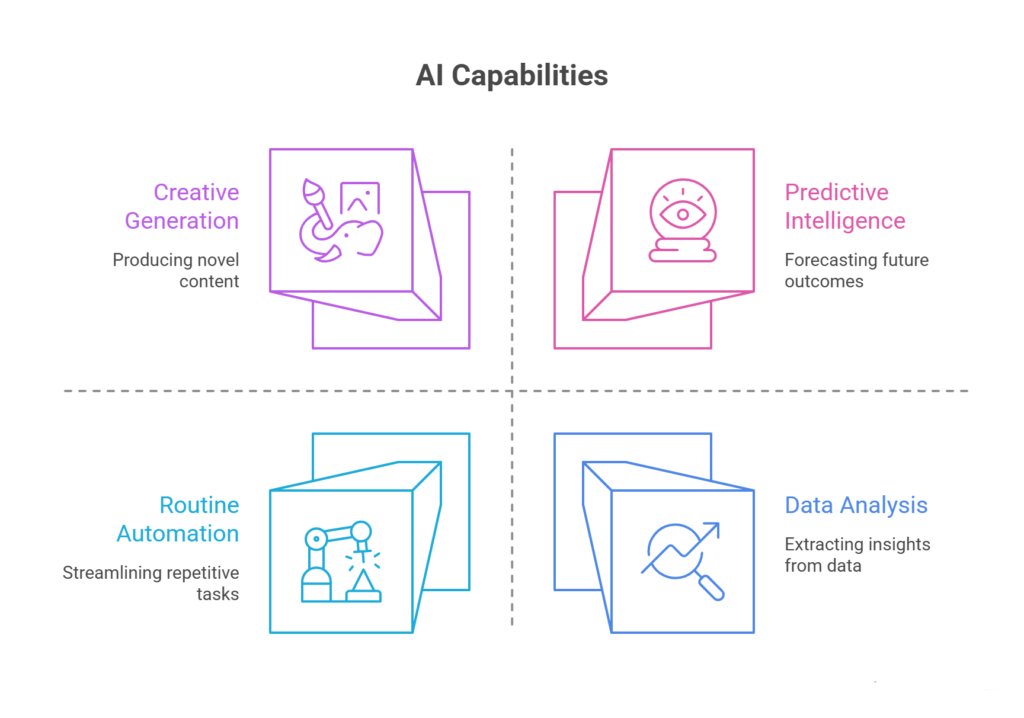
According to insights from Salesforce’s marketing AI guide, AI in social platforms helps businesses analyze vast datasets, automate repetitive processes, personalize communication, and predict customer behavior at scale. In simple words, AI helps marketers make smarter decisions faster.
Today, AI systems are capable of:
- Generating written content
- Creating images and videos
- Analyzing audience sentiment
- Predicting engagement rates
- Recommending optimal posting times
- Automating customer support responses
- Optimizing paid ad campaigns
But the real power lies not in automation alone. It lies in intelligence combined with creativity.
How AI Is Transforming Content Ideation
One of the biggest struggles in social media marketing is coming up with fresh content ideas consistently. Creative burnout is real. Even experienced content teams hit a wall sometimes.
AI tools now analyze trending topics, search behavior, audience interactions, and historical engagement patterns to suggest high-performing content ideas. Tools like ChatGPT, Jasper, and Copy.ai generate multiple variations of content angles within seconds.
For example, if you are a fitness brand, AI can analyze trending hashtags on Instagram and suggest content themes like “morning mobility routines” or “5-minute desk workouts.” It can even tailor ideas based on audience demographics.
The interesting part is not just speed. It is pattern recognition. AI identifies content gaps that humans might overlook because we simply cannot process millions of data points manually.
That said, AI-generated ideas still require human refinement. A machine can suggest what is trending. But understanding whether it aligns with your brand voice or long-term positioning is still a human job.
AI-Powered Content Creation: Text, Visuals, and Video
AI for Caption Writing and Copy Generation
AI writing tools can now generate captions, hooks, carousel scripts, Twitter threads, LinkedIn posts, and even long-form thought leadership pieces. The efficiency boost is significant.
For example, tools trained on marketing data can suggest captions optimized for engagement using emotional triggers, curiosity gaps, or storytelling frameworks.
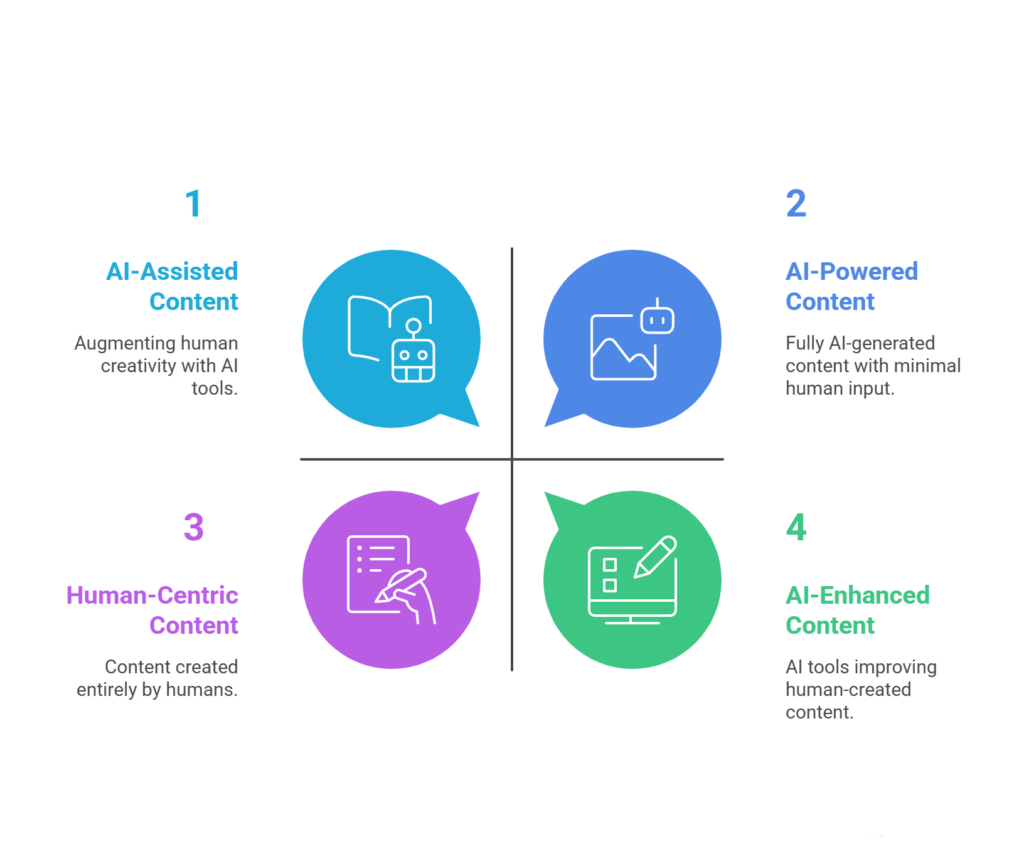
But here is where many marketers go wrong. They copy and paste AI output without editing. That is risky. AI should be your first draft assistant, not your final editor.
The best results happen when you:
- Refine tone
- Add brand personality
- Insert real experiences
- Verify facts
- Remove generic fluff
Think of AI as your brainstorming partner. Not your replacement.
AI for Visual Content Generation
Visual content drives higher engagement on most platforms. With tools like Midjourney, DALL·E, and Canva’s AI features, brands can generate custom images without expensive shoots.
AI-generated visuals are particularly useful for:
- Concept art
- Ad creatives
- Background images
- Social media illustrations
- Mood boards
Small businesses especially benefit here because they can now produce professional-looking creatives without a large design team.
However, originality and copyright awareness matter. Always ensure generated visuals align with platform guidelines and brand authenticity.
AI in Video Content Creation
Short-form video dominates social platforms like Instagram Reels, YouTube Shorts, and TikTok.
AI tools now assist in:
- Script generation
- Auto-subtitling
- Voiceovers
- Video editing
- Thumbnail optimization
Platforms like Descript and Runway help automate editing workflows. Some AI tools even generate full video explainers from text prompts.
But let us be honest. Fully AI-generated videos still feel robotic sometimes. The emotional nuance of human storytelling is hard to replicate. The most effective strategy combines AI editing with human presence.
Personalization at Scale
Personalization is where AI becomes truly powerful.
Earlier, brands segmented audiences into broad groups. Now AI can personalize content down to individual behavior patterns.
For example, social platforms like Facebook and Instagram use machine learning algorithms to determine which content each user sees. Brands running ads benefit from AI-driven targeting that predicts which users are more likely to convert.
Email retargeting based on social behavior is another example. If a user interacts with a product reel but does not purchase, AI can trigger personalized ads or messages.
This kind of hyper-personalization increases engagement and conversion rates significantly.
But there is a thin line between personalization and intrusion. Ethical data usage and transparency are critical.
Predictive Analytics and Performance Optimization
One of the most underappreciated roles of AI in social media is predictive analytics.
AI tools analyze past performance data to predict:
- Best posting times
- Content formats likely to perform
- Hashtags that increase reach
- Audience segments most likely to engage
- Ad creatives that may convert better
Platforms like Meta Ads Manager and Google Ads already rely heavily on machine learning for campaign optimization.
For example, Meta’s Advantage+ campaigns use AI to dynamically test and allocate budget toward high-performing ad sets automatically.
Instead of manually analyzing dozens of metrics, marketers now rely on AI dashboards that highlight insights instantly.
The benefit is efficiency. The risk is over-dependence. Blindly trusting AI without understanding the metrics can lead to poor strategic decisions.
AI Chatbots and Customer Engagement
Customer service on social media has become demanding. People expect instant responses.
AI-powered chatbots now handle:
- Common queries
- Order tracking
- Product recommendations
- Complaint routing
- FAQ responses
Brands like Sephora and H&M have used AI chatbots to improve engagement and reduce response time.
According to Salesforce insights, conversational AI is reshaping how brands interact with customers in real time. It not only reduces support costs but also improves customer satisfaction when implemented correctly.
However, poorly designed chatbots can frustrate users. There is nothing worse than getting stuck in an automated loop when you need real help.
The key is hybrid engagement. Let AI handle simple queries. Let humans handle complex emotional interactions.
Social Listening and Sentiment Analysis
Understanding what people say about your brand online is invaluable.
AI tools analyze millions of social conversations to detect sentiment, trending topics, and brand mentions.
For instance, platforms like Brandwatch and Sprout Social use AI-driven sentiment analysis to determine whether conversations are positive, neutral, or negative.
This helps brands respond proactively to:
- Reputation crises
- Customer complaints
- Product feedback
- Emerging trends
Imagine launching a campaign and instantly knowing whether audience reaction is positive or backfiring. That is powerful.
Without AI, monitoring this scale of data manually would be impossible.
Ethical Considerations and Challenges
AI is powerful. But it is not perfect.
Here are some key concerns marketers must address:
- Data privacy issues
- Bias in AI algorithms
- Over-automation
- Loss of brand authenticity
- Misinformation risks
Regulations like GDPR and evolving AI policies require brands to be transparent about data usage.
There is also the creative authenticity debate. If everyone uses AI tools, does content start looking similar?
Possibly.
That is why human creativity remains essential. AI should enhance creativity, not flatten it.
How Brands Are Actually Using AI Today
Let us look at some real examples.
Coca-Cola experimented with AI-generated artwork campaigns that allowed consumers to create custom digital art.
Netflix uses AI-driven recommendation algorithms that heavily influence what content appears on user feeds, including promotional snippets.
Spotify leverages AI for personalized playlists like Discover Weekly, which in turn fuels social sharing and engagement.
Meta and Google rely extensively on machine learning to optimize ad targeting and budget allocation.
These are not small experiments. AI is already embedded in major marketing ecosystems.
Practical Framework to Implement AI in Your Social Strategy
If you are wondering how to integrate AI effectively, start simple.
First, identify repetitive tasks. Caption drafting, hashtag research, analytics reporting. These are good entry points.
Second, test AI content but always edit manually.
Third, use AI analytics tools to guide decisions but validate insights with your own understanding of brand strategy.
Fourth, maintain transparency with your audience. If you use AI-generated avatars or synthetic media, disclose appropriately.
Finally, invest in skill development. Understanding how AI models work conceptually gives you a strategic advantage.
The Future Outlook
The future of social media content creation will likely be hybrid.
AI will handle speed, data analysis, personalization, and optimization.
Humans will handle creativity, storytelling, emotional intelligence, and ethical judgment.
We might see AI-generated influencers, hyper-personalized dynamic content feeds, and real-time adaptive ad creatives becoming mainstream.
But ironically, as automation increases, authenticity may become even more valuable.
Audiences can sense when content feels overly automated.
The brands that win will not be the ones that use the most AI tools. They will be the ones that use AI thoughtfully.
Final Thoughts
The role of artificial intelligence in social media content creation is not just about saving time. It is about unlocking new levels of personalization, performance optimization, and strategic decision-making.
At the same time, it raises important questions about authenticity, privacy, and creative originality.
If you approach it strategically, AI becomes a powerful assistant. If you rely on it blindly, it becomes a crutch.
The balance matters.
And honestly, we are still early in this transformation. The tools will evolve. The algorithms will get smarter. The ethical debates will continue.
But one thing is clear. Social media marketing without AI support will soon feel outdated.
So maybe the real question is not whether you should use AI.
It is how intelligently you choose to use it.
Because the future of social media content creation is not human versus machine.
It is human with machine.