
B2B marketing has always been complex. Longer sales cycles. Multiple decision-makers. High-value contracts. Layers of approvals. And honestly, a lot of waiting.
But AI has changed the rhythm of it.
What used to take weeks of research, manual segmentation, repetitive outreach, and constant follow-ups can now be automated, optimized, and scaled intelligently. The interesting part is not just automation. It is intelligence. The ability to predict, personalize, and prioritize in ways that were almost impossible a few years ago.
In this article, we are going deep into AI-powered B2B marketing strategies you should try right now. Not theoretical ideas. Not buzzwords. Practical, real-world approaches that are already transforming how B2B brands generate leads, nurture accounts, and close deals.
Let’s start with something important.
AI is not here to replace marketers. It is here to amplify smart marketers.
And if you use it right, it can fundamentally improve your b2b marketing strategies.
Why AI Matters in Modern B2B Marketing
Before jumping into tactics, we need to understand why AI is so relevant in B2B environments.
Unlike B2C, B2B buyers are more rational, more research-driven, and more risk-averse. According to reports from platforms like HubSpot and Salesforce, B2B buyers often consume 5 to 13 pieces of content before even speaking to sales. That is a lot of touchpoints.
Managing that manually is messy.
AI helps in three powerful ways.
First, it processes massive data sets in seconds. CRM data, website behavior, email engagement, LinkedIn activity, ad interactions. All of it.
Second, it identifies patterns humans may miss. For example, which combination of behaviors signals high buying intent.
Third, it personalizes experiences at scale without exploding your marketing budget.
If you are serious about upgrading your B2B growth engine, integrating AI is no longer optional. It is competitive leverage.
Intelligent Customer Segmentation Using AI
Traditional segmentation is usually based on firmographics. Company size. Industry. Revenue. Geography.
That works. But it is surface-level.
AI-driven segmentation goes much deeper.
Behavioral and Intent-Based Segmentation
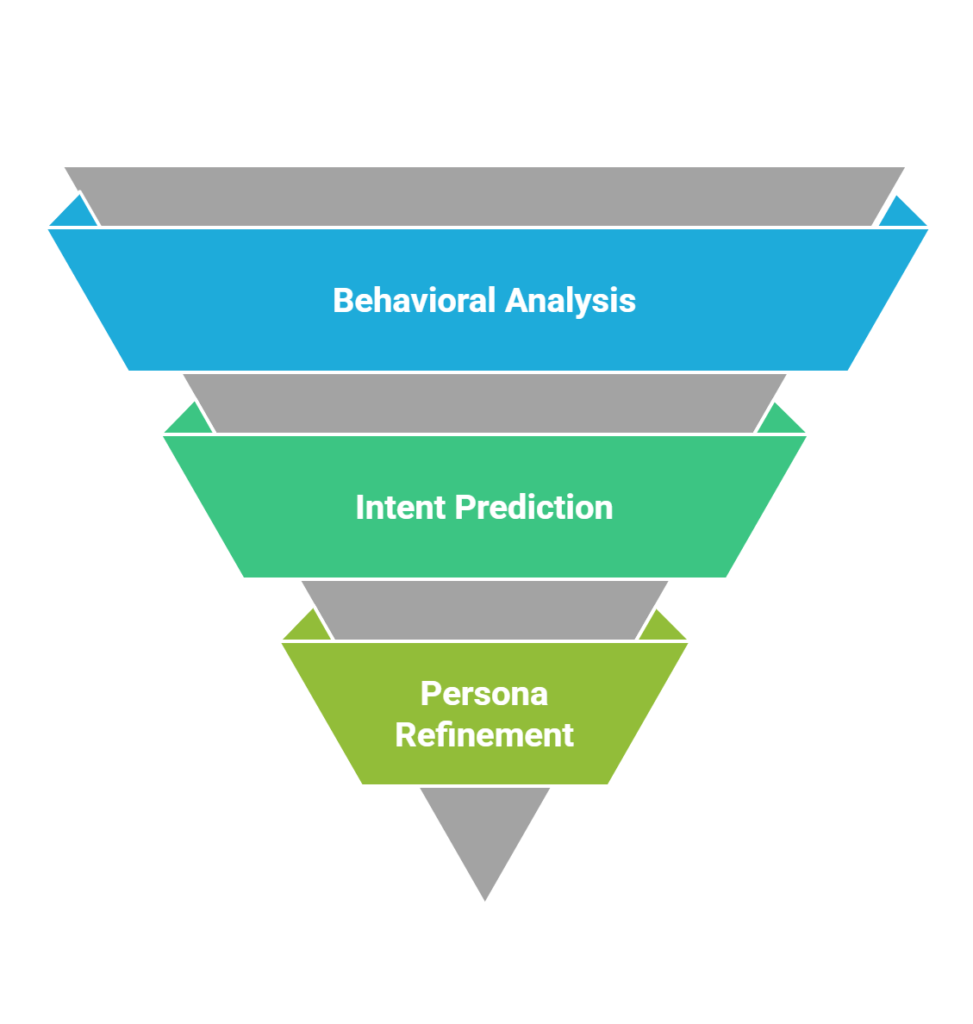
AI tools analyze browsing behavior, content consumption, time spent on pages, email engagement, webinar attendance, and even third-party intent data.
For example, platforms like Delve AI and 6sense use predictive models to cluster prospects based on buying readiness. Instead of treating all enterprise SaaS companies the same, you can identify which ones are actively researching solutions like yours.
This means your sales team stops chasing cold leads and focuses on accounts that show genuine intent.
That small shift alone can dramatically improve conversion rates.
Dynamic Persona Creation
Most companies create buyer personas once and never update them.
AI changes that. It continuously refines personas based on new data.
Instead of saying, “Our buyer is a 35 to 45-year-old marketing director in tech,” AI can reveal that your highest-converting segment is actually operations leaders in mid-sized logistics firms who engage most with ROI-driven content.
It is subtle. But powerful.
And it improves targeting across campaigns, content, and outreach.
Predictive Lead Scoring That Actually Works
Let’s be honest. Traditional lead scoring models are often flawed.
They assign arbitrary points. Downloaded an ebook? +10. Attended a webinar? +20. Visited pricing page? +30.
But not all actions are equal. And context matters.
Machine Learning-Based Scoring Models
AI-powered lead scoring uses historical conversion data to understand which behaviors truly correlate with sales.
Instead of guessing, the algorithm learns.
It might discover that prospects who watch 60 percent of a product demo video and visit integration pages within 7 days have a 3x higher close rate.
That insight becomes part of the model automatically.
Sales teams receive smarter prioritization. Marketing can align messaging based on lead temperature.
The result is shorter sales cycles and better close rates.
Continuous Optimization
The beauty of AI scoring is that it evolves.
As more deals close, more data feeds into the system. The scoring model becomes sharper over time.
In fast-moving industries, this adaptability is critical. Static systems cannot keep up with changing buyer behavior.
Hyper-Personalized Email Marketing at Scale
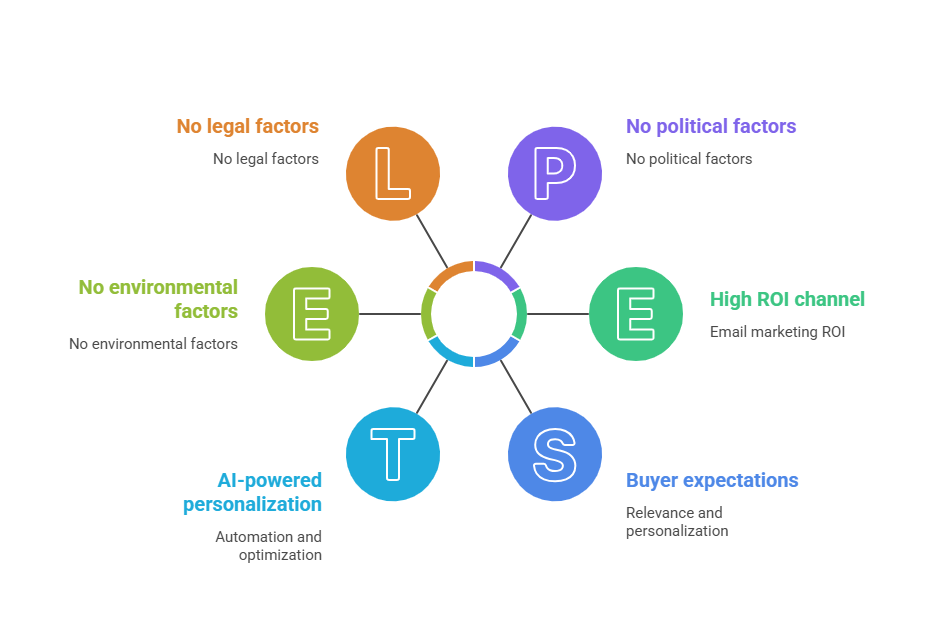
Email is still one of the highest ROI channels in B2B.
But generic newsletters are fading. Buyers expect relevance.
AI makes hyper-personalization realistic.
Smart Content Personalization
AI tools can customize email subject lines, body copy, and even CTAs based on user behavior and firmographic data.
For example, a CFO might receive ROI-focused messaging, while a CTO sees integration and security-focused content.
Platforms like HubSpot and Salesforce Marketing Cloud already embed AI features that dynamically adjust content blocks.
It feels personal. But it is automated.
Send-Time Optimization
AI also analyzes past engagement patterns to determine the best time to send emails for each contact.
Instead of blasting your entire list at 10 am on Tuesday, emails go out when each individual is most likely to open.
Open rates increase. Engagement improves. And you barely lift a finger.
It is a quiet upgrade, but it compounds over time.
AI-Driven Content Creation and Optimization
Content drives B2B pipelines. Blogs, whitepapers, case studies, LinkedIn posts, webinars.
But creating high-quality content consistently is hard.
AI can help, if used responsibly.
Content Ideation from Data Insights
AI analyzes search trends, competitor content, and keyword opportunities.
Tools like Semrush and Ahrefs integrate AI-powered suggestions to identify content gaps and ranking opportunities.
Instead of guessing topics, you build content based on real demand.
It aligns SEO with business goals more tightly.
Content Personalization on Website
AI-powered personalization engines dynamically adjust website content based on visitor profile.
An enterprise visitor might see enterprise case studies first.
A startup founder might see agile solutions and flexible pricing models highlighted.
This creates contextual journeys.
And contextual journeys convert better.
If you are refining your b2b marketing strategies, website personalization is one of the highest-impact levers available today.
Conversational AI and Intelligent Chatbots
Chatbots used to be frustrating.
Rigid flows. Limited answers. No understanding of nuance.
AI-powered conversational bots are different.
24/7 Intelligent Lead Qualification
Modern AI chatbots use natural language processing to understand queries.
They can answer product questions, book meetings, and even qualify leads by asking intelligent follow-up questions.
Instead of a static form, visitors have a conversation.
And conversations convert.
Drift and Intercom are good examples of platforms using AI to create conversational marketing flows that feel human, not robotic.
Data Collection for Sales Insights
Chatbots collect valuable data.
Common objections. Repeated questions. Pricing concerns. Integration challenges.
This data feeds into marketing and sales strategy.
It is like running hundreds of micro-interviews daily.
Account-Based Marketing Enhanced by AI
Account-Based Marketing, or ABM, is already powerful in B2B.
AI makes it sharper.
Account Prioritization
Instead of selecting target accounts based purely on company size or revenue, AI analyzes engagement data, firmographic signals, and third-party intent to rank accounts by likelihood to convert.
This ensures marketing and sales resources are focused where probability of success is highest.
Personalized Campaign Orchestration
AI can coordinate ads, email, LinkedIn outreach, and content delivery based on account behavior.
For example, if decision-makers from a specific company repeatedly visit your integration page, the system can trigger targeted LinkedIn ads emphasizing compatibility and technical documentation.
It feels coordinated.
Because it is.
Smarter Paid Advertising with AI Optimization
Paid acquisition in B2B can be expensive.
Cost per lead is often high. Mistakes are costly.
AI improves efficiency.
Automated Bidding and Budget Allocation
Google Ads and LinkedIn Ads already use machine learning for smart bidding.
AI optimizes bids based on conversion probability, device, location, and user behavior.
Instead of manually adjusting bids, you let the algorithm optimize for outcomes.
It does not eliminate oversight. But it reduces guesswork.
Predictive Audience Targeting
AI platforms analyze existing customer data to build lookalike audiences with higher similarity scores.
This reduces wasted ad spend.
Over time, campaigns become more precise.
And that precision improves ROI.
Predictive Analytics for Revenue Forecasting
Marketing leaders are increasingly expected to contribute to revenue forecasting.
AI-powered predictive analytics makes this possible.
By analyzing historical pipeline data, win rates, seasonal trends, and engagement metrics, AI models can forecast expected revenue more accurately.
This helps leadership teams make smarter decisions about hiring, budget allocation, and campaign scaling.
Marketing moves from cost center to revenue driver.
And that shift changes how marketing is perceived internally.
AI-Powered CRM Automation
CRMs are full of data.
But much of it remains underutilized.
AI integrations within platforms like Salesforce provide recommendations on next best actions.
For example, it may suggest when a lead is at risk of going cold or when follow-up frequency should increase.
It can even recommend cross-sell or upsell opportunities based on similar accounts.
This transforms CRM from a passive database into an active intelligence system.
Ethical Considerations and Human Oversight
AI is powerful.
But it is not perfect.
Data privacy regulations like GDPR and CCPA require responsible handling of user data.
AI models can also inherit biases from training data.
Human oversight remains essential.
The best-performing companies combine AI efficiency with human creativity and judgment.
Think of AI as an assistant, not a decision-maker.
How to Start Implementing AI in Your Marketing Stack
You do not need to overhaul everything at once.
Start small.
Identify one area where inefficiency is obvious. Maybe lead scoring. Maybe email personalization. Maybe account targeting.
Implement an AI-powered tool there.
Measure results.
Then expand.
Integration is key. AI tools should connect with your CRM, ad platforms, email systems, and analytics dashboards.
Disconnected AI is just noise.
Connected AI is intelligence.
The Future of AI in B2B Marketing
We are still early.
AI models are becoming more conversational, more predictive, and more integrated across platforms.
Soon, marketing stacks will not just automate workflows. They will anticipate strategy shifts.
For example, AI may detect that engagement from a specific industry segment is rising and automatically recommend creating tailored content, launching targeted ads, and assigning a dedicated sales rep.
That level of coordination was once futuristic.
Now it feels inevitable.
If you are evaluating how to modernize your b2b marketing strategies, the companies winning today are not necessarily those with the biggest budgets. They are the ones using intelligence effectively.
Final Thoughts
AI is not a trend in B2B marketing.
It is infrastructure.
From predictive lead scoring and intelligent segmentation to hyper-personalized content and smarter ABM execution, AI allows marketing teams to move from reactive to proactive.
The real advantage lies in speed and precision.
You respond faster. You prioritize better. You personalize deeper.
And over time, that compounds into stronger pipelines and higher revenue.
If you have been hesitant about AI, maybe start small. Test one tool. Run one AI-enhanced campaign.
You will likely notice something interesting.
The data feels clearer.
The targeting feels sharper.
And the outcomes, quietly but consistently, improve.
That is the promise of AI-powered B2B marketing.
Not replacing marketers.
Empowering them to perform at their best.