
Launching a digital product can be one of the most exhilarating and stressful moments in your career or business journey. Whether you are introducing a SaaS tool, an online course, a mobile app, or any other digital offering, the success of your launch hinges on preparation, timing, and execution. A well-structured Product Launch Checklist ensures you’re not leaving anything to chance. In this extensive guide, we break down every important step you need to take to ensure a smooth, successful, and high-impact launch.
In this article, I’ll guide you through strategic planning, development readiness, pre-launch audience building, launch execution, and post-launch evaluation. You’ll get context, actionable insights, real examples, and enough clarity to avoid the overwhelm that often surrounds product launches.
Why Having a Product Launch Checklist Matters
Imagine launching your product and realizing at the last minute that your onboarding tutorial isn’t ready, the pricing structure hasn’t been communicated to your support team, or your marketing emails are scheduled to go out hours after launch. Chaos, right? That’s exactly where a proper checklist saves you.
A checklist isn’t just a list of tasks; it’s a strategic blueprint that aligns all stakeholders, ensures accountability, and creates resilience in the face of unexpected roadblocks. Launches require coordination between development, marketing, sales, support, legal, and executive teams. Without this unified plan, miscommunication and missed tasks are almost guaranteed.
The process of preparing for a launch is just as important as the launch day itself because it builds confidence, anticipation, and readiness across your entire organization and your audience.
Understanding Your Audience Before You Start
Before you move forward with product development or marketing, you must understand who you’re building the product for. Too many companies develop innovative solutions but fail to validate whether people actually need or want them.
Start by identifying your target market. Who are your ideal users? What problems do they face? How are they currently solving those problems? What would make life easier for them? Answering these questions lays the foundation for every decision that follows.
Interview real users, study analytics from your current products or offerings, and map out user personas. A persona is a semi-fictional representation of your ideal customer based on data and research. The more specific and accurate your personas, the better your product positioning and messaging will be.
Audience understanding influences how you name the product, where you promote it, which features you highlight, and how you price it. It’s the cornerstone of your entire launch strategy.
Strategic Planning and Goal Setting
Successful product launches begin long before the product is visible to the public. They begin with clearly defined goals. Ask yourself: What does success look like? Are you aiming for downloads, subscriptions, revenue milestones, conversion rates, or brand awareness? Define measurable objectives so you can track and validate your results once the launch is complete.
Align these goals with your business strategy. A technology startup might define success as early user adoption and recurring subscriptions, while an educational creator might prioritize email list growth or engagement metrics.
Once goals are set, you need a timeline. Estimate how long each phase of pre-launch, launch, and post-launch will take. Build in buffer time for delays or unexpected updates. Assign owners for every task to ensure responsibility and clarity — nothing should be assumed or left vague.
Product Development and Readiness Checks
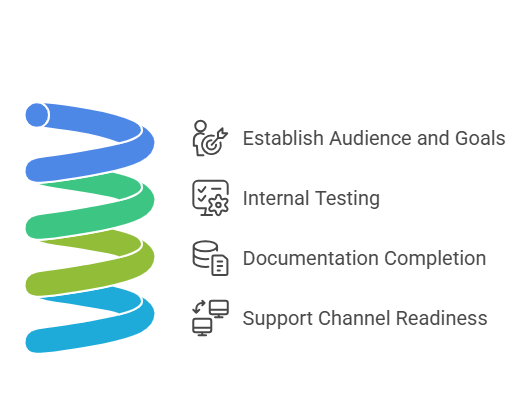
With your audience and strategic goals established, it’s time to ensure the product is truly ready. This stage is not just about writing flawless code or creating beautiful content; it’s about ensuring that the product delivers real value and that you can support users once they adopt it.
Start with internal testing. The product should have passed functional testing, usability testing, and quality assurance cycles. If your product involves software, have multiple environments for testing before deployment. If it’s content-based, finalize all modules and have them reviewed by experts.
Additionally, documentation should be complete. This includes user guides, FAQs, onboarding videos, and any self-help resources you intend to provide. You want users to experience clarity from the moment they begin using your product.
Support channels must be ready. Whether you use help desk software, live chat, phone support, or an email ticketing system, the team handling these channels must be trained and briefed on the product. They should know common issues, feature explanations, and escalation procedures.
Preparing Your Marketing and Messaging
Even if you have the best product, it won’t sell itself. Preparing your marketing is one of the most time-intensive but also most impactful phases of your launch preparation.
Craft key messaging that resonates with your audience. What major problems does your product solve? How is it different from alternatives? What transformation will your users experience? These core messages will be used across your website copy, email campaigns, ads, social media posts, and launch announcements.
Develop all creative assets ahead of time. This includes website landing pages, promotional videos, product screenshots, blog posts, and email content. Messaging must be consistent and tailored for different platforms and stages of the buyer journey.
Decide on your launch channels. Will you leverage social media, content marketing, paid ads, partnerships with influencers or affiliates, press releases, or others? Plan your calendar so that each channel tells a cohesive story across the days leading up to your launch.
Additionally, your website or landing page must be optimized for conversion. This means clear call-to-action elements, fast loading speed, persuasive copy, and intuitive user experience — especially on mobile devices where many of your users will access your content.
Building Pre-Launch Buzz and Audience Engagement
People don’t magically appear on launch day. You have to build anticipation and excitement before the product is live. This is where audience engagement and early interest play a crucial role.
Start by announcing your launch date to your email list and followers far in advance. Give them reasons to care — perhaps early access, exclusive bonuses, limited-time pricing, or valuable insights related to your product’s domain.
Leverage content marketing to educate your audience about the problem your product solves. Publish articles, videos, and social content that prepare your audience mentally for the solution your product offers. When your messaging connects with your audience’s challenges and aspirations, people naturally become interested in what you’re building.
Collaborations with influencers, industry partners, or other brands can expand your reach and credibility. These partners can help amplify your product announcement through their own networks, which can result in a greater influx of interested prospects on launch day.
Internal Team Communication and Training
While external marketing is important, internal alignment is equally critical. Every team member involved in the launch, from development to customer support to sales, must understand the product and the launch goals.
Hold a kickoff meeting where you share the product vision, launch timeline, roles, and expectations. Prepare playbooks for different scenarios such as user complaints, unforeseen bugs, or high-traffic surges.
Sales teams need pitch scripts, objection handling materials, and pricing details. Support teams need knowledge bases and resources they can quickly reference. Executives and leadership should be updated on key metrics they will be tracking and why they matter.
Clear internal communication mitigates risk and ensures that if something unexpected happens during launch, your team is ready to respond proactively.
Technical and Logistical Launch Preparation
On launch day, users will flood your website, servers, support portals, and community channels. You must be technically prepared for this surge.
Ensure your hosting infrastructure can handle peak traffic. If your product involves a digital download or online service, perform load testing to identify bottlenecks. Update any third-party integrations and confirm that payments, user authentication, and analytics tracking are working properly.
Set up monitoring tools for real-time alerts. If your product experiences downtime or performance issues during launch, early detection can mean the difference between minor inconvenience and major reputation damage.
Back up all important data before launch. It might seem obvious, but launches can trigger unintended consequences, and having recent backups ensures you can restore functionality quickly if necessary.
Launch Day Execution
Launch day should feel organized, predictable, and even fun. With the right preparation, this is where all your efforts pay off.
Kick off early by making your product announcement on your main platforms. Your email sequence should be triggered, your website updated, and social platforms buzzing with messaging. If you have paid ads running, confirm they are live and analytics is tracking conversions accurately.
Pay close attention to user feedback. Monitor social comments, customer support tickets, and any community forums you maintain. Be responsive and empathetic. Early adopters can provide valuable insights into usability issues or unexpected value.
Track your key performance indicators in real time. Metrics like traffic, conversions, revenue, churn rate, and customer feedback scores will help you understand how the launch is performing and where you might pivot or optimize.
Post-Launch Review and Next Steps
Once the dust settles, your work isn’t over. A launch is not just a singular event but the start of ongoing product growth.
Hold a post-mortem meeting with your team to evaluate what went well, what didn’t, and what could be improved. Compare actual results against your original goals. If you met or exceeded expectations, celebrate! If not, identify areas of improvement with data-backed insights.
Collect feedback from users and prioritize enhancements or fixes for upcoming releases. Maintain communication with your audience to nurture loyalty and encourage word-of-mouth referrals.
Monitor long-term metrics such as retention, revenue growth, customer lifetime value, and satisfaction. These will tell you whether your product continues to resonate and deliver value to your users beyond the initial excitement of launch day.
Conclusion
Launching a digital product is both exciting and complex. Without the right roadmap, even a brilliant product can falter at the finish line. A robust Product Launch Checklist helps you stay organized, align your team, connect with your audience, and measure success with purpose.
From understanding your audience and setting strategic goals to preparing your product, marketing plan, and internal teams, every piece of the launch puzzle matters. When executed thoughtfully, your launch can set the stage for sustainable growth, loyal users, and long-term success.
Remember that launches are iterative. Each one teaches you something new about your audience, your product, and your process. Use what you learn to make the next launch even stronger.
In the end, preparation isn’t just about checking boxes — it’s about creating an experience your audience remembers and values.