

Search engine optimization has changed a lot. If you’ve been in the SEO space for even a couple of years, you’ve probably felt it. What used to be manual audits, spreadsheets, and endless crawling tools has now evolved into something far more intelligent.
In 2026, AI is not just assisting SEO audits, it’s driving them.
And honestly, if you’re still relying only on traditional tools, you might already be behind.
This guide breaks down the 15 best tools you can use right now, how they work, and which one fits your workflow. I’ll try to keep it practical, not overly technical, because let’s face it, most marketers just want tools that actually move rankings.
Why AI is Reshaping SEO Audits in 2026
Before we jump into the tools, it’s worth understanding what changed.
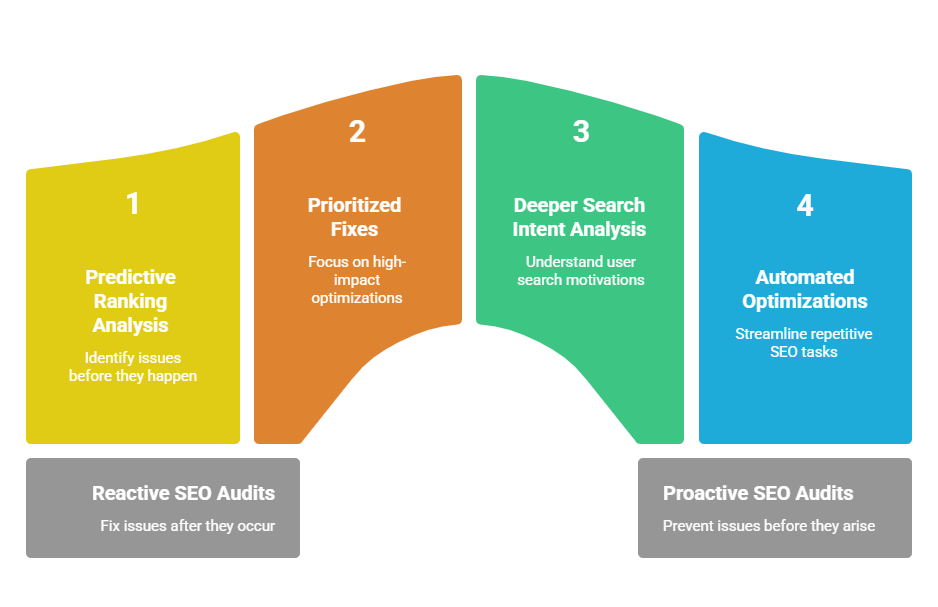
Traditional SEO audits were reactive. You ran a crawl, found issues, fixed them, and repeated. AI flipped that model.
Now, tools can:
- Predict ranking issues before they happen
- Prioritize fixes based on impact
- Analyze search intent more deeply
- Automate repetitive optimizations
Platforms like Semrush and Ahrefs already use large datasets and machine learning to identify technical errors, keyword gaps, and optimization opportunities at scale .
And newer tools go even further by combining content intelligence with real-time SERP analysis.
That’s where an AI SEO audit tool becomes essential, not optional.
How to Choose the Right AI SEO Audit Tool
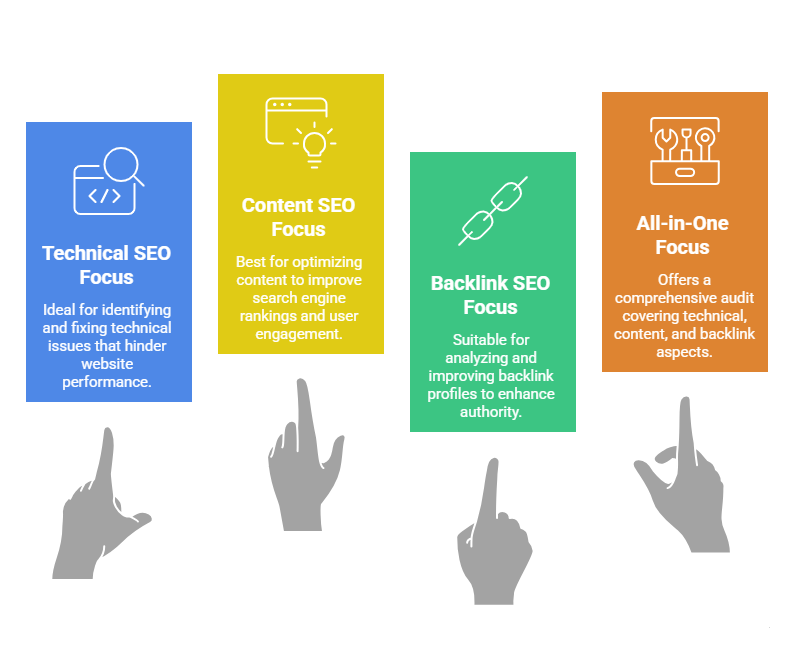
Not every tool here is built the same. Some focus on technical SEO, others on content, and a few try to do everything.
When choosing, consider:
- Depth of audit (technical vs content vs backlinks)
- Automation level
- Ease of use
- Reporting clarity
- Integration with your stack
A good AI SEO audit tool should not just show problems. It should tell you what to fix first and why.
15 Best AI SEO Audit Tools in 2026
1. SEMrush
If you want an all-in-one platform, SEMrush is still kind of unbeatable.
Its site audit feature scans websites for technical SEO issues, tracks keyword performance, and provides competitive insights in one dashboard .
What I personally like is how it prioritizes errors. You don’t get overwhelmed with 500 issues. Instead, it highlights what actually matters.
It’s a solid AI SEO audit tool for agencies and advanced marketers who want everything in one place.
2. Ahrefs
Ahrefs has always been known for backlinks, but its audit capabilities have quietly become very powerful.
It scans over 170+ SEO issues, including duplicate content, broken links, and Core Web Vitals, while also offering AI-driven content recommendations .
The interface feels clean, and the data is reliable. If backlinks are a big part of your strategy, this tool is a no-brainer.
3. Surfer SEO
Surfer SEO is more about content audits than technical ones.
It analyzes top-ranking pages and gives real-time suggestions for keyword usage, structure, and optimization. It’s like having an SEO editor sitting next to you while you write.
For content marketers, this is easily one of the most practical AI SEO audit tool options available.
4. Moz Pro
Moz Pro is kind of the “friendly” SEO tool.
It’s not as aggressive or data-heavy as some competitors, but it’s very easy to use. It offers site audits, keyword tracking, and link analysis in a simplified way .
If you’re a beginner or small business owner, this might actually be better than more complex platforms.
5. SE Ranking
SE Ranking has improved a lot in recent years.
It now offers full-scale audits, keyword tracking, and competitor analysis, all powered by AI insights. It also supports large-scale site audits, making it suitable for agencies and growing businesses .
A good mid-range AI SEO audit tool if you want strong features without premium pricing.
6. Screaming Frog SEO Spider (with AI)
This one is a bit different.
Screaming Frog is a desktop-based crawler that gives extremely detailed technical insights. Recently, it added AI integrations for tasks like content analysis and automation .
It’s not beginner-friendly, but if you’re technical, you’ll love it.
7. Frase
Frase focuses heavily on content audits and optimization.
It analyzes search intent, extracts key topics from top-ranking pages, and helps structure content accordingly.
For bloggers and content teams, it’s a lightweight but powerful AI SEO audit tool that improves relevance and depth.
8. Clearscope
Clearscope is often used by enterprise teams.
It uses NLP (natural language processing) to evaluate content quality and suggest improvements based on what’s ranking.
It’s expensive, yes. But the output quality is very high, especially for competitive niches.
9. MarketMuse
MarketMuse goes deeper into content strategy.
It doesn’t just audit a page. It evaluates your entire content ecosystem and identifies gaps.
If you’re trying to build topical authority, this tool is incredibly useful.
10. SEOptimer
SEOptimer is simple, fast, and surprisingly effective.
It generates audit reports quickly and provides clear recommendations, making it ideal for freelancers or small businesses .
It’s probably one of the easiest tools to get started with.
11. Writesonic
Writesonic is primarily known as a content generation tool, but it also includes SEO audit features.
It helps optimize content structure, keywords, and readability using AI.
Not a full technical audit tool, but a useful addition for content workflows.
12. Alli AI
Alli AI focuses on automation.
It can implement on-page SEO changes directly on your site without needing developer support. That’s actually a huge time saver.
If you manage large websites, this tool can simplify workflows significantly.
13. SpyFu
SpyFu is all about competitor intelligence.
It shows you what keywords your competitors rank for, how they spend on ads, and how their SEO strategy evolves over time .
It’s a strategic AI SEO audit tool rather than a technical one.
14. BrightEdge
BrightEdge is built for enterprises.
It combines SEO audits with AI-driven insights, content recommendations, and performance tracking.
Large organizations with complex SEO needs will find this tool extremely valuable.
15. Sintra AI
Sintra AI is one of the newer tools in this space.
It focuses on autonomous audits, meaning it continuously monitors your site and suggests improvements without manual input .
It’s still evolving, but definitely one to watch.
Comparing the Tools: Which One Should You Choose?
Let’s be honest, there’s no single “best” tool.
It depends on what you need.
If you want everything in one place, go with SEMrush or Ahrefs.
If your focus is content, Surfer SEO, Frase, or Clearscope will work better.
If you’re technical, Screaming Frog is unmatched.
And if you’re just starting out, SEOptimer or Moz Pro might feel less overwhelming.
That said, combining tools often works best. Many agencies use a mix of Ahrefs for backlinks, Surfer for content, and Screaming Frog for technical audits .
Real-World Use Case: How AI SEO Tools Improve Rankings
Here’s a simple example.
A company runs an audit using SEMrush and identifies:
- Broken links
- Duplicate content
- Missing meta tags
After fixing these issues, they reduce technical errors by up to 50% and improve organic performance significantly .
Now imagine combining that with content optimization tools like Surfer or Frase.
That’s where the real impact happens.
Common Mistakes When Using AI SEO Audit Tools
This is important.
Just having a tool doesn’t guarantee results.
Some common mistakes I’ve seen:
- Ignoring recommendations
- Fixing low-impact issues first
- Over-optimizing content
- Relying only on automation
An AI SEO audit tool should guide your strategy, not replace your thinking.
The Future of AI in SEO Audits
We’re moving toward predictive SEO.
Instead of just fixing issues, tools will:
- Forecast ranking changes
- Automate entire optimization workflows
- Optimize for AI search engines (like ChatGPT, not just Google)
Some tools already analyze AI-generated search results and brand visibility across platforms.
This shift is big, and honestly, we’re just getting started.
Final Thoughts
If you’re serious about SEO in 2026, you can’t ignore AI.
The tools listed above are not just “nice to have.” They’re becoming essential.
Start simple if you need to. Pick one tool, learn it properly, and then expand your stack.
Because at the end of the day, rankings don’t improve because you have tools.
They improve because you use them well.