

Email marketing isn’t new. But what’s changed, dramatically, is how it’s executed. In 2026, campaigns aren’t just scheduled and sent. They’re predicted, personalized, optimized, and sometimes almost eerily human.
That’s where AI Email Marketing Tools come in.
If you’ve ever struggled with low open rates, generic messaging, or endless manual segmentation, AI flips that entire workflow. It doesn’t just save time, it actually makes campaigns smarter with every send.
This guide breaks down the 15 best tools you should seriously consider in 2026, along with how they work, who they’re best for, and what makes them worth your attention.
What Are AI Email Marketing Tools and Why They Matter
At a basic level, AI-powered email tools use machine learning and data to improve campaign performance. But that definition feels incomplete.
Because in reality, these tools do things marketers used to spend weeks figuring out:
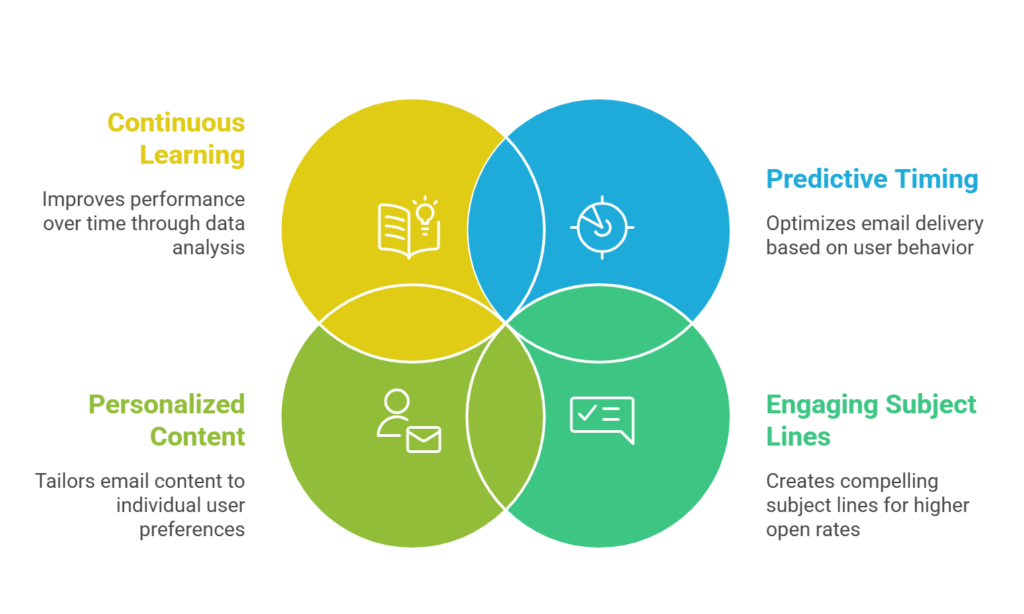
- They predict when users will open emails.
- They generate subject lines with higher engagement probability.
- They personalize content based on behavior, not assumptions.
And importantly, they learn over time.
For example, platforms like HubSpot and ActiveCampaign use behavioral data and predictive analytics to automatically send emails at the optimal time for each individual user rather than a fixed schedule.
So instead of blasting a list at 10 AM, AI ensures each person gets the email when they’re most likely to engage.
That alone can increase open rates significantly.
How AI Is Transforming Email Marketing in 2026
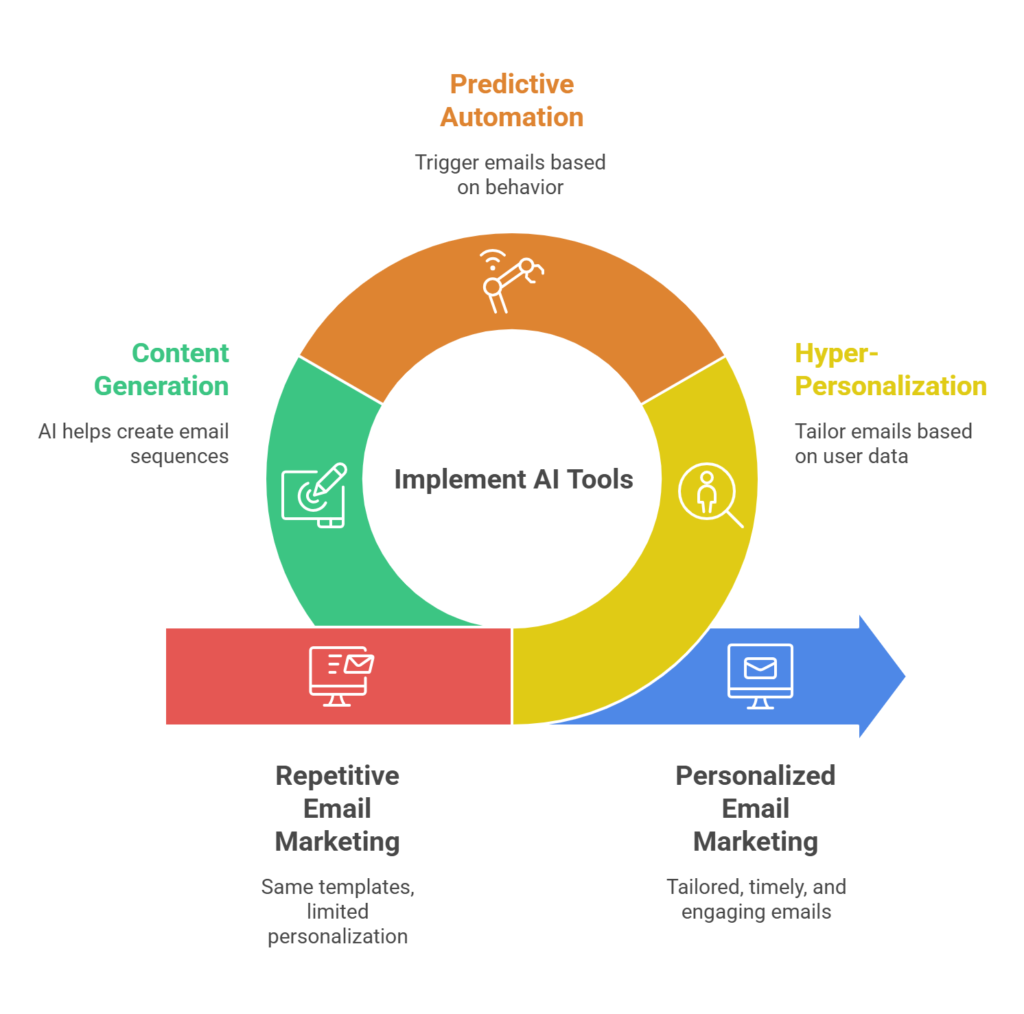
Let’s be honest. Email marketing used to be a bit repetitive.
Same templates. Same segmentation logic. Same “Hi {First Name}” personalization.
Now?
AI is changing three major things:
1. Hyper-Personalization at Scale
Modern tools analyze user behavior, purchase history, and engagement signals to tailor every email. Tools like Klaviyo even predict customer lifetime value and purchase likelihood.
2. Predictive Automation
AI decides not just what to send, but when and why. Platforms can trigger emails based on micro-behaviors like scroll depth or inactivity.
3. Content Generation
Tools like Jasper or Grammarly help generate complete email sequences, not just fix grammar.
And honestly, this is where most marketers feel the biggest shift. Writing emails is no longer the bottleneck.
15 Best AI Email Marketing Tools to Use in 2026
Now let’s get into the actual tools. I’ve grouped a mix of full platforms, AI writing assistants, and niche tools because well, no single tool does everything perfectly.
1. HubSpot AI
HubSpot is often the first name that comes up, and for good reason.
It’s not just an email marketing tool. It’s a full CRM ecosystem powered by AI.
Key AI Capabilities
HubSpot’s AI is deeply embedded across its platform. The Content Assistant can generate entire email drafts, subject lines, and CTAs based on your campaign goals. But it doesn’t stop there.
It uses predictive lead scoring to determine which contacts are most likely to convert. That means your emails aren’t just sent, they’re prioritized based on potential ROI.
Real Use Case
Let’s say you’re running a SaaS product.
HubSpot can track user behavior like demo sign-ups, pricing page visits, and inactivity periods. Based on this, it automatically triggers tailored email sequences.
A user who visited pricing twice but didn’t convert might get a discount-focused email. Someone exploring features might receive educational content instead.
Pros and Limitations
It’s incredibly powerful for scaling businesses. But yes, it can feel overwhelming at first. And pricing increases quickly as your contact list grows.
Still, for companies that want everything in one place, this is hard to beat.
2. Mailchimp with Intuit Assist
Mailchimp has evolved a lot from its early days.
With Intuit Assist, it’s now leaning heavily into AI-driven marketing.
Key AI Features
The platform analyzes your audience data to suggest campaign improvements. It can recommend subject lines, optimize send times, and even generate email copy.
What’s interesting is how beginner-friendly it still is.
You don’t need deep technical knowledge to start using its AI features.
Practical Application
Imagine you’re running a newsletter.
Mailchimp can automatically identify your most engaged subscribers and create lookalike segments. This helps you expand your reach without guesswork.
It also suggests the best times to send emails based on past engagement patterns.
Who It’s Best For
Small businesses, startups, and creators.
It may not have the depth of advanced tools, but for simplicity and ease of use, it’s still one of the strongest options.
3. ActiveCampaign
ActiveCampaign is where automation meets intelligence.
It’s built for marketers who want deeper control over customer journeys.
AI Capabilities
The platform uses machine learning to predict customer behavior. It can determine the best time to send emails, recommend products, and even adjust messaging dynamically.
Its predictive sending feature is particularly strong.
Real-World Scenario
Let’s say you run an online course.
ActiveCampaign tracks how users interact with your content. If someone watches multiple lessons but stops midway, the system can trigger re-engagement emails with personalized messaging.
Strengths
Its automation builder is one of the most advanced in the market.
But it does require a learning curve. It’s not something you fully master in a day.
4. Klaviyo
Klaviyo is almost synonymous with eCommerce email marketing.
And its AI capabilities are built specifically for that.
Core AI Features
Klaviyo uses predictive analytics to forecast customer lifetime value, churn risk, and purchase probability.
This allows you to segment users in a much more meaningful way.
Example Use Case
If a customer hasn’t purchased in 30 days but has high predicted value, Klaviyo can trigger a targeted retention campaign.
Instead of generic “We miss you” emails, it sends product-specific recommendations based on browsing behavior.
Why It Stands Out
Its integration with platforms like Shopify makes it incredibly powerful.
But if you’re not in eCommerce, you might not fully benefit from its features.
5. Mailmodo
Mailmodo takes a slightly different approach.
It focuses on interactive emails.
AI and AMP Integration
Its AI helps create AMP-powered emails where users can interact directly inside the email.
Think booking appointments, filling forms, or taking surveys without leaving the inbox.
Practical Example
If you’re running a webinar campaign, users can register directly within the email.
This reduces friction and increases conversions.
Limitations
It’s not as comprehensive as full marketing platforms. But for engagement-focused campaigns, it’s incredibly effective.
6. Jasper AI
Jasper is more of a content engine than a marketing platform.
But it plays a huge role in email marketing.
What It Does Best
Jasper generates high-quality email copy, subject lines, and sequences.
It uses trained models to match tone, intent, and audience.
Real Application
You can create a full email funnel in minutes.
Welcome emails, nurture sequences, promotional campaigns… all generated quickly.
Important Note
It still needs human editing.
AI-generated content can sometimes feel slightly off, especially for brand voice consistency.
7. Grammarly
Grammarly might seem simple, but it’s surprisingly impactful.
AI Capabilities
It doesn’t just check grammar. It analyzes tone, clarity, and engagement.
Why It Matters
In email marketing, small improvements can significantly impact performance.
A clearer subject line or more conversational tone can increase open and click rates.
Use Case
Before sending campaigns, teams use Grammarly to refine messaging.
It’s not flashy, but it works.
8. Lavender AI
Lavender is built specifically for email outreach.
Key Features
It analyzes emails in real time and provides suggestions to improve engagement.
It evaluates tone, personalization, and readability.
Real Scenario
Sales teams use Lavender to improve cold emails.
It might suggest shortening sentences, adding personalization, or adjusting tone to sound more human.
Best For
B2B outreach and sales teams.
9. SmartWriter
SmartWriter focuses heavily on personalization.
AI Capabilities
It pulls data from multiple sources to generate highly customized emails.
Example
Instead of generic emails, it references a prospect’s company, role, or recent activity.
This increases reply rates significantly.
Limitations
It’s mainly designed for outreach, not full campaign management.
10. Postcards by Designmodo
Postcards is all about design efficiency.
AI Features
It helps generate responsive email templates quickly.
Why It’s Useful
Design often slows down campaigns.
Postcards reduces that friction by providing ready-to-use layouts.
Use Case
Marketing teams can create visually appealing emails without coding.
11. Unspam.email
Deliverability is often ignored… until it becomes a problem.
What It Does
Unspam.email checks whether your emails might land in spam folders.
AI Role
It analyzes content, structure, and technical setup.
Practical Value
Before launching campaigns, teams test emails to improve inbox placement.
12. Brevo (formerly Sendinblue)
Brevo is a strong budget-friendly platform.
AI Features
It includes predictive sending, segmentation, and automation.
Real Use Case
Small businesses use Brevo to automate campaigns without high costs.
Strength
Affordable and scalable.
13. GetResponse
GetResponse combines email marketing with funnel building.
AI Capabilities
It offers email generation, automation workflows, and product recommendations.
Use Case
You can build complete marketing funnels within the platform.
14. Instantly
Instantly is built for cold email at scale.
Key Features
It focuses on deliverability and automation.
Example
Agencies use Instantly to run outreach campaigns across multiple inboxes.
15. Kit (formerly ConvertKit)
Kit is designed for creators.
AI Features
It helps with email content, segmentation, and automation.
Best Use Case
Newsletter creators and personal brands.
How to Choose the Right AI Email Tool
Here’s the thing. There is no “best” tool for everyone.
Even Reddit users who’ve tested multiple platforms agree that the right choice depends on your use case, not just features.
So instead of asking “What’s the best tool?”, ask:
- Are you focused on automation?
- Are you running eCommerce campaigns?
- Do you need better copywriting?
Because:
- If you want an all-in-one system → HubSpot
- If you want eCommerce growth → Klaviyo
- If you want better writing → Jasper or Grammarly
It’s less about tools and more about outcomes.
Real-World Use Cases of AI in Email Marketing
Let’s make this practical.
Scenario 1: Lead Nurturing
AI automatically sends emails based on user behavior, not just time delays.
Scenario 2: Cart Abandonment
Tools like Klaviyo trigger personalized reminders with product recommendations.
Scenario 3: Cold Outreach
Tools like SmartWriter generate hyper-personalized emails that feel human.
Scenario 4: Content Scaling
Jasper generates entire email sequences in minutes.
And yeah, this is where most marketers see the biggest ROI.
Challenges and Limitations You Should Know
AI isn’t perfect.
Sometimes the personalization feels… off.
Sometimes the generated content lacks brand nuance.
Even advanced systems still struggle with tone alignment in certain contexts.
So human oversight still matters.
Think of AI as an assistant, not a replacement.
Future Trends in AI Email Marketing
Looking ahead, a few trends are becoming obvious:
- AI agents will manage full campaigns autonomously
- Email + chat + SMS will merge into unified systems
- Hyper-personalization will become expected, not optional
Even platforms like Gmail are evolving into AI-powered assistants that summarize and prioritize emails automatically.
Which means your emails will have to compete harder for attention.
Final Thoughts
The shift toward AI in email marketing isn’t coming. It’s already here.
And the marketers who adapt early are seeing better engagement, higher conversions, and frankly less manual work.
But here’s something worth remembering.
Tools don’t create great marketing. Strategy does.
AI just makes execution faster, smarter, and more scalable.
So if you’re exploring AI Email Marketing Tools, don’t just chase features. Focus on how they fit into your overall marketing system.
Because that’s what actually moves the needle.