

The way businesses sell has quietly but dramatically shifted over the last few years. It’s no longer just about having a persuasive sales team or a high-converting landing page. Customers now expect instant responses, personalized interactions, and seamless experiences across channels. And honestly, if they don’t get that, they just leave.
This is where AI-powered chatbots have started to reshape the sales landscape.
You’ve probably interacted with one already. Maybe while browsing a product, a small chat window popped up asking if you needed help. Sometimes it felt robotic, sometimes surprisingly human. That difference? It usually comes down to how well the chatbot is built and integrated into the sales process.
In this guide, we’re going to unpack everything you need to know about using AI chatbots for sales. Not just surface-level stuff, but practical strategies, tools, and real-world applications that can actually move the needle.
Understanding the Role of AI Chatbots in Sales
At its core, an AI chatbot is designed to simulate conversation. But in sales, its role goes much deeper than just answering basic questions.
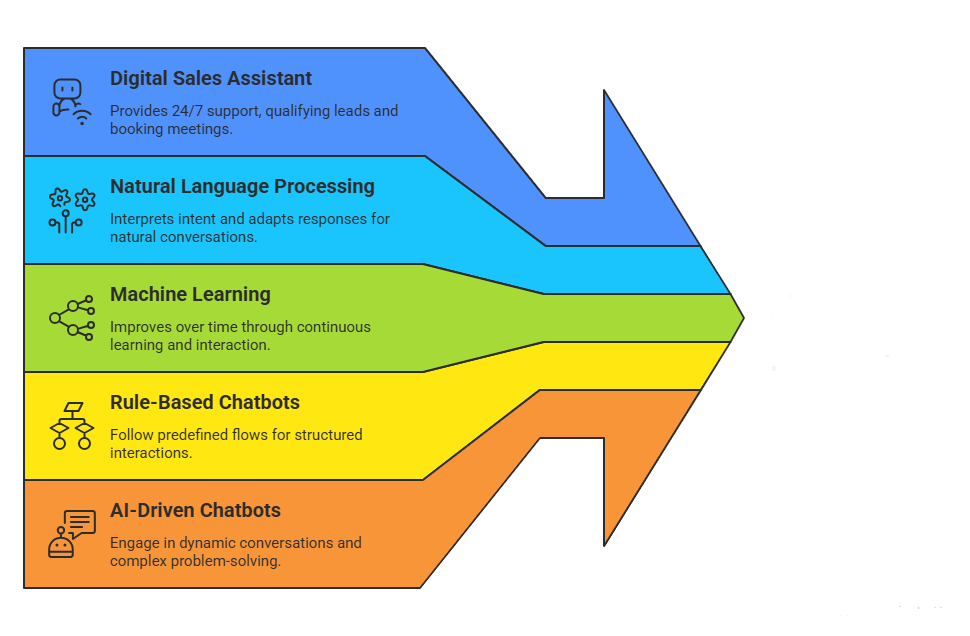
It acts as a digital sales assistant that works 24/7. It qualifies leads, nurtures prospects, recommends products, books meetings, and sometimes even closes deals.
What makes modern chatbots powerful is their use of natural language processing and machine learning. Instead of relying on rigid scripts, they can interpret intent, adapt responses, and improve over time based on interactions.
That said, not all chatbots are created equal. Some are rule-based and follow predefined flows. Others are fully AI-driven and capable of dynamic conversation. The real impact comes when you blend both approaches strategically.
Why Businesses Are Turning to AI for Sales Automation
There’s a reason companies across industries are adopting AI chatbots.
First, speed. Customers today don’t want to wait. If someone lands on your website and doesn’t find what they’re looking for within seconds, chances are they’ll bounce.
Second, scalability. A human sales team can only handle so many conversations at once. A chatbot can manage thousands simultaneously without breaking.
Third, consistency. Every lead gets the same level of attention, qualification, and follow-up. No missed opportunities due to human error or fatigue.
And maybe most importantly, data.
Every interaction a chatbot has becomes a source of insight. You start to understand customer objections, preferences, common questions, and buying triggers. That information is incredibly valuable when refining your sales strategy.
How AI Chatbots Actually Drive Conversions
It’s easy to assume chatbots are just support tools, but when implemented correctly, they become conversion engines.
Let’s break this down.
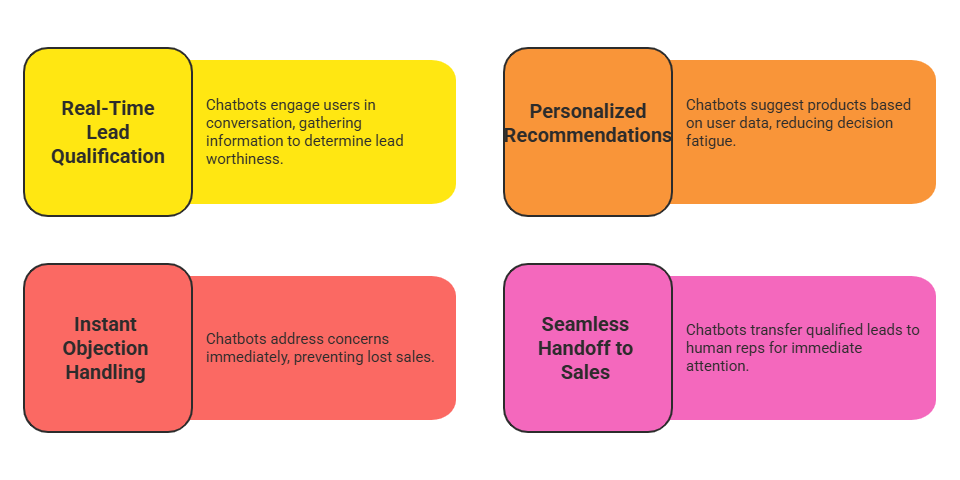
Real-Time Lead Qualification
Instead of using static forms, chatbots engage users in conversation. They ask relevant questions, gather key information, and determine whether a lead is worth pursuing.
This feels more natural to the user and often results in higher completion rates.
Personalized Recommendations
Based on user responses, browsing behavior, or past interactions, chatbots can suggest products or services that match specific needs.
This kind of personalization significantly improves conversion rates because it reduces decision fatigue.
Instant Objection Handling
A common reason people don’t convert is uncertainty.
Chatbots can instantly address concerns related to pricing, features, delivery, or compatibility. And because they’re always available, they eliminate the delay that might otherwise cause a lost sale.
Seamless Handoff to Sales Teams
When a lead is ready, the chatbot can transfer the conversation to a human sales rep or schedule a call.
This ensures that high-intent prospects get immediate attention without friction.
Types of AI Chatbots Used in Sales
Understanding the different types of chatbots helps you choose the right one for your business.
Rule-Based Chatbots
These follow predefined scripts and decision trees. They’re easy to set up and work well for simple use cases like FAQs or basic lead capture.
However, they lack flexibility and can feel rigid if the user deviates from expected inputs.
AI-Powered Chatbots
These use machine learning and NLP to understand user intent and generate responses.
They can handle more complex conversations and adapt over time, making them ideal for dynamic sales environments.
Hybrid Chatbots
A combination of rule-based and AI-driven systems.
This approach provides structure where needed while allowing flexibility in conversation. Many modern sales chatbots fall into this category because it balances control and intelligence.
Best AI Chatbot Tools for Sales Automation
Choosing the right tool is crucial. Each platform has its strengths, and the best one depends on your business model, sales cycle, and integration needs.
ChatBot.com
ChatBot.com is known for its user-friendly interface and strong automation capabilities. It allows businesses to create conversational flows without deep technical expertise.
One of its standout features is its drag-and-drop builder, which makes designing chatbot journeys intuitive. It also integrates with CRM systems, enabling seamless lead management.
For sales teams, it offers templates specifically designed for lead generation and qualification. This speeds up implementation while maintaining effectiveness.
ProProfs Chat
ProProfs Chat focuses heavily on real-time engagement. It combines live chat with chatbot automation, allowing businesses to switch between human and AI interactions smoothly.
It’s particularly useful for small to mid-sized businesses looking for a balance between automation and personal touch.
The platform also provides detailed analytics, helping teams understand user behavior and optimize conversations accordingly.
Warmly.ai
Warmly.ai takes a slightly different approach by focusing on intent-based engagement.
It tracks visitor behavior and triggers conversations based on actions, such as time spent on a page or repeated visits.
This proactive approach often leads to higher engagement rates because the chatbot reaches out at the right moment.
It also integrates deeply with sales tools, making it ideal for B2B companies with longer sales cycles.
Drift
Drift is one of the more well-known platforms in the conversational marketing space.
It’s designed to replace traditional forms with real-time conversations. Its AI chatbot can qualify leads, book meetings, and route prospects to the right sales reps.
Drift also emphasizes personalization, using data to tailor interactions based on user profiles.
Intercom
Intercom combines customer support and sales automation into a single platform.
Its chatbot, often referred to as a conversational assistant, can handle both inbound and outbound interactions.
For sales teams, it provides tools for onboarding, product tours, and targeted messaging, making it a comprehensive solution.
ManyChat
ManyChat is widely used for social media platforms, particularly Facebook Messenger and Instagram.
It’s ideal for businesses that rely on social channels for lead generation and sales.
The platform allows automation of conversations, follow-ups, and even payment processes within messaging apps.
Implementing a Sales Chatbot: Step-by-Step Approach
Getting started with a chatbot isn’t just about picking a tool and turning it on.
There’s a strategy involved.
Define Clear Objectives
Before anything else, you need to know what you want the chatbot to achieve.
Is it lead generation, qualification, customer education, or closing sales?
Having clarity here will guide the entire implementation process.
Map the Customer Journey
Understand how users move from awareness to purchase.
Identify key touchpoints where a chatbot can add value.
For example, on product pages, pricing pages, or during checkout.
Design Conversation Flows
This is where many businesses struggle.
Your chatbot conversations should feel natural, not scripted.
Think about common questions, objections, and scenarios. Then design flows that address them effectively.
Integrate with Existing Systems
Your chatbot should connect with your CRM, email marketing tools, and analytics platforms.
This ensures that data flows seamlessly and sales teams have full visibility into leads.
Test and Optimize
Launch is just the beginning.
Continuously monitor performance, analyze conversations, and refine your chatbot.
Small tweaks can lead to significant improvements in conversion rates.
Common Mistakes to Avoid
Even though chatbots are powerful, they’re not foolproof.
One common mistake is over-automation. Trying to replace human interaction entirely can backfire, especially in complex sales scenarios.
Another issue is poor conversation design. If the chatbot feels robotic or confusing, users will disengage quickly.
Lack of integration is also a problem. If your chatbot operates in isolation, you lose valuable insights and efficiency.
And finally, ignoring data. Chatbots generate a lot of information, but it’s only useful if you analyze and act on it.
Measuring the Success of Your Chatbot
To understand whether your chatbot is actually driving sales, you need to track the right metrics.
Conversion rate is an obvious one. How many interactions lead to a desired action?
Engagement rate is another important metric. Are users actually interacting with the chatbot?
Lead quality matters too. Are the leads generated by the chatbot converting into customers?
And then there’s customer satisfaction. Feedback from users can reveal a lot about the effectiveness of your chatbot.
The Future of AI Chatbots in Sales
We’re still in the early stages of what AI can do in sales.
As technology evolves, chatbots will become more conversational, more intuitive, and more integrated into the overall customer experience.
Voice-based interactions, predictive recommendations, and deeper personalization are just a few areas where we’re likely to see growth.
There’s also an increasing focus on ethical AI, ensuring transparency and trust in automated interactions.
Real-World Use Cases That Actually Work
It’s one thing to talk about theory, but seeing how businesses use chatbots in real scenarios makes everything clearer.
E-commerce brands often use chatbots to guide users through product discovery. Instead of browsing endlessly, customers get curated recommendations based on preferences.
SaaS companies use chatbots to qualify leads and book demos. This reduces friction and speeds up the sales cycle.
Service-based businesses use them for appointment scheduling and initial consultations.
And interestingly, some companies use chatbots for upselling and cross-selling after the initial purchase.
Challenges You Might Face
Despite the benefits, implementing chatbots isn’t always smooth.
One challenge is maintaining a balance between automation and personalization.
Another is ensuring the chatbot understands diverse user inputs, especially in global markets.
There’s also the issue of user trust. Some people still prefer human interaction, particularly for high-value purchases.
And then there’s ongoing maintenance. Chatbots require regular updates and optimization to stay effective.
Conclusion
The shift toward conversational sales isn’t just a trend. It’s becoming a standard.
Businesses that adapt early and implement AI chatbots strategically will have a significant advantage.
But it’s not just about technology. It’s about understanding your customers, designing meaningful interactions, and continuously improving based on data.
If done right, chatbots don’t just automate tasks. They create better experiences, stronger relationships, and ultimately, more revenue.
FAQs
1. What is an AI chatbot in sales?
An AI chatbot in sales is a software tool that uses artificial intelligence to interact with customers, qualify leads, and assist in the buying process.
2. Can chatbots really increase sales?
Yes, when implemented correctly, chatbots can improve engagement, reduce response time, and increase conversion rates.
3. Are AI chatbots suitable for small businesses?
Absolutely. Many tools are designed specifically for small and mid-sized businesses with affordable pricing and easy setup.
4. Do chatbots replace human sales teams?
Not entirely. They complement human teams by handling repetitive tasks and freeing up time for more complex interactions.
5. How long does it take to implement a chatbot?
It depends on the complexity, but basic setups can be done in a few days, while advanced implementations may take weeks.
6. What industries benefit the most from sales chatbots?
E-commerce, SaaS, real estate, and service-based industries see significant benefits from chatbot automation.
7. How do chatbots qualify leads?
They ask predefined or dynamic questions to gather information and determine whether a lead meets certain criteria.
8. Are chatbots expensive?
Costs vary depending on the platform and features, but many affordable options are available.
9. How do you measure chatbot success?
Key metrics include conversion rate, engagement rate, lead quality, and customer satisfaction.
10. What is the future of chatbots in sales?
The future includes more advanced AI, better personalization, and deeper integration with sales and marketing systems.