

Marketing has always been a mix of creativity and calculation. But something has shifted in the last few years. The scale, speed, and complexity of customer journeys today make it almost impossible to rely purely on manual execution. That’s where intelligent systems come in, quietly running in the background, analyzing behavior, predicting intent, and nudging users at just the right moment.
If you’ve been exploring ways to increase efficiency without sacrificing personalization, then understanding AI Marketing Automation might feel less like an option and more like a necessity.
This guide goes deep. Not just surface-level trends, but real strategies, tools, and practical ways to implement them. Along the way, we’ll unpack how brands are actually using these systems to boost conversions and ROI, sometimes in ways that feel surprisingly human.
What Is AI Marketing Automation?
At its core, AI-powered automation in marketing combines machine learning, data analysis, and automated workflows to make marketing smarter and faster. Instead of manually setting rules and reacting to customer actions, the system learns patterns, predicts outcomes, and acts in real time.
Think about a typical email campaign. Traditionally, you segment your audience, write emails, schedule them, and then analyze results later. With AI layered in, the system can determine who should receive which message, at what time, and even generate personalized content variations automatically.
But it’s not just email. It spans across ad platforms, content creation, customer support, lead scoring, and more.
Why AI is Changing Marketing Outcomes
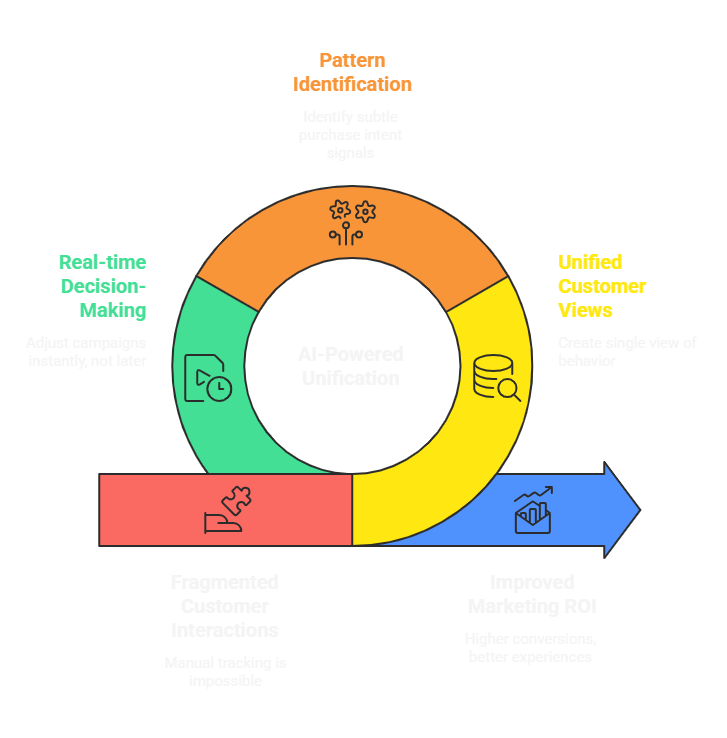
One of the biggest challenges marketers face is fragmentation. Customers interact across multiple platforms, devices, and touchpoints. Keeping track of these interactions manually is almost impossible.
AI solves this by creating unified views of customer behavior. It identifies patterns that humans might miss, like subtle signals of purchase intent or churn risk.
More importantly, it enables real-time decision-making. Instead of waiting days or weeks to optimize campaigns, adjustments happen instantly.
This leads to three major advantages:
- Higher conversion rates due to precise targeting
- Improved customer experiences through personalization
- Better ROI because of reduced waste in ad spend
And honestly, once you start seeing these improvements, it becomes hard to go back to traditional methods.
Key Strategies to Boost Conversions Using Intelligent Automation
Predictive Customer Segmentation
Segmentation used to be straightforward. Demographics, location, maybe some behavior data. But that barely scratches the surface.
AI-driven segmentation goes deeper. It analyzes thousands of data points, including browsing habits, purchase history, engagement levels, and even time spent on specific content.
This results in dynamic segments that evolve in real time. For example, a user who was casually browsing yesterday might be flagged as high intent today based on recent actions.
Tools like Salesforce Einstein and HubSpot AI help marketers build these intelligent segments without needing advanced data science knowledge.
And the result? Campaigns that feel more relevant, which naturally leads to higher engagement and conversions.
Hyper-Personalized Content Delivery
Personalization is no longer about adding a first name to an email.
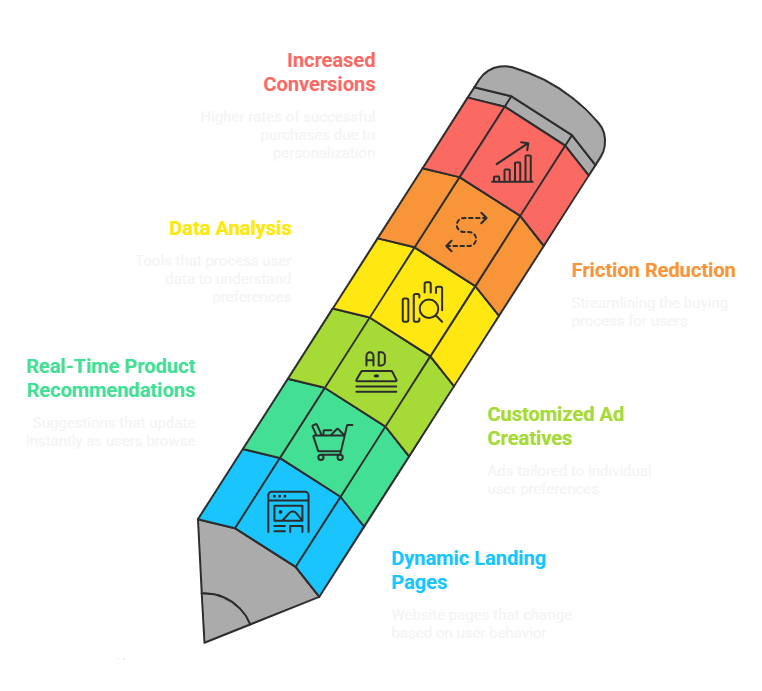
With AI, content adapts to each user. Landing pages change dynamically. Product recommendations update in real time. Even ad creatives can be customized based on user behavior.
Platforms like Dynamic Yield and Adobe Sensei specialize in this kind of personalization. They analyze user data and automatically adjust content to match individual preferences.
For example, an e-commerce store might show completely different homepage layouts to two users based on their browsing history.
This level of personalization significantly reduces friction in the buying process. Users feel understood, and that often translates into conversions.
Intelligent Lead Scoring
Not all leads are equal. Some are ready to buy, while others are just exploring.
AI improves lead scoring by analyzing behavior patterns rather than relying on static rules. It identifies signals that indicate purchase intent, such as repeated visits, content consumption, or specific interactions.
Tools like Marketo and Zoho CRM use machine learning to continuously refine lead scores. Over time, the system becomes more accurate.
This helps sales teams focus on high-value prospects, increasing efficiency and closing rates.
Automated Customer Journey Orchestration
Customer journeys are rarely linear. People move back and forth between stages, sometimes unpredictably.
AI helps map these journeys and automate responses accordingly. If a user abandons a cart, the system can trigger a personalized email. If someone engages heavily with a blog post, they might receive a targeted offer.
Platforms like ActiveCampaign and Iterable excel in this area. They allow marketers to create complex workflows that adapt based on user behavior.
The beauty here is subtlety. The automation doesn’t feel robotic. It feels like timely, relevant communication.
AI-Driven Ad Optimization
Running ads manually can be exhausting. Testing creatives, adjusting bids, refining targeting, it’s a constant process.
AI simplifies this by automating optimization. It tests multiple variations, identifies top performers, and reallocates budget accordingly.
Google Ads Smart Bidding and Meta Advantage+ campaigns are good examples. They use machine learning to optimize for conversions based on real-time data.
What’s interesting is that sometimes these systems find winning combinations that humans wouldn’t have considered.
Conversational Marketing with AI Chatbots
Customer expectations have changed. People want instant responses.
AI chatbots provide this by handling queries in real time. But modern chatbots go beyond basic FAQs. They understand context, guide users through decisions, and even assist with purchases.
Tools like Drift and Intercom use natural language processing to create conversational experiences that feel surprisingly natural.
For example, a chatbot can qualify leads, book meetings, or recommend products based on user input.
This not only improves user experience but also reduces the workload on support teams.
Content Creation and Optimization
Creating content consistently is one of the biggest challenges in marketing.
AI tools like Jasper, Copy.ai, and Writesonic help generate content ideas, drafts, and even full articles. While they don’t replace human creativity, they significantly speed up the process.
More importantly, they can optimize content for SEO, ensuring better visibility.
For instance, Surfer SEO analyzes top-ranking pages and provides recommendations to improve content structure and keywords.
This combination of speed and optimization leads to better-performing content.
Marketing Analytics and Attribution
Understanding what works and what doesn’t is crucial.
AI enhances analytics by providing deeper insights. It identifies patterns, predicts outcomes, and even suggests actions.
Tools like Google Analytics 4 and Improvado use AI to track user behavior across channels and attribute conversions accurately.
This helps marketers allocate budgets more effectively and improve ROI.
Deep Dive into Popular AI Marketing Tools
HubSpot AI
HubSpot integrates AI across its CRM, marketing, and sales tools. It offers features like predictive lead scoring, email optimization, and chatbots.
One of its strengths is ease of use. Even beginners can leverage advanced capabilities without technical expertise.
Salesforce Einstein
Einstein is Salesforce’s AI layer. It provides predictive analytics, automated insights, and personalized recommendations.
It’s particularly useful for large enterprises with complex data ecosystems.
Adobe Sensei
Adobe Sensei powers personalization, content analysis, and predictive targeting within Adobe’s ecosystem.
It’s widely used by brands focusing on high-quality digital experiences.
Jasper AI
Jasper focuses on content generation. It helps marketers create blog posts, ad copy, and social media content quickly.
While it requires human editing, it dramatically reduces content production time.
Drift
Drift specializes in conversational marketing. Its chatbot capabilities allow businesses to engage users in real time and guide them through the funnel.
Improvado
Improvado focuses on data aggregation and analytics. It pulls data from multiple sources and provides actionable insights.
This is especially useful for performance marketers managing multiple campaigns.
Real-World Examples of AI in Marketing
Netflix uses AI to recommend content based on user behavior. This keeps users engaged and increases retention.
Amazon uses AI for product recommendations, which account for a significant portion of its sales.
Spotify creates personalized playlists using AI, enhancing user experience and engagement.
These examples show how powerful AI can be when applied effectively.
Challenges and Considerations
While AI offers many benefits, it’s not without challenges.
Data quality is critical. Poor data leads to inaccurate predictions.
Privacy concerns are also important. Marketers must ensure compliance with regulations like GDPR.
There’s also the risk of over-automation. Too much automation can make interactions feel impersonal.
Balancing automation with human touch is key.
Future of Marketing with AI
The future looks promising. AI will continue to evolve, becoming more intuitive and accessible.
We can expect advancements in areas like voice search, visual recognition, and predictive analytics.
Marketing will become more proactive rather than reactive.
And honestly, that shift might redefine how brands connect with customers.
Frequently Asked Questions
1. What is AI marketing automation and how does it work?
It combines machine learning and automation to analyze data, predict behavior, and execute marketing tasks automatically.
2. Can small businesses use AI in marketing?
Yes, many tools are affordable and designed for small businesses.
3. Does AI replace human marketers?
No, it enhances their capabilities by handling repetitive tasks.
4. What are the best tools for beginners?
HubSpot, Jasper, and ActiveCampaign are good starting points.
5. How does AI improve conversion rates?
By delivering personalized experiences and optimizing campaigns in real time.
6. Is AI marketing expensive?
It depends on the tools, but many offer scalable pricing.
7. What skills are needed to use AI in marketing?
Basic understanding of data, marketing strategy, and tools.
8. How does AI help in content marketing?
It generates ideas, drafts content, and optimizes for SEO.
9. Are there risks involved?
Yes, including data privacy and over-reliance on automation.
10. What is the future of AI in marketing?
More personalization, better predictions, and increased efficiency.
Final Thoughts
The shift toward intelligent automation isn’t just a trend. It’s becoming the foundation of modern marketing.
When used thoughtfully, AI Marketing Automation helps businesses connect with customers in more meaningful ways while improving efficiency and ROI.
But it’s not about replacing human creativity. It’s about enhancing it.
And maybe that’s the most exciting part.