
There’s something quietly transformative happening in the way we consume content. Reading is no longer the only default. Listening is catching up fast. Podcasts, audiobooks, voice assistants, even YouTube narration it’s all part of a broader shift. And right at the center of this shift are modern text-to-speech systems powered by AI.
If you’ve ever tried older robotic voice generators, you probably remember how unnatural they sounded. Flat tone, weird pauses, no emotion. That’s changed dramatically. Today’s tools can mimic human speech with surprising realism, capture nuance, and even replicate accents or personalities.
This article dives deep into 20 of the most powerful tools available right now. Not just a surface list, but a detailed breakdown of what each one does well, where it struggles a bit, and who it’s best suited for.
And yes, whether you’re a marketer, content creator, educator, or just experimenting, there’s probably something here for you.
Why AI Text-to-Speech Tools Matters More Than Ever
Before we jump into tools, let’s quickly ground this.
Audio content is exploding. People listen while commuting, working out, or even while multitasking at home. Written content alone doesn’t always cut it anymore. Converting text into engaging audio opens up entirely new distribution channels.
From a marketing perspective, this means:
- Repurposing blog content into audio
- Creating voiceovers for ads and videos
- Building accessibility into your content
- Scaling content production without hiring voice actors
That last point it’s kind of a big deal.
1. ElevenLabs
ElevenLabs is probably one of the most talked-about tools right now, and honestly, it lives up to the hype in many ways.
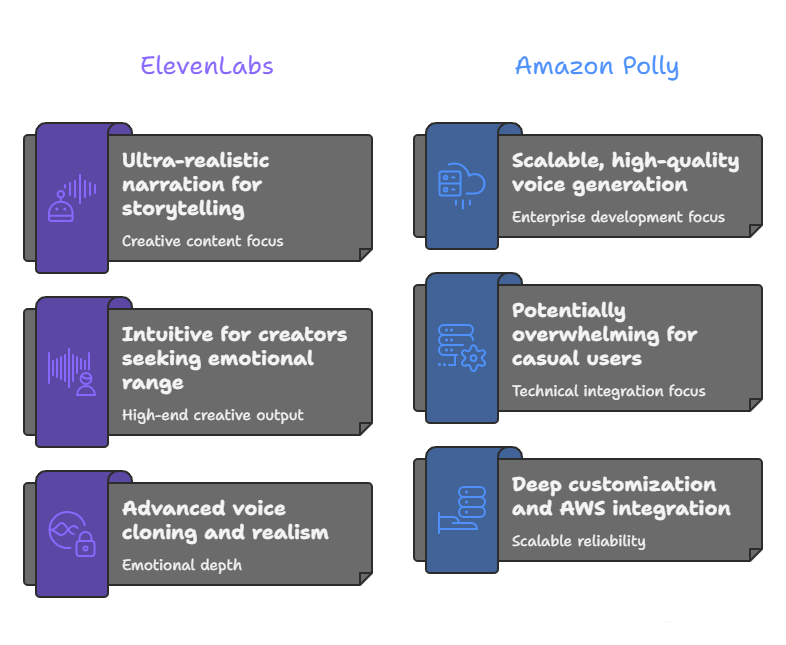
What sets it apart is realism. The voices feel human. Not just clear, but expressive. You get emotional range, which is something older tools never quite nailed.
It also offers voice cloning, which can be both powerful and a little controversial if misused. But in controlled environments, it’s incredibly useful.
Best for creators who want ultra-realistic narration, especially for storytelling or long-form content.
2. Murf AI
Murf AI is a favorite among marketers and video creators.
The platform is polished, easy to navigate, and packed with features. You can choose from a wide range of voices and accents, adjust pitch and tone, and even sync audio with visuals.
One thing I personally like about Murf is its focus on usability. You don’t need to be technical to get good results.
Ideal for explainer videos, presentations, and ads.
3. Play.ht
Play.ht is known for its extensive voice library and multilingual support.
It offers hundreds of voices across different languages, making it a strong choice for global content strategies.
The API capabilities are also worth mentioning. If you’re building something custom, Play.ht gives you flexibility.
It’s not perfect. Some voices still sound slightly synthetic depending on usage, but overall, it’s solid.
4. Descript Overdub
Descript is already popular as a podcast and video editing tool, but Overdub takes things further.
It allows you to create a digital voice clone that can generate new audio based on text input.
That means you can edit audio like a document. Delete a word, type a new one, and the voice adjusts.
For podcasters and editors, this is almost magical.
5. Speechify
Speechify is widely used for reading articles, PDFs, and documents aloud.
It’s especially popular among students and professionals who want to consume content faster.
The voices are quite natural, and the mobile experience is excellent.
It’s less about content creation and more about content consumption, but still very valuable.
6. Amazon Polly
Amazon Polly is part of AWS, so it’s more enterprise-focused.
It offers scalable, high-quality voice generation with deep customization options.
Developers love it because of its integration capabilities.
But for beginners, it might feel a bit overwhelming.
7. Google Cloud Text-to-Speech
Google’s solution is powerful, reliable, and constantly improving.
It uses DeepMind’s WaveNet technology, which produces highly natural voices.
There’s strong support for multiple languages and dialects.
Like Polly, it’s more suited for developers and businesses rather than casual users.
8. Microsoft Azure Text to Speech
Azure’s offering is honestly, quite impressive.
It includes neural voices, real-time synthesis, and advanced customization.
You can even control pronunciation, pauses, and speech patterns.
For enterprises building voice-enabled applications, this is a strong contender.
9. Lovo.ai
Lovo is a well-rounded platform with a strong focus on creators.
It offers a large voice library, emotion control, and even a built-in video editor.
The interface is clean, and onboarding is smooth.
It’s a good middle ground between beginner-friendly and feature-rich.
10. Resemble AI
Resemble AI focuses heavily on voice cloning and personalization.
You can create custom voices, modify emotions, and generate speech in real-time.
It’s particularly useful for brands that want a consistent voice identity.
There’s also an ethical layer here, as they emphasize responsible use.
11. WellSaid Labs
WellSaid Labs delivers studio-quality voiceovers.
The voices are crisp, professional, and ideal for corporate use.
It’s commonly used in e-learning, training modules, and internal communications.
The pricing is on the higher side, but the quality justifies it for many teams.
12. NaturalReader
NaturalReader is simple, accessible, and widely used.
It’s great for converting documents, ebooks, and web pages into audio.
There’s both a free and paid version, which makes it approachable.
Not the most advanced tool, but reliable.
13. Voicemaker
Voicemaker offers a surprisingly large set of features.
You get control over pitch, speed, pauses, and even breathing sounds.
Yes, breathing sounds. That level of detail is interesting.
It’s a good choice for users who like fine-tuning audio output.
14. Listnr AI
Listnr AI is built with creators in mind.
It supports multiple languages and offers podcast hosting features.
So you can create and distribute audio from one platform.
That integration can save time, especially for small teams.
15. Replica Studios
Replica Studios specializes in expressive voices.
It’s popular in gaming and storytelling.
The voices can convey emotion, which makes narratives more engaging.
If you’re working on immersive content, this is worth exploring.
16. iSpeech
iSpeech has been around for a while.
It offers basic text-to-speech functionality with decent quality.
Not the most cutting-edge, but stable and easy to use.
Sometimes reliability matters more than innovation.
17. TTSMaker
TTSMaker is a free tool that’s surprisingly capable.
It supports multiple languages and voice styles.
For beginners or those on a tight budget, it’s a good starting point.
You won’t get premium-level realism, but it does the job.
18. Notevibes
Notevibes offers high-quality voices and a clean interface.
It’s particularly useful for creating voiceovers for videos.
There’s a decent range of customization options.
A solid choice for intermediate users.
19. Speechelo
Speechelo is marketed heavily toward marketers and video creators.
It focuses on simplicity and quick results.
You can generate voiceovers in minutes without much setup.
It’s not the most advanced tool, but it’s efficient.
20. ReadSpeaker
ReadSpeaker is widely used in accessibility solutions.
It helps websites and apps provide audio versions of content.
The focus here is usability and inclusion.
For organizations prioritizing accessibility, it’s a strong option.
Choosing the Right Tool
With so many options, the real question becomes which one should you actually use?
It depends on your goal.
If you want ultra-realistic storytelling, ElevenLabs or Replica might be your best bet.
If you’re building applications, cloud solutions like AWS, Google, or Azure make more sense.
For marketing and content creation, tools like Murf, Lovo, and Play.ht strike a good balance.
And if you’re just getting started, simpler tools like NaturalReader or TTSMaker are perfectly fine.
Real-World Use Cases
Let’s make this a bit more practical.
A digital marketer could take a blog post and turn it into an audio version for Spotify or YouTube.
A course creator might generate narration for lessons without hiring voice actors.
A startup could integrate voice into their app for better accessibility.
Even freelancers are using these tools to offer voiceover services without actually recording audio themselves.
It’s kind of fascinating when you think about it.
The Future of AI Voice Technology
We’re still early in many ways.
Voices are getting more human. Emotion modeling is improving. Real-time applications are becoming more common.
But there are also challenges.
Ethics, deepfakes, consent… these are real concerns that the industry is still figuring out.
Still, the trajectory is clear. Voice is becoming a major interface.
And tools like these are shaping that future.
Final Thoughts
The landscape of AI voice generation is evolving quickly.
Some tools prioritize realism, others focus on scalability or ease of use.
There’s no single “best” option. It’s more about finding what fits your workflow.
If you’ve been thinking about experimenting with AI-generated voice, now is a good time. The technology is mature enough to be useful, but still evolving enough to offer opportunities.
And honestly, once you start using it, it’s hard to go back.
FAQs
1. What are AI Text-to-Speech Tools?
They are software solutions that convert written text into spoken audio using artificial intelligence. Modern tools produce natural-sounding voices with emotion and clarity.
2. Are these tools free to use?
Some offer free plans or trials, but most advanced features are part of paid subscriptions.
3. Can AI voices replace human voice actors?
In some use cases, yes. But for highly emotional or artistic work, human voices still have an edge.
4. Which tool is best for beginners?
Tools like NaturalReader and Speechify are easy to start with.
5. Are AI-generated voices realistic?
Many modern tools are extremely realistic, especially ElevenLabs and WellSaid Labs.
6. Can I use these tools for commercial purposes?
Most platforms allow commercial use, but you should always check licensing terms.
7. Is voice cloning safe?
It can be, but it must be used ethically and with proper consent.
8. Do these tools support multiple languages?
Yes, many tools like Play.ht and Lovo support multiple languages and accents.
9. How are marketers using these tools?
They create ads, video voiceovers, podcasts, and audio versions of blog content.
10. Are AI Text-to-Speech Tools worth investing in?
If you create content regularly or want to scale production, they can be incredibly valuable.