

Search engine optimization has evolved dramatically over the last few years. Earlier, ranking content on Google mostly meant adding the right keywords, writing long articles, and building backlinks. But today things look very different. Search engines use advanced machine learning systems, and AI-driven platforms like ChatGPT, Google AI Overviews, and conversational assistants are shaping how people discover information online.
This is exactly where AI Content Optimization becomes essential.
AI-powered tools now help marketers analyze search intent, identify semantic keywords, structure articles effectively, and improve readability. Instead of guessing what works, businesses can rely on data-driven insights to create content that performs better in both traditional search engines and AI-driven platforms.
In simple terms, modern SEO is no longer about writing content for algorithms alone. It is about creating content that AI systems can easily understand, interpret, and recommend to users.
This guide explores ten powerful strategies marketers can use to improve rankings, enhance user experience, and future-proof their content strategy.
Understanding AI Content Optimization in Modern SEO
Before diving into strategies, it helps to understand what AI-powered optimization really means.
AI Content Optimization refers to the use of artificial intelligence tools and algorithms to analyze, improve, and refine content so that it performs better in search engines and AI-driven discovery systems.
These tools analyze multiple factors, including:
- Search intent
- Keyword coverage
- Readability and tone
- Content structure
- Topic relevance
- User engagement signals
Many modern platforms analyze top-ranking pages and suggest improvements for your content so it matches what search engines expect. These tools can also recommend secondary keywords, improve meta descriptions, and refine headlines to increase click-through rates.
What makes AI particularly powerful is its ability to process huge datasets quickly. Instead of manually studying dozens of competitor pages, AI tools can instantly identify patterns that influence rankings.
But here is the important part: AI should enhance human creativity, not replace it.
The best-performing content typically combines human expertise with AI-powered insights.
Why AI Is Transforming Content Optimization
To understand why AI is becoming central to SEO, we need to look at how search engines have evolved.
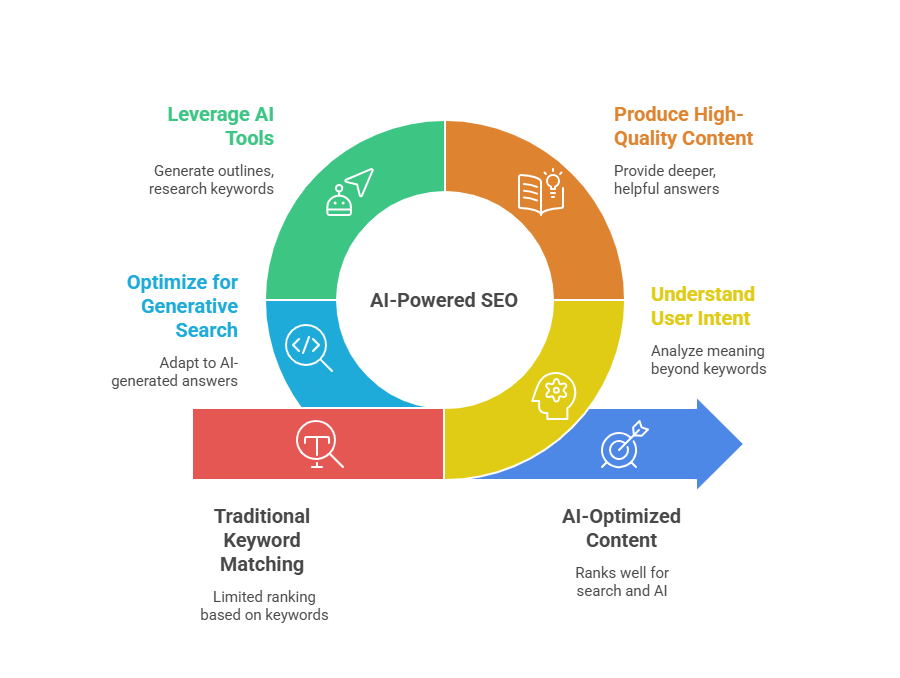
Traditional search engines mainly relied on keyword matching. If your page included the right phrases, it had a chance to rank.
Modern search engines are different. They focus heavily on:
- User intent
- Context and semantics
- Content quality
- Authority and trust
AI algorithms analyze the meaning of queries rather than just the words used. This means content must provide deeper, more helpful answers rather than simply repeating keywords.
AI tools also allow marketers to produce more content faster while maintaining quality. They help generate outlines, perform keyword research, and create optimized drafts based on real search data.
Additionally, new generative search systems can summarize information directly for users instead of simply linking to websites. This shift is pushing marketers to optimize content not only for rankings but also for AI-generated answers.
The takeaway is simple: content must now be optimized for both search engines and AI systems.
1. Use AI for Advanced Keyword Research
Keyword research has always been the foundation of SEO. But AI has significantly improved the process.
Instead of manually brainstorming keyword ideas, AI tools can analyze millions of search queries and identify patterns. They can quickly generate related keywords, questions, and topic clusters.
When using AI for keyword research, the goal is to understand what users actually want when they search for a topic. AI tools can identify:
- Long-tail keywords
- Question-based queries
- Related semantic terms
- Emerging search trends
For example, if you are writing about digital marketing automation, an AI tool might identify related search queries such as:
“best marketing automation tools for startups”
“how AI improves marketing automation”
“benefits of automated email marketing”
These insights help you create content that covers a topic comprehensively rather than focusing on a single keyword.
AI can also group keywords based on search intent, making it easier to plan content clusters. This clustering strategy helps websites build topical authority and rank for multiple related search queries.
2. Analyze Search Intent with AI Tools
One of the biggest mistakes marketers make is optimizing content for the wrong intent.
Search intent refers to the reason behind a user’s query. Are they looking for information, comparing products, or trying to make a purchase?
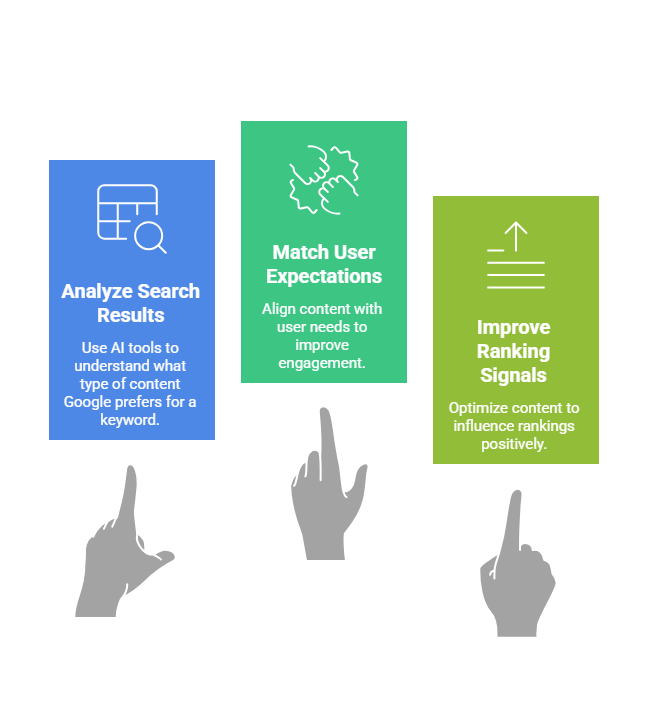
AI tools analyze search results and identify what type of content Google prefers for a keyword.
For example, if the search results for a keyword mostly show guides and tutorials, writing a sales page will likely fail to rank.
AI-powered SEO platforms can analyze top-ranking pages and identify:
- Common topics covered
- Typical word count
- Content format
- Frequently asked questions
These insights help you match the expectations of both search engines and users.
By aligning content with search intent, websites improve engagement metrics like time on page and bounce rate. These behavioral signals often influence rankings.
3. Create Data-Driven Content Briefs
Content briefs are essential for creating structured, high-quality articles. AI tools can generate detailed briefs that guide writers through the entire process.
These briefs typically include:
- Primary keyword
- Related keywords
- Suggested headings
- Competitor insights
- Recommended word count
- Frequently asked questions
AI-generated briefs save time and ensure content covers all important aspects of a topic.
Instead of guessing which subtopics to include, marketers can rely on data from search results and competitor analysis.
For example, AI tools analyze top-ranking articles and identify patterns in their structure. If most high-ranking pages include sections about benefits, examples, and tools, your content brief will recommend including those sections as well.
This process helps create comprehensive content that satisfies both users and search engines.
4. Optimize Titles and Meta Descriptions Using AI
Your title tag and meta description are often the first things users see in search results.
Even if your content ranks well, a weak title can drastically reduce click-through rates.
AI tools can analyze search trends and generate optimized titles that attract clicks while including the target keyword naturally.
Effective titles usually follow certain principles:
- They clearly explain what the article offers
- They include relevant keywords
- They stay within search engine character limits
Meta descriptions work similarly. They summarize the content and encourage users to click.
AI tools can quickly generate multiple variations of titles and descriptions, allowing marketers to test different approaches and choose the most compelling option.
According to SEO experts, optimized titles and meta descriptions can significantly improve click-through rates, which can indirectly influence rankings.
5. Improve Content Structure with AI Insights
Search engines prefer content that is easy to read and logically structured.
AI-powered content editors analyze your article and recommend improvements for:
- Heading structure
- Paragraph length
- Content flow
- Readability
These tools often provide a readability score based on factors like sentence complexity and paragraph length.
Structured content benefits both users and search engines. Clear headings help readers navigate the article, while search engines use headings to understand topic hierarchy.A well-structured article usually includes:
- Clear headings and subheadings
- Short paragraphs
- Logical transitions between sections
AI tools can automatically suggest improvements in these areas, helping writers create more engaging content.
6. Optimize Content for AI Search and Conversational Queries
The rise of conversational AI is changing how people search for information.
Instead of typing short keywords, users increasingly ask full questions.
For example:
Traditional search: “content marketing benefits”
AI query: “What are the benefits of content marketing for small businesses?”
Optimizing for these conversational queries increases the chances of appearing in AI-generated answers.
Content optimized for AI-driven search often includes:
- Question-based headings
- Clear explanations
- Concise summaries
Some SEO tools even identify common questions related to your topic so you can include them directly in your content.
Structuring articles around real user questions improves visibility in AI-generated search results and featured snippets.
7. Use Semantic SEO and Related Keywords
Search engines today understand relationships between words rather than just matching exact keywords.
This is why semantic SEO has become so important.
Semantic optimization involves including related terms and concepts that help search engines understand the topic more clearly.
For example, an article about email marketing might include related terms such as:
- automation
- conversion rate
- email campaigns
- customer segmentation
AI tools analyze top-ranking pages and suggest semantic keywords that should appear in your content.
Including these related terms helps search engines see your content as comprehensive and authoritative.
Semantic optimization also improves your chances of ranking for multiple related queries instead of just one keyword.
8. Add Multimedia and Visual Content
AI systems increasingly rely on multimodal signals to understand content. This means they analyze not only text but also images, videos, and other visual elements.
Adding relevant media can improve both user engagement and SEO performance.
Visual content helps break up long articles and makes complex information easier to understand.
Best practices include:
- Using charts or infographics to explain data
- Adding screenshots when discussing tools
- Embedding videos for tutorials
Search engines also analyze image metadata, including file names and alt text, to understand visual content.
Properly optimized visuals can improve accessibility and increase the chances of appearing in image search results.
Adding multimedia every few sections can also enhance user experience and reduce bounce rates.
9. Maintain a Consistent Brand Voice
One of the risks of using AI tools for content creation is losing a consistent brand voice.
Every brand has a unique tone and personality. Some are formal and authoritative, while others are conversational and friendly.
AI tools can help define and maintain this voice by analyzing existing content and generating guidelines.
Maintaining consistency across blog posts, social media, and marketing materials builds trust with readers.
When readers recognize your brand voice, they are more likely to engage with your content and return to your website.
Consistency also improves credibility, which plays a role in search engine trust signals.
10. Scale Content Production Without Sacrificing Quality
Scaling content production is one of the biggest advantages of AI tools.
Instead of spending days researching and outlining a single article, AI can generate drafts, topic ideas, and outlines in minutes.
This allows marketers to publish more content and cover a wider range of topics.
Publishing content consistently helps build topical authority, which is an important ranking factor.
However, scaling content should never compromise quality.
The best approach is to use AI for research, outlining, and optimization while ensuring human experts review and refine the final content.
This hybrid approach combines efficiency with authenticity.
Common Mistakes to Avoid When Using AI for SEO
While AI tools offer many advantages, they can also lead to mistakes if used incorrectly.
One common mistake is relying entirely on AI-generated content without human editing. This often results in generic articles that lack originality or depth.
Another mistake is over-optimizing content with keywords. Modern search engines prioritize natural language and helpful content rather than keyword density.
Some marketers also ignore search intent and simply target high-volume keywords. This approach often fails because it does not address what users actually want.
The key is to treat AI as an assistant rather than a replacement for human expertise.
The Future of AI-Driven Content Optimization
AI is rapidly reshaping the future of digital marketing.
As generative search engines become more advanced, content optimization strategies will continue evolving.
Future SEO strategies will likely focus on:
- Generative search optimization
- Voice search queries
- Contextual understanding
- Real-time personalization
AI systems are already capable of summarizing information directly within search results. This means content must be structured in a way that AI systems can easily extract and reference.
Businesses that adapt to these changes early will have a significant advantage in search visibility.
Conclusion
The SEO landscape is evolving faster than ever.
Artificial intelligence is transforming how search engines evaluate content, how users find information, and how marketers create digital experiences.
By leveraging AI Content Optimization, businesses can produce smarter, more data-driven content that aligns with modern search algorithms and user expectations.
From keyword research and search intent analysis to semantic SEO and multimedia optimization, AI tools provide powerful insights that help marketers improve rankings and engagement.
However, the most successful strategies combine AI efficiency with human creativity and expertise.
When used thoughtfully, AI becomes more than just a tool. It becomes a strategic partner in building content that ranks higher, reaches wider audiences, and delivers real value to readers.