

Ever walked into a store with no signs, messy aisles, and nobody around to help?
You probably didn’t stick around.
That’s exactly how potential customers feel when there’s no clear journey mapped out for them. No signals. No guidance. Just confusion—and a quick exit.
This is where a high-performing marketing funnel steps in.
A great funnel isn’t about pushing a product. It’s about clarity, trust, and guiding someone naturally from:
“What is this?” → “This might help me” → “I need this.”
When done right, a marketing funnel doesn’t just drive traffic or sales. It builds relationships. It creates loyalty. And it turns strangers into long-term advocates.
In this guide, we’ll break the funnel down stage by stage, using real-world examples and practical strategies—no fluff, only what works.
Let’s build a funnel people actually want to follow.
Understanding the Marketing Funnel Stages
Think of your funnel as a series of conversations. Each one goes a little deeper, feels more personal, and builds more trust.
From first glance to lifelong loyalty—every stage plays a role.
Awareness Stage: Make a Memorable First Impression
🧠 What’s happening here?
People don’t know you yet. They might stumble across a blog, hear your podcast in the background, or scroll past your ad.
You’ve got seconds to earn attention.
🛠 What works best:
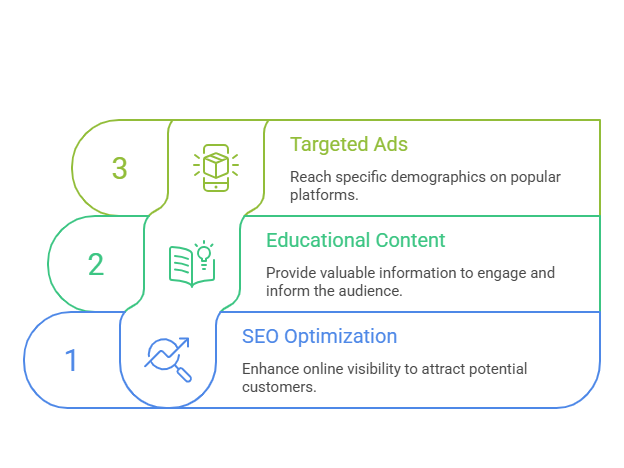
- SEO: Show up where people are already searching.
- Educational Content: Blogs, guides, videos—help first.
- Targeted Ads: Reach users where they already scroll (Google, Meta, TikTok).
💡 Example:
A skincare brand talks about redness relief—not product features.
A healthcare company writes about symptoms—not services.
Be helpful. Be relevant. Be memorable.
Interest Stage: Turn Curiosity into Connection
They’ve noticed you. Now they’re asking:
“Is this for me?”
This stage is about nurturing curiosity without selling too hard.
🛠 Ways to deepen engagement:
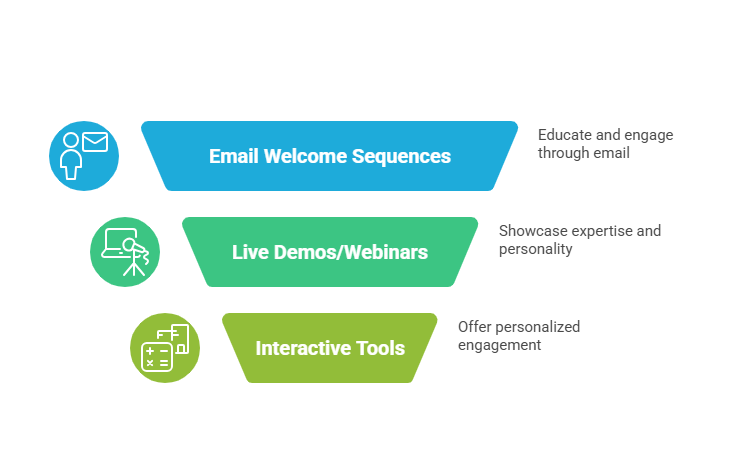
- Email Welcome Sequences: Educate first, offer later.
- Live Demos or Webinars: Show expertise and personality.
- Interactive Tools: Quizzes, calculators, assessments.
💡 Example:
An edtech quiz that identifies a child’s learning style.
A finance calculator that shows monthly savings growth.
At this stage, people should feel understood.
Consideration Stage: Build Trust & Prove Value
Now they’re comparing options. This is your credibility moment.
🛠 Trust-building elements:
- Customer Reviews & Testimonials
- Case Studies & Success Stories
- Side-by-Side Comparisons
💡 Example:
Software → Show faster onboarding than competitors.
Law firms → Highlight outcomes that matter to clients.
No hype. Just proof.
Intent Stage: Give a Confident Nudge
They’re close—but still cautious.
Your job now is to remove uncertainty.
🛠 What helps here:
- Free Trials or Demos
- Limited-Time (Honest) Offers
- Clear, Direct CTAs
💡 Examples:
Courses → Free lesson preview
Health tech → Free consultation
Make the next step obvious—and frictionless.
Purchase Stage: Make Saying Yes Easy
This is where deals fall apart if you’re not careful.
Clunky forms. Slow pages. Confusing steps.
🛠 Optimize the buying experience:
- One-Page Checkout
- Multiple Payment Options
- Cart Recovery Emails
- Instant Confirmation
💡 Tip:
Digital products should deliver instantly.
Service businesses should confirm next steps clearly.
They chose you—don’t make them doubt it.
Loyalty & Retention Stage: Create Long-Term Believers
Most brands stop after the sale. That’s a mistake.
Retention is where growth multiplies.
🛠 How to keep customers close:
- Loyalty & Reward Programs
- Thoughtful Feedback Loops
- Referral Incentives
- Ongoing Value Content
💡 Examples:
Healthcare → Regular check-ins
Finance → Progress updates
It’s cheaper—and smarter—to keep a happy customer than find a new one.
What Makes a Funnel Truly High-Performing?
High-performing funnels don’t just run. They adapt.
Common traits include:
- 🎯 Precise Segmentation
- 🔄 Aligned Sales & Marketing
- 📊 Data-Driven Decisions
- ✉️ Personalized Touchpoints
- ⚙️ Smart Automation
- 🔬 Continuous Testing
These funnels evolve with audience behavior, not assumptions.
How to Build a High-Performing Funnel from Scratch
Starting small is fine. Clarity beats complexity.
Step-by-Step Process
- Create Buyer Personas – Understand fears, needs, motivations
- Map Content to Funnel Stages
- Combine Organic + Paid Channels
- Design High-Value Lead Magnets
- Build Smart Nurture Sequences
- Track Weekly Performance
- Iterate Consistently
Niche business? Same fundamentals—just sharper targeting.
Tools That Power High-Performing Funnels
🧰 Essential Funnel Tools:
- CRM: HubSpot, Salesforce
- Email Automation: Mailchimp, ActiveCampaign
- Analytics: Google Analytics, Mixpanel
- Lead Capture: Unbounce, Typeform, OptinMonster
💡 Choose tools that fit your industry, scale with growth, and integrate smoothly.
Common Funnel Challenges (and Fixes)
- Drop-offs at one stage → Simplify messaging & CTAs
- Low-quality leads → Refine targeting
- Sales & marketing gaps → Shared dashboards & syncs
- Poor tracking → Fix analytics before optimizing
A funnel isn’t broken—it’s just talking to you through data.
Real-World Funnel Examples
- B2B SaaS: Webinars + demos → +30% qualified leads
- E-commerce: Social proof + retargeting → -20% cart abandonment
- Legal: Simplified forms → +15% bookings
- Health Startup: Quiz + consult → +40% sign-ups
- EdTech: Assessments + nurturing → +25% completion rates
No magic—just alignment.
Conclusion: Your Funnel Is a Living System
Funnels aren’t campaigns. They’re experiences.
They listen. They guide. They earn trust slowly—and keep delivering long after the sale.
Start small:
- Fix your weakest funnel stage
- Improve clarity
- Remove friction
- Add value consistently
The brands that win don’t shout louder.
They guide better.
Let’s build funnels that feel like conversations—not promotions.