

Picking the right SEO keywords can feel like guessing which door hides the golden ticket. Choose the right one, and suddenly your blog post, product page, or landing page attracts the exact people you’ve been trying to reach. Choose wrong—and your content might sit quietly on page two, waiting for someone who’ll never scroll that far.
Let’s change that.
In this guide, we’ll walk through how to choose the best keywords for SEO from understanding keyword types to using research tools without overwhelm, and tuning into what your audience is actually asking for. Whether you’re working with a scrappy startup, a polished eCommerce store, or a nonprofit stretching every dollar, this approach helps put the right eyes on your content.
Let’s get into it.
Understanding Keyword Types
Before opening a single tool or checking a competitor’s site, start here.
Think of keywords like ingredients. Some are staples, others are spices. The trick is knowing what you’re cooking and who you’re feeding.
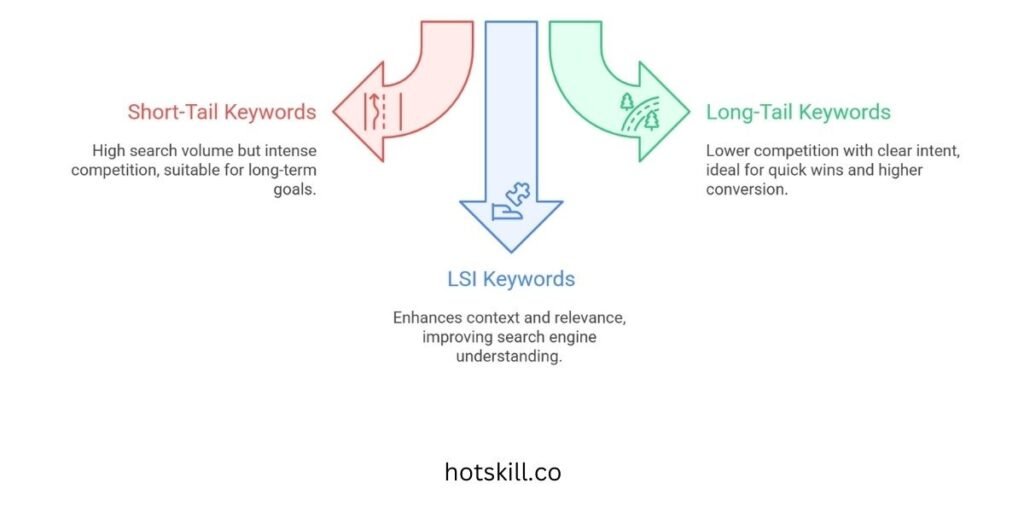
Short-Tail Keywords
These are broad, high-level terms like:
- “marketing”
- “consulting”
- “web design”
They get tons of searches but also attract intense competition. If your site is new or still growing, these are long-term goals, not quick wins.
Use them strategically, not obsessively.
Long-Tail Keywords
These are longer, more specific phrases that reflect real intent:
- “best accounting software for freelancers”
- “affordable home security camera with app”
- “virtual care services for rural clinics”
They have:
- Lower competition
- Clear intent
- Higher conversion potential
Long-tails don’t just bring traffic they bring ready users.
LSI Keywords (Contextual Keywords)
LSI keywords help search engines understand context.
If your topic is plant-based eating, related terms might include:
- vegan protein
- meal prep ideas
- grocery list essentials
This isn’t about stuffing keywords. It’s about speaking the same language your audience does naturally and clearly.
Defining Your Goals
Before choosing keywords, you need clarity.
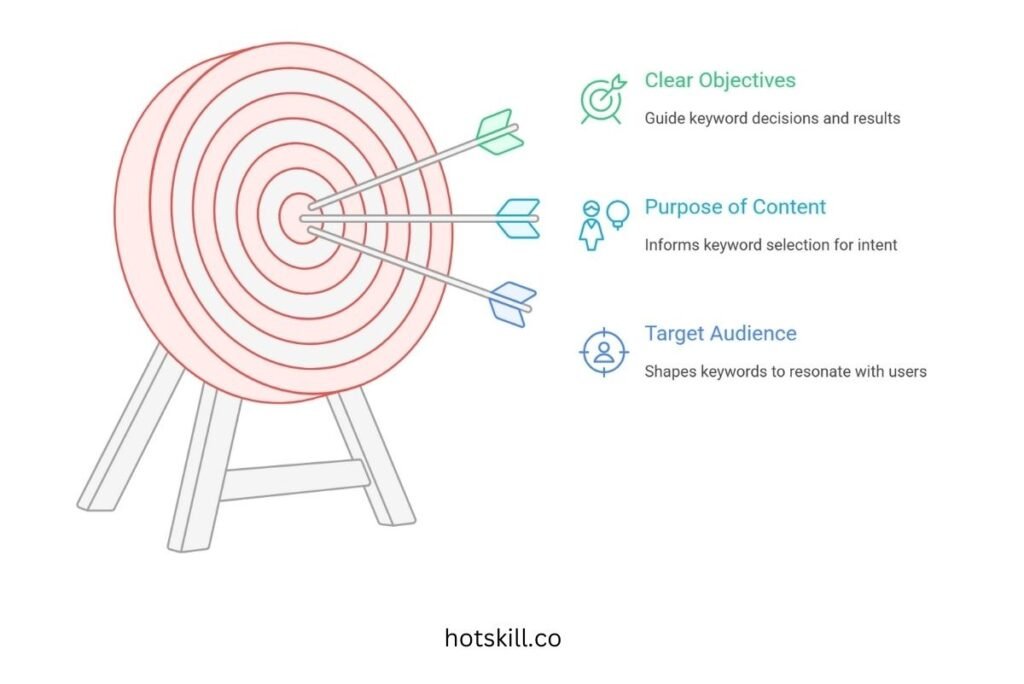
Identify Your Target Audience
Ask yourself:
- Who is this content for?
- What problems are they trying to solve?
- Are they beginners or experienced users?
A small business owner searching for clients thinks differently than a student learning a skill. Your keywords should reflect that difference.
Determine the Purpose of the Content
Not every page is meant to sell.
- Informational: “Do I need life insurance in my 30s?”
- Transactional: “Affordable life insurance quotes online”
Match the keyword to the purpose. Mismatched intent confuses both users and search engines.
Set Clear, Measurable Objectives
Avoid vague goals like “get more traffic.”
Instead, aim for:
“Increase organic traffic by 15% in 3 months using finance-related long-tail keywords.”
Clear goals guide better keyword decisions and better results.
Brainstorming Keyword Ideas
This is where creativity meets insight.
Start With What You Already Know
Think about:
- Questions customers ask
- Common misunderstandings
- Support emails and sales calls
If teachers keep asking about “behavior tools for middle school,” that’s a keyword worth exploring.
Messy notes often hide the best ideas.
Analyze Competitors (Strategically)
Look at what competitors rank for using tools like Ahrefs or SEMrush.
Don’t copy pivot.
If a competitor ranks for “how to retire in your 30s,” you might target:
- “early retirement tips for teachers”
- “retiring with student loan debt”
Better answers win.
Use Your Audience’s Exact Language
Check:
- Reviews
- Reddit threads
- Quora questions
- Social media comments
If people search “my knee clicks when I walk”, don’t write “patellofemoral dysfunction.”
Mirror real language. Speak human.
Using Keyword Research Tools
Tools help you stop guessing and start choosing wisely.
Beginner-Friendly Keyword Tools
- Google Keyword Planner – free, good for volume
- Ahrefs – deep keyword + competition insights
- SEMrush – strong for competitive analysis
- Moz Keyword Explorer – clean and intuitive
Bonus:
- AnswerThePublic (questions)
- Google Trends (timing & seasonality)
Use Seed Keywords Wisely
Start broad, then refine.
Example:
- Seed: “tax software for freelancers”
- Refined: “easy tax tracking apps for self-employed”
Small shifts can unlock better intent and easier wins.
Understand Key Metrics
- Search Volume: Monthly interest
- Keyword Difficulty: Ranking competition
- CPC: Buyer intent indicator
A keyword with moderate volume, low difficulty, and solid CPC is often a great opportunity.
Analyzing Keyword Metrics
Now it’s time to be selective.
Find the Volume Sweet Spot
Big volume ≠ best keyword.
Often, keywords with 100–1,000 searches/month offer:
- Less competition
- More focused intent
- Faster ranking potential
Quality beats quantity.
Evaluate Keyword Difficulty
If your site is growing:
- Aim for difficulty scores between 20–60
- Industry-specific phrases often rank easier
Specific beats generic every time.
Use CPC as a Buying Signal
High CPC usually means strong commercial intent.
Keywords like “best email software for small business” often perform well for:
- Reviews
- Comparisons
- Product pages
Watch Seasonality & Trends
Use Google Trends to see:
- When interest spikes
- If demand is rising or fading
Publish before peak season—not during it.
Understanding User Intent
Keywords don’t exist in isolation. Intent drives everything.
The Three Core Search Intents
- Informational: “how to change a bike tire”
- Transactional: “buy office chair with lumbar support”
- Navigational: “Airbnb login”
Wrong intent = wrong content = poor results.
Match Content to Intent
If users want to buy—show options.
If they want to learn—educate first.
Intent determines:
- Page format
- Content depth
- CTA placement
Prioritizing the Right Keywords
Now it’s decision time.
Balance Competition & Opportunity
Use a layered approach:
- Short-term wins (low competition)
- Long-term goals (high-volume terms)
Momentum builds rankings.
Choose Relevance Over Volume
If it doesn’t match what you offer—skip it.
Traffic without relevance doesn’t convert.
Create a Keyword Shortlist
Each quarter, focus on:
- 3–5 pillar keywords
- 5–10 long-tail keywords
- A mix of informational & transactional terms
Assign each keyword a content type:
- Blog post
- Landing page
- Comparison guide
Implementing Keywords Strategically
Research only works if execution is clean.
Use Keywords Naturally
Place your main keyword in:
- Title tag
- URL
- H1
- Meta description
- First 100 words
Then write like a human—not a robot.
Smart Keyword Placement Checklist
- Title: Clear and compelling
- Meta description: Click-worthy
- Headings: Contextual, not forced
- URLs: Short and keyword-focused
- Images: Descriptive filenames + alt text
Monitoring & Refining Your Strategy
SEO is never “done.”
Track Performance Regularly
Use:
- Google Search Console
- GA4
Watch:
- Rankings
- Click-through rates
- Pages gaining impressions but low clicks
Refine Based on Results
Underperforming content?
- Refresh it
- Add depth
- Improve internal links
- Adjust keyword focus
SEO rewards consistency and speed.
Conclusion: Keywords That Connect—and Convert
Keyword research isn’t about chasing rankings.
It’s about understanding people—what they ask, need, fear, and hope for.
Use the words they use.
Match what they mean.
Be genuinely helpful.
That’s what builds trust.
That’s what drives conversions.
That’s what keeps you visible.
Your next best customer is already searching.
Make sure you’re there when they do.