

In the digital age, understanding your audience and the impact of your content is essential for success. Many individuals and organizations now rely heavily on social platforms to build presence, engage communities, and drive growth. However, measuring success isn’t just about accumulating followers and likes. This is where social media analytics becomes indispensable. Although tools and platforms today make data more accessible than ever before, beginners often fall into patterns that distort insights and hamper performance. This article explores the most common pitfalls that newcomers to analytics encounter, providing you with practical, actionable strategies to avoid them and elevate your social media approach.
Understanding Social Media Analytics: The Foundation
Before diving into specific mistakes, it’s crucial to understand what social media analytics truly involves and why it matters. At its core, analytics is about transforming raw data from your platforms into meaningful insight. It’s not merely counting likes or followers; it is interpreting trends, understanding audience behavior, and aligning metrics with business goals. Effective use of analytics can help you identify what content resonates with your audience, when your followers are most active, and how your strategy is performing over time.
Despite this, many beginners treat analytics as a checklist of numbers rather than a strategic tool. They look at vanity metrics without context, set unrealistic expectations, and overlook the importance of continuous learning. The following sections highlight the most significant mistakes, explain why they matter, and offer better alternatives.
Mistake 1: Valuing Vanity Metrics Over Meaningful Metrics
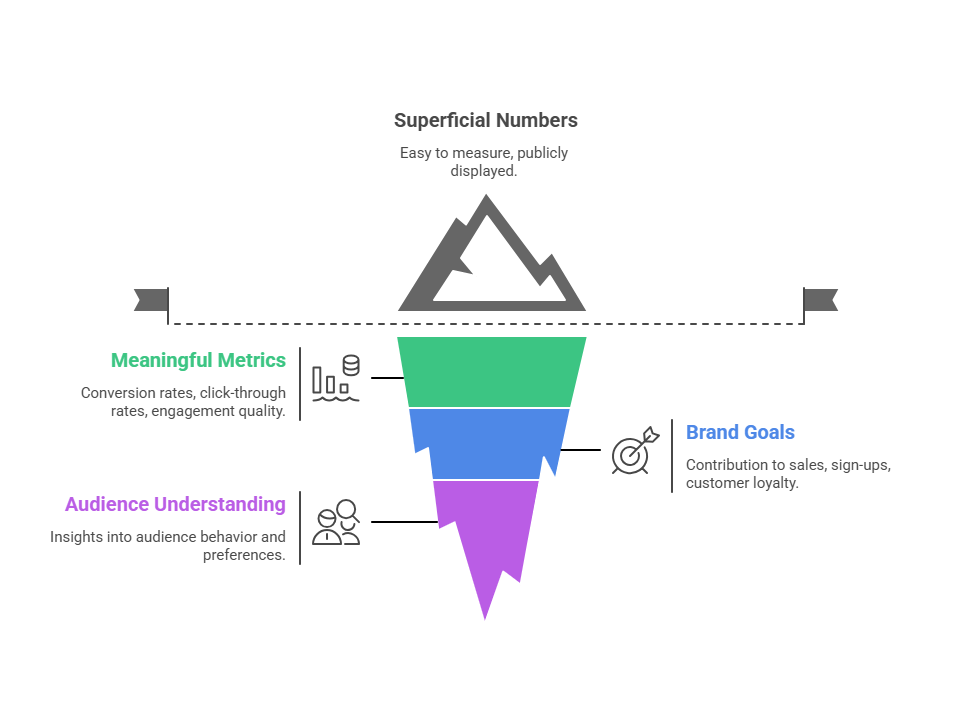
One of the most pervasive errors newcomers make is placing undue importance on superficial numbers. Vanity metrics such as follower count, impressions, or likes can be tempting to chase because they are easy to measure and often publicly displayed. But high engagement counts do not automatically translate to success or business value.
For example, a post might receive hundreds of likes because it contains a trending meme, yet it contributes nothing to your brand’s goals or audience understanding. Focusing solely on these numbers can lead you down the wrong path and cause wasted effort on content that doesn’t support meaningful outcomes.
Instead, focus on meaningful metrics such as conversion rates, click-through rates, engagement quality, and audience growth patterns over time. These deeper insights will tell you more about whether your strategy is actually working and how it contributes to broader objectives like sales, sign-ups, or customer loyalty.
Mistake 2: Ignoring the Importance of Goal Setting
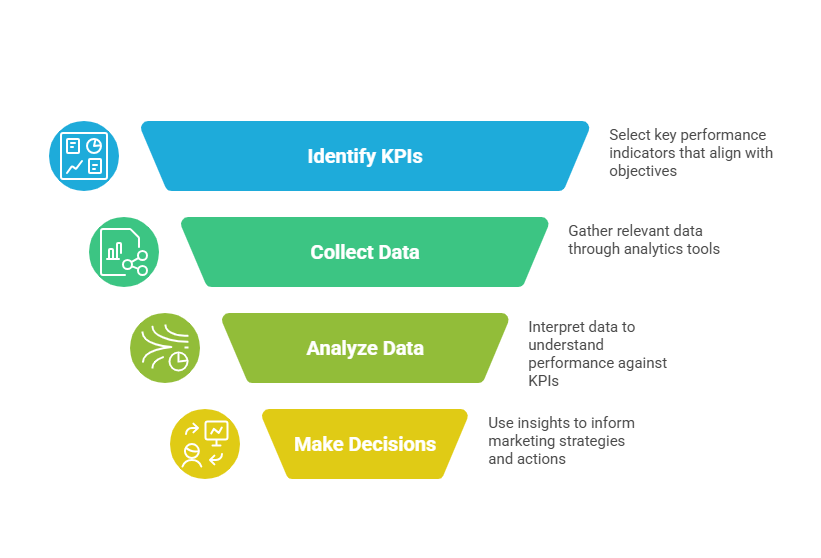
Analytics without clear objectives is like navigating without a map. Beginners often dive into analytics tools without defining what success looks like for their brand or campaign. Without specific goals, any data interpretation becomes arbitrary and misleading.
Imagine you post content every day and see an increase in likes. Without a clear goal, you might assume your strategy is effective. But what if your true aim was to drive link clicks to a product page? In that case, your efforts look very different when measured against the right metric.
To avoid this, always start with clear, measurable goals. Do you want to increase brand awareness, generate leads, boost conversions, or improve customer service? Once your goals are defined, identify the corresponding key performance indicators (KPIs) that align with these goals. Only then can your analytics provide actionable insights that drive decision-making.
Mistake 3: Misinterpreting Correlation as Causation
Another common challenge is misinterpreting patterns and assuming they indicate direct cause-and-effect relationships. For example, you might notice that posting at a certain time coincides with higher engagement. While this observation is valuable, it doesn’t necessarily mean that the posting time is the cause of increased engagement. There could be other variables at play, such as the type of content, current trends, or even external events influencing audience behavior.
Causal interpretation requires careful experimentation and controlled comparisons. Rather than relying on intuition alone, seek to test hypotheses over time. Try different posting times, content formats, and messaging styles, and observe how each change affects results. Only through methodical testing can you begin to understand which factors truly influence outcomes and which are coincidental.
Mistake 4: Failing to Customize Reports to Your Needs
Many beginners default to the predefined templates offered by analytics tools and never customize reports to reflect their unique needs. While these templates provide a broad overview, they rarely capture the precise metrics that matter most to your business.
Every brand’s priorities differ. A nonprofit might prioritize community engagement and shares, while an e-commerce business might focus on referral traffic and conversions. Generic reports can clutter your focus with irrelevant information and obscure critical insights.
The remedy is to tailor your reports. Select metrics that align with your goals, filter out noise, and organize data in a way that highlights trends over time. Create dashboards that reflect not only the health of your social media presence but also its contribution to your overarching strategy. This personalized approach ensures that you’re not overwhelmed by data but empowered by it.
Mistake 5: Overlooking Audience Segmentation
Understanding who your audience is—and how different segments behave—is essential for effective decision-making. Many beginners lump all audience interactions together and overlook the nuances of demographics, interests, or psychographics. This oversight limits your ability to craft content that resonates with specific groups.
For instance, younger audiences might respond better to short-form video content, while older segments might engage more deeply with long-form articles or educational posts. By treating all audience responses as homogenous, you miss opportunities to tailor your strategy and maximize impact.
To avoid this mistake, segment your audience based on relevant criteria. Analyze behaviors, preferences, and engagement patterns within each group. Then use these insights to tailor content that speaks directly to their interests. This targeted approach enhances relevance, fosters deeper engagement, and drives better results from your efforts.
Mistake 6: Neglecting Platform Differences
Different social platforms have unique cultures, algorithms, and formats that influence how content performs. Beginners often apply the same strategy across all channels, assuming that what works on one platform will be equally effective on another. This one-size-fits-all approach rarely succeeds.
For example, the audience on a visual platform like Instagram might engage differently than those on a professional network like LinkedIn. Similarly, Twitter’s real-time conversational nature calls for a different cadence and tone than a community-focused site like Facebook.
Recognizing these differences is essential for accurate analysis. Evaluate performance metrics with context: compare like with like rather than mixing data across platforms. Tailor your content and posting strategy to each platform’s norms, and interpret analytics in light of those norms. This nuanced perspective ensures your analysis reflects actual performance and not distorted comparisons.
Mistake 7: Ignoring Qualitative Feedback
Numbers tell a story, but they don’t tell the entire story. Many beginners rely exclusively on quantitative data and neglect qualitative feedback. Comments, messages, and direct feedback from users often contain valuable insights into audience sentiment and perception.
Quantitative data can tell you that a post performed well, but qualitative feedback can tell you why. Did your audience appreciate the message? Did they misunderstand your intent? Were there emotional responses that the numbers don’t capture? These nuances are crucial for refining strategy and building stronger connections with your community.
To incorporate qualitative insights into your analysis, spend time reading through comments, listening to feedback, and engaging with your audience. Use sentiment analysis tools if available, and pay attention to recurring themes in user-generated content. Blending both quantitative and qualitative data enriches your understanding and supports more informed decisions.
Mistake 8: Failing to Track Competitors
Social media doesn’t exist in a vacuum. Competitor performance offers valuable context that can inform your strategy and highlight opportunities for differentiation. Yet many beginners ignore this external perspective, focusing solely on their own metrics without reference to industry benchmarks.
Benchmarking against competitors provides insights into what works within your niche, common trends, and potential gaps in your strategy. Are competitors achieving higher engagement with certain types of content? Are they active at different times? How does their audience respond compared to yours?
While internal metrics remain your primary concern, contextualizing them against competitor performance can spark new ideas and prevent blind spots. Identify a set of relevant competitors, track their public performance, and look for patterns that might inform your strategic adjustments.
Mistake 9: Updating Tactics Without Testing
Beginners often see fluctuations in metrics and immediately change tactics in response. For example, if a recent post underperformed, they might assume they need to overhaul their content style or posting schedule. This reactive approach can lead to constant shifts without understanding what truly drives results.
Data-driven decisions require patience and testing. A single outlier doesn’t justify a wholesale change. Instead, use controlled experiments to test modifications, and evaluate performance consistently over time. Only after gathering sufficient evidence should you adjust your strategy.
Implementing A/B tests, varying one element at a time, and observing results across a meaningful sample size are key practices here. This disciplined approach prevents erratic decision-making and ensures your strategy evolves based on evidence, not assumption.
Mistake 10: Underestimating the Need for Continuous Learning
The landscape of social media and its analytics tools is constantly evolving. Platforms change algorithms, user behaviors shift, and new features emerge. Beginners often underestimate the importance of continuous learning and simply rely on outdated knowledge or static processes.
To stay effective, you must remain curious and adaptable. Follow industry blogs, attend webinars, participate in online communities, and engage with updates from platform providers. Invest time in learning how new features or algorithm changes might influence your strategy and data interpretation.
By embracing ongoing education, you’ll be better equipped to anticipate shifts, leverage new tools, and refine your approach in ways that keep your analytics meaningful and your strategy ahead of the curve.
Turning Insight into Action
Avoiding these common mistakes lays the foundation for a more strategic and impactful use of your analytics. Remember that real success comes from framing your efforts around clear objectives, understanding your audience, and interpreting data in context. It’s not enough to collect numbers; you must translate them into insight, action, and iterative improvement.
Social media is a dynamic ecosystem. When you treat analytics as a guiding compass rather than a reporting obligation, you unlock the true potential of your presence and build deeper, more meaningful connections with your audience. Continually refine your approach, remain open to learning, and let data inform—not dictate—your strategies. Through thoughtful analysis, you can move beyond surface-level metrics and achieve measurable success that aligns with your long-term goals. In doing so, you transform raw numbers into actionable intelligence and build a robust foundation for growth and authenticity in the digital world.