

In the rapidly evolving digital landscape, content has emerged as the backbone of communication between brands and their audiences. Every day, millions of pieces of content are created, shared, and consumed, ranging from social media posts to in-depth articles, video scripts, and email campaigns. While content is everywhere, not all content serves the same purpose, nor does it achieve the same results. This is where understanding different types of content writing becomes crucial.
Content writing is not a one-size-fits-all approach. Businesses and individuals must understand the various formats, styles, and purposes of content to communicate effectively, engage audiences, and achieve specific goals. Whether your aim is to educate, inform, entertain, or persuade, knowing which type of content writing to use in different scenarios can make a significant difference in your marketing strategy.
The Role of Content in Modern Marketing
The digital era has revolutionized the way we consume information. Websites, blogs, social media platforms, and email newsletters have become primary channels through which businesses reach their audiences. However, simply producing content is no longer enough. Search engines, social media algorithms, and user expectations demand content that is not only relevant but also high-quality and strategically crafted.
In this context, different types of content writing serve distinct purposes. They are designed to address specific audience needs, respond to search intent, and create engagement that leads to conversions. For instance, a blog post may educate users and improve SEO rankings, while a product description may aim to persuade users to make a purchase. Understanding these differences ensures that your content aligns with both business objectives and audience expectations.
What Are the Types of Content Writing?
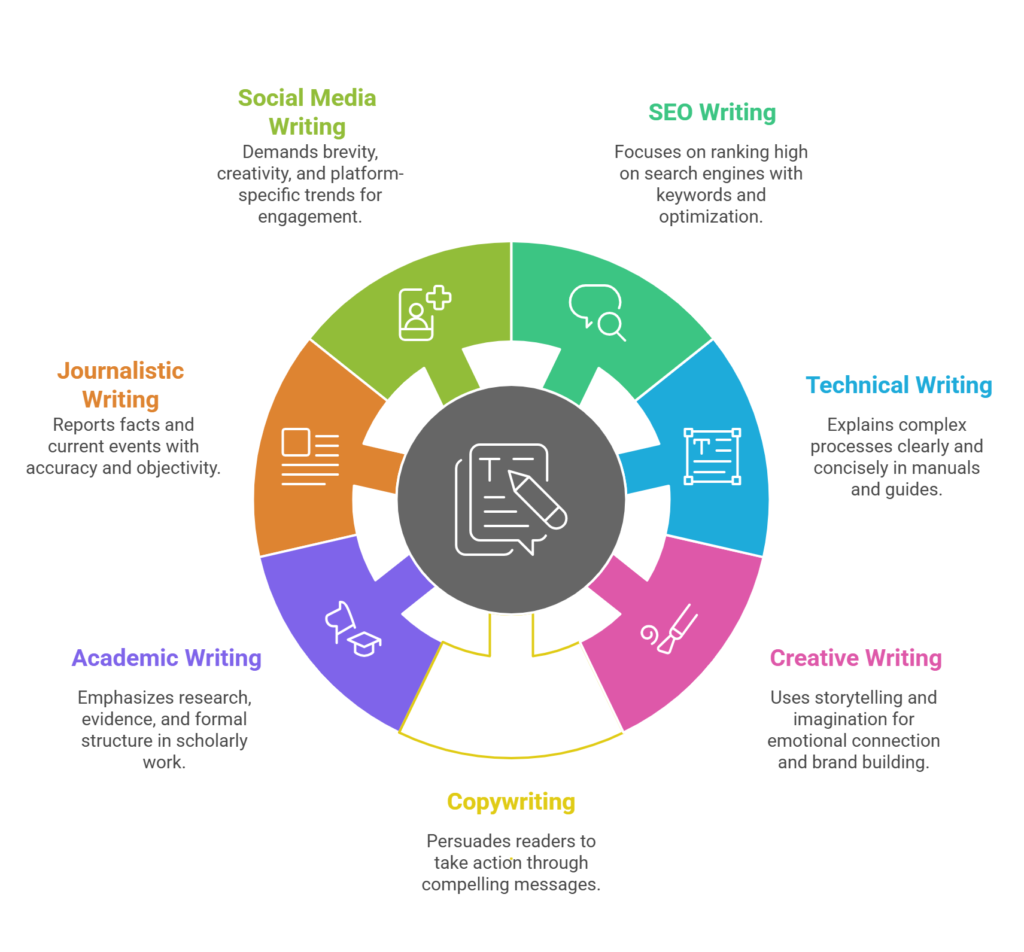
Types of content writing are varied and cater to different purposes, tones, and platforms. Each type has unique characteristics and requires a tailored approach. Recognizing these types allows content creators to adopt the right strategy for each piece of content, optimizing results and engagement.
One common type of content writing is SEO writing, which focuses on creating content that ranks well on search engines. SEO writers carefully incorporate keywords, optimize headings, and structure content to attract organic traffic. This type of writing is essential for businesses looking to enhance their online visibility and drive qualified traffic to their websites.
Another prevalent type is technical writing, which involves producing manuals, guides, or instructional content that explains complex processes in a clear and concise manner. Technical writing is critical in industries such as software, engineering, and healthcare, where accuracy and clarity are paramount. A technical writer must not only understand the subject matter but also anticipate the reader’s needs to ensure comprehension.
Creative writing is yet another type of content writing that thrives on storytelling, imagination, and originality. It is often used in marketing campaigns, brand storytelling, and social media content where emotional connection and engagement are the primary goals. Unlike technical writing, creative writing allows for more freedom in style, tone, and structure, making it ideal for capturing audience interest and building brand personality.
Additionally, copywriting is a type of content writing designed to persuade and drive action. Copywriters craft compelling messages for advertisements, landing pages, emails, and product descriptions with the goal of converting readers into customers. Effective copywriting requires a deep understanding of human psychology, consumer behavior, and persuasive techniques.
Other types include academic writing, journalistic writing, and social media content writing, each serving specific purposes and audiences. Academic writing emphasizes research, evidence, and formal structure, while journalistic writing focuses on reporting facts and current events. Social media writing, on the other hand, demands brevity, creativity, and an understanding of platform-specific trends and algorithms.
Understanding these types of content writing is essential for businesses and individuals seeking to establish authority, build relationships with audiences, and achieve measurable results. Each type requires different skills, strategies, and approaches, making it critical to match the content type to the intended objective.
Why Different Types of Content Writing Matter for Businesses

Businesses today operate in a competitive digital environment where every piece of content can impact reputation, engagement, and revenue. Producing content without understanding its type and purpose can lead to wasted resources, missed opportunities, and ineffective communication.
For instance, a company that primarily relies on blog content to educate users may fail if it ignores the need for persuasive copywriting on product pages or email campaigns. Similarly, a business that produces visually appealing social media posts without proper storytelling may struggle to engage audiences meaningfully. By understanding the types of content writing, businesses can strategically allocate resources, maintain consistent messaging, and ensure that each piece of content serves a defined purpose.
Moreover, different content types play distinct roles in the customer journey. SEO-focused blog posts attract visitors who are seeking information, while email newsletters nurture leads and encourage conversions. Social media content builds brand awareness, and product copy drives purchases. Recognizing how each type contributes to overall business objectives allows companies to design a content strategy that maximizes impact and ROI.
Impact on Audience Engagement
Understanding types of content writing is not just about business objectives—it’s also about creating meaningful experiences for audiences. Every reader interacts with content differently, and effective content writing considers these interactions.
For example, audiences seeking solutions to a problem may prefer detailed how-to guides or informational blog posts, while users looking for entertainment may engage more with creative writing or social media storytelling. Copywriting, on the other hand, directly appeals to readers’ desires and emotions to encourage action. By identifying the type of content that resonates with specific audience segments, content creators can enhance engagement, build trust, and encourage loyalty.
The tone, format, and style of content also influence audience perception. Technical writing requires precision and clarity, which builds credibility and trust among users seeking accurate information. Creative writing, with its narrative and imaginative elements, fosters emotional connection and brand affinity. Tailoring content type to audience expectations ensures that the message is received, understood, and appreciated.
Choosing the Right Type of Content Writing
Selecting the right type of content writing begins with defining your goals. Are you aiming to educate, inform, entertain, or persuade? Understanding the objective will guide the choice of content type.
Next, consider your audience. Demographic factors, interests, and behavior patterns play a significant role in determining which type of content writing will be most effective. For instance, younger audiences may engage more with social media content and visually rich narratives, while professionals in technical fields may prefer in-depth guides or whitepapers.
Another factor is the platform. Different platforms have distinct requirements and best practices. SEO content must align with search engine guidelines, social media content must cater to platform-specific algorithms, and email copy must be concise yet persuasive. Understanding the nuances of each platform ensures that content is both optimized and impactful.
Finally, assess your resources and expertise. Producing high-quality content requires skilled writers, designers, and strategists who understand the intricacies of each content type. Investing in training or hiring specialists can significantly enhance the quality and effectiveness of your content.
How to Implement a Multi-Type Content Strategy
A successful content strategy does not rely on a single type of content writing. Instead, it integrates multiple types to address various audience needs and objectives.
Start by conducting an audit of existing content. Identify gaps where specific types of content are missing or underrepresented. For instance, you may have excellent blog articles but lack persuasive copy for product pages.
Next, develop a content calendar that incorporates different types of content writing across channels. Include SEO articles for organic traffic, social media posts for engagement, email campaigns for nurturing, and creative storytelling for brand building. Ensure that each piece aligns with broader marketing goals and maintains a consistent brand voice.
Measuring performance is equally important. Track metrics such as website traffic, engagement rates, conversion rates, and social shares to assess the effectiveness of each content type. This data provides insights into which types resonate most with your audience and where adjustments are needed.
By strategically combining multiple types of content writing, businesses can create a cohesive and dynamic content ecosystem that drives results, strengthens brand authority, and builds lasting relationships with their audience.
Emerging Trends in Content Writing
The field of content writing is continuously evolving, influenced by technological advancements, changes in consumer behavior, and updates to search engine algorithms. Understanding these trends is essential for staying ahead in digital marketing.
One emerging trend is AI-assisted content creation, which allows writers to generate drafts, improve grammar, and optimize SEO quickly. While AI can enhance efficiency, human creativity and strategic thinking remain indispensable for producing engaging and authentic content.
Interactive content, such as quizzes, polls, and interactive infographics, is also gaining popularity. This type of content encourages participation, increases engagement, and provides valuable data about audience preferences.
Video scripts and multimedia content are becoming increasingly important as consumers shift toward visual platforms like YouTube, TikTok, and Instagram. Integrating multimedia storytelling with traditional content types can enhance reach and impact.
Finally, personalization is key. Tailoring content to individual preferences, behaviors, and stages in the customer journey ensures relevance and improves the likelihood of engagement and conversion. By understanding and leveraging these trends, content creators can remain competitive and deliver content that resonates with modern audiences.
Conclusion
Understanding different types of content writing is more than an academic exercise—it is a strategic necessity in today’s competitive digital landscape. From SEO writing and technical documentation to creative storytelling and persuasive copy, each type of content serves a distinct purpose, addresses unique audience needs, and contributes to business objectives.
By mastering the nuances of various types of content writing, businesses and individuals can create content that not only informs and engages but also drives measurable results. Strategic use of content types enhances brand authority, strengthens audience relationships, and ensures that every piece of content delivers value.
In an era where content is both abundant and influential, knowing the types of content writing and how to leverage them effectively can be the difference between content that is seen and content that truly makes an impact. Embracing this understanding empowers marketers, writers, and businesses to craft compelling narratives, optimize digital presence, and achieve sustained success in a crowded online marketplace.