

If you are running a brand today and you are not studying your competitors on social platforms, you are probably leaving growth on the table. I have seen this happen again and again. Teams obsess over their own content, their own engagement, their own numbers. But markets are conversations. And conversations do not happen in isolation.
Competitive research has evolved. It is no longer limited to checking a rival’s website or reading their annual report. It now lives inside comment sections, reels, threads, LinkedIn posts, YouTube communities, and even the way audiences react to a meme. The brands that win are the ones that listen better, analyze smarter, and adapt faster.
This is where Social Media Analytics becomes a strategic advantage rather than just a reporting tool.
In this article, we will break down how to conduct meaningful competitive research using modern data tools, how to interpret what you see, how to avoid common traps, and how to turn insights into actual business growth. Whether you are in digital marketing, performance marketing, SEO, or building a startup from scratch, this guide will give you a structured, actionable framework.
Let us begin with the basics.
Why Competitive Research on Social Platforms Matters More Than Ever
Competition today is not only about product features or pricing. It is about perception. It is about how people feel when they see your brand versus another brand.
Social platforms have become real-time focus groups. Every like, share, comment, and reaction is data. Every viral post reveals audience psychology. Every backlash exposes positioning mistakes.
Traditional competitive research relied heavily on surveys and third-party reports. Those methods still have value, but they are slower and sometimes disconnected from real behavior. Social Media Analytics allows marketers to observe what people are actually doing, not just what they claim in surveys.
For example, if a competitor launches a new product and their Instagram comments are filled with confusion about pricing, that is a strategic insight. If their LinkedIn posts about thought leadership are generating high engagement from industry leaders, that signals authority positioning. If their YouTube videos are getting watch time but low subscriber growth, something in the funnel might be broken.
These patterns are visible. You just need the right lens.
Competitive research on social media helps you understand three core things: positioning, performance, and perception. Positioning tells you how competitors frame themselves. Performance shows how well their content and campaigns are working. Perception reveals how audiences feel about them.
And when you layer these together, you get clarity.
Understanding the Role of Social Media Analytics in Competitive Research
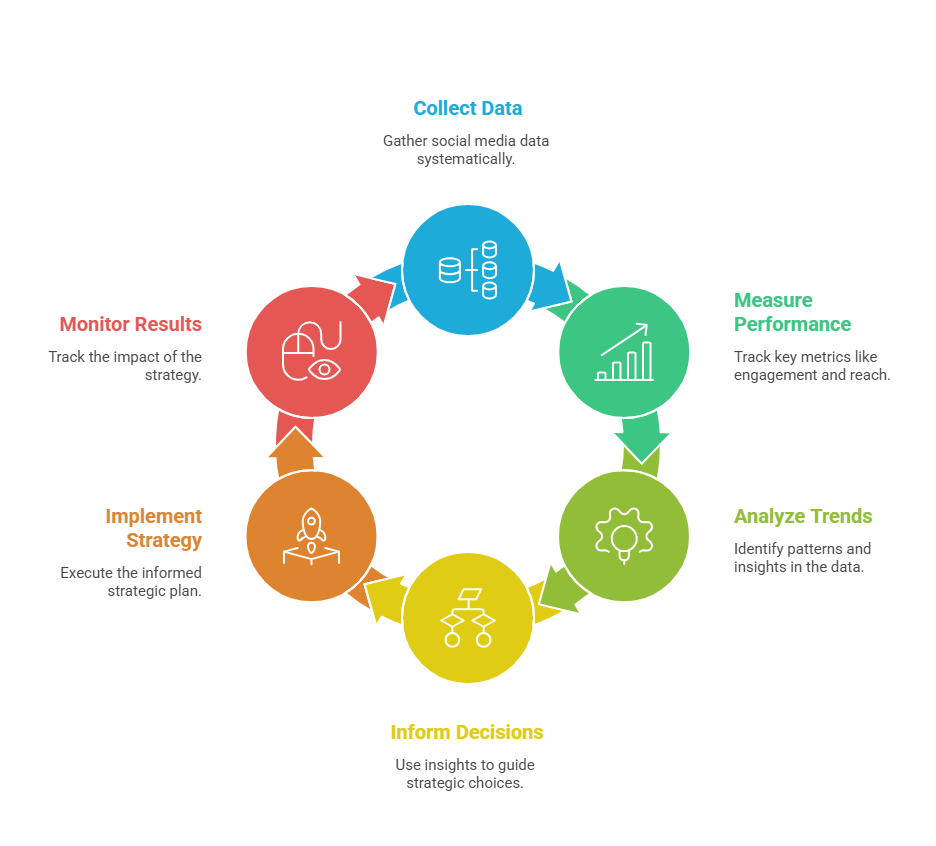
Let us slow down for a moment and clarify what we mean here.
Social Media Analytics is not just counting followers or tracking likes. It is the systematic collection, measurement, and analysis of social data to inform strategic decisions.
In competitive research, this means studying your competitors’ content performance, audience engagement, growth trends, messaging shifts, campaign impact, and community response.
It goes beyond vanity metrics. It looks at patterns.
For example, you might notice that a competitor’s engagement rate spikes every time they post educational content instead of promotional content. That tells you something about what the audience values. Or you may see that their reels outperform static posts by a large margin, suggesting a platform-specific content strategy.
Using Social Media Analytics tools such as Sprout Social, Hootsuite, Brandwatch, Meltwater, or native platform dashboards, you can benchmark your performance against competitors. You can track share of voice. You can monitor hashtag usage. You can even detect emerging trends before they become mainstream.
But the tools alone are not the strategy. Interpretation is everything.
Identifying the Right Competitors to Analyze
One common mistake is analyzing only obvious competitors.
Yes, you should track direct competitors who offer similar products or services. But you should also look at indirect competitors and aspirational brands.
Direct competitors target the same audience with similar offerings. Indirect competitors might solve the same problem differently. Aspirational brands are those that dominate attention in your niche, even if they are larger than you.
For example, if you are a D2C skincare brand in India, your direct competitors are other skincare brands targeting similar demographics. Your indirect competitors might include dermatology clinics or organic beauty influencers. Your aspirational competitors could be global giants like The Ordinary or Glossier.
Using Social Media Analytics, you can compare how each type of competitor communicates, how frequently they post, what formats they use, and how their audiences respond.
The key is not to copy. It is to learn patterns.
Key Metrics to Track for Competitive Research
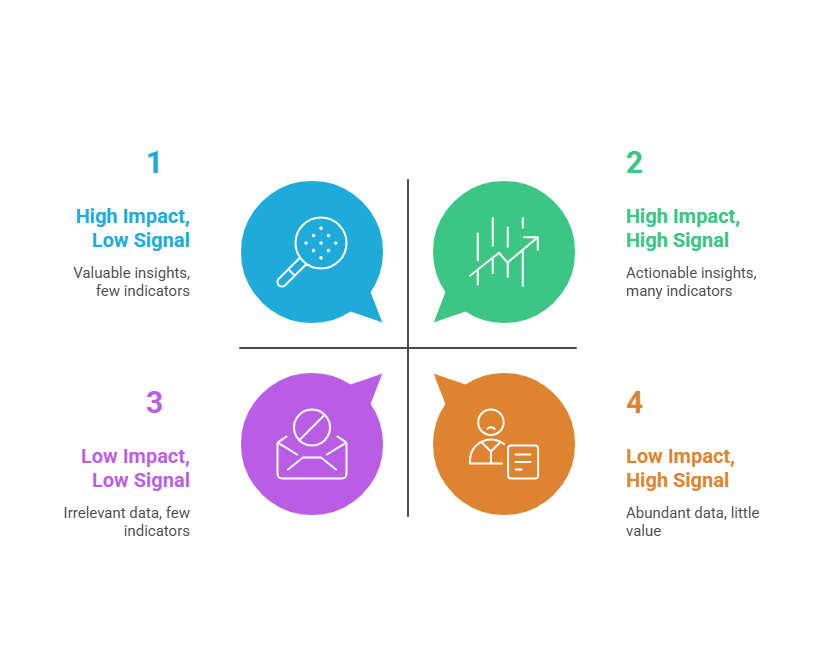
Metrics matter, but context matters more.
Follower count alone is not meaningful. A competitor may have 500,000 followers but low engagement. Another may have 50,000 followers but a highly active community. The second brand might actually be more influential.
Engagement rate is often a stronger indicator of content relevance. You should examine likes, comments, shares, saves, retweets, and reactions relative to audience size.
Content type performance is also crucial. Are videos outperforming images? Are carousels driving more saves? Are long captions sparking deeper discussions?
Growth trends reveal momentum. A steady increase in followers may indicate strong brand awareness campaigns. Sudden spikes might signal influencer collaborations or paid ads.
Share of voice is another powerful metric. It shows how much of the conversation in your niche is dominated by each competitor. With advanced Social Media Analytics platforms, you can measure how often your brand is mentioned compared to others.
Traffic and conversion indicators, if accessible through public signals or third-party estimates, can also provide insights into how social efforts translate into business results.
The goal is not to drown in numbers. It is to find signals.
Content Strategy Analysis: Decoding What Works
Content leaves clues.
When you observe competitors consistently posting certain themes, formats, or tones, it is rarely random. It is usually based on performance data.
Study the type of posts that generate the highest engagement. Are they educational? Entertaining? Emotional? Controversial? Behind-the-scenes?
Look at posting frequency. Some brands thrive with daily content. Others focus on fewer but more polished pieces.
Analyze storytelling patterns. Are competitors positioning themselves as experts, rebels, friends, or premium authorities?
With Social Media Analytics dashboards, you can export performance reports and categorize content manually. Over time, you will notice themes. Maybe tutorials generate the most saves. Maybe user-generated content drives trust. Maybe humor works better than formal messaging.
This is where competitive research becomes creative inspiration rather than imitation.
Audience Insights: Learning from Their Community
Your competitor’s audience is a goldmine of information.
Read comments carefully. What questions are people asking? What frustrations are they expressing? What compliments do they repeat?
If customers repeatedly ask a competitor about shipping delays, that indicates a weakness. If people constantly praise their customer service, that is a strength.
Advanced Social Media Analytics platforms allow you to analyze audience demographics such as age, location, and interests. Even if you cannot access exact data, you can infer patterns from language, timing, and engagement style.
One powerful technique is analyzing top commenters and brand advocates. Who are they? Are they influencers, industry experts, or everyday users? What kind of content do they engage with most?
This insight helps you refine your own targeting and messaging strategy.
Campaign Analysis: Tracking Competitor Launches and Promotions
When a competitor launches a campaign, social platforms light up.
Monitor hashtags associated with their campaigns. Track engagement before, during, and after the launch. Compare baseline performance to campaign spikes.
Social Media Analytics tools allow you to track hashtag performance, keyword mentions, and campaign-related engagement trends.
For example, when Nike launches a campaign around a social cause, the brand does not just measure likes. It tracks conversation volume, community response, influencer participation, and media amplification.
You can replicate this process for your competitors. Study how long campaign momentum lasts. Does engagement drop sharply after launch? Does conversation continue organically?
Campaign analysis reveals not just creativity but strategic execution.
Sentiment Analysis: Understanding Emotional Response
Numbers show what people are doing. Emotions show why they are doing it.
Sentiment Analysis helps you categorize conversations as positive, negative, or neutral. This is especially useful during product launches, controversies, or rebranding efforts.
Imagine a competitor introduces a new pricing model. Engagement may spike, but if most comments express frustration, the spike is not necessarily positive.
Many Social Media Analytics tools now include built-in emotion detection features that scan language patterns and classify tone. While automated systems are not perfect, they provide directional insights.
Understanding audience emotion helps you avoid repeating competitor mistakes and replicate their successes with more precision.
Influencer and Partnership Research
Influencer collaborations are often visible long before official announcements.
Track which influencers frequently interact with competitors. Notice tagged posts, affiliate links, and campaign hashtags.
By using Social Media Analytics, you can measure engagement levels on sponsored posts versus organic posts. If a competitor’s influencer partnership generates high engagement but low comment depth, it might indicate surface-level interest rather than genuine impact.
You can also identify micro-influencers who repeatedly engage with competitor content. These creators might be potential collaborators for your own brand.
Competitive research in influencer marketing is less about copying names and more about understanding audience alignment.
Paid Ads and Creative Monitoring
Organic content tells part of the story. Paid ads reveal budget priorities.
Platforms like Meta Ads Library and TikTok Creative Center allow you to view active ads from competitors. Observe messaging, creative formats, offers, and calls to action.
While ad performance data is not fully public, engagement patterns can still be studied. Combine this with Social Media Analytics data to see whether paid campaigns correlate with spikes in follower growth or engagement.
Look for recurring creative themes. Are competitors using testimonials? Limited-time discounts? Educational hooks?
This analysis informs your own performance marketing strategy without guesswork.
Building a Structured Competitive Research Framework
Data without structure becomes noise.
Create a consistent process. Decide how often you will review competitor data. Weekly snapshots work well for fast-moving industries. Monthly deep dives are useful for strategic planning.
Organize insights into categories such as content performance, audience behavior, campaign impact, influencer activity, and growth trends.
Over time, patterns become clearer.
For example, you might notice that a competitor’s engagement drops every quarter when they shift from educational content to heavy promotions. Or you might see seasonal spikes that align with cultural events.
Using Social Media Analytics in a structured way ensures that insights compound rather than disappear.
Turning Insights into Strategy
This is the most important part.
Competitive research is not about spying. It is about sharpening your positioning.
If you notice competitors dominating educational content, maybe you differentiate with strong community building. If they rely heavily on discounts, you might emphasize premium value.
Use insights to test hypotheses. If a competitor’s short-form videos consistently outperform static posts, experiment with similar formats while maintaining your unique brand voice.
Document your experiments. Track results using Social Media Analytics dashboards. Compare performance before and after strategic changes.
Growth rarely comes from copying. It comes from informed adaptation.
Avoiding Common Pitfalls in Competitive Analysis
It is easy to become obsessed with competitors.
One risk is reactive marketing. You see a competitor post something and immediately replicate it. This often leads to diluted brand identity.
Another mistake is focusing only on high-performing posts. Sometimes average-performing content reveals more about long-term strategy.
Also remember that you are seeing only public data. Internal metrics such as conversions and customer lifetime value are hidden. A viral post does not always translate into revenue.
Use Social Media Analytics as a compass, not as a mirror.
The Future of Competitive Research
The landscape is evolving quickly.
Artificial intelligence is making data interpretation faster and more predictive. Real-time dashboards now detect trends before they fully emerge. Cross-platform analytics tools integrate insights from Instagram, LinkedIn, YouTube, X, and TikTok into unified reports.
Soon, predictive modeling will allow brands to forecast competitor growth patterns based on historical engagement data.
Social Media Analytics will become even more integrated with CRM systems, performance marketing dashboards, and SEO tools. Competitive research will no longer be a separate activity. It will be embedded into daily decision-making.
Brands that build analytical capability today will have a serious advantage tomorrow.
Final Thoughts
Competitive research using social platforms is not optional anymore. It is foundational.
When used thoughtfully, Social Media Analytics transforms scattered interactions into strategic clarity. It shows you where competitors are winning, where they are vulnerable, and where opportunities exist.
The real power lies not in the data itself, but in your interpretation.
Pay attention to patterns. Study audience reactions. Observe campaign execution. Learn from both success and failure.
And then, build something better.
Because in the end, the goal of competitive research is not to chase competitors. It is to understand the market so deeply that you lead it.