

If you’ve spent even a little time in digital marketing or eCommerce, you’ve probably noticed something interesting. Getting new customers is expensive. Like, really expensive. But increasing revenue from existing customers? That’s where things get surprisingly efficient.
This is exactly where AI for Cross-Selling and Upselling comes into play.
Instead of pushing random product suggestions or relying on outdated “Customers also bought” widgets, AI brings intelligence, timing, and personalization into the mix. It studies behavior, predicts intent, and recommends products that actually make sense to the customer.
And honestly, when it’s done right, it doesn’t even feel like selling.
In this deep dive, we’ll break down how AI is transforming cross-selling and upselling, the strategies that actually work in 2026, and how you can implement them in a practical, non-overwhelming way.
What is Cross-Selling and Upselling?
Before we get into AI, let’s quickly align on the basics.
What is Cross-Selling?
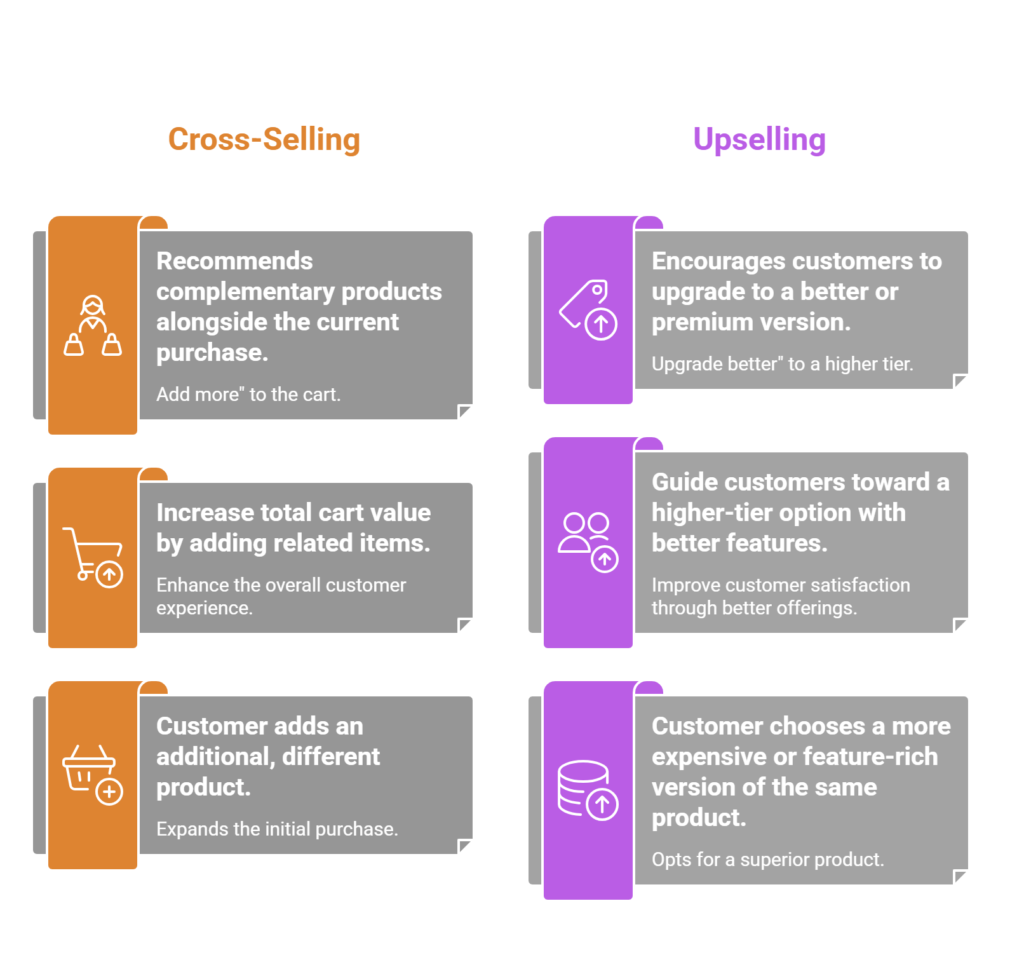
Cross-selling is when you recommend complementary products alongside what a customer is already buying.
Think of it like ordering a burger and being offered fries or a drink. It’s about enhancing the purchase.
In eCommerce, this might look like suggesting a phone case when someone buys a smartphone. The goal is to increase the total cart value while improving the overall experience.
What is Upselling?
Upselling, on the other hand, is about encouraging customers to upgrade.
Instead of buying a basic product, you guide them toward a premium version or a higher-tier option with better features.
For example, recommending a higher storage variant of a laptop or a premium subscription plan.
The Key Difference
Cross-selling = “Add more”
Upselling = “Upgrade better”
Both strategies aim to increase revenue, but more importantly, they can also improve customer satisfaction when done correctly.
Why Traditional Methods Fall Short
Let’s be honest. Traditional cross-selling and upselling strategies were kind of clunky.
You’d see:
- Generic recommendations
- Static product bundles
- Rule-based suggestions like “If X, then show Y”
And sometimes they worked. But often, they didn’t.
The problem is simple. Customers today expect personalization. Not just basic personalization, but hyper-relevant, real-time suggestions.
And static systems just can’t keep up.
That’s where AI changes everything.
What is AI for Cross-Selling and Upselling?
At its core, AI-driven cross-selling and upselling use machine learning to analyze large volumes of customer data and generate personalized recommendations in real time.
But that’s the technical definition.
In practical terms, it means:
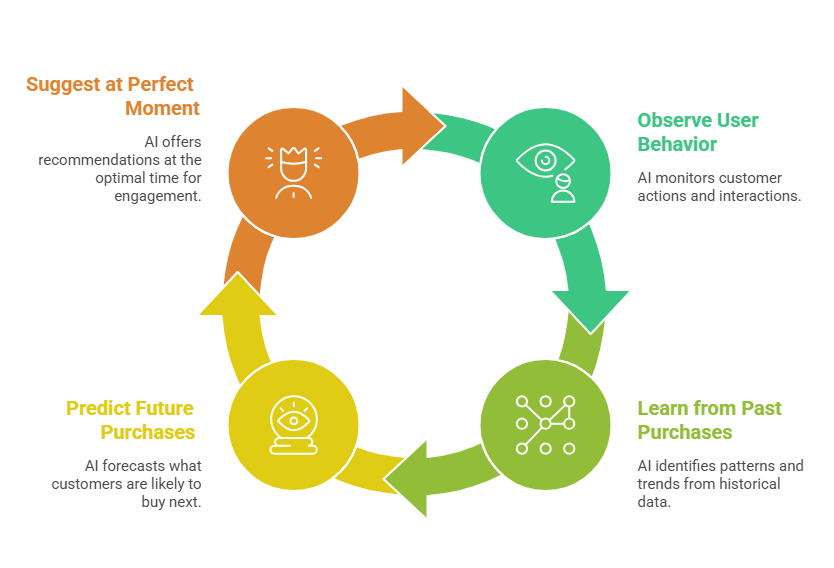
- AI observes how users behave
- It learns patterns from past purchases
- It predicts what someone is likely to buy next
- And then suggests it at the perfect moment
Instead of guessing, you’re using data-backed decisions.
And that’s a massive shift.
How AI is Transforming Cross-Selling and Upselling
1. Real-Time Personalization
This is probably the biggest advantage.
AI doesn’t just rely on past data. It reacts to what the user is doing right now.
For example:
- Browsing behavior
- Time spent on a product
- Cart activity
- Search queries
AI processes all of this instantly and adjusts recommendations accordingly.
This leads to suggestions that feel natural, not forced.
2. Predictive Analytics
AI can predict what a customer might want before they even realize it.
Sounds a bit futuristic, but it’s already happening.
By analyzing patterns across thousands (or millions) of users, AI identifies:
- Products often bought together
- Upgrade preferences
- Price sensitivity
This allows brands to recommend the right product at the right time.
And timing matters more than most people think.
3. Advanced Customer Segmentation
Instead of broad segments like “new users” or “returning customers,” AI creates micro-segments.
For example:
- High-value repeat buyers
- Discount-sensitive shoppers
- Premium product enthusiasts
This level of segmentation allows for highly targeted cross-sell and upsell strategies.
4. Continuous Learning and Optimization
Unlike static systems, AI keeps improving.
It learns from:
- Clicks
- Purchases
- Ignored recommendations
- Returns
Over time, it refines its suggestions and becomes more accurate.
That’s why AI-driven systems often outperform traditional ones by a significant margin.
Benefits of Using AI in Cross-Selling and Upselling
Increased Revenue and Average Order Value
This is the obvious one.
By recommending relevant products, businesses can increase the total value of each transaction without increasing traffic.
Even small improvements in average order value can have a huge impact on profits.
Higher Customer Lifetime Value
When customers find value in recommendations, they’re more likely to return.
AI helps build long-term relationships by consistently delivering relevant experiences.
Better Customer Experience
This one is underrated.
Good recommendations feel helpful, not pushy.
And when customers feel understood, they’re more likely to trust your brand.
Improved Conversion Rates
AI-powered recommendations can significantly boost conversions.
Some businesses report up to 20% higher conversion rates using predictive analytics.
Real-World Examples of AI in Action
Amazon
Amazon is probably the most famous example.
Their recommendation engine drives a huge portion of their revenue. In fact, around 35% of sales come from AI-driven recommendations.
Netflix (Yes, It Counts)
While not traditional eCommerce, Netflix uses similar principles.
It recommends content based on viewing behavior, which is essentially cross-selling content within its platform.
Shopify Stores
Many Shopify stores now use AI-powered apps to:
- Recommend bundles
- Suggest upgrades
- Personalize product pages
These tools are becoming standard, not optional.
Smart Strategies to Implement AI for Cross-Selling and Upselling
Now let’s get practical.
1. Personalized Product Recommendations
This is the foundation.
Instead of generic suggestions, use AI to recommend products based on:
- Browsing history
- Purchase behavior
- User preferences
The goal is to make recommendations feel like helpful advice.
2. Dynamic Bundling
Instead of fixed bundles, AI can create dynamic bundles.
For example:
If a user adds a laptop to their cart, AI might suggest:
- Laptop bag
- Mouse
- Extended warranty
But the exact bundle changes depending on the user.
This increases relevance and conversion.
3. Smart Pricing and Discounting
AI can adjust pricing strategies based on user behavior.
For example:
- Offer discounts only to price-sensitive users
- Suggest premium upgrades to high-value customers
This ensures you’re not leaving money on the table.
4. Timing-Based Recommendations
Timing is everything.
AI helps determine:
- When to show an upsell
- When to suggest a cross-sell
- When to stay silent
Bad timing can hurt conversions. Good timing can dramatically improve them.
5. Post-Purchase Upselling
Most businesses stop selling after checkout.
That’s a mistake.
AI can analyze the purchase and suggest:
- Add-ons
- Refills
- Complementary products
This works especially well in email marketing.
6. Conversational AI and Chatbots
AI chatbots can act like sales assistants.
They:
- Answer questions
- Recommend products
- Guide users through the buying process
And honestly, they’re getting really good at it.
Challenges and Limitations
Let’s not pretend AI is perfect.
Data Dependency
AI needs data to work.
If you don’t have enough data, recommendations might not be accurate.
Privacy Concerns
Customers are becoming more aware of data usage.
Transparency is important.
Over-Automation
Sometimes, too much automation can feel robotic.
There still needs to be a human touch.
Interestingly, even discussions on platforms like Reddit highlight that AI works best as a “guidance system,” not a full replacement for human judgment.
Best Practices for Success
Focus on Relevance Over Volume
More recommendations don’t mean better results.
Relevance is everything.
Test and Optimize Continuously
AI improves over time, but you still need to test:
- Placement
- Messaging
- Timing
Combine AI with Human Insight
AI provides data, but humans provide context.
The best results come from combining both.
The Future of AI in Cross-Selling and Upselling
We’re just getting started.
Here’s what’s coming next:
Hyper-Personalization
Even more precise recommendations based on:
- Real-time intent
- Emotional signals
- Contextual data
Voice and Conversational Commerce
AI assistants will recommend products through voice interactions.
Think Alexa, but smarter.
Integration with Generative AI
AI won’t just recommend products.
It will:
- Write personalized product descriptions
- Create tailored offers
- Generate dynamic landing pages
This is where things get really interesting.
Conclusion
AI for Cross-Selling and Upselling isn’t just a trend. It’s becoming a core part of modern digital marketing strategy.
It allows businesses to:
- Increase revenue without increasing traffic
- Deliver better customer experiences
- Build long-term relationships
And maybe the most important part?
It makes selling feel less like selling.
If you’re running an eCommerce store or managing marketing campaigns, this is one area you can’t afford to ignore.
Start small. Test one strategy. Learn from the data.
Because once you see it working, it’s hard to go back.