

The internet does not forget. That is probably the simplest way to understand why reputation management has become such a critical function for modern brands. One bad review, one viral tweet, one poorly handled complaint can echo across platforms for years. And today, where customers live on Instagram, LinkedIn, X, YouTube, and review platforms, managing brand perception is no longer optional.
This is where ORM Social Media comes into play.
If you are a marketer, founder, or brand manager, understanding how social media reputation works can literally protect your revenue. In some cases, it can even create competitive advantage.
In this detailed guide, we will break down what ORM on social platforms really means, why it matters more than ever, how it fits into digital marketing strategy, and how brands can implement it in a practical, sustainable way.
Let’s dive in.
What Is ORM Social Media?
At its core, ORM Social Media refers to the process of monitoring, managing, and improving a brand’s reputation across social media platforms. It is a specialized branch of Online Reputation Management focused specifically on conversations happening on platforms like Instagram, Facebook, LinkedIn, X, YouTube, and even emerging communities like Reddit.
Unlike traditional PR, which focuses on media coverage, or SEO, which focuses on search rankings, social reputation management is real-time, conversational, and highly public.
Every comment, review, tag, story mention, influencer post, and user-generated video becomes part of your brand’s public perception.
And here is the important part: you do not control the narrative anymore. Your customers do.
Social media has shifted power toward audiences. Anyone can publish a complaint. Anyone can create a viral review. Anyone can expose a brand mistake.
That means reputation is no longer what you say about your brand. It is what others say about you.
Why Social Media Reputation Matters More Than Ever
There was a time when reputation management was mostly about handling bad press or crisis situations. Today, it is integrated into everyday marketing.
Social Media Is the New Search Engine
Consumers increasingly check social platforms before buying. They look at comments under posts. They browse tagged content. They check how brands respond to complaints.
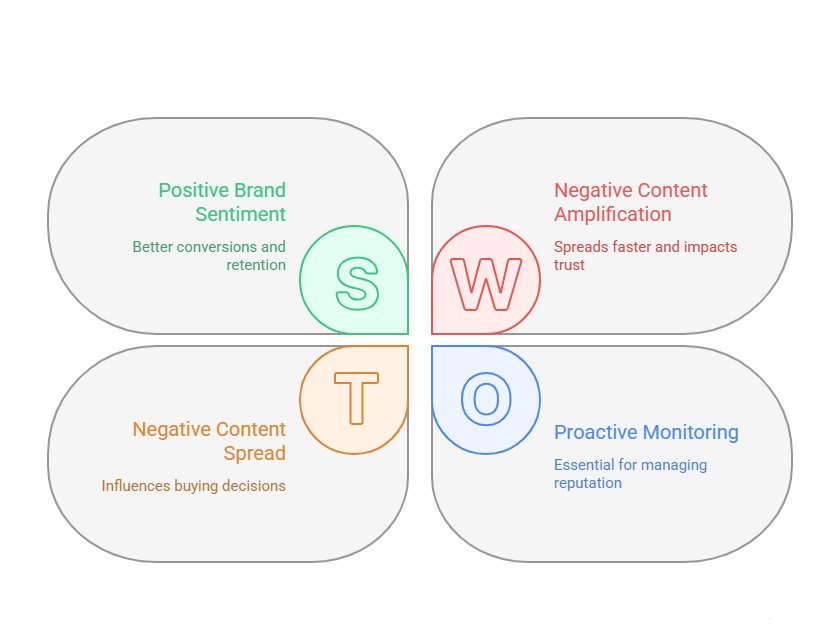
In fact, platforms like Instagram and TikTok now function as discovery engines. A single negative thread can influence hundreds or thousands of buying decisions.
If a customer sees unanswered complaints under your post, trust drops instantly.
And trust is currency.
Negative Content Spreads Faster Than Positive Content
Human psychology tends to amplify negative experiences. People are more likely to share bad service than good service.
On social platforms, outrage spreads quickly. Algorithms amplify engagement, and controversial content often generates high engagement.
This means a single unresolved complaint can spiral.
That is why proactive monitoring is essential.
Reputation Directly Impacts Revenue
Brands with strong positive sentiment convert better. They attract partnerships more easily. They retain customers longer.
On the other hand, consistent negative sentiment leads to:
- Lower click-through rates on ads
- Reduced conversion rates
- Higher customer acquisition costs
- Lower brand equity
Social reputation is not just about image. It directly impacts performance marketing metrics.
The Difference Between ORM and Social Media Management
Many businesses confuse reputation management with social media management. They are related, but not the same.
Social media management focuses on content creation, posting schedules, engagement campaigns, and growth strategies.
Reputation management focuses on monitoring conversations, responding to feedback, handling criticism, and shaping public perception.
For example:
Posting reels and running ads is social media marketing.
Responding to negative comments professionally and resolving customer complaints publicly is reputation management.
Both functions must work together.
The Role of ORM in Digital Marketing Strategy
Reputation is not a side activity. It is integrated into the entire marketing funnel.
According to industry insights and digital marketing frameworks, ORM supports every stage of the buyer journey.
Awareness Stage
At the awareness stage, potential customers might search your brand on Instagram or LinkedIn.
If they see:
- Positive engagement
- Helpful responses
- Authentic community interaction
They are more likely to move forward.
If they see ignored complaints, sarcastic responses, or silence, they may never even visit your website.
Consideration Stage
During consideration, buyers compare options. They check reviews, comments, and brand transparency.
This is where social proof plays a massive role.
Brands that actively manage feedback create visible trust signals.
Decision Stage
Right before purchase, customers often check comments or reviews again. Even small signals like how fast you reply can influence the final decision.
Reputation management becomes a conversion optimization strategy.
Key Components of an Effective Social Media ORM Strategy
Reputation management is not about deleting negative comments or pretending problems do not exist. In fact, that often backfires.
A strong strategy includes several core elements.
Active Social Listening
You cannot manage what you do not monitor.
Social listening tools track brand mentions, tags, keywords, and conversations across platforms. Tools like Brandwatch, Sprout Social, and Hootsuite allow brands to detect sentiment shifts early.
Listening also includes tracking indirect mentions where users talk about your brand without tagging you.
Real-Time Response System
Speed matters.
Customers expect quick responses. Even a simple acknowledgment like “We are looking into this” can prevent escalation.
The key is tone. Responses must be calm, empathetic, and solution-focused.
Defensiveness almost always damages reputation.
Transparency and Accountability
When brands admit mistakes openly, audiences often respond positively.
Think of brands that publicly apologize and explain corrective steps. Those moments, when handled properly, can actually strengthen trust.
Silence creates suspicion.
Encouraging Positive Advocacy
Reputation management is not only about damage control. It is also about amplifying positive experiences.
Encouraging satisfied customers to share feedback, reposting testimonials, and highlighting user-generated content builds a positive narrative around your brand.
Over time, positive sentiment can outweigh occasional criticism.
Common Social Media Reputation Risks for Brands
Every brand faces risk on social platforms. The key difference is how prepared they are.
Viral Customer Complaints
A single angry customer with a compelling story can go viral.
If the issue is genuine and poorly handled, it may spread across platforms and even reach traditional media.
Preparation includes clear escalation protocols and empowered customer service teams.
Influencer Backlash
Partnering with influencers comes with risk. If an influencer faces controversy, associated brands may experience reputational impact.
Due diligence before collaborations is crucial.
Employee-Generated Controversy
Sometimes employees post controversial content that reflects on the brand. Clear internal social media policies help mitigate such risks.
Misinformation and Fake Reviews
Competitors or trolls may spread false claims.
Having a verification and response system helps protect brand credibility.
The Psychological Impact of Public Brand Responses
There is something fascinating about social media conversations. They are public.
When a brand responds to a complaint, it is not just responding to one person. It is performing for the entire audience.
This public stage creates what behavioral psychologists call observational trust.
When customers see you:
- Respond respectfully
- Offer solutions
- Follow up
They build confidence in your reliability, even if they never faced an issue themselves.
On the other hand, ignoring complaints signals indifference.
Perception becomes reality.
Measuring the Effectiveness of Social Media Reputation Management
You cannot improve what you do not measure.
Effective ORM Social Media strategies rely on measurable metrics such as sentiment analysis, response time, engagement quality, and share of positive mentions.
Sentiment analysis tools use AI to categorize mentions as positive, neutral, or negative. Over time, brands can track shifts in public perception.
Response time is another crucial metric. Faster responses generally correlate with higher customer satisfaction.
Engagement quality matters more than volume. Meaningful interactions indicate stronger community trust.
Real Brand Examples of Reputation Management
Let us look at how real brands handle social media reputation.
Nike
Nike actively engages with customer feedback on social platforms. When facing criticism, especially around social issues, the brand often takes a clear stand rather than remaining neutral. This approach may polarize audiences, but it strengthens loyalty among its core community.
Zomato
Zomato is known for its witty social media presence. However, during service complaints, the brand switches tone to empathetic and professional. This adaptability protects brand perception while maintaining personality.
Airbnb
Airbnb faced serious backlash during global crises but addressed concerns through public updates, policy changes, and transparent communication. Proactive communication reduced long-term reputational damage.
These examples highlight that reputation management is not about perfection. It is about responsiveness and clarity.
Integrating Reputation Management With Paid Advertising
Many marketers forget that social ads amplify everything, including comments.
If you run Facebook or Instagram ads and your ad post accumulates negative comments, it directly impacts performance.
Users read comments before clicking.
FNegative threads reduce click-through rates and increase skepticism.
Smart performance marketers monitor ad comments daily and address issues immediately. Some even hide abusive comments while keeping genuine criticism visible and resolved.
This balance protects brand image without appearing censorious.
Crisis Management Framework for Social Media
Every brand should have a crisis playbook.
First, identify the issue quickly through monitoring tools.
Second, assess the severity. Is it a minor complaint or a viral issue?
Third, craft a clear, consistent message.
Fourth, respond publicly while resolving privately when necessary.
Finally, document learnings to prevent recurrence.
Crisis moments are stressful. But brands that handle them with transparency often emerge stronger.
Building a Proactive Reputation Strategy
Reactive management is not enough. Proactive strategy builds resilience.
Encourage customer feedback regularly.
Invest in community building.
Train customer support teams in digital communication tone.
Align marketing, PR, and customer service departments so messaging remains consistent.
Reputation is a cross-functional responsibility.
How AI Is Transforming Social Media Reputation Management
AI-powered tools now analyze massive volumes of conversations in real time.
They detect sentiment shifts early.
They flag potential crises.
They automate basic responses while escalating complex cases to human teams.
Generative AI can even draft empathetic responses faster.
However, automation must be balanced with authenticity. Over-automation can feel robotic and damage trust.
Human judgment remains essential.
Why Startups and Small Brands Cannot Ignore Social Reputation
Some small businesses assume reputation management is only for big brands.
That is risky.
In fact, smaller brands may be more vulnerable because they have less brand equity to buffer negative publicity.
One viral complaint can significantly impact a young company.
On the positive side, smaller brands can respond more personally and build deeper connections.
Authenticity becomes a competitive advantage.
The Future of Social Reputation in 2026 and Beyond
As AI-generated content increases, misinformation risks will rise.
Deepfakes, fake reviews, and manipulated screenshots may become more common.
Brands will need stronger verification processes and faster response systems.
At the same time, audiences will value transparency even more.
Communities will prefer brands that communicate openly rather than appearing overly polished.
Reputation management will evolve from reactive damage control to continuous relationship building.
Final Thoughts
In a world where every customer has a microphone, brand perception lives and evolves in real time.
Managing that perception requires more than posting attractive content. It requires listening, responding, empathizing, and sometimes admitting mistakes publicly.
ORM Social Media is not a trend. It is a fundamental pillar of digital marketing.
Brands that invest in proactive reputation management build trust, improve performance metrics, and create loyal communities.
Brands that ignore it risk losing control of their narrative.
If there is one takeaway here, it is this: reputation is no longer built behind closed doors. It is built in comment sections.
And those comment sections are always watching.