

If you have ever published a blog post that brought traffic for three days and then completely disappeared from search results, you know how frustrating content marketing can feel. You put in the effort. You researched. You wrote. You optimized. And still, the traffic spike faded almost immediately.
Now compare that with an article that keeps bringing visitors month after month, year after year. No constant promotion. No dependency on trends. Just steady, predictable traffic.
That is the real power of Evergreen Content Marketing.
In a world where trends move fast and algorithms change even faster, building long-term traffic assets is probably one of the smartest marketing decisions you can make. This guide will break down how it works, why it works, and how you can build a sustainable system around it.
Let’s dive in.
What Is Evergreen Content?
Evergreen content is content that remains relevant, valuable, and searchable over a long period of time. It is not tied to trends, news cycles, product launches, or temporary discussions. It answers fundamental questions and solves ongoing problems.
Think about topics like:
How to create a marketing funnel
What is SEO
How to run Facebook ads
How to build an email list
These topics are not going away anytime soon.
When done correctly, Evergreen Content Marketing focuses on building such durable assets that consistently attract search traffic without constant reinvention.
The idea is simple, but execution is where most brands struggle.
Why Evergreen Content Matters for Long-Term Traffic
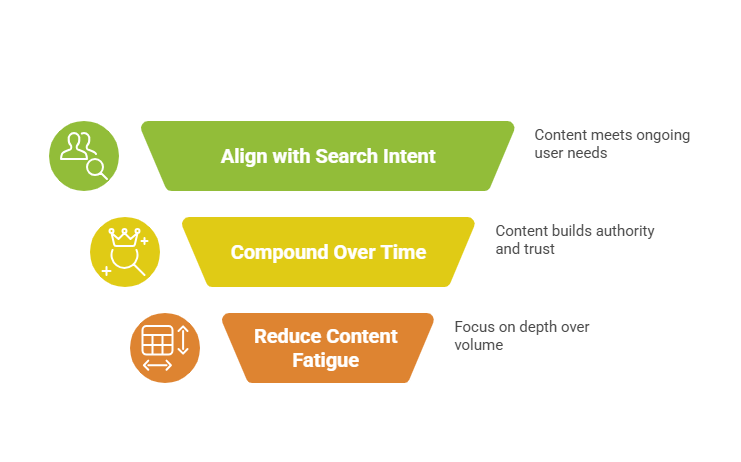
Short-term content can give you spikes. Evergreen content gives you compounding growth.
Here is why it works so well.
It Aligns Perfectly With Search Intent
People continuously search for foundational knowledge. They are always learning. New entrepreneurs enter the market every day. New students discover marketing every semester.
The search demand for foundational topics never disappears.
When you build a strategy around Evergreen Content Marketing, you tap into ongoing demand rather than temporary attention.
It Compounds Over Time
Search engines reward authority and consistency. When a piece of content ranks and consistently satisfies user intent, it strengthens your domain authority.
Over time, strong evergreen articles attract backlinks naturally. Other bloggers reference them. AI systems cite them. Search engines trust them.
The longer they exist, the stronger they get.
It Reduces Content Fatigue
Constantly chasing trends is exhausting. It also creates pressure on your team to publish at high speed.
Evergreen content, on the other hand, is slower to produce but more strategic. You focus on depth instead of volume. You build content assets rather than content noise.
And honestly, that feels more sustainable.
Evergreen Content vs Trending Content
It is important to understand the difference.
Trending content is timely. It reacts to news, algorithm changes, product updates, industry gossip. It can drive massive traffic quickly, but it decays fast.
Evergreen content is timeless. It addresses recurring questions and ongoing challenges.
Both have a place in your strategy. But if you want stable organic growth, Evergreen Content Marketing must form the foundation.
Trending content can support visibility. Evergreen content builds your long-term traffic engine.
Types of Evergreen Content That Actually Work
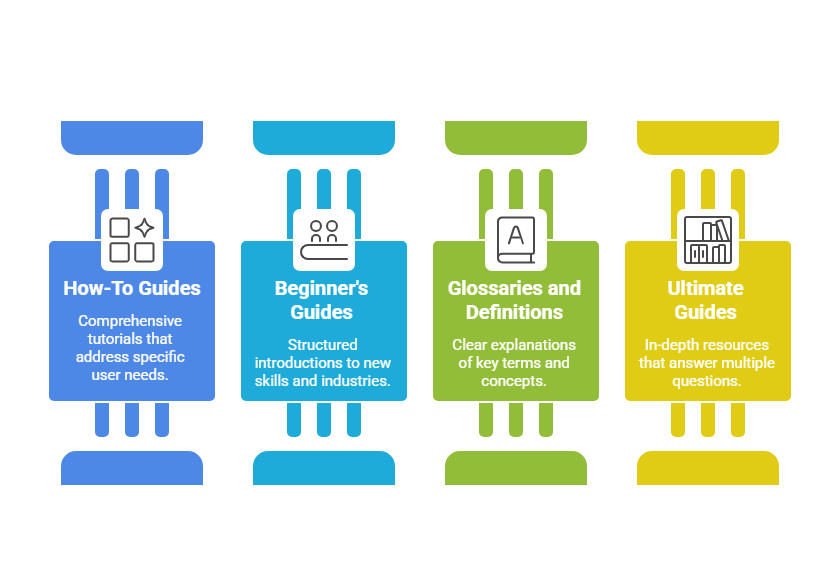
Not all content qualifies as evergreen. To build a high-performing strategy, you need formats that naturally retain relevance.
How-To Guides
These are arguably the most powerful evergreen format.
For example, guides like “How to Start Dropshipping” or “How to Create a Google Ads Campaign” consistently attract search demand. The tools may evolve slightly, but the core intent remains stable.
Comprehensive tutorials establish expertise and align perfectly with informational search intent.
Beginner’s Guides
Beginner content works because new learners constantly enter every industry.
A structured introduction to SEO, content marketing, AI tools, or performance marketing will continue to attract traffic as long as people keep learning those skills.
Glossaries and Definitions
Definition-based content ranks well when optimized correctly. For example, explaining terms like CTR, conversion rate, or retargeting remains relevant for years.
These pieces are particularly powerful for capturing top-of-funnel search traffic.
Ultimate Guides
In-depth long-form resources often perform better in search. When structured properly, they answer multiple sub-questions within a single page.
That depth signals authority.
A well-executed Evergreen Content Marketing strategy often revolves around pillar guides supported by cluster articles.
How to Identify Evergreen Topics
This is where strategy matters.
You cannot just guess what will remain relevant. You need research.
Look at Consistent Search Volume
Use tools like Google Keyword Planner, Ahrefs, SEMrush, or Ubersuggest.
If a keyword shows steady search volume across months and years, it is a strong evergreen candidate.
Avoid keywords that show extreme spikes tied to specific dates or events.
Check Google Trends
Google Trends is underrated for content validation.
Search your topic and observe the pattern over five years. If the line is relatively stable or gradually rising, it has evergreen potential.
Analyze Competitor Content
Look at what established marketing blogs are ranking for consistently.
For example, platforms like HubSpot and Moz have multiple articles that rank for years because they focus heavily on Evergreen Content Marketing principles.
When you see content that has remained relevant for a long time, study its structure and depth.
Structuring Evergreen Content for Maximum SEO Impact
Creating evergreen topics is not enough. The structure matters just as much.
Build Around Search Intent
Every evergreen article must clearly match the intent behind the keyword.
Is the user looking for a definition? A tutorial? A comparison? A strategy?
If you misalign with intent, you will struggle to rank no matter how well-written the content is.
Use Topic Clusters
Instead of writing isolated posts, build a pillar page supported by cluster content.
For example, a pillar article on content marketing can link to supporting posts on keyword research, on-page SEO, content promotion, and analytics.
This internal linking structure strengthens topical authority and improves crawlability.
Many successful brands rely heavily on Evergreen Content Marketing frameworks structured around clusters.
Optimize for Featured Snippets and AI Summaries
Modern search engines and AI platforms prefer structured, clear, concise explanations.
Use well-formatted headings. Answer direct questions clearly. Provide short explanatory paragraphs before diving deeper.
This increases your chances of appearing in featured snippets and AI-generated summaries.
Writing Evergreen Content That Feels Human
Here is something important.
Evergreen does not mean robotic.
In fact, content that survives long-term usually feels conversational, practical, and grounded in real experience.
Share insights. Add examples. Explain what works and what does not. Maybe even admit uncertainties where appropriate.
Google’s E-E-A-T guidelines emphasize Experience and Expertise. Demonstrating real-world understanding builds trust.
For instance, if you have personally tested long-form guides and seen them rank over time, mention that experience. It adds authenticity.
That authenticity is central to effective Evergreen Content Marketing.
Updating Evergreen Content: The Overlooked Secret
Many people think evergreen content means “write once and forget.”
Not true.
Evergreen content requires periodic updates.
Search engines reward freshness when it improves accuracy. Updating statistics, tools, screenshots, and examples keeps your content relevant.
If you publish a guide about Facebook Ads, you may need to update interface changes every year. The core strategy remains stable, but the execution evolves.
Regular updates protect your rankings.
Smart Evergreen Content Marketing is not static. It is adaptive.
Measuring the Success of Evergreen Content
You should evaluate evergreen performance differently from trending posts.
Organic Traffic Stability
Look for consistent monthly traffic rather than spikes.
If an article brings steady visitors for six months or more, it qualifies as a strong evergreen asset.
Keyword Ranking Stability
Check ranking position over time. Stable or gradually improving rankings indicate healthy evergreen performance.
Backlink Growth
Evergreen content naturally earns backlinks because it serves as a reference.
If other websites consistently cite your article, that is a strong signal of long-term value.
Brands that prioritize Evergreen Content Marketing often notice cumulative SEO authority over time.
Common Mistakes to Avoid
Even experienced marketers make mistakes when building evergreen strategies.
Overly Broad Topics
Trying to cover everything in one article can dilute focus.
Instead, aim for comprehensive yet targeted coverage that aligns clearly with a core keyword.
Ignoring User Experience
Long-form content must be readable. Break text into sections. Use subheadings. Maintain clarity.
Even though this article is long, notice how it is structured in digestible sections.
Neglecting Promotion
Evergreen does not mean organic only.
Initial promotion through email marketing, social sharing, and backlinks helps your content gain traction faster.
Without early visibility, even strong content can struggle to rank.
Real-World Examples of Evergreen Content Success
HubSpot’s guide to inbound marketing continues to generate traffic years after publication.
Moz’s Beginner’s Guide to SEO has remained one of the most referenced resources in the industry.
Neil Patel’s in-depth marketing guides often rank for competitive keywords because they address fundamental questions.
These brands understand Evergreen Content Marketing deeply. They invest in quality, depth, and structure.
And they update consistently.
How to Build Your Evergreen Content Strategy Step by Ste
Let’s bring this together practically.
Start by defining 10 to 20 foundational topics within your niche.
Validate search demand using keyword tools and trend analysis.
Create pillar pages around high-volume core topics.
Build supporting cluster content internally linked to each pillar.
Optimize on-page SEO carefully.
Promote the content strategically in the early phase.
Update every six to twelve months.
That is the framework behind successful Evergreen Content Marketing systems.
It sounds simple. It is not easy. But it works.
The Future of Evergreen Content in the AI Era
With AI tools generating massive volumes of content daily, quality differentiation is becoming more important than ever.
Search engines are prioritizing helpful, experience-driven, well-structured content.
Generic, surface-level articles will struggle.
Evergreen content that demonstrates expertise and real insight will thrive.
AI may change distribution, but foundational knowledge will always be in demand.
In fact, the role of Evergreen Content Marketing may become even more critical as brands compete for sustained visibility rather than short-term clicks.
Final Thoughts
If you are serious about building long-term organic traffic, you need assets, not just posts.
Evergreen content functions like digital real estate. It appreciates over time. It compounds authority. It reduces reliance on constant publishing pressure.
It requires research, depth, updates, and strategic structure.
But once you build a strong evergreen library, you create something powerful. Predictable traffic. Sustainable growth. Authority in your niche.
And maybe that is the biggest advantage of all.
Instead of chasing every new trend, you build something that lasts.