
Most performance marketers hit the same wall eventually. Campaigns are ready to scale, budgets are approved, targeting is dialed in, and then creative becomes the bottleneck. Someone still has to brief a designer, wait for revisions, and hope the fifth variant performs better than the first four.
That gap between how fast media buying moves and how slow creative production moves is exactly what an AI agent for ad creative generation is built to close. This isn’t a single tool that spits out one image. It’s a system that takes a brief, generates multiple ad variants across formats, and often tests and refines them with minimal manual input.
According to an IAB study from late 2025 into early 2026, 83% of ad executives now say their company has deployed AI somewhere in the creative process, up from 60% just a year earlier. That’s not a pilot program anymore. That’s the new baseline.
This article breaks down what these agents actually do, which tools are leading the space right now, and how to build a workflow that doesn’t just generate creative faster but generates creative that actually converts.
Why Ad Creative Production Became Advertising’s Biggest Bottleneck
Media buying has been automated for years. Bidding, targeting, budget pacing, all of it runs on algorithms now. Creative was the last piece still stuck in manual production, and that mismatch created a real problem.
Ad fatigue moves fast. A survey from Bidease’s 2025 State of Mobile App Growth report found that 76% of marketers refresh their ad creatives at least every two weeks, and two thirds already use AI tools to generate and test new variants. If your creative process still takes a week per concept, you’re structurally behind before the campaign even launches.
This is where an AI advertising creative tool earns its keep. It’s not about replacing a creative director’s judgment. It’s about removing the production lag between “we need ten variants of this hook” and actually having them ready to test.
Ad creative production has become the primary bottleneck in performance marketing because media buying and targeting are already automated, while creative refresh cycles of every two weeks or less require a volume of variants that manual production simply cannot sustain.
What Is an AI Ad Creative Agent and How Does It Work?
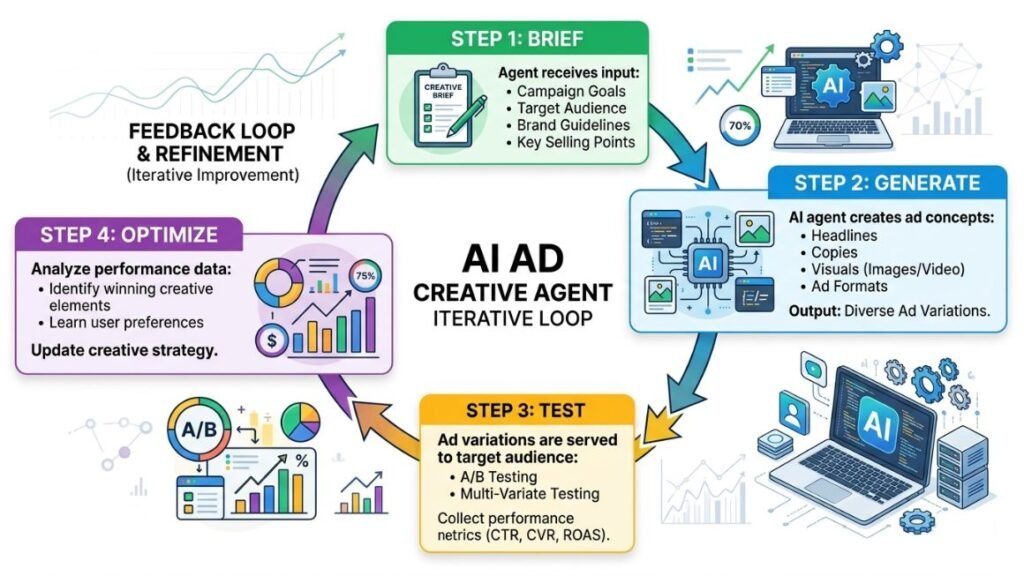
An AI agent for ad creative generation is a system that takes a brief, brand assets, and performance data, then autonomously produces, tests, and iterates on ad variants across formats and channels without a human building each asset by hand. That’s the standalone definition. Here’s what actually happens under the hood.
Unlike a basic generative tool that produces one image from one prompt, an AI agent for advertising typically works in a loop: generate, evaluate, refine, repeat. The “agent” part matters. A plain generator waits for your next instruction. An agent takes an objective, like “improve click-through rate on this product line,” and keeps producing and testing variants toward that goal with limited supervision.
Briefing and Input
You feed the agent your brand guidelines, past top-performing ads, product images or feed data, and the campaign objective. The better the input, the better the output. Garbage brief in, generic creative out.
Generation and Variation
The agent produces multiple versions across headlines, images, video, and layout combinations. Some tools generate dozens of variants in minutes. Zocket’s analysis of over 2.3 million AI-generated ads in 2025 found that video generation is the fastest-growing category, up from just 3.2% of AI ad creative in 2024 and now growing at 280% year over year, largely because generation speed dropped from ten minutes per video to under two minutes.
Testing and Optimization Loop
The strongest agents don’t stop at generation. They push variants live, read early performance signals, and reallocate budget or generate follow-up variants based on what’s working. This is the difference between an AI ad creative generator and a true agent: the loop closes itself instead of waiting for a marketer to pull a report and decide what to try next.
Six Tools Leading AI-Powered Ad Creative Generation in 2026
There’s no shortage of tools calling themselves an AI ad creative generator right now, but they’re not interchangeable. Some are built for volume, some for video, some only make sense at enterprise budget. Here’s what actually stands out, tested against real use cases rather than marketing copy.
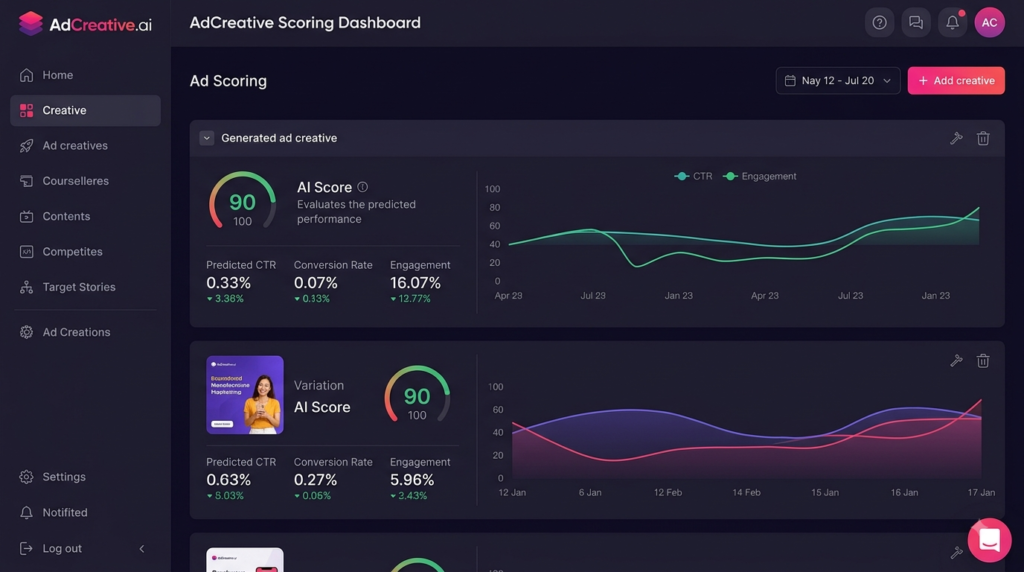
AdCreative.ai — Best for High-Volume Static Ad Generation
What it does: AdCreative.ai generates and scores conversion-optimized static ads at scale, primarily for Meta and Google campaigns, using a credit-based system where every generation and variation draws down credits.
What it does well: Volume is the strength here. It’s genuinely fast at producing dozens of scored static variants for e-commerce and SaaS brands running high-frequency creative refreshes.
Where it falls short: Video access requires jumping straight to the $249/month Professional plan, and credit costs for video aren’t published upfront, which makes it hard to calculate true cost per asset before committing. Post-generation customization is also limited compared to a dedicated design tool.
Best for: Performance marketers and lean e-commerce teams spending $2,000 to $50,000 a month on ads who need static volume over creative nuance.
Pricing: Plans start around $39/month as of 2026, with video features locked behind the $249/month tier.
Meta Advantage+ Creative — Best for Native Meta Campaign Optimization
What it does: Meta’s built-in system automatically generates and tests creative variations directly inside Ads Manager, adjusting elements like image crops, text overlays, and music based on real-time delivery data.
What it does well: Because it’s native to the platform, there’s zero integration lag between generation and delivery. It reads Meta’s own signal data, which no third-party tool can fully replicate.
Where it falls short: You’re locked into Meta’s ecosystem. It won’t touch your Google or TikTok creative, and brand control can feel loose since Meta’s AI decides which combinations to test.
Best for: Brands already running the majority of spend on Meta who want optimization without adding another platform to the stack.
Pricing: Included at no extra cost inside Meta Ads Manager.
Google Performance Max Asset Generation — Best for Cross-Channel Google Inventory
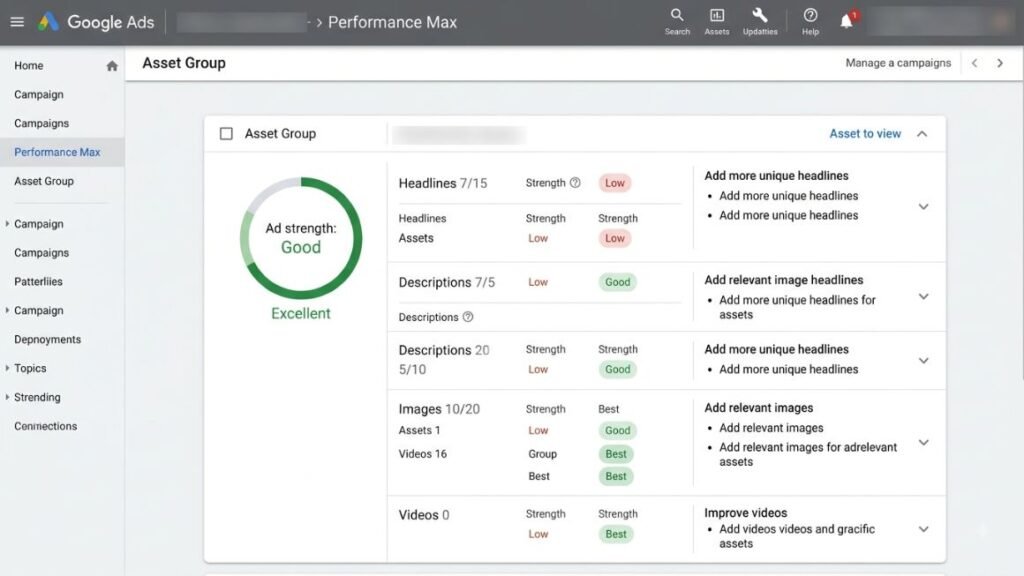
What it does: Performance Max uses Gemini-powered generation to create headlines, descriptions, and images directly from your existing website and asset library, then automatically assembles combinations across Search, YouTube, Display, Gmail, and Discover from a single asset pool. Each asset group can hold up to 15 short headlines, 5 long headlines, 20 images, 5 logos, and 5 videos, which Google’s AI assembles into ads tailored to each placement.
What it does well: The reach is unmatched since one asset pool feeds six different ad formats. Google also rates each asset as Low, Good, or Best based on uniqueness and relevance, giving you a clear signal on what to fix.
Where it falls short: You give up granular control over which channel gets which combination. If brand consistency across a specific placement matters a lot to you, this system will occasionally surprise you.
Best for: E-commerce and lead-gen advertisers who already run Performance Max and want to stop manually uploading dozens of asset variants.
Pricing: Included with any Google Ads account running Performance Max, no separate fee.
Pencil — Best for Predictive Creative Scoring
What it does: Pencil scores ad concepts against historical performance patterns from Meta, TikTok, and YouTube before anything goes live, aiming to cut wasted spend on creative testing rather than just producing more variants.
What it does well: The predictive layer is genuinely useful. Instead of launching five concepts and waiting a week for data, you get a directional score before spend goes out the door.
Where it falls short: The entry plan caps out at 50 generations a month, which is a low ceiling for any brand producing at real volume.
Best for: DTC brands and video-heavy performance teams that already have brand assets and want smarter testing, not just faster production.
Pricing: Plans start around $14 to $99/month depending on the tier, as of 2026.
Smartly.io — Best for Enterprise Creative and Media Unification
What it does: Smartly.io combines creative automation with media buying and campaign intelligence in a single system, on the belief that creative and media perform better when they’re not managed separately.
What it does well: Its AI Studio has generated over 1.9 million creative assets since launch, and its Dynamic Creative Optimization engine produces thousands of personalized variants from a single template. That’s real scale for enterprise catalogs.
Where it falls short: It’s not built for small teams. On G2, over half of its reviewers come from mid-market and enterprise accounts, with fewer than 20% from small businesses, and pricing reflects that.
Best for: Enterprise advertisers managing large-scale social spend across Meta, TikTok, Pinterest, and Snapchat simultaneously.
Pricing: Custom enterprise quotes only, no published self-serve tier.
Creatify — Best for UGC-Style Video Ads
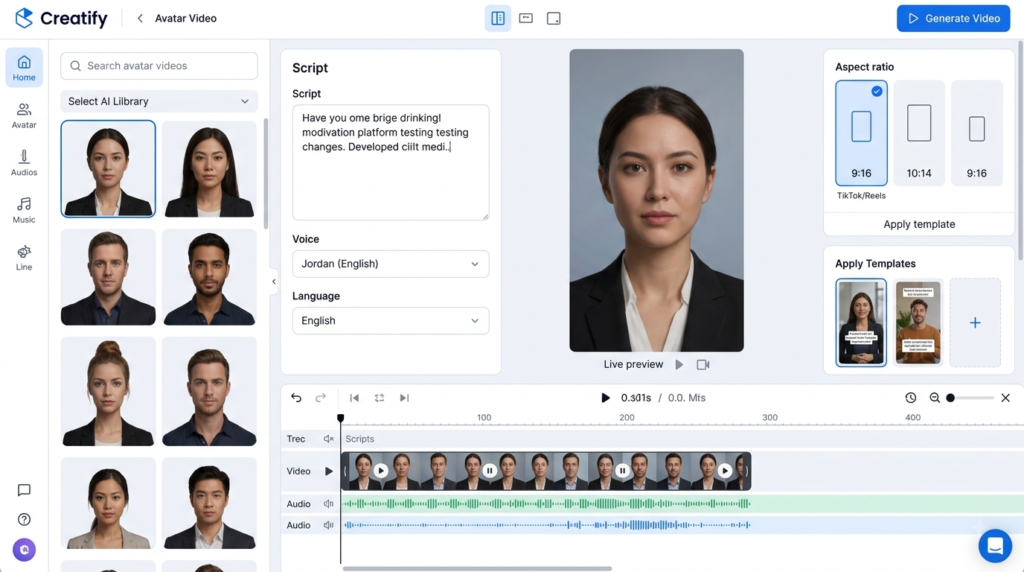
What it does: Creatify is an AI ad copy generator and video platform specializing in UGC-style and avatar-driven spokesperson ads, letting brands produce realistic-looking testimonial videos without hiring talent or booking a shoot.
What it does well: The realism of the avatar delivery is the standout feature. For brands leaning into short-form video, it fills a gap that static-image tools can’t touch.
Where it falls short: Output still leans templated at scale, and heavy customization of scripts and pacing takes more manual editing than the marketing pages suggest.
Best for: Brands running Reels, TikTok, or Shorts campaigns that need spokesperson-style video without a production budget.
Pricing: Free tier available; paid plans typically start under $50/month as of 2026.
How to Build an Automated Ad Creative Workflow With AI Agents
Buying a tool isn’t the same as building a workflow. Here’s how automated ad creative generation actually gets implemented well, step by step.
- Audit your existing top performers. Pull your last 90 days of ad data and identify the three to five creatives with the strongest CTR and ROAS. These become the training reference for whatever tool you use.
- Build a structured brief template. Include brand voice rules, banned phrases, required disclaimers, and product feed access. An AI agent for ad creative generation is only as consistent as the brief it’s fed.
- Set generation volume by channel. Static-heavy platforms like Google Display can handle high variant counts. Video platforms need fewer, higher-quality outputs given the cost and review time per asset.
- Route outputs through a human review gate. Even the best agent needs a brand check before anything goes live, especially on claims, pricing, and compliance language.
- Connect performance data back into the loop. Whichever tool you use, make sure it can read campaign results and use them to inform the next generation batch rather than generating blind every time.
- Review and refresh the brief monthly. Creative fatigue moves fast, and a brief that worked in January won’t necessarily hold in April.
Where AI-Generated Ad Creatives Still Fall Short
Here’s the part most tool vendors won’t tell you upfront. AI-generated ad creatives are fast, but fast doesn’t automatically mean good, and the data backs that up.
Zocket’s review of 2.3 million AI-generated ads concluded plainly that AI-generated creative does not outperform premium human-made creative. It’s a volume and speed advantage, not a quality guarantee. And on the consumer side, the trust gap is bigger than most advertisers assume. A Luma industry report found that only 45% of Gen Z and Millennial consumers feel positive about AI-generated ads, while advertisers assumed 82% would. That’s a 37-point gap between perception and reality.
Brand consistency is another weak spot. Templated outputs can start to look interchangeable across brands using the same tool, especially in static image generation where “different backgrounds, same product shot” becomes the default output. And post-generation customization on most of these platforms is more limited than a dedicated design tool, so plan for a human editing pass, not a hands-off pipeline.
AI-generated ad creative wins on speed and volume, not necessarily on quality or audience trust. The gap between how positively advertisers assume consumers view AI ads and how consumers actually feel about them is significant enough that human review and brand judgment remain essential, not optional.
Is an AI Marketing Agent Worth It for Your Team?
For most performance marketing teams, yes, but the return depends heavily on how much creative volume you actually need. HubSpot’s 2025 Marketing Trends research found that 73% of marketing teams using AI tools reported significant time savings on creative production, and G2’s advertising research found Microsoft Advertising data showing a 2.8x click-through rate lift on multimedia ads using AI Copilot.
An AI marketing agent makes the most sense if you’re running frequent creative refreshes, managing multiple product lines, or testing across three or more channels at once. If you’re running one or two static campaigns with infrequent updates, the overhead of setting up briefs and review workflows might outweigh the time saved.
In Hotskill’s own review of learner workflows, marketers who structured their creative briefs before adopting an AI tool saw far more consistent output quality than those who jumped straight into generation without one. The tool matters less than the process wrapped around it.
The Bottom Line
Creative production doesn’t have to be the reason your campaigns launch late. Start small: pick one tool that matches your primary format, whether that’s static, video, or native platform generation, and build a real brief before you generate a single variant. The teams getting the most out of an AI agent for ad creative generation aren’t the ones generating the most assets. They’re the ones feeding the system the clearest input and reviewing the output with an actual strategy behind it.
If you want to get hands-on with prompting and AI workflows like this instead of just reading about them, Hotskill has structured lessons built for exactly this kind of practical, tool-specific skill building. Download the app on iOS or Android at hotskill.co/download.
FAQ
What is an AI agent for ad creative generation?
It’s a system that autonomously generates, tests, and refines ad creative, including headlines, images, and video, based on a brief and performance data, rather than requiring a human to build each variant manually. Unlike a basic generator, it typically closes the loop by using results to inform the next round of output.
AI ad creative generator vs a regular design tool, what’s the difference?
A design tool like Canva or Photoshop requires you to manually build every asset yourself, even with templates. An AI ad creative generator produces the variants for you based on a brief, and the more advanced ones test and optimize automatically.
How do I use an AI agent for my ad creative workflow?
Start by feeding it your top-performing past ads, brand guidelines, and campaign objective. Set generation volume by channel, route every output through a human review step, and connect performance data back into the tool so future batches improve based on real results.
Is AI ad creative generation worth it for a small business?
It depends on your ad frequency. If you’re refreshing creative every two weeks or running multiple product lines, the time savings are significant. If you run one or two static campaigns with infrequent changes, a simpler design tool may be enough.
Do I still need a designer if I use an AI ad creative agent?
Yes, in most cases. These tools speed up production and testing volume, but brand consistency, final quality control, and complex campaign concepts still benefit from human creative judgment, especially before anything goes live to a large audience.
Why isn’t my AI-generated ad creative performing well?
The most common cause is a weak or generic brief. These tools generate exactly what they’re fed, so vague instructions produce generic output. Feed the tool your actual top-performing ads and specific brand rules rather than a one-line prompt.
Which AI ad creative tool is best for video ads specifically?
Creatify and Pencil both lean into video, with Creatify focused on UGC-style avatar videos and Pencil focused on scoring video concepts before launch. AdCreative.ai also offers video but only on its higher-priced Professional plan.
Do I need to know how to code to use an AI advertising creative tool?
No. Every tool covered here, from AdCreative.ai to Google’s Performance Max asset generation, uses a visual interface built for marketers, not developers. No coding knowledge is required to set up a brief or launch generated assets.
Can an AI agent for advertising manage my entire campaign, not just creative?
Some can, particularly platform-native tools like Meta Advantage+ and Google Performance Max, which combine creative generation with bidding and placement decisions. Standalone creative tools like AdCreative.ai or Creatify focus on the creative layer only and still require a separate ad platform to launch.
How much does an AI ad generation tool typically cost?
Entry-level plans range from free tiers to around $40/month for tools like AdCreative.ai and Creatify, as of 2026. Enterprise platforms like Smartly.io require custom quotes, and video-specific features on several platforms sit in higher-priced tiers than static image generation.