

Digital marketing has changed. Again.
Not too long ago, publishing a well-written blog post and promoting it through email and social media was enough to generate traffic, leads, and even sales. Then video took over. Then short-form video. Then AI-generated everything. And now? Attention is the scarcest resource in the digital economy.
Consumers scroll fast. They skim. They multitask. They ignore anything that feels passive.
This is exactly where Interactive Content Marketing steps in.
Instead of asking users to read, watch, or listen passively, it invites them to participate. It turns audiences into contributors. It shifts the experience from “consume this” to “discover something about yourself.”
And honestly, that shift changes everything.
In this detailed guide, we will explore why Interactive Content Marketing is shaping the future of digital engagement, how it works, why it converts better, and how you can implement it effectively in your strategy today.
What Is Interactive Content Marketing?
At its core, Interactive Content Marketing refers to digital content that requires active participation from users instead of passive consumption.
Instead of just reading an article, users take a quiz.
Instead of watching a static infographic, they explore a clickable experience.
Instead of downloading a PDF, they input data into a calculator and receive personalized results.
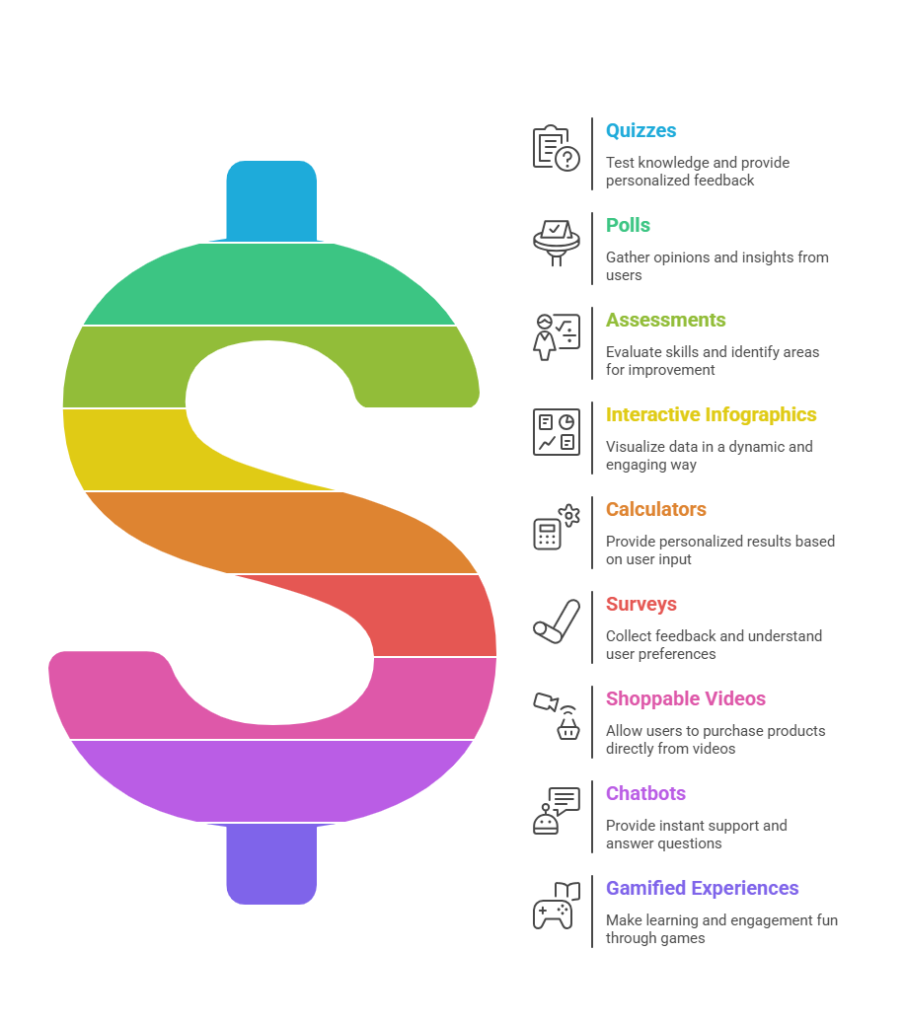
Interactive content can include:
- Quizzes
- Polls
- Assessments
- Interactive infographics
- Calculators
- Surveys
- Shoppable videos
- Chatbots
- Gamified experiences
What makes it powerful is not just the format. It is the psychological shift. When someone participates, they become invested.
And investment leads to attention. Attention leads to memory. Memory leads to action.
The Attention Economy Is Broken
Let us be honest.
The average user is overwhelmed. According to various industry studies, people encounter thousands of brand messages daily. Most are ignored. Banner blindness is real. Scroll fatigue is real.
Static content struggles because it competes in an endless feed.
Even high-quality blog posts often suffer from low average time on page. You might write 2,000 words of brilliance, but users skim 30 percent of it and leave.
Interactive formats disrupt that pattern.
When a user sees a headline like “Find Your Ideal Marketing Channel in 60 Seconds,” curiosity kicks in. They click. They answer questions. They wait for a result.
That waiting period alone increases dwell time.
The engagement becomes measurable and meaningful.
Why Passive Content Is Losing Its Impact
Traditional content marketing is not dead. But it is evolving.
Passive content like blog posts and whitepapers relies heavily on motivation. The user must choose to read, absorb, and process information.
Interactive formats reduce cognitive load. They break information into small, manageable inputs.
Instead of saying “Here is everything you need to know,” you say “Answer three questions and we will show you what applies to you.”
That personalization changes how the brain responds.
And this is not just theory. Platforms like HubSpot and Brafton have reported that interactive experiences often generate twice the conversions of static content.
It makes sense. People care more about outcomes tailored to them.
The Psychology Behind Engagement
There is something powerful about self-discovery.
When someone takes a quiz titled “What Type of Entrepreneur Are You?” they are not just consuming content. They are exploring identity.
Psychologically, this taps into:
- Curiosity gap
- Self-relevance bias
- Instant gratification
- Commitment consistency
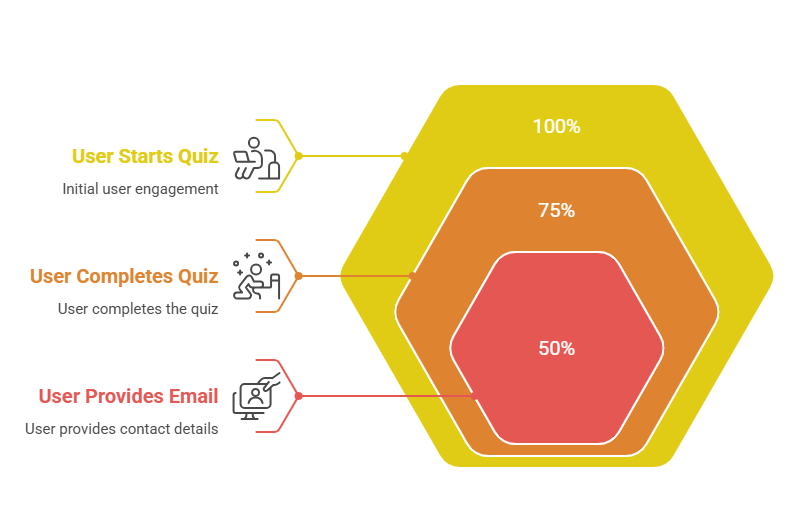
Once users start interacting, they are more likely to complete the process because they have already invested effort.
This micro-commitment model works beautifully in lead generation.
Instead of asking for an email immediately, you offer value first. Then, at the end, you ask for contact details to see results.
The exchange feels fair.
Sometimes, I think this is where marketers underestimate the power of experience. We focus too much on traffic and too little on emotional involvement.
Interactive content creates involvement.
Data Collection Without Feeling Intrusive
One of the biggest advantages of Interactive Content Marketing is ethical data collection.
Users willingly provide information because they receive something in return.
For example, a skincare brand might create a “Find Your Ideal Routine” assessment. Users input their skin type, concerns, and goals. The brand gathers first-party data while delivering personalized recommendations.
This is critical in a world moving away from third-party cookies.
Interactive experiences generate zero-party data, meaning information users intentionally share.
That data is cleaner, more accurate, and more valuable for segmentation.
And from a performance marketing perspective, this can dramatically improve retargeting campaigns.
Personalization at Scale
Modern marketing demands personalization. But personalization at scale is difficult with static content.
Interactive content bridges that gap.
A calculator can provide different outcomes based on user inputs. A quiz can segment audiences into categories. A dynamic landing page can adapt based on responses.
Instead of creating 10 different lead magnets, you create one interactive asset that adapts to users.
That efficiency matters.
It also aligns with AI-driven marketing strategies. When interactive experiences are connected to CRM systems and marketing automation tools, personalization becomes seamless.
You are no longer guessing what users want. They tell you.
Interactive Content Marketing and SEO Performance
There is a common misconception that interactive experiences hurt SEO.
In reality, when executed properly, they enhance it.
Search engines prioritize user engagement metrics like time on page and bounce rate. Interactive formats often improve both.
If users spend five minutes completing an assessment instead of 30 seconds scanning a page, search engines interpret that as value.
Additionally, interactive assets can attract backlinks.
For example, cost calculators in the finance or SaaS industries often become link magnets because they provide practical utility.
That said, technical implementation matters. Interactive elements should not block crawlability. Supporting text content must exist for search indexing.
The smartest strategy combines static SEO-optimized content with embedded interactive modules.
Real-World Examples of Success
Several brands have used interactive strategies effectively.
HubSpot’s Website Grader is a classic example. Users enter their website URL and receive a performance report. It delivers immediate value while capturing leads.
BuzzFeed quizzes are another well-known case. While often entertainment-focused, they demonstrate how powerful participation can be.
Financial institutions frequently use mortgage calculators to drive conversions. These tools answer specific user questions instantly.
Even SaaS brands like Shopify use interactive ROI calculators to demonstrate value.
These examples show that interactive formats work across industries, from B2C entertainment to B2B enterprise.
Interactive Content in the Era of AI
Generative AI is changing how content is created. But it is also changing user expectations.
People expect dynamic experiences.
AI-powered chatbots, conversational assessments, and real-time recommendation engines blur the line between content and conversation.
Imagine visiting a marketing agency website and answering a few questions. An AI assistant then generates a customized growth roadmap based on your responses.
That is not just content. That is consultative engagement.
Interactive formats combined with AI increase perceived expertise and authority. They position brands as solution providers rather than content publishers.
How Interactive Content Marketing Improves Conversion Rates
Conversion optimization often focuses on small tweaks like button color or headline changes.
But sometimes the format itself is the biggest lever.
Interactive experiences increase:
- Time spent with brand
- Information recall
- Emotional investment
- Lead quality
When someone completes a multi-step assessment, they have already demonstrated interest and intent.
This makes them warmer leads.
It also creates smoother sales conversations because you already know their pain points.
In many cases, businesses report higher form completion rates when the process feels like a guided experience rather than a static form.
Integrating Interactive Content Into Your Funnel
Interactive formats can support every stage of the marketing funnel.
At the top of funnel, quizzes and polls drive awareness and social sharing.
In the middle, assessments and calculators educate and qualify leads.
At the bottom, personalized demos and interactive product tours reduce friction.
The key is alignment with user intent.
If someone is researching marketing budgets, a performance marketing ROI calculator will resonate more than a generic ebook.
Intent-driven interactivity is the sweet spot.
Common Mistakes to Avoid
Not all interactive experiences succeed.
Some brands overcomplicate the process. Too many steps can cause drop-offs.
Others fail to deliver meaningful results. If the outcome feels generic, trust declines.
Design also matters. Poor UX can ruin engagement.
Interactive content should be intuitive, mobile-friendly, and fast-loading.
Another mistake is ignoring follow-up. Capturing data without nurturing leads wastes potential.
The experience should connect to email automation, retargeting ads, or personalized content sequences.
Measuring Success
Measuring interactive performance requires more than page views.
Key metrics include:
- Completion rate
- Average engagement time
- Lead capture rate
- Segmentation accuracy
- Downstream conversion rate
Interactive assets often provide richer analytics because each user input becomes a data point.
This data can reveal patterns in audience behavior that static content cannot.
For performance marketers, that insight is gold.
Building Your First Interactive Asset
If you are new to this approach, start simple.
Identify a common customer question.
Transform that question into a diagnostic tool.
For example, if you run a digital marketing agency, create a “Marketing Readiness Score” quiz.
Use tools like Typeform, Outgrow, or even custom-built web apps.
Focus on clarity and value.
The goal is not to impress users with flashy animations. It is to solve a problem interactively.
And test continuously. Optimization is key.
The Future Outlook
Digital engagement will continue to evolve.
Static content will still exist, of course. Blogs, videos, podcasts are foundational.
But participation-driven experiences will dominate competitive industries.
As attention spans shorten and personalization becomes standard, interactive formats will feel less like an advantage and more like a necessity.
Brands that embrace this shift early will build stronger audience relationships.
Those that do not may struggle to stand out in increasingly crowded feeds.
The future of digital engagement is not louder content.
It is smarter, more participatory content.
Final Thoughts
Marketing has always been about connection.
In the early days, that meant face-to-face conversations. Then it became broadcast advertising. Then digital publishing.
Now, it is interaction.
Interactive Content Marketing transforms audiences from spectators into participants.
It enhances engagement, improves data quality, boosts conversions, and aligns perfectly with AI-driven personalization trends.
And maybe this is the real point.
People do not want more content.
They want better experiences.
If you can create experiences that invite participation, provide value, and adapt to user needs, you are not just following a trend.
You are building the future of digital engagement.
The brands that win tomorrow will not be the ones that publish the most.
They will be the ones that involve the most.
And involvement changes everything.