

If you’re running social media for a brand right now, you already know the math doesn’t work. One person is expected to research trends, write captions, design graphics, schedule posts across five platforms, reply to comments, and report on performance, all before lunch. Most teams solve this by either burning out or letting half the calendar go empty.
This is exactly the gap an AI Agent for Social Media Marketing is built to close. Not a chatbot you copy-paste from, but a system that can plan, create, and act across your social channels with far less hand-holding than the tools you’ve probably already tried.
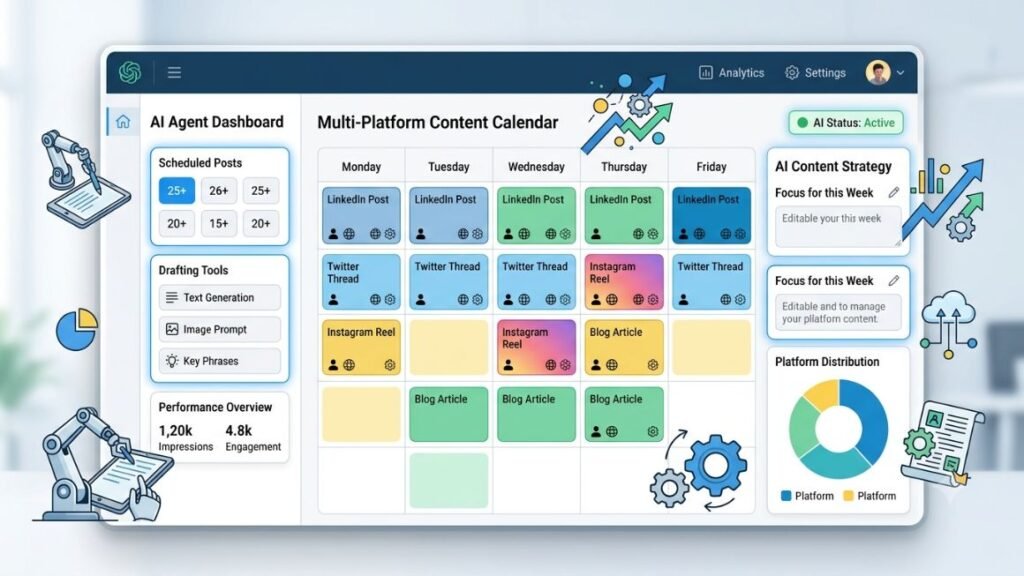
In this guide, you’ll get a precise definition of what counts as an AI agent versus a regular AI tool, how these agents actually work inside a social media workflow, and a detailed breakdown of the platforms worth your time in 2026. No vague promises. Just what each tool does, where it struggles, and who it’s actually built for.
What Is an AI Agent for Social Media Marketing?
An AI agent is a system that can take a goal, break it into steps, and complete those steps with minimal human input, often by using other tools or APIs along the way. Unlike a standard AI model that responds once and stops, an agent keeps working: it checks results, adjusts its approach, and moves to the next task on its own.
Applied to social, that means a tool that doesn’t just draft a caption when you ask. It pulls trending topics, writes a week’s worth of posts in your brand voice, schedules them at the right times for each platform, and reports back on what performed well, all as one continuous workflow rather than five separate prompts you have to manage yourself.
This matters because most “AI tools” marketers have used so far are really just generators. You type a prompt, you get an output, and you’re back in the driver’s seat for every single step after that. An agent removes most of those handoffs.
An AI Agent for Social Media Marketing is a system that plans, creates, and executes social content tasks with minimal manual input, as opposed to a generator tool that only responds to single prompts. The distinction matters because agents reduce the number of manual handoffs in a content workflow, which is where most social teams lose time.
How Is an AI Agent Different From a Regular AI Tool?
The short answer: autonomy and memory. A regular tool like a caption generator has no idea what you posted yesterday. An agent typically has access to your past content, your brand guidelines, and your performance data, and it uses all of that to make decisions without you re-explaining context every time.
Here’s a comparison that makes the difference concrete. Say you want a week of Instagram content around a product launch.
With a standard generator, you’d write a prompt, get a caption, copy it into your scheduler, write another prompt for the next post, and repeat that seven times. With an agent, you give it the launch brief once. It researches relevant trends, drafts the full week of captions and hashtag sets, queues them in your scheduler, and flags which post it thinks will underperform based on your account’s history.
That’s not a small difference. It’s the difference between AI as a typing assistant and AI as a team member who can be trusted with a task end to end.
What Can an AI Agent Actually Do in Social Media Marketing?
Most platforms calling themselves agents in 2026 handle some combination of the following:
- Content research and ideation — pulling trending audio, hashtags, and competitor posts relevant to your niche
- Caption and copy generation — writing in a trained brand voice across multiple platforms at once
- Visual creation — generating or adapting images and short video clips for each post
- Scheduling and posting — queuing content at platform-specific optimal times without manual entry
- Comment and DM responses — answering common questions or routing complex ones to a human
- Performance analysis — summarising what worked and suggesting what to try next
Not every tool does all six well. This is where most of the hype falls apart. A platform might market itself as a full agent but really only automates scheduling with a caption generator bolted on. We’ll call that out tool by tool below.
Best AI Agent Tools for Social Media Marketing
These are the platforms worth evaluating right now, based on what they actually do rather than what their landing page claims.
Sprout Social — Best for Agencies Managing Multiple Brands
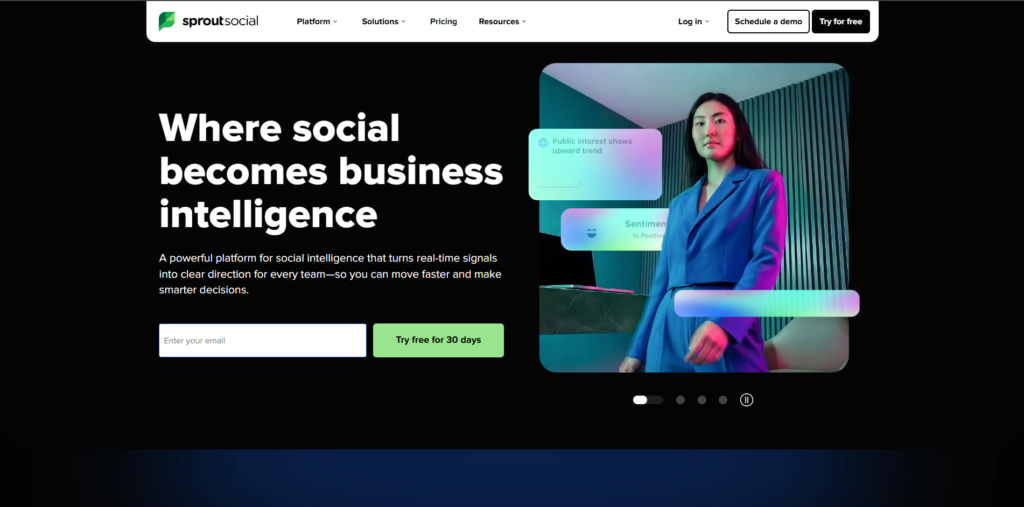
Sprout Social’s AI assist layer handles content suggestions, optimal send-time recommendations, and an automated reporting agent that summarises account performance in plain language each week.
What it does well: The reporting agent is genuinely useful. It catches engagement dips before a human would and explains why in normal language, not just a chart dump. For agencies juggling ten client accounts, this alone saves hours.
Where it falls short: The content generation side is still closer to a smart assistant than a true autonomous agent. You’ll still be approving every caption manually, which is fine for quality control but slower than tools built agent-first.
Best for: Agencies and in-house teams managing more than three brand accounts who need reporting automation more than content automation.
Pricing: Plans start around $249/month per seat as of 2026, with AI features bundled into Professional and Advanced tiers.
Lately.ai — Best for Repurposing Long-Form Content
Lately takes a long piece of content like a podcast transcript or a blog post and breaks it into dozens of platform-specific social posts on its own, learning from which past posts of yours performed best.
What it does well: The repurposing engine is the strongest part of the product. Feed it one webinar recording and it can output a full month of LinkedIn, X, and Instagram posts without you writing a single caption from scratch.
Where it falls short: Visual content is weak. You’ll need a separate tool for graphics and video, since Lately is built almost entirely around text and audio inputs.
Best for: Brands and creators who already produce long-form content (podcasts, webinars, blogs) and want to multiply it across channels automatically.
Pricing: Starts around $39/month for individuals, scaling to enterprise pricing for teams, as of 2026.
Predis.ai — Best for Visual-First Brands
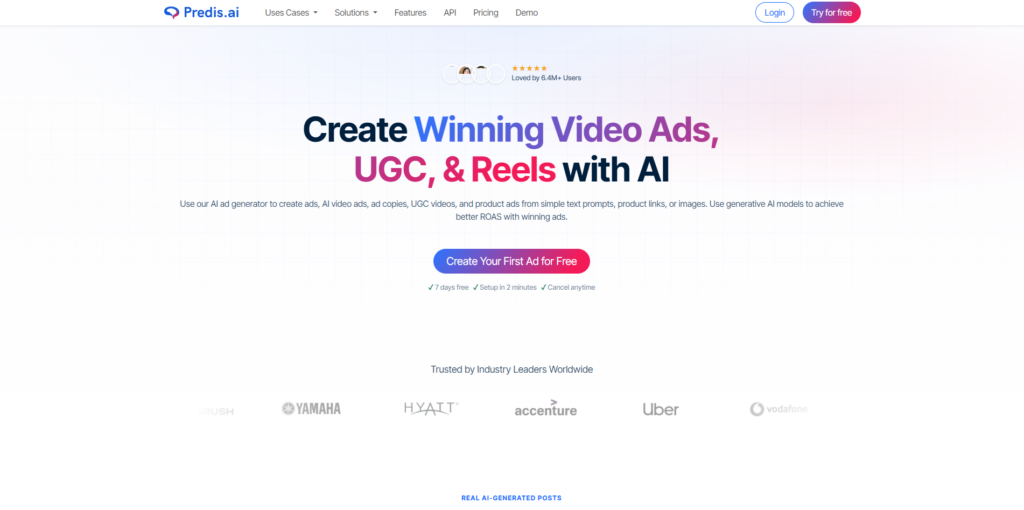
Predis is built for brands that live on Instagram and TikTok. Give it a product link or a competitor’s handle, and its agent generates a batch of on-brand carousel posts, captions, and short video edits.
What it does well: Competitor analysis is the standout feature. Point it at a competitor account and it will generate content ideas based on what’s actually working for them right now, not generic trend lists.
Where it falls short: Brand voice consistency takes a few rounds of correction before it locks in. Out of the box, captions can read a little generic until you train it on your existing posts.
Best for: Ecommerce and DTC brands that need a steady volume of visual content without a design team.
Pricing: Plans start around $32/month, with higher tiers unlocking video generation, as of 2026.
Vista Social — Best All-Around Agent for Small Teams
Vista Social combines scheduling, an AI writing assistant, and an automated response agent for comments and DMs in one dashboard, which makes it one of the more complete agent setups for smaller teams without a big budget.
What it does well: The automated response handling is solid for FAQ-style comments and DMs, freeing up real human time for the conversations that actually need a person.
Where it falls short: It’s not built for scale. Once you’re managing 15+ accounts, the interface starts to feel like it’s straining under the load.
Best for: Solo marketers and small teams managing five or fewer accounts who want one tool instead of three.
Pricing: Starts around $15/month per user, making it one of the more affordable full-stack options as of 2026.
FeedHive — Best for Performance-Based Content Decisions
FeedHive’s agent doesn’t just schedule, it actively tests. It can generate multiple caption variants for the same post and use early engagement signals to decide which version to push further.
What it does well: The built-in A/B logic is rare at this price point. Most tools make you set up testing manually. FeedHive’s agent runs it automatically and reports back.
Where it falls short: The learning curve is steeper than the others on this list. New users often need a week or two to fully understand the automation rules before trusting them.
Best for: Marketers who care about performance data more than convenience and don’t mind a setup phase.
Pricing: Starts around $19/month, as of 2026.
No single AI Agent for Social Media Marketing currently does content research, generation, scheduling, replies, and reporting equally well. Sprout Social leads on reporting, Lately leads on repurposing long-form content, Predis leads on visual generation, Vista Social leads on all-around small team use, and FeedHive leads on performance testing. Choosing the right one depends on which part of the workflow is actually costing you the most time.
How to Set Up an AI Agent Workflow for Your Brand
Getting value from any of these tools depends on setup, not just subscribing. Here’s the sequence that actually works.
- Step 1: Audit your current bottleneck. Before picking a tool, figure out whether your time loss is in ideation, writing, design, scheduling, or reporting. Pick the agent that solves that specific problem first.
- Step 2: Feed the agent your existing content. Every tool above improves dramatically once it has 15 to 20 of your past posts to learn tone and style from. Skipping this step is the single biggest reason agents produce generic output.
- Step 3: Set guardrails, not just goals. Define what the agent should never post (pricing claims, competitor mentions, certain hashtags) before letting it run autonomously.
- Step 4: Run it in review mode for two weeks. Even the best agents need a supervised period. Approve every post manually at first, and only move to auto-publish once you trust the pattern.
- Step 5: Review the weekly report and adjust. This is the step most teams skip entirely. The reporting layer exists to make the agent smarter over time, not just to give you a chart.
Where AI Agents Still Fall Short
Honesty matters more than hype here. These agents are genuinely useful, but none of them replace strategic thinking. They’re good at execution and pattern-matching, not at deciding whether your brand should even be on a new platform, or how to handle a PR situation that needs judgment instead of a template.
There’s also a real risk of voice drift. Left fully unsupervised for months, even a well-trained agent will slowly produce content that sounds slightly off, because it’s optimising for engagement patterns rather than brand identity. Quarterly human review isn’t optional, it’s part of the setup.
And none of them are reliable for real-time crisis response. If something goes wrong publicly, a human needs to be the one writing the response, full stop.
Final Thoughts
An AI Agent for Social Media Marketing isn’t a magic fix, but it does solve a real problem: there’s too much manual work between an idea and a published post. The tools that matter most are the ones that match your actual bottleneck, not the ones with the flashiest demo.
Start with one clear gap, whether that’s research, writing, or reporting, pick the tool built for that specific job, and give it real training data before judging the output. That’s the difference between an agent that saves you hours every week and one that just becomes another app you forgot to cancel.
If you want to actually understand how to set up and prompt these AI agents properly instead of guessing your way through them, Hotskill has structured lessons built for exactly this. Download the app on iOS or Android, and start your first lesson today.
FAQ
What is an AI Agent for Social Media Marketing?
An AI Agent for Social Media Marketing is a software system that can plan, create, schedule, and analyse social content with minimal manual input, working across multiple steps of a campaign rather than responding to a single prompt at a time.
How is an AI agent different from a chatbot like ChatGPT?
A chatbot responds to one prompt at a time and has no memory of past tasks unless you provide it again. An AI agent retains context, makes decisions across multiple steps, and can take actions like scheduling a post or replying to a comment without you doing each step manually.
Which AI agent is best for a small business with one social media manager?
Vista Social is generally the best starting point for a solo marketer, since it combines content creation, scheduling, and comment management in one affordable tool instead of requiring three separate subscriptions.
Do I need to know how to code to use these tools?
No. Every tool covered in this guide is built with a no-code dashboard. You’ll set rules and review content through a visual interface, not write any scripts or use an API directly.
Can an AI agent fully replace a social media manager?
Not currently. These tools handle execution well, drafting, scheduling, basic replies, but strategic decisions, brand voice judgment calls, and crisis response still need a person. Most teams use agents to free up a manager’s time, not eliminate the role.
Is it worth paying for an AI agent if I already use a scheduling tool like Buffer?
It depends on what’s actually slowing you down. If scheduling itself isn’t the problem but writing and research are, a dedicated agent like Lately or Predis will save more time than your current scheduler ever could, since they’re solving a different part of the workflow.
Why is my AI agent producing generic-sounding content?
This almost always comes down to training data. Most agents need 15 to 20 of your past posts uploaded before they can match your brand voice. Skipping that setup step is the most common reason output feels flat.
How much do AI agents for social media cost in 2026?
Pricing ranges widely, from around $15/month for lightweight tools like Vista Social to $249/month per seat for enterprise platforms like Sprout Social. Most small business owners can get meaningful value from tools in the $20 to $40/month range.
Can AI agents handle multiple platforms at once?
Yes, this is one of their core strengths. Most of the tools above can adapt a single piece of content into platform-specific formats for Instagram, TikTok, LinkedIn, and X without you rewriting it for each one.
Is it safe to let an AI agent post without my approval?
It can be, but only after a supervised testing period. Run any agent in review mode for at least two weeks, set clear content guardrails, and check in on its output regularly rather than switching to full autopilot from day one.